Loading...
Ahmad Shah Qajar vs Julius Caesar
Julius Caesar leads by 42.1 pts · 2 figures compared
…
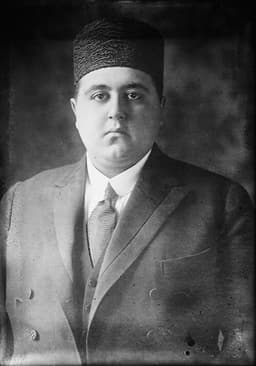
Ahmad Shah Qajar
Emperor · Modern
40.7Total

Julius Caesar
General · Ancient
82.8Total
Basic Information
Born
1898
-100
Died
1930
-44
Era
Modern
Ancient
Nationality
Persia
Roman Republic
Occupation
Emperor
General
Civilization
Middle Eastern
Western
Score Comparison
Military (10%)
43.3
88.0
Political (20%)
26.4
78.0
Influence (20%)
47.1
85.0
Legacy (20%)
35.8
82.0
Leadership (15%)
41.5
80.0
Strategy (15%)
54.3
85.0
TOTAL
40.7
82.8
Ahmad Shah Qajar — Complete Timeline
1919 AD
Signed the Anglo-Persian Agreement of 1919Political Action◆ Major
Ahmad Shah's government signed the Anglo-Persian Agreement, which would have made Persia a British protectorate in exchange for loans and military assistance. Widespread nationalist opposition forced the Majlis to reject the agreement, and it was never ratified, contributing to the government's weakness.
TreatyBritish InfluenceNationalist Opposition
Impact: nationaldestructive
1923 AD
Fled to EuropePolitical Action◆ Major
Ahmad Shah left Persia for Europe, ostensibly for medical treatment, but effectively went into exile. He left Reza Khan as prime minister with full powers. His absence weakened the monarchy and allowed Reza Khan to consolidate control, leading to the eventual deposition.
ExilePolitical VacuumReza Khan's Rise
Impact: nationaltragic
1925 AD
Deposed by Reza KhanPolitical Action
Ahmad Shah Qajar was deposed by the Majlis, which voted to end the Qajar dynasty and appoint Reza Khan as the new shah. This followed Reza Khan's coup in 1921 and his subsequent consolidation of power. Ahmad Shah was in Europe at the time and never returned to Persia.
DepositionEnd of Qajar DynastyReza Khan
Impact: nationaltragic
Julius Caesar — Complete Timeline
58 BC
Gallic WarsWar◆ Major
Caesar, as proconsul of Gaul, launched a series of campaigns that conquered all of Gaul (modern France, Belgium, and parts of Switzerland). He fought numerous battles, including against the Helvetii, the Belgae, and the Gallic chieftain Vercingetorix. The wars brought immense wealth and a loyal army to Caesar.
Gallic WarsConquestRoman Expansion
Impact: regional
49 BC
Crossing the RubiconPolitical Action◆ Major
Caesar led Legio XIII across the Rubicon River into Italy, defying the Roman Senate's order to disband his army. This act triggered a civil war against Pompey and the Optimates, ultimately leading to Caesar's dictatorship and the end of the Roman Republic.
Roman Civil WarEnd of RepublicPower Struggle
Impact: global
48 BC
Battle of PharsalusWar◆ Major
Caesar's outnumbered army defeated the larger forces of Pompey the Great at Pharsalus in Greece. Caesar's tactical use of a reserve line to counter Pompey's cavalry charge proved decisive. Pompey fled to Egypt, where he was assassinated, leaving Caesar as the undisputed master of the Roman world.
Roman Civil WarBattleDecisive Victory
Impact: regional
44 BC
Appointment as Dictator for LifePolitical Action◆ Major
The Roman Senate appointed Caesar dictator perpetuo (dictator for life), granting him unprecedented personal power. This move concentrated military, legislative, and judicial authority in one person, effectively ending the Roman Republic's traditional system of checks and balances and alarming many senators.
DictatorshipEnd of RepublicPower Consolidation
Impact: regionaldestructive
Assassination on the Ides of MarchPolitical Action◆ Major
A group of Roman senators, led by Marcus Junius Brutus and Gaius Cassius Longinus, stabbed Caesar to death at a meeting of the Senate in the Theatre of Pompey. The assassination was intended to restore the Republic, but instead triggered another civil war that led to the rise of the Roman Empire.
AssassinationRoman PoliticsEnd of Republic
Impact: globaldestructive
Expert Analysis
ahmad-shah-qajar-vs-julius-caesar
# The Man Who Crossed the Rubicon, and the Man Who Crossed a Continent
In the spring of 44 BCE, a fifty-five-year-old Roman dictator sat in the Senate chamber, surrounded by men he had once called friends. The daggers came from all sides. Julius Caesar fell, bleeding twenty-three wounds into the marble floor, and with him fell the Roman Republic. A thousand miles east and two millennia later, another ruler—young, hesitant, and utterly alone—boarded a train in Tehran. Ahmad Shah Qajar, the last shah of Persia, was bound for Europe. He would never return. One man died because he had seized too much power. The other died because he had never learned to hold it.
Origins
Caesar was born into the chaos of the late Republic, a world of civil wars, debt, and desperate ambition. His family, the Julii, claimed descent from the goddess Venus, but they were politically minor. His father died when Caesar was sixteen, leaving him to navigate a treacherous world of Sullan proscriptions and aristocratic feuds. He learned early that survival meant charm, ruthlessness, and a willingness to borrow beyond any reasonable limit. The Roman elite was a shark tank, and Caesar intended to become the largest shark.
Ahmad Shah Qajar was born in 1898, a child of a dynasty already in decay. The Qajar shahs had ruled Persia since the late eighteenth century, but by Ahmad’s birth, they were puppets of foreign powers. His father, Mozaffar ad-Din Shah, was a weak ruler who sold Persia’s concessions to Russia and Britain. Ahmad grew up in a palace of velvet and intrigue, surrounded by courtiers who whispered of conspiracies. He was crowned at the age of eleven, a boy king in a land that had forgotten how to obey.
Rise to Power
Caesar’s path was forged in blood. He served in the military in Asia Minor, was captured by pirates (whom he later crucified), and climbed the political ladder through sheer audacity. He allied with Pompey and Crassus in the First Triumvirate, then spent eight years conquering Gaul—a campaign of genius, brutality, and self-promotion. His *Commentaries* turned military reports into propaganda. By 49 BCE, he was a general with a loyal army, a vast fortune, and a Senate that feared him. When ordered to disband his legions, he crossed the Rubicon River. The civil war had begun.
Ahmad Shah’s rise was an accident of birth. He was crowned in 1909, during the Persian Constitutional Revolution, a period when reformers sought to limit royal power. He was a figurehead, not a leader. Real power lay with the Majlis, the parliament, and with foreign ambassadors. Ahmad Shah’s first major act was to sign the Anglo-Persian Agreement of 1919, a treaty that would have turned Persia into a British protectorate. He did not negotiate it; he simply approved it. The agreement collapsed under popular outrage, but the damage was done. He had shown the nation that he was a signature, not a sovereign.
Leadership & Governance
Caesar ruled as a reformer. As dictator, he overhauled the calendar, granted citizenship to provincials, launched public works, and reduced debt. He centralized power but kept the forms of the Republic intact—he was, after all, a master of appearances. His military genius was undeniable: at Alesia, he besieged a Gallic army while simultaneously fighting off a relief force, a feat of logistics and nerve that still astonishes. But his political wisdom was flawed. He pardoned his enemies, believing generosity would win loyalty. It did not. He also accepted honors that reeked of kingship—a golden chair, a statue among the gods—and that sealed his fate.
Ahmad Shah governed by absence. He spent much of his reign in Europe, leaving Persia to be run by regents and warlords. Reza Khan, a Cossack officer, rose to power by crushing rebellions and modernizing the army. Ahmad Shah did not resist. He signed decrees, fled to France in 1923 for “medical treatment,” and watched from afar as Reza Khan consolidated control. In 1925, the Majlis deposed him, ending the Qajar dynasty. Ahmad Shah’s total score of 47.4 reflects a leader who barely led. His military score of 35.6 is not a judgment of his tactics—he had no tactics—but of his absence.
Triumph & Tragedy
Caesar’s greatest moment was his triumph over Gaul. He brought Rome wealth, glory, and a new province. His tragedy was the Ides of March. He had conquered the world but could not conquer the Senate. His last words, according to legend, were “*Et tu, Brute?*” — a recognition that the knife came from a friend.
Ahmad Shah’s greatest moment was his coronation, but even that was hollow. His tragedy was his irrelevance. He died in 1930 in Neuilly-sur-Seine, France, at the age of thirty-one, a forgotten exile. His legacy score of 46.7 is not a mark of failure in war or reform—it is a mark of having done nothing at all.
Character & Destiny
Caesar was driven by an insatiable hunger for glory. He once wrote, “*Veni, vidi, vici*”—I came, I saw, I conquered. That was not boast; it was his philosophy. He believed that destiny favored the bold, and he was right, until it didn’t. His personality—charming, calculating, relentless—shaped the history of the West. He destroyed the Republic and made the Empire possible.
Ahmad Shah was shaped by passivity. He was not evil, nor was he stupid; he was paralyzed. Born into a dynasty that had lost its nerve, he mirrored its decay. He fled because he could not imagine fighting. His character was not one of action but of resignation. He left Persia to Reza Khan, who would modernize the country with an iron fist. Ahmad Shah’s destiny was to be a footnote.
Legacy
Caesar’s legacy is immense. His name became a title—Kaiser, Tsar. His reforms outlived him. The Julian calendar lasted 1,600 years. His military campaigns are still studied. He is remembered as a genius and a tyrant, a founder and a destroyer. His total score of 83.3 reflects a life that changed the world.
Ahmad Shah’s legacy is a cautionary tale. He is remembered, if at all, as the last of the Qajars, the shah who lost a throne he never held. His name appears in history books as a prelude to the Pahlavi era. His score of 47.4 is a quiet verdict: he was a king who never reigned.
Conclusion
One man crossed a river and changed the world. The other crossed a continent and vanished. The difference was not birth, nor opportunity, nor even intelligence. It was will. Caesar believed he could shape history, and he did. Ahmad Shah believed history would shape itself, and it did—without him. They stand on opposite ends of the spectrum of power: one who seized it with both hands, and one who let it slip through his fingers. In the end, the dagger and the train both lead to the same place: oblivion. But only one of them, on the way, built an empire.
Rankings
🥇
Julius CaesarLeader
Mil: 88.0Pol: 78.0Inf: 85.0
82.8
🥈
Ahmad Shah Qajar
Mil: 43.3Pol: 26.4Inf: 47.1
40.7
+42.1 behind
How This Comparison Works
Algorithm
Each figure is scored on 6 dimensions (0—100 scale) based on structured historical data: Military (10%), Political (20%), Influence (20%), Legacy (20%), Leadership (15%), Strategy (15%). The weighted total produces the final ranking.
Data Sources
Scores are computed from structured sub-indicators in the database. Scale factors adjust for era (Ancient ×0.85, Modern ×1.0) and civilization size (Eastern ×1.05, Other ×0.80) to account for differences in population and military scale.
Maximum 3 Figures
Comparisons are limited to 2—3 figures to ensure readability and statistical meaningfulness.
Error Margins
±5 points per dimension — Sub-scores are derived from historical records with inherent uncertainty. Two figures within 5 points on a dimension should be considered roughly equivalent in that area.
Total Score Accuracy
±3 points overall — The weighted combination of 6 dimensions produces a total score with approximately ±3 points of uncertainty. Differences of less than 3 points are not statistically significant— the figures are effectively tied.
Known Limitations
- Historical records are incomplete and uneven across civilizations
- Figures from oral-tradition societies may be underrepresented
- Occupation labels can misclassify multi-role figures
- Scores measure capability and impact, not moral character
- Quantitative scoring is a comparison tool, not absolute truth
Capability Radar
Military (10%) — Battles & Warfare
Battles
5
95
Win Rate
5
92
Expansion
5
97
Political (20%) — Governance & Reform
Reform
10
90
Diplomacy
15
85
Economy
10
82
Influence (20%) — Cultural & Global Reach
Cultural
10
88
Global
10
94
Legacy (20%) — Historical Impact
Historical
15
95
Longevity
10
96
Leadership (15%) — Power & Stability
Tenure
20
75
Stability
10
60
Strategy (15%) — Tactics & Innovation
Strategy
5
94
Tactics
5
96
Reform
5
88
Similar Comparisons
Comments & Discussion
CaesarSkeptic6/17/2026
Call me crazy, but comparing a guy who conquered Gaul and rewrote the Roman calendar to a teenage shah who couldn't even control his own capital is like comparing a lion to a housecat. Caesar's crossing of the Rubicon was a calculated act of war; Ahmad's train to Europe was an act of surrender. The Qajar kid inherited a mess, sure, but he didn't even try to fight. Give me Caesar's ambition over that any day.
历史数据控6/17/2026
这个对比根本是关公战秦琼。凯撒在公元前58年高卢战争时就部署了约10个军团,而艾哈迈德沙阿在1914年连一支现代化军队都凑不齐。数据上,两人面临的重力完全不对等。凯撒书写历史,艾哈迈德沙阿只是被动记录。别拿巧合当深刻。
ClassicsBuff6/17/2026
It's a fascinating if flawed pairing. Caesar's death was a political necessity for the conspirators; the Ides of March was a targeted assassination with Republican ideals. Ahmad's exile was just... pathetic. He literally abdicated without a fight in 1925. Caesar had the dignity of a dramatic end; Ahmad had the indignity of a quiet departure. One man's legacy is a calendar month named July; the other's is a dusty footnote in Persian history.
阳谋观察家6/17/2026
你们都被“伟大”骗了。凯撒的专制毁了罗马共和制,而艾哈迈德沙阿的软弱至少给了波斯一个相对和平的过渡期。凯撒在元老院被杀时血流成河,但他留下的内战让罗马死了几十万人;艾哈迈德沙阿坐上火车去欧洲,避免了大规模流血。有时候,不握权的人比握权者更明智。历史不是只看谁更强硬。
RevisionistLen6/17/2026
Honestly, this comparison misses the point. Both were victims of their systems. Caesar was a product of late Republic corruption; Ahmad was a product of Qajar decay and colonialism. The real contrast is in agency: Caesar actively shaped his destiny until the end, while Ahmad was a passive mannequin for Russian and British interests. That's not valor or cowardice—just different historical weather patterns.