Loading...
Aga of Kish vs Caracalla
Caracalla leads by 11.6 pts · 2 figures compared
…

Aga of Kish
Emperor · Ancient
34.6Total
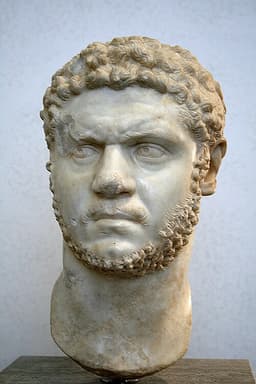
Caracalla
Emperor · Ancient
46.2Total
Basic Information
Born
-2650
188
Died
-2600
217
Era
Ancient
Ancient
Nationality
Kish
Roman Empire
Occupation
Emperor
Emperor
Civilization
Middle Eastern
Western
Score Comparison
Military (10%)
25.9
10.0
Political (20%)
30.7
48.0
Influence (20%)
42.4
57.2
Legacy (20%)
32.5
50.0
Leadership (15%)
31.2
45.0
Strategy (15%)
39.6
45.0
TOTAL
34.6
46.2
Aga of Kish — Complete Timeline
2650 BC
Siege of Uruk by Aga of KishWar◆ Major
Aga, king of Kish, besieged Uruk, demanding submission from Gilgamesh. The siege was broken by Gilgamesh's forces, and Aga was captured. Gilgamesh spared Aga's life due to a previous favor, ending the conflict between Kish and Uruk.
GilgameshSiegeUruk
2600 BC
End of the First Dynasty of KishPolitical Action
Aga was the last king of the First Dynasty of Kish, as recorded in the Sumerian King List. After his reign, the kingship passed to Uruk, marking the end of Kish's dominance in Sumer. The exact circumstances of his fall are not recorded.
Dynastic ChangeKishSumerian King List
Impact: regional
Caracalla — Complete Timeline
211 AD
Assassination of GetaPolitical Action◆ Major
Caracalla murdered his brother and co-emperor Geta in their mother Julia Domna's arms, after a period of intense rivalry. Geta's supporters were purged, and his name was erased from inscriptions (damnatio memoriae).
AssassinationBrotherDamnatio Memoriae
Impact: nationaltragic
212 AD
Constitutio AntoninianaReform
Caracalla issued the Constitutio Antoniniana, granting Roman citizenship to all free inhabitants of the Roman Empire. This edict aimed to increase tax revenue and unify the empire, but also diluted the traditional privileges of Roman citizens.
CitizenshipReformTaxation
Impact: globalconstructive
213 AD
Campaign against the AlemanniWar
Caracalla campaigned against the Alemanni tribe on the Rhine frontier, winning a victory and adopting the title Germanicus Maximus. He also attempted to imitate Alexander the Great by forming a Macedonian-style phalanx.
CampaignAlemanniFrontier
Impact: regional
216 AD
Construction of the Baths of CaracallaCultural◆ Major
Caracalla commissioned the Baths of Caracalla in Rome, one of the largest and most luxurious public bath complexes in the ancient world. The baths served as a social and cultural center for the Roman populace.
ArchitecturePublic WorksBaths
Impact: nationalconstructive
217 AD
Assassination of CaracallaPolitical Action◆ Major
Caracalla was assassinated on the road to Carrhae by a soldier named Martialis, at the instigation of the praetorian prefect Macrinus. His death ended the Severan dynasty's direct line and led to Macrinus's brief reign.
AssassinationEnd of DynastyMacrinus
Impact: globaltragic
Expert Analysis
Origins
Aga of Kish was the last king of the First Dynasty of Kish, ruling in the Early Dynastic period of Mesopotamia around the 27th century BCE. He was likely born into the royal family of Kish, one of the most prominent city-states in Sumer. The Sumerian King List records him as the son of Enmebaragesi, a king who had previously dominated the region. Aga inherited a kingdom that had been the preeminent power in Sumer, but his reign faced challenges from rising city-states, particularly Uruk. Little else is known about his early life, as sources from this period are limited to fragmentary texts and archaeological evidence.
Caracalla, born Lucius Septimius Bassianus in 188 CE in Lugdunum (modern Lyon, France), was the eldest son of Emperor Septimius Severus and Julia Domna. He was raised in the imperial court, receiving a Roman education and military training. His father, a successful general who seized power in 193 CE, ensured Caracalla was groomed for leadership. Caracalla was renamed Marcus Aurelius Antoninus in 198 CE to associate him with the revered Antonine dynasty. His early life was marked by the presence of his younger brother Geta, with whom he shared a bitter rivalry fostered by their father's divided succession plans.
Rise to Power
Aga ascended to the throne of Kish likely in the late 27th century BCE, inheriting a kingdom that had long dominated Sumer. His rise was traditional for a hereditary monarchy, but his reign was defined by the conflict with Gilgamesh, king of Uruk. The key turning point was the Siege of Uruk, where Aga demanded submission from Gilgamesh. According to the Sumerian epic, Gilgamesh refused, and Aga's forces besieged Uruk. However, Uruk's defenses held, and Gilgamesh led a successful counterattack, capturing Aga. Instead of executing him, Gilgamesh spared Aga, but the defeat effectively ended Kish's supremacy. The Sumerian King List marks Aga as the last king of the First Dynasty of Kish, after which kingship passed to Uruk.
Caracalla's rise was more calculated and ruthless. He was declared co-emperor with his father Septimius Severus in 198 CE, and after Severus's death in 211 CE, he became co-ruler with his brother Geta. The brothers' rivalry escalated quickly, with each attempting to consolidate power. In December 211 CE, Caracalla murdered Geta in their mother's arms, claiming self-defense. He then purged Geta's supporters, executing thousands, including the jurist Papinian. This brutal act solidified his sole rule. Caracalla also sought to emulate Alexander the Great, launching campaigns in the East and adopting the title "Parthicus Maximus" after a fabricated victory over the Parthians.
Leadership & Governance
Aga's leadership is primarily known through his confrontation with Gilgamesh. As a king, he likely exercised traditional Sumerian kingship, managing irrigation, trade, and military defense. The siege of Uruk suggests a militaristic approach, but his failure and subsequent capture indicate a lack of strategic adaptability. His governance score of 31.2 reflects limited evidence, but the loss of Kish's hegemony suggests weak political acumen. In contrast, Caracalla's governance was marked by centralization and legal reform. His most notable act was the Constitutio Antoniniana in 212 CE, granting Roman citizenship to all free inhabitants of the empire. This edict aimed to increase tax revenue and unify the empire, but it also diluted the prestige of citizenship. Caracalla also commissioned the Baths of Caracalla in Rome, a massive public works project that demonstrated imperial power. However, his governance was undermined by paranoia and brutality, as seen in the massacre of Geta's supporters. His political score of 48.0 reflects these mixed achievements.
Triumph & Tragedy
Aga's greatest success was maintaining Kish's status as a leading city-state for his early reign, but the siege of Uruk was a catastrophic failure. The capture by Gilgamesh and the loss of kingship to Uruk ended his dynasty. The sparing of his life by Gilgamesh is a rare positive note, but overall, his reign ended in defeat. Caracalla's triumphs include the Constitutio Antoniniana, which had lasting legal effects, and the construction of the Baths, a cultural landmark. He also secured victories against the Alemanni, earning the title Germanicus Maximus. However, his tragedies are numerous: the murder of Geta and the subsequent purges alienated the elite, and his costly military campaigns drained the treasury. His assassination in 217 CE by a soldier named Martialis, instigated by the praetorian prefect Macrinus, ended his reign in ignominy. His military score of 10.0 reflects his poor performance in the field compared to his ambitions.
Character & Destiny
Aga is depicted in the Epic of Gilgamesh as a proud and demanding king, but his sparing by Gilgamesh suggests a capacity for mercy or pragmatism. His character likely contributed to his downfall—overconfidence in challenging Uruk led to defeat. His destiny was to be the last of his dynasty, a footnote in Sumerian history. Caracalla was known for his cruelty, insecurity, and obsession with Alexander the Great. He modeled his appearance and campaigns after Alexander, but his actions—killing his brother, persecuting rivals, and alienating the army—sowed the seeds of his demise. The historian Cassius Dio described him as a "savage beast" who delighted in bloodshed. His assassination on the road to Carrhae in 217 CE was a direct result of his own paranoia and the instability he created. His leadership score of 45.0 reflects his ability to hold power but not to secure loyalty.
Legacy
Aga's legacy is minimal: he is remembered primarily as the opponent of Gilgamesh and as the last king of the First Dynasty of Kish. His defeat marked a shift in Sumerian power from Kish to Uruk. In terms of influence, he scored 42.4, but this is largely due to his association with the Gilgamesh epic. Caracalla's legacy is more substantial. The Constitutio Antoniniana fundamentally changed the Roman Empire by expanding citizenship, a move that contributed to the eventual homogenization of Roman society. The Baths of Caracalla remained a model for later imperial baths. However, his reign also exemplified the instability of the Severan dynasty. His legacy score of 50.0 is moderate, reflecting both his legal impact and his tyrannical rule. In total scores, Caracalla leads with 46.2 compared to Aga's 34.6, a gap of 11.6 points.
Conclusion
Caracalla had a greater impact on history than Aga of Kish. While Aga's defeat contributed to the Gilgamesh epic, his reign was a brief end to a dynasty. Caracalla's Constitutio Antoniniana reshaped Roman citizenship and had lasting legal consequences. His scores in political (48.0 vs 30.7), influence (57.2 vs 42.4), and legacy (50.0 vs 32.5) are significantly higher. Even in leadership, Caracalla's score of 45.0 surpasses Aga's 31.2. Although Caracalla's military score is lower (10.0 vs 25.9), his overall total of 46.2 demonstrates a broader and more enduring impact. Caracalla's actions altered the course of Roman law and society, whereas Aga's reign was a localized defeat. Thus, Caracalla stands as the more consequential figure.
Rankings
🥇
CaracallaLeader
Mil: 10.0Pol: 48.0Inf: 57.2
46.2
🥈
Aga of Kish
Mil: 25.9Pol: 30.7Inf: 42.4
34.6
+11.6 behind
How This Comparison Works
Algorithm
Each figure is scored on 6 dimensions (0—100 scale) based on structured historical data: Military (10%), Political (20%), Influence (20%), Legacy (20%), Leadership (15%), Strategy (15%). The weighted total produces the final ranking.
Data Sources
Scores are computed from structured sub-indicators in the database. Scale factors adjust for era (Ancient ×0.85, Modern ×1.0) and civilization size (Eastern ×1.05, Other ×0.80) to account for differences in population and military scale.
Maximum 3 Figures
Comparisons are limited to 2—3 figures to ensure readability and statistical meaningfulness.
Error Margins
±5 points per dimension — Sub-scores are derived from historical records with inherent uncertainty. Two figures within 5 points on a dimension should be considered roughly equivalent in that area.
Total Score Accuracy
±3 points overall — The weighted combination of 6 dimensions produces a total score with approximately ±3 points of uncertainty. Differences of less than 3 points are not statistically significant— the figures are effectively tied.
Known Limitations
- Historical records are incomplete and uneven across civilizations
- Figures from oral-tradition societies may be underrepresented
- Occupation labels can misclassify multi-role figures
- Scores measure capability and impact, not moral character
- Quantitative scoring is a comparison tool, not absolute truth
Capability Radar
Military (10%) — Battles & Warfare
Battles
10
45
Win Rate
10
40
Expansion
10
25
Political (20%) — Governance & Reform
Reform
10
80
Diplomacy
15
30
Economy
10
25
Influence (20%) — Cultural & Global Reach
Cultural
5
50
Global
5
55
Legacy (20%) — Historical Impact
Historical
10
65
Longevity
5
60
Leadership (15%) — Power & Stability
Tenure
20
40
Stability
15
15
Strategy (15%) — Tactics & Innovation
Strategy
10
30
Tactics
10
35
Reform
5
20
Similar Comparisons
Comments & Discussion
No comments yet. Be the first to share your thoughts!