Loading...
Abu Jafar al-Mansur vs Wu Zetian
Wu Zetian leads by 4.5 pts · 2 figures compared
…
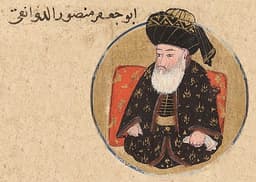
Abu Jafar al-Mansur
Emperor · Medieval
65.5Total

Wu Zetian
Emperor · Medieval
70.0Total
Basic Information
Born
714
624
Died
775
705
Era
Medieval
Medieval
Nationality
Abbasid Caliphate
China
Occupation
Emperor
Emperor
Civilization
Middle Eastern
Eastern
Score Comparison
Military (10%)
65.0
60.0
Political (20%)
75.0
62.7
Influence (20%)
40.0
65.0
Legacy (20%)
80.0
80.0
Leadership (15%)
82.0
78.0
Strategy (15%)
55.0
66.3
TOTAL
65.5
70.0
Abu Jafar al-Mansur — Complete Timeline
754 AD
Consolidated Abbasid Power After the RevolutionPolitical Action◆ Major
Al-Mansur eliminated rivals including his uncle Abd Allah ibn Ali and the Barmakids, securing Abbasid control. He established a centralized bureaucracy and suppressed rebellions, including the Rawandiyya uprising.
Impact: global
762 AD
Founded the City of BaghdadPolitical Action
Abu Jafar al-Mansur founded the city of Baghdad as the new capital of the Abbasid Caliphate. The Round City was designed as a center of administration and culture, becoming one of the largest cities in the world.
Impact: globalconstructive
770 AD
Patronized Translation of Greek WorksCultural◆ Major
Al-Mansur supported the translation of Greek philosophical and scientific texts into Arabic. This initiative laid the foundation for the Abbasid translation movement, which preserved and expanded classical knowledge.
Impact: globalconstructive
Wu Zetian — Complete Timeline
655 AD
Became Empress ConsortPolitical Action◆ Major
Wu Zetian was elevated from concubine to empress consort of Emperor Gaozong of Tang in 655. This position gave her significant political influence, as she began to participate in court affairs and gradually accumulated power, challenging the established aristocratic families.
Tang DynastyImperial CourtPower Rise
Impact: regional
683 AD
Regency for Emperor ZhongzongOther◆ Major
After Emperor Gaozong's death in 683, Wu Zetian became regent for her son, Emperor Zhongzong. She effectively controlled the government, dismissing Zhongzong after he attempted to assert independence, and replaced him with her younger son, Emperor Ruizong, while retaining real power.
Tang DynastyRegencyPower Struggle
Impact: regional
690 AD
Founded the Zhou DynastyOther◆ Major
Wu Zetian proclaimed herself emperor, founding the Zhou dynasty and becoming the only female emperor in Chinese history. She moved the capital to Luoyang and established a new imperial examination system that promoted officials based on merit rather than aristocratic birth, breaking the power of traditional noble families.
Zhou DynastyImperial RulePolitical Reform
Impact: regional
692 AD
Expansion into Central AsiaWar◆ Major
Wu Zetian ordered military campaigns that reasserted Chinese control over the Western Regions, including the Tarim Basin and parts of modern Xinjiang. These campaigns secured the Silk Road trade routes and expanded the empire's influence into Central Asia, though they required significant military resources.
Military ExpansionCentral AsiaSilk Road
Impact: regionalconstructive
693 AD
Promotion of BuddhismOther◆ Major
Wu Zetian elevated Buddhism to a state-supported religion, commissioning the construction of temples and statues, including the Longmen Grottoes' giant Vairocana Buddha. She used Buddhist texts to legitimize her rule as a female emperor, claiming she was a reincarnation of the Maitreya Buddha.
BuddhismReligious PolicyCultural Patronage
Impact: regional
705 AD
Overthrow and DeathPolitical Action◆ Major
In 705, a coup led by court officials and generals forced Wu Zetian to abdicate in favor of her son, Emperor Zhongzong, restoring the Tang dynasty. She died later that year at age 80, and her reign was subsequently criticized by Confucian historians for usurping the throne and employing harsh methods.
Tang DynastyCoupAbdication
Impact: regionaldestructive
Expert Analysis
Wu Zetian vs Abu Jafar al-Mansur
# The Iron Empress and the City Builder
In the year 762, as the caliph Abu Jafar al-Mansur traced the outline of a new city in the desert dust of Mesopotamia, a woman named Wu Zhao was quietly maneuvering through the silk-draped corridors of the Tang imperial palace in Chang’an, seven thousand miles to the east. Neither knew of the other’s existence, yet both were about to reshape the world. One would build a city that became the intellectual heart of the Islamic world; the other would build something far more audacious—herself, as the only female emperor in Chinese history. Their paths to power could not have been more different, nor their legacies more enduring.
Origins
Wu Zetian was born in 624 into a family of modest but rising status. Her father was a timber merchant who had supported the founding Tang emperor, and her mother came from a scholarly clan. This placed her in a peculiar social position—respectable enough to enter the palace, but not so elevated that she could afford to be passive. In Tang China, women of the court possessed real political influence, yet the throne remained an exclusively male domain. Wu learned early that in a world of rigid hierarchies, intelligence was both a weapon and a shield.
Al-Mansur, born in 714, came from the opposite end of the spectrum. He was a son of the Abbasid revolutionary movement, born into a family that had long plotted to overthrow the Umayyad Caliphate. His world was one of conspiracy, blood feuds, and the intoxicating promise of power. Where Wu had to charm and outthink her way upward, al-Mansur had only to survive the brutal internal politics of his own family. He was not the eldest, nor the most charismatic—he was simply the most relentless.
Rise to Power
Wu Zetian’s ascent was a masterclass in patience and psychological warfare. Entering the palace as a low-ranking concubine of Emperor Taizong, she survived his death by becoming a nun, then engineered her recall to serve his son, Emperor Gaozong. By 655, she had eliminated her rivals—including the empress and a favored concubine—and was installed as Gaozong’s empress. When Gaozong suffered a stroke in 660, she began ruling through him, and after his death in 683, she placed her sons on the throne as puppets. In 690, she finally cast aside all pretense, declared herself emperor, and founded her own Zhou dynasty. Every step was calculated, every rival methodically removed.
Al-Mansur’s rise was swifter and bloodier. The Abbasid Revolution of 750 had swept his family to power, but the new caliph, his brother al-Saffah, died in 754. Al-Mansur inherited a caliphate in name only. His uncle, Abd Allah ibn Ali, raised an army to challenge him. The Barmakid family, once allies, grew too powerful and were crushed. By 762, al-Mansur had eliminated every serious rival, consolidating Abbasid power through systematic assassination and military force. Where Wu built her power through the slow erosion of others’ authority, al-Mansur simply cut down anyone who stood in his path.
Leadership & Governance
Wu Zetian governed with a ruthlessness that shocked even hardened courtiers. She established a secret police network, crushed rebellions in the northwest, and expanded Tang territory deep into Central Asia. Yet she was also a reformer: she opened the civil service examinations to commoners, promoted officials based on merit rather than birth, and patronized Buddhism to legitimize her rule. Her military score of 62 reflects real but limited campaigns; her political score of 80 captures her genius for administration. She understood that power required not just fear, but the creation of a new order.
Al-Mansur’s governance was more architectural than revolutionary. His political score of 68 and leadership score of 79 reflect a man who consolidated rather than created. He built Baghdad as a perfect circle—the Round City—with the caliph’s palace at its center, a physical manifestation of absolute authority. He patronized the translation of Greek philosophy and science into Arabic, laying the foundation for the Abbasid Golden Age. But his rule was also paranoid and repressive. He distrusted his own generals, executed former allies, and ruled through a network of spies. Where Wu built institutions, al-Mansur built a city and a dynasty.
Triumph & Tragedy
Wu Zetian’s greatest triumph was simply existing: she ruled for fifteen years as emperor, crushed rebellions, and died in her bed at age 81. Her tragedy was that her dynasty died with her. After her death in 705, her son was restored to the Tang throne, and her Zhou dynasty was erased from official history. She was remembered as a usurper, a seductress, a monster—and only centuries later would historians begin to acknowledge her competence.
Al-Mansur’s triumph was Baghdad itself. When he died in 775, the city was already becoming the world’s greatest center of learning and commerce. His tragedy was personal: he never trusted anyone, not even his own sons. He died on a pilgrimage to Mecca, a lonely tyrant who had built an empire but could not enjoy it. His military score of 60 and strategy score of 57 suggest he was no great warrior—his genius lay in building, not conquering.
Character & Destiny
Wu Zetian was a pragmatist who understood that power was a performance. She cultivated an image of divine authority, commissioned Buddhist scriptures that prophesied her rule, and even created a new calendar. Yet beneath the pageantry was a woman who had survived by reading people. She knew when to be merciful and when to destroy. Her legacy score of 85 reflects her enduring fascination: she remains the only woman in Chinese history to claim the title of emperor.
Al-Mansur was a builder who could not stop destroying. He founded a city that would outlast his dynasty, patronized learning that would change the world, yet died with few friends and many enemies. His influence score of 75 and legacy score of 70 reflect a man whose greatest achievement was a place, not a person. He built the stage on which others would perform.
Legacy
Wu Zetian left no dynasty, but she left a question that still haunts history: could a woman rule? Her reign proved that gender was no barrier to competence, but it also demonstrated the price of breaking that barrier. She is remembered as both a villain and a pioneer, a figure who challenges every assumption about power and gender.
Al-Mansur left Baghdad, which became the intellectual capital of the medieval world. The House of Wisdom, the translation movement, the preservation of Greek philosophy—all trace back to his patronage. Yet his city would be sacked by the Mongols in 1258, and his dynasty would crumble. What remains is the idea of Baghdad: a city built not just of brick and mortar, but of ambition and learning.
Conclusion
Standing back from these two figures, one sees a profound contrast: Wu Zetian was a woman who tried to become an institution, while al-Mansur was an institution that tried to become a man. She built herself; he built a city. She failed to found a lasting dynasty; he founded a lasting idea. In the end, perhaps the most telling difference is this: Wu Zetian’s story is about what one person can achieve against impossible odds, while al-Mansur’s story is about what one person can build that outlasts them. Both are forms of immortality, but only one survives the ruins of time.
Rankings
🥇
Wu ZetianLeader
Mil: 60.0Pol: 62.7Inf: 65.0
70.0
🥈
Abu Jafar al-Mansur
Mil: 65.0Pol: 75.0Inf: 40.0
65.5
+4.5 behind
How This Comparison Works
Algorithm
Each figure is scored on 6 dimensions (0—100 scale) based on structured historical data: Military (10%), Political (20%), Influence (20%), Legacy (20%), Leadership (15%), Strategy (15%). The weighted total produces the final ranking.
Data Sources
Scores are computed from structured sub-indicators in the database. Scale factors adjust for era (Ancient ×0.85, Modern ×1.0) and civilization size (Eastern ×1.05, Other ×0.80) to account for differences in population and military scale.
Maximum 3 Figures
Comparisons are limited to 2—3 figures to ensure readability and statistical meaningfulness.
Error Margins
±5 points per dimension — Sub-scores are derived from historical records with inherent uncertainty. Two figures within 5 points on a dimension should be considered roughly equivalent in that area.
Total Score Accuracy
±3 points overall — The weighted combination of 6 dimensions produces a total score with approximately ±3 points of uncertainty. Differences of less than 3 points are not statistically significant— the figures are effectively tied.
Known Limitations
- Historical records are incomplete and uneven across civilizations
- Figures from oral-tradition societies may be underrepresented
- Occupation labels can misclassify multi-role figures
- Scores measure capability and impact, not moral character
- Quantitative scoring is a comparison tool, not absolute truth
Capability Radar
Military (10%) — Battles & Warfare
Battles
60
65
Win Rate
65
70
Expansion
70
75
Political (20%) — Governance & Reform
Reform
90
85
Diplomacy
80
80
Economy
85
85
Influence (20%) — Cultural & Global Reach
Cultural
85
85
Global
80
70
Legacy (20%) — Historical Impact
Historical
90
90
Longevity
85
85
Leadership (15%) — Power & Stability
Tenure
85
90
Stability
75
75
Strategy (15%) — Tactics & Innovation
Strategy
70
75
Tactics
55
60
Reform
75
80
Similar Comparisons
Comments & Discussion
RAZOR_OVAL6/16/2026
Give me al-Mansur any day. Wu Zetian was a master of palace intrigue, sure, but al-Mansur literally drew Baghdad in the dirt with a stick and it became the center of civilization for 500 years. That’s not just power—that’s prophecy. Wu climbed over bodies; al-Mansur built the house where knowledge lived. I’d rather study under the shadow of the Round City than kneel in a Tang corridor.
建城者6/16/2026
拿吴泽天和曼苏尔比?曼苏尔建了巴格达,那是全世界的图书馆,而吴皇后血洗了半个唐朝宫廷。她杀了亲儿子、流放了学士、把裙子染成龙袍。曼苏尔奠基的是文明,她奠基的是恐惧。一个是城市的父亲,一个是帝国的寡妇。
ALEPH_REBEL6/16/2026
You’re all too romantic. Al-Mansur was not some scholar-king—he was a paranoid butcher who founded Baghdad while hunting down every relative he distrusted. Wu Zetian actually passed civil service exams, reformed the bureaucracy, and promoted merit over aristocratic birth. That’s real institutional genius. Building a city is easy with slave labor. Fixing a government that lasts? That’s the harder art.
科举之魂6/16/2026
说实话,我站武则天。曼苏尔是典型的“建城者”——名字留在史书上,但其实靠的是波斯工程师和无名的工匠。而武则天在男权制度里把自己变成了制度本身。她让寒门子弟考科举、修《姓氏录》、支持佛教造像,这些事没有一场战役能替代。城可以烧掉,制度却会传承。