Loading...
Abu Jafar al-Mansur vs Henry the Fowler
Abu Jafar al-Mansur leads by 4.6 pts · 2 figures compared
…
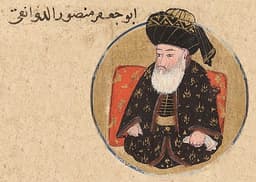
Abu Jafar al-Mansur
Emperor · Medieval
65.5Total
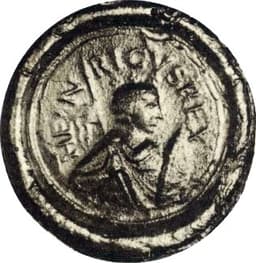
Henry the Fowler
Emperor · Medieval
60.9Total
Basic Information
Born
714
876
Died
775
936
Era
Medieval
Medieval
Nationality
Abbasid Caliphate
East Francia
Occupation
Emperor
Emperor
Civilization
Middle Eastern
Western
Score Comparison
Military (10%)
65.0
70.0
Political (20%)
75.0
59.3
Influence (20%)
40.0
55.0
Legacy (20%)
80.0
52.0
Leadership (15%)
82.0
85.0
Strategy (15%)
55.0
55.0
TOTAL
65.5
60.9
Abu Jafar al-Mansur — Complete Timeline
754 AD
Consolidated Abbasid Power After the RevolutionPolitical Action◆ Major
Al-Mansur eliminated rivals including his uncle Abd Allah ibn Ali and the Barmakids, securing Abbasid control. He established a centralized bureaucracy and suppressed rebellions, including the Rawandiyya uprising.
Impact: global
762 AD
Founded the City of BaghdadPolitical Action
Abu Jafar al-Mansur founded the city of Baghdad as the new capital of the Abbasid Caliphate. The Round City was designed as a center of administration and culture, becoming one of the largest cities in the world.
Impact: globalconstructive
770 AD
Patronized Translation of Greek WorksCultural◆ Major
Al-Mansur supported the translation of Greek philosophical and scientific texts into Arabic. This initiative laid the foundation for the Abbasid translation movement, which preserved and expanded classical knowledge.
Impact: globalconstructive
Henry the Fowler — Complete Timeline
919 AD
Election as King of East FranciaPolitical Action
Henry the Fowler was elected King of East Francia by the Saxon and Frankish nobles at Fritzlar on May 6, 919. He was the first Saxon king, marking the transition from Carolingian to Ottonian rule. His election was contested by other dukes but he prevailed.
ElectionAccessionOttonian Dynasty
Impact: regionalconstructive
921 AD
Treaty of Bonn (921)Political Action◆ Major
Henry the Fowler signed the Treaty of Bonn with Charles the Simple of West Francia, recognizing each other's royal titles and establishing peaceful relations. This treaty ended Carolingian claims over East Francia and solidified Henry's legitimacy as an independent king.
TreatyRecognitionDiplomacy
Impact: regionalconstructive
924 AD
Nine-Year Truce with the MagyarsPolitical Action◆ Major
Henry the Fowler negotiated a nine-year truce with the Magyars, agreeing to pay tribute in exchange for a halt to their raids. He used this period to fortify towns, reorganize the army, and train cavalry. This strategic pause was crucial for his later military reforms.
TruceMagyarsMilitary Reform
Impact: regionalconstructive
929 AD
Battle of Lenzen (929)War◆ Major
Henry the Fowler's forces defeated a Slavic army at the Battle of Lenzen, securing the eastern frontier of East Francia. This victory allowed Henry to consolidate control over the Elbe region and establish the March of Brandenburg, a key step in German eastward expansion.
BattleSlavic WarsEastern Expansion
Impact: regionalconstructive
933 AD
Battle of Riade (933)War
After the truce with the Magyars expired, Henry the Fowler led a German army to victory at the Battle of Riade (near Merseburg). The defeat of the Magyar cavalry ended their raids into East Francia for a generation and established Henry's reputation as a defender of Christendom.
BattleMagyarsVictory
Impact: regionalconstructive
936 AD
Death of Henry the FowlerOther◆ Major
Henry the Fowler died on July 2, 936, at Memleben. He was succeeded by his son, Otto I, who would become Holy Roman Emperor. Henry's reign laid the foundations for the Ottonian dynasty and the medieval German kingdom.
DeathSuccessionOttonian
Impact: regional
Expert Analysis
Henry the Fowler vs Abu Jafar al-Mansur
### The Builder and the Founder: Henry the Fowler and Abu Jafar al-Mansur
In the year 919, two men, born centuries apart in worlds that would never meet, stood at the precipices of their destinies. One, a Saxon duke named Henry, was elected king by a gathering of nobles at Fritzlar, a cold May morning in a land of forests and rivers. The other, a wily prince named Abu Jafar, had already seized the caliphate by 754, but his true moment of creation would come in 762, when he laid the first stone of a city called Baghdad. One built a kingdom from the ashes of a crumbling empire; the other built a capital that would become the intellectual heart of the world. Their differences are not merely those of geography—they are the differences between a man who forged a nation through patience and a man who forged a civilization through vision.
### Origins
Henry the Fowler was born in 876 into the chaos of East Francia, a land fractured by the collapse of Charlemagne’s empire. His father, Otto the Illustrious, was a Saxon duke, and Henry grew up in a world of petty kings, marauding Vikings, and the terrifying Magyar horsemen who swept out of the east. His was a culture of the sword, the shield, and the fortified hilltop. For Henry, power was local, personal, and hard-won. He learned to negotiate with his own nobles, to bribe enemies, and to wait. His era taught him that survival came before glory.
Abu Jafar al-Mansur, born in 714, came from a lineage of revolutionaries. His family, the Abbasids, had overthrown the Umayyad Caliphate in 750, a seismic shift that began in the eastern provinces of Persia. Al-Mansur was raised in a world of intricate politics, where loyalty was a currency and betrayal a tool. The Abbasid revolution was not a tribal feud but a sophisticated ideological movement, fueled by discontented Persians, Shia Muslims, and the urban poor. Al-Mansur learned to read men, to manipulate factions, and to see empire as a machine of letters, taxes, and walls. His era taught him that power required not just a sword, but a system.
### Rise to Power
Henry’s rise was the story of a reluctant king. In 919, the East Frankish nobles, exhausted by the weakness of the Carolingian line, offered the crown to Henry. He famously refused at first, preferring the title of duke, but eventually accepted after a show of reluctance that solidified his authority. His path was one of compromise: he made a treaty with Charles the Simple of West Francia at Bonn in 921, recognizing each other’s titles, and he paid tribute to the Magyars in 924 for a nine-year truce. Henry understood that to win, he first had to survive. He did not conquer his enemies; he outlasted them.
Al-Mansur’s rise was a bloodier affair. He became caliph in 754, but his position was immediately challenged by his uncle, Abd Allah ibn Ali, and by the powerful Barmakid family. Al-Mansur eliminated them with cold efficiency, establishing a reign of terror that secured his throne. He did not negotiate; he destroyed. Where Henry waited, al-Mansur struck. His power was built on the corpses of rivals, and he understood that in the Abbasid world, hesitation was death.
### Leadership & Governance
Henry’s leadership was that of a Saxon warlord turned king. He fortified towns, built castles, and trained a new kind of cavalry that could counter the Magyars. His military genius was practical: in 929, at the Battle of Lenzen, he crushed a Slavic army, securing his eastern frontier. But his greatest moment came in 933 at the Battle of Riade, when the nine-year truce expired and he led his army to victory over the Magyars. He did not pursue them; he simply broke their terror. His political wisdom lay in restraint—he never sought the title of emperor, preferring the simpler “King of the East Franks.” He reformed the church, but only to strengthen his own hand.
Al-Mansur governed as a builder of institutions. He founded Baghdad in 762, a perfectly circular city designed as a symbol of cosmic order and Abbasid power. He patronized the translation of Greek works into Arabic, laying the foundation for the House of Wisdom. His military was a tool of consolidation, not expansion: he crushed rebellions in Persia and Syria, but his true legacy was administrative. He created a bureaucracy of viziers and scribes, standardized taxes, and built roads. Where Henry ruled through personal loyalty, al-Mansur ruled through a system.
### Triumph & Tragedy
Henry’s triumph was Riade, where he proved that a patient king could defeat a terror. His tragedy was that he died too soon—in 936, at Memleben, just as his kingdom was stabilizing. He left his son Otto I a strong, unified realm, but he never saw it become an empire.
Al-Mansur’s triumph was Baghdad, a city that would house a million souls and become the center of the Islamic Golden Age. His tragedy was the price of his perfection: he was a paranoid tyrant who imprisoned his own family and died in 775, leaving a legacy of fear alongside his glittering capital. He built a city, but he also built a prison for his soul.
### Character & Destiny
Henry was a man of the earth—pragmatic, patient, and unpretentious. His nickname, “the Fowler,” comes from a legend that he was hunting birds when told of his election, a story that captures his humility. He was not a dreamer; he was a fixer. His destiny was to restore order to a fractured land, and he did so by being ordinary in the best sense: steady, reliable, and unafraid of compromise.
Al-Mansur was a man of the mind—calculating, ambitious, and ruthless. He was called “al-Mansur,” meaning “the victorious,” a title he earned through blood. He was a visionary who saw cities in the desert and knowledge in foreign tongues. His destiny was to create a civilization, and he did so by being extraordinary in the most terrifying sense: brilliant, cold, and unyielding.
### Legacy
Henry’s legacy is the Ottonian dynasty, which would produce the Holy Roman Empire. His son Otto I became emperor in 962, and Henry is remembered as the founder of a German nation. His tomb at Quedlinburg remains a pilgrimage site. But his legacy is modest: he is a king, not a legend.
Al-Mansur’s legacy is Baghdad, a city that would be sacked by Mongols in 1258 but whose spirit of learning endured. He is remembered as the architect of the Abbasid Golden Age, a man who turned a revolution into a civilization. His legacy is vast: the translations he sponsored preserved Greek philosophy for the world. He is a legend, not just a king.
### Conclusion
Henry the Fowler and Abu Jafar al-Mansur were both founders, but of different worlds. Henry built a kingdom from the ground up, one fort, one treaty, one battle at a time. Al-Mansur built a city that became a cosmos, a place where the stars of knowledge were mapped. One was a man of his time, the other a man who created his time. Their stories remind us that greatness comes in many forms: the patient hand that steadies a ship, and the iron fist that builds a new world. Both are necessary; both are eternal.
Rankings
🥇
Abu Jafar al-MansurLeader
Mil: 65.0Pol: 75.0Inf: 40.0
65.5
🥈
Henry the Fowler
Mil: 70.0Pol: 59.3Inf: 55.0
60.9
+4.6 behind
How This Comparison Works
Algorithm
Each figure is scored on 6 dimensions (0—100 scale) based on structured historical data: Military (10%), Political (20%), Influence (20%), Legacy (20%), Leadership (15%), Strategy (15%). The weighted total produces the final ranking.
Data Sources
Scores are computed from structured sub-indicators in the database. Scale factors adjust for era (Ancient ×0.85, Modern ×1.0) and civilization size (Eastern ×1.05, Other ×0.80) to account for differences in population and military scale.
Maximum 3 Figures
Comparisons are limited to 2—3 figures to ensure readability and statistical meaningfulness.
Error Margins
±5 points per dimension — Sub-scores are derived from historical records with inherent uncertainty. Two figures within 5 points on a dimension should be considered roughly equivalent in that area.
Total Score Accuracy
±3 points overall — The weighted combination of 6 dimensions produces a total score with approximately ±3 points of uncertainty. Differences of less than 3 points are not statistically significant— the figures are effectively tied.
Known Limitations
- Historical records are incomplete and uneven across civilizations
- Figures from oral-tradition societies may be underrepresented
- Occupation labels can misclassify multi-role figures
- Scores measure capability and impact, not moral character
- Quantitative scoring is a comparison tool, not absolute truth
Capability Radar
Military (10%) — Battles & Warfare
Battles
60
55
Win Rate
65
60
Expansion
70
60
Political (20%) — Governance & Reform
Reform
90
75
Diplomacy
80
70
Economy
85
65
Influence (20%) — Cultural & Global Reach
Cultural
85
55
Global
80
40
Legacy (20%) — Historical Impact
Historical
90
65
Longevity
85
60
Leadership (15%) — Power & Stability
Tenure
85
70
Stability
75
70
Strategy (15%) — Tactics & Innovation
Strategy
70
65
Tactics
55
50
Reform
75
70
Similar Comparisons
Comments & Discussion
No comments yet. Be the first to share your thoughts!