Loading...
Abu Bakr vs Wu Zetian
Abu Bakr leads by 7.1 pts · 2 figures compared
…
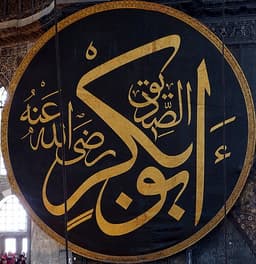
Abu Bakr
Emperor · Medieval
77.1Total

Wu Zetian
Emperor · Medieval
70.0Total
Basic Information
Born
573
624
Died
634
705
Era
Medieval
Medieval
Nationality
Rashidun Caliphate
China
Occupation
Emperor
Emperor
Civilization
Middle Eastern
Eastern
Score Comparison
Military (10%)
74.7
60.0
Political (20%)
62.7
62.7
Influence (20%)
88.0
65.0
Legacy (20%)
80.0
80.0
Leadership (15%)
77.2
78.0
Strategy (15%)
66.3
66.3
TOTAL
77.1
70.0
Abu Bakr — Complete Timeline
632 AD
Ridda Wars (Apostasy Wars)War◆ Major
Abu Bakr launched military campaigns against Arabian tribes that renounced Islam or refused to pay zakat after Muhammad's death. The wars, led by generals like Khalid ibn al-Walid, reestablished Muslim control over Arabia and consolidated the caliphate.
Ridda WarsConsolidationRashidun
Impact: regional
Election as First CaliphPolitical Action
After the death of Muhammad, Abu Bakr was elected as the first caliph (successor) at Saqifah. His election unified the Muslim community, though it caused controversy among some supporters of Ali. He became the leader of the nascent Islamic state.
CaliphateSuccessionRashidun
Impact: global
633 AD
Compilation of the QuranCultural◆ Major
Abu Bakr ordered the compilation of the Quran into a single written manuscript after many memorizers died in the Ridda Wars. Zayd ibn Thabit collected verses from various sources, creating the first official codex, which later served as the basis for Uthman's standard text.
QuranCompilationRashidun
Impact: globalconstructive
634 AD
Death of Abu BakrPolitical Action◆ Major
Abu Bakr died after a brief illness, having designated Umar as his successor. His caliphate lasted only two years but established the foundations of the Islamic state, including the expansion beyond Arabia and the preservation of the Quran.
DeathSuccessionRashidun
Impact: global
Wu Zetian — Complete Timeline
655 AD
Became Empress ConsortPolitical Action◆ Major
Wu Zetian was elevated from concubine to empress consort of Emperor Gaozong of Tang in 655. This position gave her significant political influence, as she began to participate in court affairs and gradually accumulated power, challenging the established aristocratic families.
Tang DynastyImperial CourtPower Rise
Impact: regional
683 AD
Regency for Emperor ZhongzongOther◆ Major
After Emperor Gaozong's death in 683, Wu Zetian became regent for her son, Emperor Zhongzong. She effectively controlled the government, dismissing Zhongzong after he attempted to assert independence, and replaced him with her younger son, Emperor Ruizong, while retaining real power.
Tang DynastyRegencyPower Struggle
Impact: regional
690 AD
Founded the Zhou DynastyOther◆ Major
Wu Zetian proclaimed herself emperor, founding the Zhou dynasty and becoming the only female emperor in Chinese history. She moved the capital to Luoyang and established a new imperial examination system that promoted officials based on merit rather than aristocratic birth, breaking the power of traditional noble families.
Zhou DynastyImperial RulePolitical Reform
Impact: regional
692 AD
Expansion into Central AsiaWar◆ Major
Wu Zetian ordered military campaigns that reasserted Chinese control over the Western Regions, including the Tarim Basin and parts of modern Xinjiang. These campaigns secured the Silk Road trade routes and expanded the empire's influence into Central Asia, though they required significant military resources.
Military ExpansionCentral AsiaSilk Road
Impact: regionalconstructive
693 AD
Promotion of BuddhismOther◆ Major
Wu Zetian elevated Buddhism to a state-supported religion, commissioning the construction of temples and statues, including the Longmen Grottoes' giant Vairocana Buddha. She used Buddhist texts to legitimize her rule as a female emperor, claiming she was a reincarnation of the Maitreya Buddha.
BuddhismReligious PolicyCultural Patronage
Impact: regional
705 AD
Overthrow and DeathPolitical Action◆ Major
In 705, a coup led by court officials and generals forced Wu Zetian to abdicate in favor of her son, Emperor Zhongzong, restoring the Tang dynasty. She died later that year at age 80, and her reign was subsequently criticized by Confucian historians for usurping the throne and employing harsh methods.
Tang DynastyCoupAbdication
Impact: regionaldestructive
Expert Analysis
Wu Zetian vs Abu Bakr
# The Throne and the Caliphate: Wu Zetian and Abu Bakr
In the seventh century, two leaders emerged from vastly different worlds to reshape the course of history. One was a woman who climbed from the shadows of a harem to sit upon the Dragon Throne, the only female emperor in China’s long chronicle. The other was a grieving friend who, in the chaos following a prophet’s death, held together a fledgling faith and launched an empire. Wu Zetian and Abu Bakr never met, never knew of each other’s existence. Yet their stories, set in the same medieval centuries, offer a profound meditation on power, legitimacy, and the price of leadership. How did a concubine and a merchant come to rule with such contrasting fates?
Origins
Wu Zetian was born in 624 into a family of modest official rank. Her father, a timber merchant, had risen through loyalty to the Tang dynasty’s founder, but the family lacked the aristocratic pedigree that opened doors in Chang’an. Young Wu was intelligent, willful, and literate—a dangerous combination for a girl. When she entered the palace as a teenage concubine of Emperor Taizong, she entered a world of exquisite cruelty, where a woman’s worth was measured in beauty and obedience. She learned to read men, to anticipate danger, and to wait.
Abu Bakr, born in 573 in Mecca, came from a respected Quraysh tribe but not its wealthiest branch. He was a cloth merchant, known for honesty and a gentle demeanor. When he heard the call of a new prophet named Muhammad, he did not hesitate. He became the first adult male convert to Islam, and his faith was absolute. He was Muhammad’s closest friend, his confidant, and the father of Aisha, the Prophet’s beloved wife. Where Wu Zetian learned survival in a cage of silk, Abu Bakr learned loyalty in a desert of shifting alliances.
Rise to Power
Wu Zetian’s ascent was a masterclass in patience and calculation. After Taizong’s death in 649, she was sent to a Buddhist convent—as custom demanded of childless concubines. But she had already caught the eye of his son, the new emperor Gaozong. Through letters, through intrigue, through the manipulation of palace eunuchs and rival consorts, she clawed her way back. By 655, she was empress consort. When Gaozong suffered debilitating strokes, she ruled behind the curtain, and after his death in 683, she pushed aside her own sons to claim the throne outright in 690, founding her own Zhou dynasty. Her rise was not a gift; it was a conquest.
Abu Bakr’s path was shorter but no less treacherous. When Muhammad died unexpectedly in 632, the young Muslim community teetered on collapse. Some Medinan tribes wanted independence; others claimed the succession for Ali, the Prophet’s cousin and son-in-law. At a hastily convened meeting in a covered portico called Saqifah, Abu Bakr was elected caliph—successor—not by divine appointment but by consensus. He accepted the burden reluctantly, famously saying, “I have been given authority over you, though I am not the best among you.” His legitimacy rested on trust, not blood.
Leadership & Governance
Wu Zetian governed with an iron hand wrapped in silk. She expanded the civil service examination system, promoting talented men from humble backgrounds over hereditary aristocrats—a direct challenge to the old clans that despised her. She patronized Buddhism, commissioning colossal statues and sutra translations, using religion to legitimize her gender and her dynasty. Her military campaigns pushed Tang borders deeper into Central Asia and Korea, though her 62.0 military score reflects mixed results: victories won through capable generals, but marred by costly defeats. She was ruthless with rivals—her own children were exiled or killed—yet she also reduced taxes, improved granaries, and listened to honest officials. Her political score of 80.0 captures this duality: a brilliant strategist who governed through fear and merit.
Abu Bakr’s caliphate lasted only two years, from 632 to 634, but those years were decisive. Upon his election, many Arabian tribes renounced Islam or refused to pay the alms tax. Abu Bakr did not negotiate. He declared the Ridda Wars—the Apostasy Wars—and dispatched armies across the peninsula. His military score of 62.7 is modest, but his leadership score of 81.3 reflects the iron will behind it. He famously said, “If they withhold even a hobbling cord of what they used to give to the Prophet, I will fight them for it.” By the time of his death, Arabia was unified under Muslim rule. He also ordered the compilation of the Quran into a single manuscript, preserving the revelation after many memorizers had fallen in battle.
Triumph & Tragedy
Wu Zetian’s greatest triumph was her very existence on the throne—a woman who ruled as emperor, not regent, for fifteen years. She expanded the empire, reformed governance, and left a mark so deep that even her Tang successors, who erased her dynasty, could not erase her legacy. Her tragedy was the isolation of absolute power: she died in 705 at age 80, forced to abdicate after a coup, her lovers and favorites executed, her sons estranged. She was buried as “Empress Consort,” not Emperor—a final humiliation.
Abu Bakr’s triumph was the survival of Islam itself. In two years, he transformed a fragile community into a unified state ready to burst beyond Arabia. His tragedy was the brevity of his rule. He died in 634, likely poisoned by a Jewish woman whose family had been killed in the wars—though accounts vary. He never saw the conquests of Syria, Persia, or Egypt that his policies made possible.
Character & Destiny
Wu Zetian’s character was shaped by constant peril. She trusted no one, because trust was a luxury she could never afford. She was brilliant, paranoid, and vengeful—qualities that served her rise but poisoned her reign. Her destiny was to be a singularity: the only woman to claim the title of emperor in Chinese history, a title she fought for with every weapon at her disposal.
Abu Bakr’s character was shaped by faith. He was gentle in private, resolute in public, and utterly convinced of his mission. His destiny was to be the bridge between a prophet and an empire. He did not seek power; he accepted it as a duty. Where Wu Zetian’s rule was about her, Abu Bakr’s was about something greater.
Legacy
Wu Zetian’s legacy is a paradox. She is remembered as a ruthless usurper and a capable ruler, a feminist icon and a cautionary tale. Her 85.0 legacy score reflects the enduring fascination she holds: a woman who broke every rule and paid every price. China’s official histories condemn her, but the people remember her as a strong leader who gave them grain and justice.
Abu Bakr’s legacy is foundational. He is “Al-Siddiq”—the Truthful, the Confirmer—the first caliph, the model of righteous leadership for Sunni Islam. His 70.0 legacy score understates his impact, for without him there might be no caliphate, no Islamic empire, no Quran as we know it. He is revered, not debated.
Conclusion
Wu Zetian and Abu Bakr both seized history by the throat—one through ambition, the other through duty. One ruled for herself, the other for God. One died in disgrace, the other in honor. Yet both faced the same fundamental challenge: how to hold power when the old rules no longer apply. Wu Zetian answered with cunning and steel; Abu Bakr answered with faith and consensus. Their different outcomes were not accidents of fate but products of their worlds—and their souls. In the end, the concubine and the merchant remind us that leadership is never about the throne. It is about what you are willing to sacrifice to sit upon it.
Rankings
🥇
Abu BakrLeader
Mil: 74.7Pol: 62.7Inf: 88.0
77.1
🥈
Wu Zetian
Mil: 60.0Pol: 62.7Inf: 65.0
70.0
+7.1 behind
How This Comparison Works
Algorithm
Each figure is scored on 6 dimensions (0—100 scale) based on structured historical data: Military (10%), Political (20%), Influence (20%), Legacy (20%), Leadership (15%), Strategy (15%). The weighted total produces the final ranking.
Data Sources
Scores are computed from structured sub-indicators in the database. Scale factors adjust for era (Ancient ×0.85, Modern ×1.0) and civilization size (Eastern ×1.05, Other ×0.80) to account for differences in population and military scale.
Maximum 3 Figures
Comparisons are limited to 2—3 figures to ensure readability and statistical meaningfulness.
Error Margins
±5 points per dimension — Sub-scores are derived from historical records with inherent uncertainty. Two figures within 5 points on a dimension should be considered roughly equivalent in that area.
Total Score Accuracy
±3 points overall — The weighted combination of 6 dimensions produces a total score with approximately ±3 points of uncertainty. Differences of less than 3 points are not statistically significant— the figures are effectively tied.
Known Limitations
- Historical records are incomplete and uneven across civilizations
- Figures from oral-tradition societies may be underrepresented
- Occupation labels can misclassify multi-role figures
- Scores measure capability and impact, not moral character
- Quantitative scoring is a comparison tool, not absolute truth
Capability Radar
Military (10%) — Battles & Warfare
Battles
65
65
Win Rate
70
70
Expansion
85
75
Political (20%) — Governance & Reform
Reform
85
85
Diplomacy
80
80
Economy
70
85
Influence (20%) — Cultural & Global Reach
Cultural
70
85
Global
85
70
Legacy (20%) — Historical Impact
Historical
85
90
Longevity
90
85
Leadership (15%) — Power & Stability
Tenure
60
90
Stability
75
75
Strategy (15%) — Tactics & Innovation
Strategy
75
75
Tactics
60
60
Reform
80
80
Similar Comparisons
Comments & Discussion
DRAGONLADY_DEFENDER6/16/2026
Wu Zetian was history’s ultimate pragmatist, turning a concubine’s weakness into absolute power. Abu Bakr was just a caretaker—a placeholder who rode Muhammad’s coattails for two years. Wu crushed aristocratic rebellions, reformed the civil service, and proved female rule could stabilize an empire. Abu Bakr’s main achievement was mopping up apostates. Call me biased, but building a dynasty from scratch beats holding one together after a prophet dies. Give me the strategist who wielded power alon
伪史暴走族6/16/2026
硬拿武则天跟阿布·伯克尔比就是关公战秦琼!一个靠权术和阴谋在儒家男权裂缝里杀出血路,一个靠宗教狂热统一阿拉伯半岛——根本不在同一操作系统上。别扯什么“同属七世纪”,武则天死得早几十年,连天竺法显都没见过。这种跨文明比较纯粹是为了制造“东西方对位”的假新闻,历史不能当RPG玩。先搞清楚谁是既得利益者再吹牛。
CLASSICS_SCHOLAR6/16/2026
Let’s be intellectually honest: neither fits the “ideal ruler” archetype from any classical tradition. Wu Zetian’s reign was a masterpiece of pragmatic survival, not Confucian virtue—she killed heirs, manipulated succession, and crushed dissent with Buddhist propaganda. Abu Bakr, meanwhile, was a reluctant leader who prioritized tribal unity over personal ambition. Both were transitional figures, not epoch-makers. Their real contrast is in how legitimacy was claimed: one through institutional po
数据控老六6/16/2026
吹武则天“女权先驱”的歇了吧!她本质上是个封建特权阶级的暴君,用特务政治和酷吏维持统治,跟她是不是女人没关系。阿布·伯克尔统一阿拉伯半岛时,人口不过几十万,短期战事靠宗教激情;武则天统治的是六千万人的帝国,治理难度完全不在一个量级。数据说话:武则天在位期间人口增长40%以上,阿布·伯克尔只有两年,连统计意义都没有。别拿情怀当历史。
CALIPHATE_CHRONICLER6/16/2026
Abu Bakr’s two-year caliphate was arguably more consequential than Wu Zetian’s two decades. He crushed the Ridda apostasy, preserved the Quran’s compilation, and launched the invasions of Syria and Iraq. That’s empire-building on a tectonic scale. Wu Zetian inherited a functioning Tang machine and tinkered with it—impressive court maneuvering, yes, but not world-historical impact. Abu Bakr faced existential collapse and chose expansion. He didn’t