Loading...
Abu Bakr vs Henry the Fowler
Abu Bakr leads by 16.2 pts · 2 figures compared
…
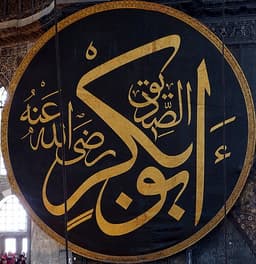
Abu Bakr
Emperor · Medieval
77.1Total
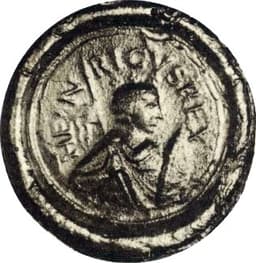
Henry the Fowler
Emperor · Medieval
60.9Total
Basic Information
Born
573
876
Died
634
936
Era
Medieval
Medieval
Nationality
Rashidun Caliphate
East Francia
Occupation
Emperor
Emperor
Civilization
Middle Eastern
Western
Score Comparison
Military (10%)
74.7
70.0
Political (20%)
62.7
59.3
Influence (20%)
88.0
55.0
Legacy (20%)
80.0
52.0
Leadership (15%)
77.2
85.0
Strategy (15%)
66.3
55.0
TOTAL
77.1
60.9
Abu Bakr — Complete Timeline
632 AD
Ridda Wars (Apostasy Wars)War◆ Major
Abu Bakr launched military campaigns against Arabian tribes that renounced Islam or refused to pay zakat after Muhammad's death. The wars, led by generals like Khalid ibn al-Walid, reestablished Muslim control over Arabia and consolidated the caliphate.
Ridda WarsConsolidationRashidun
Impact: regional
Election as First CaliphPolitical Action
After the death of Muhammad, Abu Bakr was elected as the first caliph (successor) at Saqifah. His election unified the Muslim community, though it caused controversy among some supporters of Ali. He became the leader of the nascent Islamic state.
CaliphateSuccessionRashidun
Impact: global
633 AD
Compilation of the QuranCultural◆ Major
Abu Bakr ordered the compilation of the Quran into a single written manuscript after many memorizers died in the Ridda Wars. Zayd ibn Thabit collected verses from various sources, creating the first official codex, which later served as the basis for Uthman's standard text.
QuranCompilationRashidun
Impact: globalconstructive
634 AD
Death of Abu BakrPolitical Action◆ Major
Abu Bakr died after a brief illness, having designated Umar as his successor. His caliphate lasted only two years but established the foundations of the Islamic state, including the expansion beyond Arabia and the preservation of the Quran.
DeathSuccessionRashidun
Impact: global
Henry the Fowler — Complete Timeline
919 AD
Election as King of East FranciaPolitical Action
Henry the Fowler was elected King of East Francia by the Saxon and Frankish nobles at Fritzlar on May 6, 919. He was the first Saxon king, marking the transition from Carolingian to Ottonian rule. His election was contested by other dukes but he prevailed.
ElectionAccessionOttonian Dynasty
Impact: regionalconstructive
921 AD
Treaty of Bonn (921)Political Action◆ Major
Henry the Fowler signed the Treaty of Bonn with Charles the Simple of West Francia, recognizing each other's royal titles and establishing peaceful relations. This treaty ended Carolingian claims over East Francia and solidified Henry's legitimacy as an independent king.
TreatyRecognitionDiplomacy
Impact: regionalconstructive
924 AD
Nine-Year Truce with the MagyarsPolitical Action◆ Major
Henry the Fowler negotiated a nine-year truce with the Magyars, agreeing to pay tribute in exchange for a halt to their raids. He used this period to fortify towns, reorganize the army, and train cavalry. This strategic pause was crucial for his later military reforms.
TruceMagyarsMilitary Reform
Impact: regionalconstructive
929 AD
Battle of Lenzen (929)War◆ Major
Henry the Fowler's forces defeated a Slavic army at the Battle of Lenzen, securing the eastern frontier of East Francia. This victory allowed Henry to consolidate control over the Elbe region and establish the March of Brandenburg, a key step in German eastward expansion.
BattleSlavic WarsEastern Expansion
Impact: regionalconstructive
933 AD
Battle of Riade (933)War
After the truce with the Magyars expired, Henry the Fowler led a German army to victory at the Battle of Riade (near Merseburg). The defeat of the Magyar cavalry ended their raids into East Francia for a generation and established Henry's reputation as a defender of Christendom.
BattleMagyarsVictory
Impact: regionalconstructive
936 AD
Death of Henry the FowlerOther◆ Major
Henry the Fowler died on July 2, 936, at Memleben. He was succeeded by his son, Otto I, who would become Holy Roman Emperor. Henry's reign laid the foundations for the Ottonian dynasty and the medieval German kingdom.
DeathSuccessionOttonian
Impact: regional
Expert Analysis
Henry the Fowler vs Abu Bakr
# The Unlikely Founders
In the summer of 634, as Abu Bakr lay dying in Medina after barely two years as caliph, he could look back on a transformation that had no parallel in history. Across the known world, in the Saxon heartland of East Francia, another aging ruler named Henry was preparing to pass his crown to his son Otto, having spent seventeen years stitching together a kingdom from the wreckage of Charlemagne's empire. One man had unified Arabia under a new faith; the other had forged Germany from tribal chaos. Both are remembered as founders, but what they founded could not have been more different—and the reasons lie deep in the soil of their origins, their faiths, and their very different relationships with time itself.
Origins
Abu Bakr was born in 573 into the Quraysh tribe of Mecca, a merchant society where honor was measured in lineage and generosity. He was a cloth trader by profession, known not for warrior prowess but for integrity—his nickname *al-Siddiq* meant "the truthful one." When Muhammad began preaching, Abu Bakr was among the first to believe, and he never wavered. His closeness to the Prophet was personal: he was Muhammad's father-in-law, his companion in the cave during the Hijra, and the man the Prophet trusted above all others. His world was one of revelation, prophecy, and the absolute claim of God on human affairs.
Henry the Fowler, born in 876, inhabited a very different universe. The Carolingian Empire had collapsed into feuding kingdoms; the Magyar horsemen raided from the east, Vikings from the north, Slavic tribes pressed from beyond the Elbe. Henry was a Saxon duke, not a merchant or a prophet's friend. His nickname came from a legend that he was trapping birds when told of his election as king—a story that captures his earthy pragmatism. His world was one of survival, tribute, and the slow work of building power from the ground up.
Rise to Power
When Muhammad died in 632, the Muslim community faced a crisis of succession. Abu Bakr was elected at Saqifah—a hurried gathering of Medina's elders—and his election was contested by those who believed Ali should have succeeded. Yet Abu Bakr acted with immediate authority. His first words as caliph were a warning: "If you abandon prayer, you will be punished." He understood that the unity of faith required the unity of rule.
Henry's election in 919 was equally contested but far messier. The Saxon and Frankish nobles gathered at Fritzlar on May 6 and chose Henry not by acclamation but by negotiation. He was not the first choice of many; the powerful Duke of Swabia had to be won over, and the Duke of Bavaria recognized his authority only grudgingly. Unlike Abu Bakr, Henry could not claim divine mandate. He had to earn loyalty through patience and deals.
Leadership & Governance
Abu Bakr's caliphate was a whirlwind. Upon taking power, he faced the Ridda Wars—tribes across Arabia that renounced Islam or refused to pay the poor-tax (*zakat*). His response was uncompromising: "By God, if they withhold a single camel's rope that they used to give to the Messenger, I will fight them for it." He dispatched eleven army columns across the peninsula, crushing resistance with a ferocity that shocked even his supporters. Within a year, Arabia was unified under Medina's rule.
But Abu Bakr's most lasting act was intellectual. After the Battle of Yamama, where hundreds of Quran memorizers died, he ordered the compilation of the Quran into a single written manuscript. This was not merely administrative—it was an act of preservation that defined the faith itself. His military score of 62.7 reflects a commander who delegated war to brilliant generals like Khalid ibn al-Walid, while his political score of 72.2 shows a leader who understood that power required both the sword and the book.
Henry the Fowler governed through patience. Facing Magyar raids that had terrorized Germany for decades, he did not immediately fight. In 924, he negotiated a nine-year truce, agreeing to pay tribute—a humiliating concession that bought time. He used those years to fortify towns, train cavalry, and build a network of fortified burghs. When the truce expired in 933, he met the Magyars at Riade and won a decisive victory. His military score of 60.1 and strategy score of 55.2 are lower than Abu Bakr's, but they miss the point: Henry's genius was not in battle but in preparation. He understood that building a kingdom required walls, not just warriors.
Triumph & Tragedy
Abu Bakr's triumph was the unification of Arabia and the preservation of Islam at its moment of greatest vulnerability. His tragedy was his brevity: he died after only two years, leaving Umar to inherit a caliphate that was still fragile. He never saw the conquest of Persia or Syria—the empires his work would topple.
Henry's triumph was the Battle of Lenzen in 929, where his forces crushed the Slavic tribes on the eastern frontier, and the Battle of Riade in 933, which ended Magyar dominance. His tragedy was that he never achieved the imperial crown. He was King of East Francia, but the title of Emperor remained vacant, a ghost of Charlemagne's glory. He died in 936 at Memleben, having designated his son Otto as successor, but never seeing the Holy Roman Empire his dynasty would create.
Character & Destiny
Abu Bakr was a man of absolute conviction. When he said, "I am the successor of the Messenger of God," he meant it literally. His leadership score of 81.3 reflects a ruler who inspired loyalty through moral clarity, not compromise. He could be ruthless—the Ridda Wars were brutal—but he was also merciful to those who submitted. His decisions were shaped by a faith that demanded action; he could not wait for history to unfold, because history was already determined by God.
Henry was a man of calculation. His truce with the Magyars was not cowardice but strategy; his slow consolidation of power was not weakness but wisdom. He knew that building a kingdom required time, and he had the patience to wait. His political score of 74.5 is slightly higher than Abu Bakr's, and this makes sense: Henry was a politician in a way Abu Bakr never was. Abu Bakr ruled by revelation; Henry ruled by negotiation.
Legacy
Abu Bakr's legacy is the Rashidun Caliphate and the Quran as a book. He is remembered as the first caliph, the "successor" whose decisions shaped Sunni Islam's understanding of leadership. His influence score of 67.6 and legacy score of 70.0 reflect a founder whose work was immediately built upon by others—Umar, Uthman, Ali—but whose foundational role is never forgotten.
Henry's legacy is the Ottonian dynasty and the Holy Roman Empire. His son Otto I would be crowned Emperor in 962, fulfilling what Henry had only begun. Henry is remembered as the founder of the German kingdom, the man who turned East Francia from a collection of duchies into a coherent state. His influence score of 72.7 is slightly higher than Abu Bakr's, perhaps because his work had more visible institutional consequences: the German monarchy, the imperial title, the medieval Reich.
Conclusion
What separates these two founders is not their achievements but their relationship with time. Abu Bakr lived in a world of crisis and revelation, where two years could change history forever. Henry lived in a world of slow consolidation, where seventeen years were barely enough to begin. One unified through faith and the sword; the other unified through tribute and walls. One preserved a sacred text; the other built a secular kingdom. Both succeeded, but their success took different forms because their worlds demanded different things.
The historian looking back sees that Abu Bakr's caliphate was a lightning strike—brief, brilliant, and world-altering. Henry's kingdom was a glacier—slow, patient, and equally transformative. One could not have done the other's work. And perhaps that is the deepest lesson: greatness is not a single quality but a response to circumstance. The truthful merchant and the bird-trapping duke both shaped the world, but they did so by being exactly who they were, in exactly the time they were given.
Rankings
🥇
Abu BakrLeader
Mil: 74.7Pol: 62.7Inf: 88.0
77.1
🥈
Henry the Fowler
Mil: 70.0Pol: 59.3Inf: 55.0
60.9
+16.2 behind
How This Comparison Works
Algorithm
Each figure is scored on 6 dimensions (0—100 scale) based on structured historical data: Military (10%), Political (20%), Influence (20%), Legacy (20%), Leadership (15%), Strategy (15%). The weighted total produces the final ranking.
Data Sources
Scores are computed from structured sub-indicators in the database. Scale factors adjust for era (Ancient ×0.85, Modern ×1.0) and civilization size (Eastern ×1.05, Other ×0.80) to account for differences in population and military scale.
Maximum 3 Figures
Comparisons are limited to 2—3 figures to ensure readability and statistical meaningfulness.
Error Margins
±5 points per dimension — Sub-scores are derived from historical records with inherent uncertainty. Two figures within 5 points on a dimension should be considered roughly equivalent in that area.
Total Score Accuracy
±3 points overall — The weighted combination of 6 dimensions produces a total score with approximately ±3 points of uncertainty. Differences of less than 3 points are not statistically significant— the figures are effectively tied.
Known Limitations
- Historical records are incomplete and uneven across civilizations
- Figures from oral-tradition societies may be underrepresented
- Occupation labels can misclassify multi-role figures
- Scores measure capability and impact, not moral character
- Quantitative scoring is a comparison tool, not absolute truth
Capability Radar
Military (10%) — Battles & Warfare
Battles
65
55
Win Rate
70
60
Expansion
85
60
Political (20%) — Governance & Reform
Reform
85
75
Diplomacy
80
70
Economy
70
65
Influence (20%) — Cultural & Global Reach
Cultural
70
55
Global
85
40
Legacy (20%) — Historical Impact
Historical
85
65
Longevity
90
60
Leadership (15%) — Power & Stability
Tenure
60
70
Stability
75
70
Strategy (15%) — Tactics & Innovation
Strategy
75
65
Tactics
60
50
Reform
80
70
Similar Comparisons
Comments & Discussion
DukeDismantler6/16/2026
Comparing Henry and Abu Bakr as equivalent founders is like calling a campfire and a supernova both 'warm'. Abu Bakr unified fractious tribes into a politico-religious powerhouse that conquered half the known world in a generation. Henry's 'unification' gave us the Holy Roman Empire—a squabbling, decentralized mess that never actually unified Germany. Give me the caliph who crushed the Ridda apostates and launched the Levantine conquests over the Saxon duke who spent years fighting Magyars and n
数据拆解师6/16/2026
拿统治时长做对比本身就作弊。阿布·贝克尔当哈里发才两年,却建立了哈里发制度、彻底统一了阿拉伯半岛、让拜占庭帝国都开始发抖。亨利呢?十七年时间,基本就是在跟马扎尔人打仗、跟斯拉夫人较劲,所谓"东法兰克王国",也就靠着伪造的加洛林血统才名正言顺。别让这个时间差欺骗了你——两年改变世界 vs 十七年修修补补,孰轻孰重一目了然。
ChronicleCrusher6/16/2026
The real story here isn't about founders—it's about what they built. Abu Bakr's legacy wasn't just political unity; it was the compilation of the Qur'an itself. He ordered Zayd ibn Thabit to gather the scattered revelations into a single book. That single decision preserved Islam's textual foundation. Henry's greatest achievement? A fancy hunting cloak and the Liudolfing dynasty. Sorry, but preserving divine scripture beats whatever Henry did with those Saxon nobles. Give me al-Siddiq any day.
古籍翻新客6/16/2026
拿"开创"这个概念糊弄谁呢?亨利一世充其量是个部落盟主——他连公爵们都控制不住,所谓"德意志国王"头衔来自选侯,不是征服。阿布·贝克尔可是有正儿八经的"群众宣誓"做合法性来源。伊斯兰传统里他是"继承者"(Khalifa),不是"建国者",但他确实开创了哈里发这个史上最成功的政治制度雏形。亨利的"萨克森王朝"?不过是在法兰克废墟上搭了个木头棚子。两样东西,别硬放在一起比较。
SkepticalScribe6/16/2026
Look, both get hyped as 'founders' because later generations needed legitimizing ancestors. Abu Bakr's short caliphate gets inflated because Shia-Sunni debates need his figure. Henry the Fowler's elevation to 'founder of Germany' is a 19th-century nationalist invention. In reality, Henry spent most of his reign fighting off Magyars, not building a nation. And Abu Bakr's 'unification' was more about suppressing rebellions against Medina's authority