Loading...
This comparison has not been analyzed yet.
One-time AI generation (~1 minute). Scores and timeline are already available below.
Ablai Khan vs Milos Obrenovic I
Ablai Khan leads by 12.7 pts · 2 figures compared
…
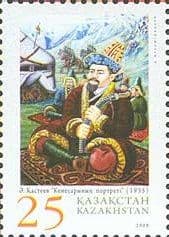
Ablai Khan
Emperor · Modern
63.0Total
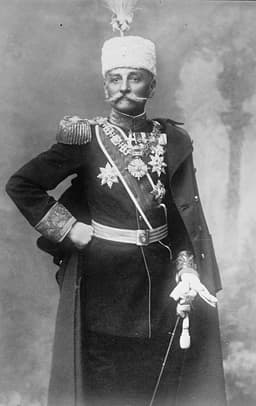
Milos Obrenovic I
Emperor · Modern
50.3Total
Basic Information
Born
1711
1780
Died
1781
1860
Era
Modern
Modern
Nationality
Kazakh Khanate
Serbia
Occupation
Emperor
Emperor
Civilization
Eastern
Western
Score Comparison
Military (10%)
67.3
38.3
Political (20%)
59.3
68.0
Influence (20%)
61.0
56.4
Legacy (20%)
54.0
49.2
Leadership (15%)
80.0
40.0
Strategy (15%)
66.3
38.6
TOTAL
63.0
50.3
Ablai Khan — Complete Timeline
1756 AD
Battle of the Irtysh RiverWar◆ Major
Ablai Khan led Kazakh forces against the Dzungar Khanate at the Irtysh River. The battle was a decisive Kazakh victory, significantly weakening Dzungar power in the region. This victory helped secure Kazakh independence from Dzungar threats.
WarDzungar KhanateBattleVictory
Impact: regional
1757 AD
Diplomatic Relations with the Qing EmpirePolitical Action◆ Major
Ablai Khan established diplomatic relations with the Qing Empire of China. He sent an embassy to Beijing and recognized Qing suzerainty in exchange for trade rights and military support. This balanced Russian influence and secured the eastern borders of the Kazakh Khanate.
DiplomacyQing EmpireTradeSuzerainty
Impact: regionalconstructive
1770 AD
Resistance to Russian ExpansionPolitical Action◆ Major
Ablai Khan resisted Russian attempts to control the Kazakh steppe. He refused to swear allegiance to the Russian Empire and maintained an independent foreign policy. He played Russian and Qing interests against each other to preserve Kazakh autonomy.
DiplomacyRussian EmpireIndependenceBalance of Power
Impact: regional
1771 AD
Unification of the Three JuzesPolitical Action
Ablai Khan was recognized as the supreme khan over all three Kazakh juzes (Senior, Middle, and Junior). This unification was achieved through a combination of military strength, diplomacy, and marriage alliances. It created a unified Kazakh state for the first time in decades.
UnificationKazakh KhanateJuzesState Building
Impact: regionalconstructive
Milos Obrenovic I — Complete Timeline
1815 AD
Led Second Serbian UprisingWar
Milos Obrenovic led the Second Serbian Uprising against the Ottoman Empire, successfully securing autonomy for Serbia. The uprising established the Obrenovic dynasty and laid the foundation for a modern Serbian state.
Serbian UprisingOttoman EmpireIndependence
Impact: regionalconstructive
1817 AD
Recognized as Prince of SerbiaPolitical Action◆ Major
The Ottoman Empire recognized Milos Obrenovic as the hereditary Prince of Serbia, formalizing Serbian autonomy. This recognition established the Obrenovic dynasty as the ruling house of the semi-independent principality.
Serbian AutonomyObrenovic DynastyOttoman Recognition
Impact: regionalconstructive
1839 AD
Abdicated the ThronePolitical Action◆ Major
Milos Obrenovic abdicated the Serbian throne in June 1839 under pressure from internal opposition and Ottoman demands. He went into exile, leaving the throne to his son Milan, who died shortly after.
AbdicationExileSerbian Politics
Impact: nationaltragic
This comparison has not been analyzed yet.
One-time AI generation (~1 minute). Scores and timeline are already available below.
Rankings
🥇
Ablai KhanLeader
Mil: 67.3Pol: 59.3Inf: 61.0
63.0
🥈
Milos Obrenovic I
Mil: 38.3Pol: 68.0Inf: 56.4
50.3
+12.7 behind
How This Comparison Works
Algorithm
Each figure is scored on 6 dimensions (0—100 scale) based on structured historical data: Military (10%), Political (20%), Influence (20%), Legacy (20%), Leadership (15%), Strategy (15%). The weighted total produces the final ranking.
Data Sources
Scores are computed from structured sub-indicators in the database. Scale factors adjust for era (Ancient ×0.85, Modern ×1.0) and civilization size (Eastern ×1.05, Other ×0.80) to account for differences in population and military scale.
Maximum 3 Figures
Comparisons are limited to 2—3 figures to ensure readability and statistical meaningfulness.
Error Margins
±5 points per dimension — Sub-scores are derived from historical records with inherent uncertainty. Two figures within 5 points on a dimension should be considered roughly equivalent in that area.
Total Score Accuracy
±3 points overall — The weighted combination of 6 dimensions produces a total score with approximately ±3 points of uncertainty. Differences of less than 3 points are not statistically significant— the figures are effectively tied.
Known Limitations
- Historical records are incomplete and uneven across civilizations
- Figures from oral-tradition societies may be underrepresented
- Occupation labels can misclassify multi-role figures
- Scores measure capability and impact, not moral character
- Quantitative scoring is a comparison tool, not absolute truth
Capability Radar
Military (10%) — Battles & Warfare
Battles
65
30
Win Rate
70
35
Expansion
80
35
Political (20%) — Governance & Reform
Reform
60
50
Diplomacy
85
60
Economy
50
45
Influence (20%) — Cultural & Global Reach
Cultural
60
40
Global
45
30
Legacy (20%) — Historical Impact
Historical
70
50
Longevity
55
45
Leadership (15%) — Power & Stability
Tenure
70
55
Stability
65
40
Strategy (15%) — Tactics & Innovation
Strategy
75
30
Tactics
60
25
Reform
55
20
Similar Comparisons
Comments & Discussion
No comments yet. Be the first to share your thoughts!