Loading...
Adolf Frederick vs Milos Obrenovic I
Milos Obrenovic I leads by 10.9 pts · 2 figures compared
…
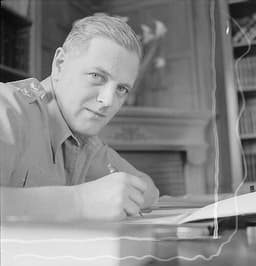
Adolf Frederick
Emperor · Modern
39.4Total
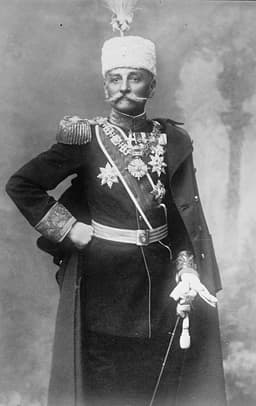
Milos Obrenovic I
Emperor · Modern
50.3Total
Basic Information
Born
1710
1780
Died
1771
1860
Era
Modern
Modern
Nationality
Sweden
Serbia
Occupation
Emperor
Emperor
Civilization
Western
Western
Score Comparison
Military (10%)
48.8
38.3
Political (20%)
30.7
68.0
Influence (20%)
45.5
56.4
Legacy (20%)
34.2
49.2
Leadership (15%)
31.2
40.0
Strategy (15%)
53.1
38.6
TOTAL
39.4
50.3
Adolf Frederick — Complete Timeline
1751 AD
Coronation of Adolf FrederickPolitical Action◆ Major
Adolf Frederick was crowned King of Sweden after the death of Frederick I. His coronation was conditional on the 1720 constitution, which left him with little real power, as the Riksdag dominated governance.
CoronationConstitutionAge of Liberty
Impact: national
1756 AD
December Crisis (1756)Political Action
Adolf Frederick attempted to increase royal power by dismissing the Hat party government, but the Riksdag forced him to back down. The crisis highlighted the weakness of the monarchy during the Age of Liberty.
CrisisConstitutional Conflict
Impact: national
1771 AD
Death from OvereatingOther
Adolf Frederick died in Stockholm after consuming a large meal of lobster, caviar, sauerkraut, and champagne, followed by 14 servings of his favorite dessert. His death was attributed to digestive issues, symbolizing his weak and indulgent rule.
DeathOvereating
Impact: nationaltragic
Milos Obrenovic I — Complete Timeline
1815 AD
Led Second Serbian UprisingWar
Milos Obrenovic led the Second Serbian Uprising against the Ottoman Empire, successfully securing autonomy for Serbia. The uprising established the Obrenovic dynasty and laid the foundation for a modern Serbian state.
Serbian UprisingOttoman EmpireIndependence
Impact: regionalconstructive
1817 AD
Recognized as Prince of SerbiaPolitical Action◆ Major
The Ottoman Empire recognized Milos Obrenovic as the hereditary Prince of Serbia, formalizing Serbian autonomy. This recognition established the Obrenovic dynasty as the ruling house of the semi-independent principality.
Serbian AutonomyObrenovic DynastyOttoman Recognition
Impact: regionalconstructive
1839 AD
Abdicated the ThronePolitical Action◆ Major
Milos Obrenovic abdicated the Serbian throne in June 1839 under pressure from internal opposition and Ottoman demands. He went into exile, leaving the throne to his son Milan, who died shortly after.
AbdicationExileSerbian Politics
Impact: nationaltragic
Expert Analysis
Origins
Adolf Frederick was born in 1710 into the House of Holstein-Gottorp, a minor German ducal family. His early life was shaped by the political machinations of the Great Northern War, and he was largely a pawn in the diplomacy of Empress Elizabeth of Russia, who arranged his election as heir to the Swedish throne in 1743. He had little formal education in statecraft and was raised in a court dominated by foreign influence.
Milos Obrenovic I was born in 1780 in the village of Gornja Dobrinja, Serbia, then part of the Ottoman Empire. He came from a peasant family and was largely illiterate. His early experiences included participating in the First Serbian Uprising (1804–1813) as a vojvoda (military commander). After the uprising's failure, he fled to Austria, but returned to lead the Second Serbian Uprising in 1815.
Rise to Power
Adolf Frederick's rise was due entirely to external forces. In 1743, the Russian Empress Elizabeth chose him as the Swedish heir apparent after the death of Crown Prince Frederick. He became king in 1751 upon the death of Frederick I, but his powers were severely limited by the 1720 constitution, which made Sweden a parliamentary monarchy dominated by the Riksdag (parliament) and the Hat and Cap parties.
Milos Obrenovic's rise was achieved through military and political action. In 1815, he led the Second Serbian Uprising against Ottoman rule, defeating Ottoman forces at the Battle of Ljubic and other engagements. By 1817, he had negotiated the autonomy of Serbia within the Ottoman Empire, becoming its prince. He was recognized as hereditary Prince of Serbia by the Ottomans in 1830, establishing the Obrenovic dynasty.
Leadership & Governance
Adolf Frederick's leadership was characterized by passivity and frustration. He attempted to increase royal power in the December Crisis of 1756 by dismissing the Hat party government, but the Riksdag forced him to back down. He was essentially a figurehead, with scores of 30.7 in political and 31.2 in leadership. His only notable governance act was his abdication of effective power after the crisis, leaving the state to be run by the parliament.
Milos Obrenovic ruled Serbia with an authoritarian but effective hand. He centralized power, suppressed rival families (such as the Karadjordjevics), and implemented reforms including the establishment of a standing army, a tax system, and a rudimentary bureaucracy. His political score of 68.0 reflects his ability to navigate Ottoman suzerainty while consolidating internal control. He also promoted education and infrastructure, though his rule was marked by nepotism and corruption.
Triumph & Tragedy
Adolf Frederick's greatest triumph was surviving as king for 20 years despite his weak position. His greatest tragedy—and most famous event—was his death in 1771 from overeating: he consumed a meal of lobster, caviar, sauerkraut, and champagne, followed by 14 servings of his favorite dessert. This death symbolizes his lack of self-control and political irrelevance.
Milos Obrenovic's triumph was securing Serbian autonomy, a major achievement that laid the foundation for modern Serbia. He scored 56.4 in influence and 49.2 in legacy. However, his tragedy was his forced abdication in 1839 under pressure from internal opposition (the Ustavobranitelji, or Defenders of the Constitution) and Ottoman demands. He went into exile, dying in 1860, but his dynasty continued to rule Serbia intermittently until 1903.
Character & Destiny
Adolf Frederick was well-meaning but indecisive and gluttonous. His character—lacking ambition and political skill—led to his destiny as a weak king remembered mainly for his bizarre death. Historical assessments dismiss him as a nonentity, with a total score of 39.4.
Milos Obrenovic was shrewd, ruthless, and pragmatic. He was a skilled negotiator and military leader, but his authoritarian tendencies and favoritism created enemies. His character drove him to achieve Serbian autonomy, but also caused his downfall. He scores 50.3 overall, reflecting his mixed legacy.
Legacy
Adolf Frederick's legacy is minimal. He is remembered as Sweden's "King who ate himself to death"—a cautionary tale of political irrelevance. His reign saw the further decline of royal power in Sweden, leading to the absolute monarchy of Gustav III after his death.
Milos Obrenovic's legacy is substantial. He founded the Obrenovic dynasty, which ruled Serbia for most of the 19th century. His achievement of autonomy was the first step toward full independence in 1878. However, his authoritarian methods and the dynastic rivalry with the Karadjordjevics contributed to political instability, culminating in the 1903 assassination of King Alexander Obrenovic.
Conclusion
Milos Obrenovic I had a far greater impact than Adolf Frederick. With a total score of 50.3 versus 39.4, Obrenovic's political and influence scores (68.0 and 56.4) dwarf Frederick's (30.7 and 45.5). While Frederick was a passive figurehead, Obrenovic actively created a nation. His legacy of Serbian autonomy and the Obrenovic dynasty shaped Balkan history for a century. Adolf Frederick, by contrast, left no meaningful political impact beyond a bizarre footnote.
Rankings
🥇
Milos Obrenovic ILeader
Mil: 38.3Pol: 68.0Inf: 56.4
50.3
🥈
Adolf Frederick
Mil: 48.8Pol: 30.7Inf: 45.5
39.4
+10.9 behind
How This Comparison Works
Algorithm
Each figure is scored on 6 dimensions (0—100 scale) based on structured historical data: Military (10%), Political (20%), Influence (20%), Legacy (20%), Leadership (15%), Strategy (15%). The weighted total produces the final ranking.
Data Sources
Scores are computed from structured sub-indicators in the database. Scale factors adjust for era (Ancient ×0.85, Modern ×1.0) and civilization size (Eastern ×1.05, Other ×0.80) to account for differences in population and military scale.
Maximum 3 Figures
Comparisons are limited to 2—3 figures to ensure readability and statistical meaningfulness.
Error Margins
±5 points per dimension — Sub-scores are derived from historical records with inherent uncertainty. Two figures within 5 points on a dimension should be considered roughly equivalent in that area.
Total Score Accuracy
±3 points overall — The weighted combination of 6 dimensions produces a total score with approximately ±3 points of uncertainty. Differences of less than 3 points are not statistically significant— the figures are effectively tied.
Known Limitations
- Historical records are incomplete and uneven across civilizations
- Figures from oral-tradition societies may be underrepresented
- Occupation labels can misclassify multi-role figures
- Scores measure capability and impact, not moral character
- Quantitative scoring is a comparison tool, not absolute truth
Capability Radar
Military (10%) — Battles & Warfare
Battles
22
30
Win Rate
27
35
Expansion
28
35
Political (20%) — Governance & Reform
Reform
5
50
Diplomacy
10
60
Economy
5
45
Influence (20%) — Cultural & Global Reach
Cultural
5
40
Global
5
30
Legacy (20%) — Historical Impact
Historical
10
50
Longevity
5
45
Leadership (15%) — Power & Stability
Tenure
5
55
Stability
10
40
Strategy (15%) — Tactics & Innovation
Strategy
36
30
Tactics
35
25
Reform
38
20
Similar Comparisons
Comments & Discussion
No comments yet. Be the first to share your thoughts!