Loading...
Abelardo L. Rodriguez vs Bulent Ecevit
Bulent Ecevit leads by 7.4 pts · 2 figures compared
…
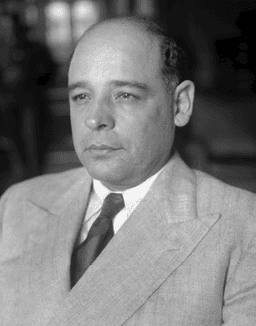
Abelardo L. Rodriguez
Politician · Modern
46.9Total
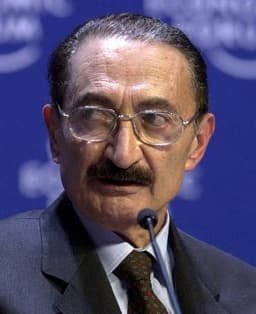
Bulent Ecevit
Politician · Modern
54.3Total
Basic Information
Born
1889
1925
Died
1967
—
Era
Modern
Modern
Nationality
Mexico
Turkey
Occupation
Politician
Politician
Civilization
Western
Middle Eastern
Score Comparison
Military (10%)
36.6
47.5
Political (20%)
43.7
68.0
Influence (20%)
47.9
60.0
Legacy (20%)
38.3
50.0
Leadership (15%)
65.7
53.2
Strategy (15%)
52.8
38.3
TOTAL
46.9
54.3
Abelardo L. Rodriguez — Complete Timeline
1932 AD
Served as president of Mexico during the MaximatoPolitical Action◆ Major
Rodríguez became president after the resignation of Pascual Ortiz Rubio, serving from 1932 to 1934. He was the last president of the Maximato era, continuing policies set by Plutarco Elías Calles and overseeing economic recovery from the Great Depression.
PresidencyMaximatoEconomic recovery
Impact: national
1933 AD
Implemented labor and social reformsReform
Rodríguez's administration enacted labor laws that improved working conditions and expanded social security. These reforms were part of the broader post-revolutionary consolidation but were limited by the influence of Calles.
Labor reformSocial securityMaximato
Impact: nationalprogressive
Bulent Ecevit — Complete Timeline
1974 AD
Ordered the Cyprus InvasionWar
Ecevit ordered the Turkish military invasion of Cyprus following a Greek-backed coup on the island. The invasion led to the partition of Cyprus and the establishment of the Turkish Republic of Northern Cyprus.
Cyprus InvasionMilitary ActionPartition
Impact: regionaldestructive
First Term as Prime Minister of TurkeyPolitical Action◆ Major
Bulent Ecevit became Prime Minister of Turkey for the first time, leading a coalition government of the Republican People's Party (CHP). He served as prime minister four times between 1974 and 1999.
Prime MinisterRepublican People's PartyCoalition
Impact: nationalconstructive
1980 AD
Ousted by the 1980 Military CoupPolitical Action◆ Major
The Turkish military coup overthrew Ecevit's government. He was arrested and banned from politics for a decade, along with other party leaders.
Military CoupArrestPolitical Ban
Impact: nationaldestructive
1999 AD
Return to Politics and Fourth Term as Prime MinisterPolitical Action◆ Major
Ecevit returned as prime minister after the 1999 elections, leading a coalition government. His term was marked by economic crisis and the capture of PKK leader Abdullah Ocalan.
Return to PoliticsCoalitionEconomic Crisis
Impact: national
Capture of Abdullah OcalanPolitical Action◆ Major
Under Ecevit's government, Turkish authorities captured Abdullah Ocalan, leader of the Kurdistan Workers' Party (PKK), in Kenya. Ocalan's capture led to a ceasefire and reduced violence.
PKKAbdullah OcalanCounterterrorism
Impact: nationalconstructive
Expert Analysis
Origins
Abelardo L. Rodriguez was born on May 12, 1889, in Guaymas, Sonora, Mexico. He came from a modest family and had limited formal education, working as a shopkeeper and later in mining before entering politics. His early career was shaped by the Mexican Revolution, where he aligned with the victorious Constitutionalist faction. He served in various military and administrative roles under Presidents Alvaro Obregon and Plutarco Elias Calles.
Bulent Ecevit was born on May 28, 1925, in Istanbul, Turkey, into an intellectual family. His father was a professor and his mother a painter. Ecevit studied at Robert College and later at the University of Ankara, where he graduated in literature. He began his career as a journalist and poet before entering politics. He was influenced by leftist ideologies and the Republican People's Party (CHP) tradition.
Rise to Power
Rodriguez rose through the ranks of the Institutional Revolutionary Party (PNR) and served as governor of Baja California from 1929 to 1932. His political ascent was tied to his loyalty to President Calles, the "Jefe Maximo" of the Maximato era. In 1932, after the resignation of President Pascual Ortiz Rubio, Rodriguez was appointed interim president by Congress, serving from September 4, 1932, to November 30, 1934. His presidency was marked by his role as a placeholder for Calles's continued influence.
Ecevit entered parliament in 1957 as a CHP member. He became Minister of Labor in 1961 and gained prominence for his left-leaning policies. In 1972, he succeeded Ismet Inonu as CHP leader. He became Prime Minister for the first time in 1974, leading a coalition government. His defining moment came in July 1974 when he ordered the Turkish invasion of Cyprus following a Greek-backed coup. The invasion resulted in the partition of the island and the establishment of the Turkish Republic of Northern Cyprus.
Leadership & Governance
Rodriguez's governance was constrained by Calles's behind-the-scenes control. He implemented labor reforms, including the Federal Labor Law of 1931 (actually enacted under his predecessor but enforced during his term) and expanded social security. He also continued land distribution under the agrarian reform. His rule was technocratic and focused on maintaining stability. He scored 65.7 in Leadership, reflecting his ability to manage the transition period.
Ecevit was a more autonomous leader. He pursued a social democratic agenda, including land reform and workers' rights. His decision to invade Cyprus demonstrated decisive action, scoring 47.5 in Military and 38.3 in Strategy, indicating mixed effectiveness in military planning. His second term (1978-1979) was marked by economic crisis and political violence, leading to the 1980 military coup. He returned in 1999, but his coalition government faced a severe economic crisis in 2001.
Triumph & Tragedy
Rodriguez's greatest success was maintaining political stability during a difficult transition. He completed the presidential term without major upheaval and oversaw the peaceful transfer of power to Lazaro Cardenas. His tragedy was his lack of independent power; he is remembered as a puppet of Calles. His Legacy score of 38.3 reflects limited lasting impact.
Ecevit's triumph was the Cyprus invasion, which secured Turkish Cypriot autonomy and enhanced his popularity domestically. He also oversaw the capture of PKK leader Abdullah Ocalan in 1999. His tragedy was the economic collapse of 2001, which led to his political downfall. His decision to invade Cyprus also resulted in international isolation for Turkey and ongoing conflict. He scored 54.3 overall, higher than Rodriguez's 46.9.
Character & Destiny
Rodriguez was pragmatic and cautious, content to serve as a caretaker. He lacked the ambition to challenge Calles, which limited his historical footprint. His character was that of a loyal administrator rather than a visionary leader.
Ecevit was principled and charismatic, known for his poetic and intellectual demeanor. He was stubborn, often refusing to compromise, which contributed to his government's instability. His character drove him to take bold actions like the Cyprus invasion but also led to economic mismanagement.
Legacy
Rodriguez is a minor figure in Mexican history, remembered primarily as the last president of the Maximato. His labor reforms were later expanded by Cardenas. His influence is overshadowed by Calles and Cardenas.
Ecevit's legacy is more significant. The Cyprus invasion permanently altered the geopolitics of the Eastern Mediterranean. He is credited with promoting social democracy in Turkey and confronting the military. However, his handling of the economy tarnished his reputation. He remains a polarizing figure.
Conclusion
Bulent Ecevit had greater impact than Abelardo L. Rodriguez. Ecevit's decision to invade Cyprus reshaped a nation and continues to affect international relations. Rodriguez, while competent, was a transitional figure with limited influence. Ecevit's higher scores (54.3 vs 46.9) reflect his wider-ranging consequences. Despite his failures, Ecevit's actions had more enduring consequences.
Rankings
🥇
Bulent EcevitLeader
Mil: 47.5Pol: 68.0Inf: 60.0
54.3
🥈
Abelardo L. Rodriguez
Mil: 36.6Pol: 43.7Inf: 47.9
46.9
+7.4 behind
How This Comparison Works
Algorithm
Each figure is scored on 6 dimensions (0—100 scale) based on structured historical data: Military (10%), Political (20%), Influence (20%), Legacy (20%), Leadership (15%), Strategy (15%). The weighted total produces the final ranking.
Data Sources
Scores are computed from structured sub-indicators in the database. Scale factors adjust for era (Ancient ×0.85, Modern ×1.0) and civilization size (Eastern ×1.05, Other ×0.80) to account for differences in population and military scale.
Maximum 3 Figures
Comparisons are limited to 2—3 figures to ensure readability and statistical meaningfulness.
Error Margins
±5 points per dimension — Sub-scores are derived from historical records with inherent uncertainty. Two figures within 5 points on a dimension should be considered roughly equivalent in that area.
Total Score Accuracy
±3 points overall — The weighted combination of 6 dimensions produces a total score with approximately ±3 points of uncertainty. Differences of less than 3 points are not statistically significant— the figures are effectively tied.
Known Limitations
- Historical records are incomplete and uneven across civilizations
- Figures from oral-tradition societies may be underrepresented
- Occupation labels can misclassify multi-role figures
- Scores measure capability and impact, not moral character
- Quantitative scoring is a comparison tool, not absolute truth
Capability Radar
Military (10%) — Battles & Warfare
Battles
5
30
Win Rate
5
40
Expansion
5
30
Political (20%) — Governance & Reform
Reform
35
55
Diplomacy
40
50
Economy
30
45
Influence (20%) — Cultural & Global Reach
Cultural
15
40
Global
10
50
Legacy (20%) — Historical Impact
Historical
20
55
Longevity
10
40
Leadership (15%) — Power & Stability
Tenure
40
60
Stability
25
40
Strategy (15%) — Tactics & Innovation
Strategy
5
40
Tactics
5
35
Reform
5
20
Similar Comparisons
Comments & Discussion
No comments yet. Be the first to share your thoughts!