Loading...
This comparison has not been analyzed yet.
One-time AI generation (~1 minute). Scores and timeline are already available below.
Abel Muzorewa vs Frank Forde
Abel Muzorewa leads by 0.9 pts · 2 figures compared
…

Abel Muzorewa
Politician · Modern
38.9Total
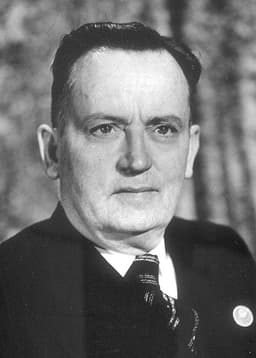
Frank Forde
Politician · Modern
38.0Total
Basic Information
Born
1925
1890
Died
—
1983
Era
Modern
Modern
Nationality
Zimbabwe
Australia
Occupation
Politician
Politician
Civilization
Other
Western
Score Comparison
Military (10%)
50.0
50.0
Political (20%)
26.4
26.4
Influence (20%)
47.1
45.5
Legacy (20%)
36.7
35.8
Leadership (15%)
31.2
31.2
Strategy (15%)
42.9
40.5
TOTAL
38.9
38.0
Abel Muzorewa — Complete Timeline
1979 AD
Elected Prime Minister of Zimbabwe RhodesiaPolitical Action◆ Major
Muzorewa won the internal election and became Prime Minister of Zimbabwe Rhodesia, a short-lived state created after the Internal Settlement. His government was not recognized internationally due to the exclusion of ZANU and ZAPU.
Prime MinisterInternal Settlement
Impact: national
Attended Lancaster House AgreementPolitical Action
Muzorewa participated in the Lancaster House Conference in London, which negotiated the end of the Rhodesian Bush War. The agreement led to the creation of independent Zimbabwe under majority rule.
Peace NegotiationIndependence
Impact: national
1980 AD
Lost 1980 General ElectionPolitical Action◆ Major
Muzorewa's party, the United African National Council, won only 3 seats in the pre-independence election. Robert Mugabe's ZANU won a landslide, ending Muzorewa's political dominance.
ElectionDefeat
Impact: national
Frank Forde — Complete Timeline
1941 AD
Appointed Minister for the ArmyPolitical Action◆ Major
Forde was appointed Minister for the Army in John Curtin's Labor government. He oversaw Australia's military operations during World War II, including the defense against Japanese advances in the Pacific.
World War IIMilitary Administration
Impact: national
1945 AD
Became Prime Minister of AustraliaPolitical Action◆ Major
Forde became Prime Minister on 6 July 1945 following the death of John Curtin. He served for only 8 days until Ben Chifley was elected as Labor leader and succeeded him.
Prime MinisterShortest Tenure
Impact: national
1946 AD
Australian Ambassador to CanadaPolitical Action
After leaving politics, Forde was appointed as Australia's first High Commissioner to Canada. He served in this diplomatic role until 1953, representing Australian interests in North America.
DiplomacyPost-Political Career
Impact: nationalconstructive
This comparison has not been analyzed yet.
One-time AI generation (~1 minute). Scores and timeline are already available below.
Rankings
🥇
Abel MuzorewaLeader
Mil: 50.0Pol: 26.4Inf: 47.1
38.9
🥈
Frank Forde
Mil: 50.0Pol: 26.4Inf: 45.5
38.0
+0.9 behind
How This Comparison Works
Algorithm
Each figure is scored on 6 dimensions (0—100 scale) based on structured historical data: Military (10%), Political (20%), Influence (20%), Legacy (20%), Leadership (15%), Strategy (15%). The weighted total produces the final ranking.
Data Sources
Scores are computed from structured sub-indicators in the database. Scale factors adjust for era (Ancient ×0.85, Modern ×1.0) and civilization size (Eastern ×1.05, Other ×0.80) to account for differences in population and military scale.
Maximum 3 Figures
Comparisons are limited to 2—3 figures to ensure readability and statistical meaningfulness.
Error Margins
±5 points per dimension — Sub-scores are derived from historical records with inherent uncertainty. Two figures within 5 points on a dimension should be considered roughly equivalent in that area.
Total Score Accuracy
±3 points overall — The weighted combination of 6 dimensions produces a total score with approximately ±3 points of uncertainty. Differences of less than 3 points are not statistically significant— the figures are effectively tied.
Known Limitations
- Historical records are incomplete and uneven across civilizations
- Figures from oral-tradition societies may be underrepresented
- Occupation labels can misclassify multi-role figures
- Scores measure capability and impact, not moral character
- Quantitative scoring is a comparison tool, not absolute truth
Capability Radar
Military (10%) — Battles & Warfare
Battles
19
27
Win Rate
27
32
Expansion
30
35
Political (20%) — Governance & Reform
Reform
15
10
Diplomacy
20
15
Economy
10
10
Influence (20%) — Cultural & Global Reach
Cultural
10
5
Global
10
5
Legacy (20%) — Historical Impact
Historical
15
10
Longevity
5
5
Leadership (15%) — Power & Stability
Tenure
10
5
Stability
5
10
Strategy (15%) — Tactics & Innovation
Strategy
31
35
Tactics
32
40
Reform
34
42
Similar Comparisons
Comments & Discussion
No comments yet. Be the first to share your thoughts!