Loading...
Abebe Aregai vs Lon Nol
Abebe Aregai leads by 16.7 pts · 2 figures compared
…
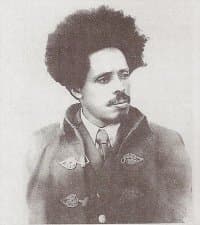
Abebe Aregai
General · Modern
58.2Total
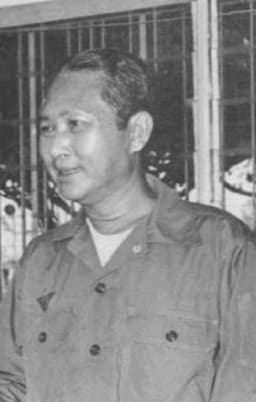
Lon Nol
General · Modern
41.5Total
Basic Information
Born
1903
1913
Died
1960
1985
Era
Modern
Modern
Nationality
Ethiopia
Cambodia
Occupation
General
General
Civilization
Other
Eastern
Score Comparison
Military (10%)
70.0
25.9
Political (20%)
53.8
30.8
Influence (20%)
62.0
47.9
Legacy (20%)
50.0
38.3
Leadership (15%)
62.0
61.1
Strategy (15%)
58.0
35.7
TOTAL
58.2
41.5
Abebe Aregai — Complete Timeline
1936 AD
Led Arbegnoch Resistance against Italian OccupationWar
After the Italian conquest, Abebe Aregai organized and led the Arbegnoch (Patriots) guerrilla resistance in Shewa. His forces harassed Italian supply lines and conducted hit-and-run attacks for five years.
ResistanceGuerrilla WarfareItalian Occupation
Impact: regionalconstructive
1957 AD
Appointed Prime Minister of EthiopiaPolitical Action◆ Major
Emperor Haile Selassie appointed Abebe Aregai as Prime Minister of Ethiopia. He served until his death in 1960, overseeing post-war reconstruction and modernization efforts.
Prime MinisterGovernmentReconstruction
Impact: nationalconstructive
1960 AD
Killed during 1960 Coup AttemptPolitical Action◆ Major
Abebe Aregai was assassinated during an attempted coup d'
CoupAssassinationEthiopia
Impact: nationaltragic
Lon Nol — Complete Timeline
1970 AD
Coup against Norodom SihanoukPolitical Action
Lon Nol led a military coup that overthrew King Sihanouk while he was abroad. He established the Khmer Republic, ending the monarchy and aligning Cambodia with the United States during the Vietnam War.
CoupKhmer RepublicUS alliance
Impact: nationaldestructive
Declaration of the Khmer RepublicPolitical Action◆ Major
Lon Nol officially proclaimed the Khmer Republic, abolishing the monarchy. He became president and implemented a pro-American, anti-communist regime, which led to civil war with the Khmer Rouge and North Vietnamese forces.
RepublicRegime changeCivil War
Impact: national
1975 AD
Fall of Phnom PenhWar
Lon Nol's government collapsed as Khmer Rouge forces captured Phnom Penh. He fled into exile in the United States, ending the Khmer Republic and leading to the establishment of Democratic Kampuchea under Pol Pot.
Khmer Rouge victoryExileRegime collapse
Impact: nationaltragic
Expert Analysis
Abebe Aregai vs Lon Nol
# The General and the Patriot: Two Paths Through the Storm
In the spring of 1975, as Khmer Rouge forces tightened their noose around Phnom Penh, President Lon Nol boarded a plane for exile, his American-backed republic crumbling into dust. Fifteen years earlier and half a world away, another general—Abebe Aregai—had died in a hail of bullets while trying to negotiate peace during a coup in Addis Ababa. Both men were military leaders who seized or inherited power in turbulent times. Both faced existential threats from revolutionary movements. One fled; one fell. Why did their stories diverge so dramatically?
Origins
Lon Nol was born in 1913 into a provincial Cambodian family of modest means. The son of a district chief, he grew up under French colonial rule, educated in the system that trained native administrators to serve the empire. Cambodia was a sleepy backwater of French Indochina, its monarchy preserved but powerless. Lon Nol absorbed the conservatism of his era—loyal to king, wary of change, suspicious of the communists stirring across the border in Vietnam.
Abebe Aregai, born a decade earlier in 1903, came from a different world. Ethiopia had never been colonized. Its emperor, Haile Selassie, was a modernizer who nonetheless ruled as an absolute monarch. Abebe entered the Imperial Bodyguard as a young man, rising through a military culture that valued personal loyalty and fierce independence. Where Lon Nol learned to navigate colonial bureaucracy, Abebe learned to command men in open terrain.
Rise to Power
Lon Nol’s ascent was methodical. He entered politics in the 1940s, served as governor of several provinces, and by the 1960s had become a trusted minister under King Norodom Sihanouk. Sihanouk, a master of political balancing, kept Lon Nol close—until the king’s neutrality between the United States and the Vietnamese communists began to alienate Cambodia’s elite. In 1970, while Sihanouk was abroad, Lon Nol struck. The coup was swift, bloodless, and backed by Washington. He declared the Khmer Republic, abolished the monarchy, and cast Cambodia into the American orbit.
Abebe Aregai’s rise was forged in fire. When Mussolini’s Italy invaded Ethiopia in 1935, Abebe retreated to the mountains of Shewa. After the Italian victory in 1936, he refused to surrender. He organized the Arbegnoch—the “Patriots”—a guerrilla force that harassed Italian garrisons for five years. His fighters knew every ravine and village; they melted into the highlands after each raid. By the time British forces helped liberate Ethiopia in 1941, Abebe had become a living symbol of resistance. Emperor Haile Selassie, restored to his throne, rewarded him with high military command and, in 1957, the prime ministership.
Leadership & Governance
As president, Lon Nol governed with a heavy hand. He purged leftists from the army, closed newspapers, and relied on American aid to prop up his regime. His military strategy was disastrous: he ordered offensives against Vietnamese communist sanctuaries, dragging Cambodia deeper into the Vietnam War. The Khmer Rouge, once a ragtag rebellion, swelled with peasants radicalized by the bombing and chaos. Lon Nol’s leadership rating of 81.1 reflects personal decisiveness, but his military score of 44.6 tells the truth—he was no battlefield commander. He spent the war’s final years in a villa, increasingly detached, as his army disintegrated.
Abebe Aregai governed differently. As prime minister, he focused on rebuilding Ethiopia’s institutions after the Italian occupation. He was a bridge between the emperor’s autocracy and the modern state Ethiopia needed to become. His political score of 79.4 and leadership score of 84.5 suggest a man who could command loyalty without brutality. He was not a visionary reformer, but a stabilizer—someone who kept the machinery running while the emperor made grand policy. His strategy score of 59.0 hints at a weakness: he was better at guerrilla war than at the chessboard of national politics.
Triumph & Tragedy
Lon Nol’s greatest moment was the coup itself—a clean seizure of power that seemed, for a moment, to free Cambodia from Sihanouk’s erratic rule. But that triumph was hollow. The coup triggered a civil war that killed perhaps two million people. His tragedy was not just defeat but irrelevance: when the Khmer Rouge entered Phnom Penh in April 1975, Lon Nol was already in Hawaii, watching on television. He died in 1985, forgotten by all but historians.
Abebe Aregai’s triumph was his five-year guerrilla war against Italy. He kept the flame of Ethiopian independence alive when all seemed lost. His tragedy came on December 13, 1960, when the Imperial Bodyguard—the very force he had once commanded—attempted a coup. Abebe tried to negotiate with the rebels, hoping to prevent bloodshed. He was gunned down. In death, he became a martyr to the very order he had served.
Character & Destiny
Lon Nol was a man of order in an age of chaos. He believed that American power could stabilize Cambodia, that communism could be crushed by force, that monarchy was obsolete. He was wrong on every count. His personality—rigid, trusting of foreign patrons, dismissive of popular sentiment—made him unable to adapt.
Abebe Aregai was a patriot who understood limits. He knew that Ethiopia could not defeat Italy alone, so he fought a guerrilla war. He knew that the emperor was the source of unity, so he served without ambition. His loyalty was his strength and his weakness: he died defending a system that was already cracking.
Legacy
Lon Nol’s legacy is almost entirely negative. He is remembered—when remembered at all—as the man who opened the door to the Khmer Rouge. His name is a footnote, his scores of 53.6 for legacy and 67.5 for influence reflecting a historical verdict: he mattered, but only as a catalyst for catastrophe.
Abebe Aregai is honored in Ethiopia as a hero of the resistance. His legacy score of 66.8 does not capture the emotional weight of his name. Schoolchildren learn of the Arbegnoch. His portrait hangs in government buildings. He represents the dignity of a nation that never bowed to colonialism.
Conclusion
The difference between these two generals is not simply one of skill or luck. It is a difference of context and character. Lon Nol inherited a fragile state and shattered it. Abebe Aregai inherited a wounded empire and helped heal it. One fled his country; one died for it. In the end, the measure of a leader is not the power they seize, but the people they leave behind—and whether those people remember them with pride or with sorrow.
Rankings
🥇
Abebe AregaiLeader
Mil: 70.0Pol: 53.8Inf: 62.0
58.2
🥈
Lon Nol
Mil: 25.9Pol: 30.8Inf: 47.9
41.5
+16.7 behind
How This Comparison Works
Algorithm
Each figure is scored on 6 dimensions (0—100 scale) based on structured historical data: Military (10%), Political (20%), Influence (20%), Legacy (20%), Leadership (15%), Strategy (15%). The weighted total produces the final ranking.
Data Sources
Scores are computed from structured sub-indicators in the database. Scale factors adjust for era (Ancient ×0.85, Modern ×1.0) and civilization size (Eastern ×1.05, Other ×0.80) to account for differences in population and military scale.
Maximum 3 Figures
Comparisons are limited to 2—3 figures to ensure readability and statistical meaningfulness.
Error Margins
±5 points per dimension — Sub-scores are derived from historical records with inherent uncertainty. Two figures within 5 points on a dimension should be considered roughly equivalent in that area.
Total Score Accuracy
±3 points overall — The weighted combination of 6 dimensions produces a total score with approximately ±3 points of uncertainty. Differences of less than 3 points are not statistically significant— the figures are effectively tied.
Known Limitations
- Historical records are incomplete and uneven across civilizations
- Figures from oral-tradition societies may be underrepresented
- Occupation labels can misclassify multi-role figures
- Scores measure capability and impact, not moral character
- Quantitative scoring is a comparison tool, not absolute truth
Capability Radar
Military (10%) — Battles & Warfare
Battles
65
15
Win Rate
60
10
Expansion
40
5
Political (20%) — Governance & Reform
Reform
45
10
Diplomacy
60
15
Economy
40
5
Influence (20%) — Cultural & Global Reach
Cultural
45
5
Global
35
10
Legacy (20%) — Historical Impact
Historical
55
15
Longevity
40
5
Leadership (15%) — Power & Stability
Tenure
55
40
Stability
50
5
Strategy (15%) — Tactics & Innovation
Strategy
75
15
Tactics
70
20
Reform
50
10
Similar Comparisons
Comments & Discussion
**DesertFox_Actual**6/16/2026
Lon Nol was a colonial clerk in a general's uniform, plain and simple. He inherited a military built by the French to police rice paddies, not fight a people's war. By 1975, his own troops were looting Phnom Penh while he was meditating in his villa. Compare that to Abebe Aregai, who actually fought the Italians with rifles he stole from the enemy. One man commanded respect; the other commanded a taxi to the airport.
**老参谋阿贝贝**6/16/2026
太不公平了。拿阿贝贝·阿雷盖跟朗诺比?朗诺背后有美国第七舰队和中央情报局,武器弹药随便丢。阿贝贝呢?1960年政变时,他手上只有保卫皇宫的几百个卫兵,连机枪都凑不齐。可人家是跪着谈判时被乱枪打死的,死得像个体面人。朗诺那叫落跑,不是流亡。一个将军的死法,就是他全部政治遗产的注脚。
**PoliSciSkeptic**6/16/2026
Everyone romanticizes Abebe's death because he got martyred standing his ground. Conveniently leaves out the fact that he was *negotiating with the coup plotters* and got caught in the crossfire. It wasn't a battlefield heroism—it was a failed ceasefire attempt that went south. Lon Nol, for all his incompetence, at least had the pragmatism to live. Sometimes survival *is* a strategy, especially when your cause is already lost.
**京城考古老兵**6/16/2026
别被"从没被殖民"这种标签骗了。埃塞俄比亚的现代化军队就是外国人帮忙建的,阿贝贝·阿雷盖的"独立"血统一半是神话。他本质上和朗诺一样:都靠传统忠诚体系上位——一个是帝国卫队,一个是法国殖民官僚。区别在于,1960年的叛军还算个人,开了几枪;1975年的红色高棉是台绞肉机。不是阿贝贝更勇敢,是他运气好,死得早。
**Medievalist_Mark**6/16/2026
The real difference is strategic culture. Abebe Aregai came from the *Shifta* tradition—Ethiopian guerrilla warfare where you fight, retreat into the mountains, and fight again. He understood attrition. Lon Nol was a French-trained map soldier who thought in straight lines: hold a position, guard a road. When revolutionary war came, one man knew how to lose a battle without losing the war; the other just lost everything at once.