Loading...
Abdul Kader Kane vs Julius Caesar
Julius Caesar leads by 29.4 pts · 2 figures compared
…
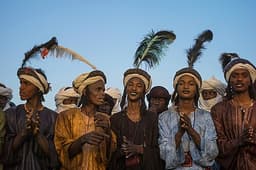
Abdul Kader Kane
Emperor · Modern
53.4Total

Julius Caesar
General · Ancient
82.8Total
Basic Information
Born
1726
-100
Died
1807
-44
Era
Modern
Ancient
Nationality
Futa Toro
Roman Republic
Occupation
Emperor
General
Civilization
Other
Western
Score Comparison
Military (10%)
46.7
88.0
Political (20%)
68.0
78.0
Influence (20%)
54.1
85.0
Legacy (20%)
44.2
82.0
Leadership (15%)
53.2
80.0
Strategy (15%)
60.0
85.0
TOTAL
53.4
82.8
Abdul Kader Kane — Complete Timeline
1776 AD
Founding of the Imamate of Futa ToroPolitical Action
Abdul Kader Kane led a successful revolution that overthrew the Denianke dynasty and established the Imamate of Futa Toro. He became the first Almami, creating a theocratic state governed by Islamic law in the Senegal River valley.
FoundingRevolutionIslamic State
Impact: regionalconstructive
1777 AD
Implementation of Islamic LawReform◆ Major
Abdul Kader Kane implemented a comprehensive legal and administrative system based on the Maliki school of Islamic jurisprudence. He established qadis (judges) and Islamic schools, replacing traditional practices with sharia law throughout Futa Toro.
Legal ReformIslamic LawEducation
Impact: regionalconstructive
1785 AD
Conflict with the FrenchWar◆ Major
Abdul Kader Kane led military resistance against French colonial expansion in the Senegal River region. He fought to maintain Futa Toro's independence and control over trade routes, though the conflict ended without decisive victory for either side.
Colonial ResistanceFrenchTrade
Impact: regional
Julius Caesar — Complete Timeline
58 BC
Gallic WarsWar◆ Major
Caesar, as proconsul of Gaul, launched a series of campaigns that conquered all of Gaul (modern France, Belgium, and parts of Switzerland). He fought numerous battles, including against the Helvetii, the Belgae, and the Gallic chieftain Vercingetorix. The wars brought immense wealth and a loyal army to Caesar.
Gallic WarsConquestRoman Expansion
Impact: regional
49 BC
Crossing the RubiconPolitical Action◆ Major
Caesar led Legio XIII across the Rubicon River into Italy, defying the Roman Senate's order to disband his army. This act triggered a civil war against Pompey and the Optimates, ultimately leading to Caesar's dictatorship and the end of the Roman Republic.
Roman Civil WarEnd of RepublicPower Struggle
Impact: global
48 BC
Battle of PharsalusWar◆ Major
Caesar's outnumbered army defeated the larger forces of Pompey the Great at Pharsalus in Greece. Caesar's tactical use of a reserve line to counter Pompey's cavalry charge proved decisive. Pompey fled to Egypt, where he was assassinated, leaving Caesar as the undisputed master of the Roman world.
Roman Civil WarBattleDecisive Victory
Impact: regional
44 BC
Appointment as Dictator for LifePolitical Action◆ Major
The Roman Senate appointed Caesar dictator perpetuo (dictator for life), granting him unprecedented personal power. This move concentrated military, legislative, and judicial authority in one person, effectively ending the Roman Republic's traditional system of checks and balances and alarming many senators.
DictatorshipEnd of RepublicPower Consolidation
Impact: regionaldestructive
Assassination on the Ides of MarchPolitical Action◆ Major
A group of Roman senators, led by Marcus Junius Brutus and Gaius Cassius Longinus, stabbed Caesar to death at a meeting of the Senate in the Theatre of Pompey. The assassination was intended to restore the Republic, but instead triggered another civil war that led to the rise of the Roman Empire.
AssassinationRoman PoliticsEnd of Republic
Impact: globaldestructive
Expert Analysis
abdul-kader-kane-vs-julius-caesar
### The General and the Almami: Two Roads to Power
On a winter day in 49 BCE, a Roman general named Julius Caesar stood at the bank of a small, muddy river in northern Italy. The Rubicon was a boundary, a line that no general could cross with his army without declaring war on the Republic itself. He hesitated, then uttered a famous phrase: *“Alea iacta est”*—the die is cast. Half a world away, in the Senegal River valley of West Africa, another leader, Abdul Kader Kane, also faced a moment of no return. In 1776, he led a ragged army of Muslim reformers against the ruling Denianke dynasty, a centuries-old power that had grown corrupt and decadent. Both men were about to reshape their worlds. But one would become a legend whose name echoes through millennia; the other, a figure of profound regional significance largely forgotten in the West. What drove these vastly different outcomes?
### Origins
Caesar was born into the chaos of the late Roman Republic, a world of civil wars, senatorial intrigue, and expanding frontiers. His family, the Julii, was ancient but not wealthy. He grew up in a Rome where political power was won through military glory, patronage, and ruthless ambition. Every Roman noble’s education was a preparation for the Forum and the battlefield. By contrast, Abdul Kader Kane emerged from the scholarly and religious traditions of Futa Toro, a region in what is now Senegal. The 18th century was a time of Islamic revival in West Africa, where Muslim clerics and *marabouts* began to challenge the old, syncretic rulers. Kane was a *torodbe*, a class of Muslim scholars and teachers, not a warrior by birth. His world was one of Quranic study, legal debate, and the slow, patient work of building a following among the people. The difference in their origins is the difference between a sword forged in the fires of empire and a seed planted in the soil of faith.
### Rise to Power
Caesar’s ascent was a masterclass in political and military opportunism. He built alliances with the wealthy Crassus and the powerful Pompey, forming the First Triumvirate. He then spent a decade conquering Gaul (58–50 BCE), a brutal war that made him a military hero, a fortune, and a loyal army. His crossing of the Rubicon was the final, illegal act that launched a civil war, after which he made himself dictator. Abdul Kader Kane’s path was slower and more communal. For years, he preached against the Denianke’s oppression and their tolerance of the French slave trade. The revolution he led in 1776 was not a lightning strike but a popular uprising, driven by religious fervor and a desire for justice. Where Caesar seized power through a single, brilliant gamble, Kane was swept into power by a movement. The difference is between a man who bends history to his will and a man who rides the wave of history.
### Leadership & Governance
As dictator, Caesar was a whirlwind of reform. He reorganized the calendar, centralized tax collection, expanded citizenship to provincials, and began massive public works. His rule was efficient, but autocratic—he was a pragmatist who believed in a strong, centralized state. His military genius lay in speed, logistics, and the personal loyalty of his legions. Abdul Kader Kane’s style was theocratic and judicial. In 1777, he implemented a comprehensive legal system based on the Maliki school of Islamic jurisprudence. He was an *almami*, a ruler who was both a political leader and a religious guide. His military campaigns, including his resistance against French colonial expansion in 1785, were defensive and ideological. He fought not for personal glory but to maintain the purity and independence of his Islamic state. Caesar conquered; Kane codified. One built an empire; the other built a community.
### Triumph & Tragedy
Caesar’s greatest triumph was his conquest of Gaul, a feat that doubled Rome’s territory and filled its treasury. His greatest tragedy was his own success: the Senate, fearing his power, stabbed him to death on the Ides of March in 44 BCE. He died at the height of his power, but his murder plunged Rome into another civil war. Abdul Kader Kane’s triumph was the founding of the Imamate of Futa Toro itself—a stable, devout state that lasted decades. His tragedy came later, in the early 19th century, when French military power and internal divisions undermined his creation. He died in 1807, likely in obscurity, his state slowly crumbling. Caesar’s tragedy was a sudden, dramatic fall; Kane’s was a slow, grinding decline.
### Character & Destiny
Caesar was audacious, charismatic, and utterly self-confident. He took risks that would have destroyed lesser men. His personality *was* his destiny: he could not stop climbing, could not stop reaching for more. This drive made him great, but it also made him a target. Abdul Kader Kane was patient, pious, and communal. He saw himself as a servant of God and his people, not as a conqueror. His character led him to build institutions, not a cult of personality. Caesar’s destiny was to be a singular figure, a man whose name became a title. Kane’s destiny was to be a founder, a link in a chain of West African Islamic reformers.
### Legacy
Julius Caesar’s legacy is monumental. His name became synonymous with imperial power—*Kaiser* and *Tsar* are derived from it. The Roman Empire he helped create shaped Western law, language, and politics for two millennia. Abdul Kader Kane’s legacy is quieter but no less real. He is remembered as a pioneer of Islamic state-building in West Africa, a model for later reformers like Usman dan Fodio. In Senegal, his name is spoken with respect, a symbol of resistance and religious devotion. One legacy is a thunderclap that echoes around the world; the other is a steady flame that warms a hearth.
### Conclusion
Standing at the Rubicon, Caesar gambled everything on his own genius. Standing before the Denianke, Abdul Kader Kane gambled everything on his faith. One played for an empire; the other played for a soul. History remembers Caesar because he wrote his story in blood across the map of the known world. It nearly forgot Kane because he wrote his story in the hearts of a people, in a language few outside his region could read. In the end, the difference is not one of worth, but of scale and circumstance. Both men changed the world that knew them. The question is not who was greater, but what greatness means when measured by different stars.
Rankings
🥇
Julius CaesarLeader
Mil: 88.0Pol: 78.0Inf: 85.0
82.8
🥈
Abdul Kader Kane
Mil: 46.7Pol: 68.0Inf: 54.1
53.4
+29.4 behind
How This Comparison Works
Algorithm
Each figure is scored on 6 dimensions (0—100 scale) based on structured historical data: Military (10%), Political (20%), Influence (20%), Legacy (20%), Leadership (15%), Strategy (15%). The weighted total produces the final ranking.
Data Sources
Scores are computed from structured sub-indicators in the database. Scale factors adjust for era (Ancient ×0.85, Modern ×1.0) and civilization size (Eastern ×1.05, Other ×0.80) to account for differences in population and military scale.
Maximum 3 Figures
Comparisons are limited to 2—3 figures to ensure readability and statistical meaningfulness.
Error Margins
±5 points per dimension — Sub-scores are derived from historical records with inherent uncertainty. Two figures within 5 points on a dimension should be considered roughly equivalent in that area.
Total Score Accuracy
±3 points overall — The weighted combination of 6 dimensions produces a total score with approximately ±3 points of uncertainty. Differences of less than 3 points are not statistically significant— the figures are effectively tied.
Known Limitations
- Historical records are incomplete and uneven across civilizations
- Figures from oral-tradition societies may be underrepresented
- Occupation labels can misclassify multi-role figures
- Scores measure capability and impact, not moral character
- Quantitative scoring is a comparison tool, not absolute truth
Capability Radar
Military (10%) — Battles & Warfare
Battles
35
95
Win Rate
40
92
Expansion
30
97
Political (20%) — Governance & Reform
Reform
60
90
Diplomacy
50
85
Economy
40
82
Influence (20%) — Cultural & Global Reach
Cultural
40
88
Global
25
94
Legacy (20%) — Historical Impact
Historical
45
95
Longevity
30
96
Leadership (15%) — Power & Stability
Tenure
55
75
Stability
45
60
Strategy (15%) — Tactics & Innovation
Strategy
35
94
Tactics
30
96
Reform
45
88
Similar Comparisons
Comments & Discussion
RUBICON_REBEL6/17/2026
Comparing Caesar to Kane is like comparing a wildfire to a candle. Caesar crossed the Rubicon with battle-hardened legions; Kane led a religious uprising against a decaying dynasty. One shaped the Mediterranean world for centuries, the other fought a local struggle against the slave trade. Kane's Futa Toro revolution was remarkable, but it couldn't compete with Caesar's scale or legacy. Let's be real—Caesar's strategic genius and political machinery dwarf anything Kane accomplished. Kane matters
CAESAR_FANBOI6/17/2026
This comparison is absurd. Kane was a provincial reformer fighting a minor dynastic war, while Caesar conquered Gaul, invaded Britain, and ended the Roman Republic. One fact: Caesar's Commentaries are still studied in military academies. Kane's legacy barely registers outside West Africa. I don't mean to dismiss non-European history, but you can't put a local religious leader on the same stage as the man who wrote "Veni, vidi, vici." Kane fought for a river valley; Caesar fought for the entire k
沙漠判官6/17/2026
凯恩才是真正的革命家,凯撒不过是个贵族军阀。凯撒出生在权力中心,靠家族关系和背叛爬上高位;凯恩呢?他从一个穆斯林学者起家,带领贫苦农民反抗腐朽的丹尼亚克王朝,还成功废除了奴隶贸易。凯撒的"骰子已掷"不过是个人野心,凯恩的"圣战"是解放千万人。历史书是胜利者写的,但凯恩的阿尔马米国证明了,道德勇气比罗马军团更有价值。别拿凯撒的规模说事,腐败的帝国不是标准。
数据破壁人6/17/2026
说真的,光看硬数据就知道没法比。凯撒在8年里打了50多场战役,统治了约780万平方公里的土地;凯恩的势力范围顶多就是塞内加尔河谷那几万平方公里。凯撒的人口基数是数千万罗马公民和奴隶,凯恩的联盟撑死了几十万人。这不是种族歧视,这是历史影响力的问题。凯恩的改革再伟大,也没能改变西非的长期格局;凯撒却永远改变了欧洲政治体制。数字不会撒谎,凯恩就是个地方英雄。
古典学狂热者6/17/2026
你们都被"西方中心论"骗了。凯撒确实厉害,但把他和凯恩放一起比,本身就暴露了比较框架的偏见。凯恩的Futa Toro圣战是18世纪伊斯兰复兴运动的一部分,和凯撒的罗马内战完全是不同语境。凯撒有普卢塔克、苏埃托尼乌斯这些历史学家给他镀金,凯恩却只有口头传统和零散记载。我研究拉丁文十年了,但我不否认非洲革命史的复杂性。凯恩的托