Loading...
Abdul Ghani Baradar vs Napoleon Bonaparte
Napoleon Bonaparte leads by 22.1 pts · 2 figures compared
…
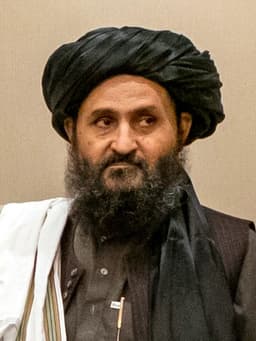
Abdul Ghani Baradar
Politician · Modern
48.8Total

Napoleon Bonaparte
General · Modern
70.9Total
Basic Information
Born
1968
1769
Died
—
1821
Era
Modern
Modern
Nationality
Afghanistan
France
Occupation
Politician
General
Civilization
Middle Eastern
Western
Score Comparison
Military (10%)
47.5
94.0
Political (20%)
40.8
72.0
Influence (20%)
54.9
40.0
Legacy (20%)
45.0
80.0
Leadership (15%)
58.8
78.0
Strategy (15%)
41.0
90.0
TOTAL
48.8
70.9
Abdul Ghani Baradar — Complete Timeline
1994 AD
Co-founded the Taliban MovementPolitical Action
Abdul Ghani Baradar co-founded the Taliban movement alongside Mullah Omar in Kandahar. He played a key role in organizing the group's early military campaigns and establishing its ideological framework, becoming a top military commander.
AfghanistanTalibanFounding
Impact: global
2010 AD
Captured in Karachi by US-Pakistan ForcesPolitical Action◆ Major
Abdul Ghani Baradar was captured in a joint US-Pakistan intelligence operation in Karachi, Pakistan, in February 2010. His arrest was a major blow to the Taliban's leadership and disrupted their command structure during the war.
AfghanistanTalibanCapture
Impact: global
2018 AD
Released from Pakistani CustodyPolitical Action◆ Major
Abdul Ghani Baradar was released from Pakistani custody in October 2018 at the request of the US. His release was part of efforts to facilitate peace negotiations between the Taliban and the US, leading to the Doha Agreement.
AfghanistanTalibanPeace Process
Impact: global
2020 AD
Signed the Doha Agreement with the USPolitical Action
Abdul Ghani Baradar signed the Doha Agreement on behalf of the Taliban in February 2020. The agreement outlined the withdrawal of US troops from Afghanistan in exchange for Taliban security guarantees, paving the way for the Taliban's return to power.
AfghanistanPeace AgreementUS-Taliban
Impact: global
2021 AD
Appointed Deputy Prime Minister of AfghanistanPolitical Action◆ Major
Abdul Ghani Baradar was appointed Deputy Prime Minister of the Taliban-led government in Afghanistan in September 2021. He became a key figure in the new administration, overseeing economic and political affairs.
AfghanistanTalibanGovernment
Impact: national
Napoleon Bonaparte — Complete Timeline
1799 AD
Coup of 18 BrumaireOther◆ Major
Napoleon Bonaparte, with support from his brother Lucien and key political figures, overthrew the Directory in a bloodless coup. He established the Consulate with himself as First Consul, effectively becoming the ruler of France. This event ended the French Revolution's most unstable period.
French RevolutionCoupRise to Power
Impact: regional
1804 AD
Promulgation of the Napoleonic CodeOther◆ Major
Napoleon enacted the Civil Code of the French, known as the Napoleonic Code, a comprehensive set of laws that replaced the fragmented feudal legal systems. The code established legal equality, protected property rights, and secularized law. It became the basis for legal systems in many European and world countries.
Legal ReformNapoleonic CodeCivil Law
Impact: globalconstructive
1805 AD
Battle of AusterlitzWar◆ Major
Napoleon's Grande Arm
Napoleonic WarsBattleDecisive Victory
Impact: global
1812 AD
Invasion of RussiaWar◆ Major
Napoleon led the Grande Arm
Napoleonic WarsInvasionDisaster
Impact: globaldestructive
1815 AD
Battle of WaterlooWar◆ Major
Napoleon's French army was defeated by the combined forces of the Duke of Wellington's Anglo-Allied army and Gebhard Leberecht von Bl
Napoleonic WarsBattleFinal Defeat
Impact: globaldestructive
Expert Analysis
abdul-ghani-baradar-vs-napoleon-bonaparte
# The Conqueror and the Cleric
In the winter of 1812, Napoleon Bonaparte watched his Grand Army burn Moscow only to freeze in retreat across the Beresina River. In the spring of 2021, Abdul Ghani Baradar sat in a Doha hotel room, signing papers that would send American troops home after two decades of war. One man wanted to rule the world; the other wanted to expel the world from his homeland. Both succeeded, both failed, and their stories reveal how the same century—the modern era—could produce two such different destinies.
Origins
Napoleon was born in 1769 on the island of Corsica, a recent French acquisition, into a minor noble family that spoke Italian at home. He was short, ambitious, and deeply conscious of being an outsider. The French Revolution, which erupted when he was twenty, shattered the old order and opened paths to power that had never existed before. His education at military academies in Brienne and Paris gave him the technical skills; the revolution gave him the opportunity.
Abdul Ghani Baradar was born in 1968 in Uruzgan province, Afghanistan, a land that had never been fully conquered by any foreign empire. His family were Pashtun farmers, and he grew up in a world of tribal codes, Islamic scholarship, and the distant thunder of the Soviet invasion. The 1979 Soviet occupation radicalized his generation. Baradar studied in madrassas in Pakistan, where he met a one-eyed mullah named Mohammed Omar. Together, they would forge a movement from the chaos.
Both men emerged from upheaval. But Napoleon’s revolution was about overthrowing kings; Baradar’s was about expelling infidels. One sought to build a new order; the other sought to restore an ancient one.
Rise to Power
Napoleon’s ascent was meteoric. At age twenty-four, he drove the British out of Toulon and became a brigadier general. By twenty-six, he was commanding the Army of Italy, where his lightning campaigns stunned the Habsburgs. In 1799, he staged a coup and made himself First Consul. By 1804, he crowned himself Emperor. Each step was a gamble, each victory a stepping stone.
Baradar’s rise was slower and more brutal. In 1994, he co-founded the Taliban in Kandahar with Mullah Omar, organizing a ragtag militia of religious students. They captured Kandahar, then Kabul, and by 1998 controlled most of Afghanistan. But Baradar never sought a crown. He was the organizer, the negotiator, the man who kept the movement together when the U.S. invasion scattered them after 2001. While Napoleon conquered Europe in a decade, Baradar spent twenty years in the shadows, fighting a guerrilla war and, from 2010 to 2018, a Pakistani prison cell.
The difference is stark: Napoleon seized power through brilliant campaigns; Baradar earned power through patient survival.
Leadership & Governance
Napoleon governed with the energy of a man who believed he could reshape reality. He centralized the French state, created the Bank of France, and most famously, codified the Napoleonic Code—a legal system that abolished feudalism, protected property rights, and influenced civil law from Latin America to Japan. He built roads, lycées, and a modern bureaucracy. But he also created a police state, censored the press, and placed his brothers on European thrones.
Baradar governed differently. Since 2021, as Deputy Prime Minister, he has presided over a regime that enforces a strict interpretation of sharia law—banning girls from secondary education, restricting women’s work, and public executions. But he also negotiated the Doha Agreement, showing a pragmatic willingness to deal with the superpower that had hunted him for years. His governance is less about building institutions than about maintaining control through tribal alliances and religious authority.
Napoleon’s military genius—rated 94 in strategy—allowed him to win at Austerlitz and Jena but also doomed him at Waterloo. Baradar’s military score is only 43, but he understood that in Afghanistan, victory meant outlasting, not outfighting.
Triumph & Tragedy
Napoleon’s greatest moment was 1805: the Grande Armée destroyed the Austrian and Russian armies at Austerlitz, and he stood at the peak of Europe. His greatest tragedy was 1812: the invasion of Russia, where 600,000 men marched east and fewer than 100,000 returned. The retreat through the snow broke his army and his legend.
Baradar’s greatest moment was 2020: signing the Doha Agreement with the United States, securing the withdrawal of foreign troops. His greatest tragedy is unfolding now: the recognition that victory brought not peace but isolation, economic collapse, and a nation even more fractured than before. Napoleon’s tragedy was a single catastrophic campaign; Baradar’s tragedy is the daily grind of governing a country the world has abandoned.
Character & Destiny
Napoleon was driven by an insatiable will. “Impossible is a word to be found only in the dictionary of fools,” he said. He trusted his genius, his luck, and his army. That confidence built an empire and then destroyed it. He could not stop.
Baradar is driven by faith and patience. He spent a decade in prison, emerged to negotiate with his enemies, and waited for the Americans to tire. He is not a visionary; he is a survivor. Where Napoleon charged, Baradar waited.
Legacy
Napoleon left the Napoleonic Code, the model of the modern state, and the romantic image of the self-made conqueror. His legacy is debated but indelible. Baradar’s legacy is uncertain. He helped restore Taliban rule, but whether that regime can survive, or whether it will collapse into civil war, remains unknown. Napoleon reshaped the world; Baradar reshaped one country, and even that is fragile.
Conclusion
Standing at Waterloo, Napoleon watched his dreams die in the mud of a Belgian field. Sitting in Kabul, Baradar watches a nation struggle to breathe under sanctions and silence. One man tried to conquer everything and lost everything. The other man tried to expel everyone and succeeded—only to find that victory is its own kind of defeat. Both remind us that history rewards not the right choices but the irreversible ones.
Rankings
🥇
Napoleon BonaparteLeader
Mil: 94.0Pol: 72.0Inf: 40.0
70.9
🥈
Abdul Ghani Baradar
Mil: 47.5Pol: 40.8Inf: 54.9
48.8
+22.1 behind
How This Comparison Works
Algorithm
Each figure is scored on 6 dimensions (0—100 scale) based on structured historical data: Military (10%), Political (20%), Influence (20%), Legacy (20%), Leadership (15%), Strategy (15%). The weighted total produces the final ranking.
Data Sources
Scores are computed from structured sub-indicators in the database. Scale factors adjust for era (Ancient ×0.85, Modern ×1.0) and civilization size (Eastern ×1.05, Other ×0.80) to account for differences in population and military scale.
Maximum 3 Figures
Comparisons are limited to 2—3 figures to ensure readability and statistical meaningfulness.
Error Margins
±5 points per dimension — Sub-scores are derived from historical records with inherent uncertainty. Two figures within 5 points on a dimension should be considered roughly equivalent in that area.
Total Score Accuracy
±3 points overall — The weighted combination of 6 dimensions produces a total score with approximately ±3 points of uncertainty. Differences of less than 3 points are not statistically significant— the figures are effectively tied.
Known Limitations
- Historical records are incomplete and uneven across civilizations
- Figures from oral-tradition societies may be underrepresented
- Occupation labels can misclassify multi-role figures
- Scores measure capability and impact, not moral character
- Quantitative scoring is a comparison tool, not absolute truth
Capability Radar
Military (10%) — Battles & Warfare
Battles
30
95
Win Rate
40
90
Expansion
30
95
Political (20%) — Governance & Reform
Reform
25
95
Diplomacy
50
80
Economy
20
85
Influence (20%) — Cultural & Global Reach
Cultural
30
85
Global
40
90
Legacy (20%) — Historical Impact
Historical
40
95
Longevity
30
90
Leadership (15%) — Power & Stability
Tenure
40
85
Stability
15
70
Strategy (15%) — Tactics & Innovation
Strategy
40
95
Tactics
35
98
Reform
20
92
Similar Comparisons
Comments & Discussion
CorsicanCannon6/17/2026
Comparing Baradar to Napoleon is like comparing a village mayor to an emperor. Napoleon rewrote the map of Europe through 60 battles and a legal code that still governs. Baradar’s "victory" was surviving in a cave until foreigners got bored. This analysis romanticizes guerrilla patience as equal to military genius—it’s an insult to every soldier who studied Austerlitz. One shaped modernity; the other just outlasted it.
帝国拆解匠6/17/2026
拿破仑的失败是浪漫主义的悲剧,巴拉克的胜利是后殖民的讽刺。一个在莫斯科冻死二十万大军时还想着建立欧陆体系,另一个在卡塔尔签协议时算的是部落盟友的补偿金。把打游击和搞征服放在同一秤上,这是历史相对主义的新低——有些失败比成功更改变世界,但巴拉克连失败的资格都没有。
DataGrinder6/17/2026
The numbers tell a different story: Napoleon mobilized over 600,000 men for Russia; Baradar’s entire movement likely never controlled more than 50,000 fighters at peak. Yet the analysis treats their "success" as symmetrical because both caused superpower withdrawals. That’s survivorship bias dressed as wisdom. One lost a campaign; the other won a stalemate. Scale matters, and conflating them distorts how we measure historical impact.
书院旧儒6/17/2026
读史当看文明进程,而非个人成败。拿破仑代表现代民族国家的铁与火,将大革命理念用刺刀播种全欧;巴拉克是部落社会对现代性的最后抵抗,用归零逻辑驱逐所有外部强权。一个想构建,一个想净化。前者虽败犹荣,后者虽胜实退。若说两人同属一个时代,那只是因为我们活在他们撕开的裂口中,看不透方向。