Loading...
This comparison has not been analyzed yet.
One-time AI generation (~1 minute). Scores and timeline are already available below.
Abdillahi Qarshe vs Shehbaz Sharif
Shehbaz Sharif leads by 5.2 pts · 2 figures compared
…

Abdillahi Qarshe
Politician · Modern
45.1Total
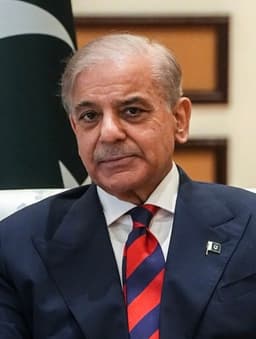
Shehbaz Sharif
Politician · Modern
50.3Total
Basic Information
Born
1924
1951
Died
—
—
Era
Modern
Modern
Nationality
Somalia
Pakistan
Occupation
Politician
Politician
Civilization
Other
Indian
Score Comparison
Military (10%)
48.6
45.4
Political (20%)
33.6
45.0
Influence (20%)
54.1
51.8
Legacy (20%)
45.8
40.0
Leadership (15%)
41.5
67.0
Strategy (15%)
40.2
60.0
TOTAL
45.1
50.3
Abdillahi Qarshe — Complete Timeline
1945 AD
Role in Somali Youth LeaguePolitical Action
Abdillahi Qarshe joined the Somali Youth League, the leading independence movement. He used his musical talents to compose patriotic songs that mobilized support for Somali independence from colonial rule.
IndependenceActivismMusic
Impact: nationalconstructive
1950 AD
Pioneering Modern Somali MusicCultural
Abdillahi Qarshe pioneered modern Somali music by introducing new instruments and styles, blending traditional Somali poetry with contemporary melodies. His work influenced generations of Somali musicians.
MusicInnovationCulture
Impact: nationalconstructive
1960 AD
Composition of Somali National AnthemCultural◆ Major
Abdillahi Qarshe composed the music for the Somali national anthem, 'Qolobaa Calankeed,' which was adopted upon independence. This work became a symbol of Somali unity and national identity.
MusicNational AnthemIndependence
Impact: nationalconstructive
Shehbaz Sharif — Complete Timeline
1997 AD
Chief Minister of Punjab (first term)Political Action◆ Major
Shehbaz Sharif was elected Chief Minister of Punjab, Pakistan's most populous province. He served three non-consecutive terms, focusing on infrastructure projects, including the Lahore Metro Bus and Orange Line, and governance reforms. His tenure was marked by both development and allegations of authoritarianism.
Provincial GovernanceInfrastructure DevelopmentPunjab
Impact: regionalconstructive
2018 AD
Arrest and imprisonmentPolitical Action◆ Major
Shehbaz Sharif was arrested by the National Accountability Bureau on charges of corruption related to the Ashiana-e-Iqbal housing scheme and other cases. He was imprisoned for several months before being granted bail. The cases were widely seen as politically motivated by the PTI government.
Corruption ChargesPolitical PersecutionNAB
Impact: nationaldestructive
Leader of the Opposition in the National AssemblyPolitical Action
Shehbaz Sharif became Leader of the Opposition in the National Assembly after the 2018 general elections. He led the opposition against Prime Minister Imran Khan's government, organizing the no-confidence motion that eventually succeeded in 2022.
Opposition LeadershipParliamentary Politics
Impact: national
2022 AD
Election as Prime Minister of PakistanPolitical Action◆ Major
Shehbaz Sharif was elected Prime Minister of Pakistan by the National Assembly after the ouster of Imran Khan through a no-confidence motion. He formed a coalition government with the Pakistan Democratic Movement, marking the first time a prime minister was removed by a no-confidence vote in Pakistan's history.
Coalition GovernmentNo-Confidence MotionPakistan Politics
Impact: national
This comparison has not been analyzed yet.
One-time AI generation (~1 minute). Scores and timeline are already available below.
Rankings
🥇
Shehbaz SharifLeader
Mil: 45.4Pol: 45.0Inf: 51.8
50.3
🥈
Abdillahi Qarshe
Mil: 48.6Pol: 33.6Inf: 54.1
45.1
+5.2 behind
How This Comparison Works
Algorithm
Each figure is scored on 6 dimensions (0—100 scale) based on structured historical data: Military (10%), Political (20%), Influence (20%), Legacy (20%), Leadership (15%), Strategy (15%). The weighted total produces the final ranking.
Data Sources
Scores are computed from structured sub-indicators in the database. Scale factors adjust for era (Ancient ×0.85, Modern ×1.0) and civilization size (Eastern ×1.05, Other ×0.80) to account for differences in population and military scale.
Maximum 3 Figures
Comparisons are limited to 2—3 figures to ensure readability and statistical meaningfulness.
Error Margins
±5 points per dimension — Sub-scores are derived from historical records with inherent uncertainty. Two figures within 5 points on a dimension should be considered roughly equivalent in that area.
Total Score Accuracy
±3 points overall — The weighted combination of 6 dimensions produces a total score with approximately ±3 points of uncertainty. Differences of less than 3 points are not statistically significant— the figures are effectively tied.
Known Limitations
- Historical records are incomplete and uneven across civilizations
- Figures from oral-tradition societies may be underrepresented
- Occupation labels can misclassify multi-role figures
- Scores measure capability and impact, not moral character
- Quantitative scoring is a comparison tool, not absolute truth
Capability Radar
Military (10%) — Battles & Warfare
Battles
23
42
Win Rate
21
49
Expansion
30
48
Political (20%) — Governance & Reform
Reform
30
55
Diplomacy
25
60
Economy
15
65
Influence (20%) — Cultural & Global Reach
Cultural
45
20
Global
20
30
Legacy (20%) — Historical Impact
Historical
40
25
Longevity
35
15
Leadership (15%) — Power & Stability
Tenure
20
30
Stability
10
40
Strategy (15%) — Tactics & Innovation
Strategy
31
52
Tactics
35
53
Reform
37
61
Similar Comparisons
Comments & Discussion
No comments yet. Be the first to share your thoughts!