Loading...
Eva Peron vs Shehbaz Sharif
Eva Peron leads by 13.3 pts · 2 figures compared
…

Eva Peron
Politician · Modern
63.6Total
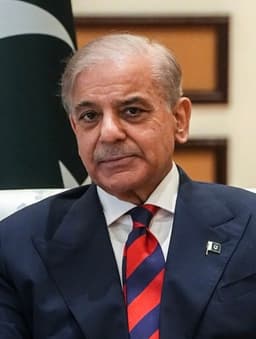
Shehbaz Sharif
Politician · Modern
50.3Total
Basic Information
Born
1919
1951
Died
1952
—
Era
Modern
Modern
Nationality
Argentina
Pakistan
Occupation
Politician
Politician
Civilization
Western
Indian
Score Comparison
Military (10%)
48.9
45.4
Political (20%)
68.0
45.0
Influence (20%)
82.0
51.8
Legacy (20%)
56.0
40.0
Leadership (15%)
65.7
67.0
Strategy (15%)
41.1
60.0
TOTAL
63.6
50.3
Eva Peron — Complete Timeline
1945 AD
Marriage to Juan PerónPolitical Action◆ Major
Eva Duarte married Colonel Juan Per
MarriagePolitical AlliancePeronism
Impact: nationalconstructive
1947 AD
Women's suffrage campaignReform
Eva Perón led the campaign for women's suffrage in Argentina, culminating in the passage of the Law 13.010, which granted women the right to vote. She organized the Female Peronist Party and mobilized women voters for Perón's 1951 re-election.
Women's RightsSuffragePolitical Reform
Impact: nationalprogressive
1948 AD
Founding of the Eva Perón FoundationReform◆ Major
Eva Perón established the Eva Perón Foundation, a charitable organization funded by state resources and private donations. It built hospitals, schools, and housing, and provided direct aid to the poor, significantly expanding social welfare in Argentina.
Social WelfareCharityPeronism
Impact: nationalconstructive
1951 AD
Refusal of vice-presidential nominationPolitical Action◆ Major
Eva Perón declined the nomination for Vice President of Argentina, known as the 'Renunciamiento,' due to opposition from the military and her declining health. This decision preserved Perón's political stability but marked the end of her formal political ambitions.
Political DecisionHealthPeronism
Impact: national
1952 AD
Death from cancerOther◆ Major
Eva Perón died of cervical cancer at age 33. Her death triggered massive public mourning, with millions attending her funeral. Her body was embalmed and later disappeared for 16 years after the 1955 coup, becoming a symbol of Peronist martyrdom.
DeathMourningSymbolism
Impact: nationaltragic
Shehbaz Sharif — Complete Timeline
1997 AD
Chief Minister of Punjab (first term)Political Action◆ Major
Shehbaz Sharif was elected Chief Minister of Punjab, Pakistan's most populous province. He served three non-consecutive terms, focusing on infrastructure projects, including the Lahore Metro Bus and Orange Line, and governance reforms. His tenure was marked by both development and allegations of authoritarianism.
Provincial GovernanceInfrastructure DevelopmentPunjab
Impact: regionalconstructive
2018 AD
Arrest and imprisonmentPolitical Action◆ Major
Shehbaz Sharif was arrested by the National Accountability Bureau on charges of corruption related to the Ashiana-e-Iqbal housing scheme and other cases. He was imprisoned for several months before being granted bail. The cases were widely seen as politically motivated by the PTI government.
Corruption ChargesPolitical PersecutionNAB
Impact: nationaldestructive
Leader of the Opposition in the National AssemblyPolitical Action
Shehbaz Sharif became Leader of the Opposition in the National Assembly after the 2018 general elections. He led the opposition against Prime Minister Imran Khan's government, organizing the no-confidence motion that eventually succeeded in 2022.
Opposition LeadershipParliamentary Politics
Impact: national
2022 AD
Election as Prime Minister of PakistanPolitical Action◆ Major
Shehbaz Sharif was elected Prime Minister of Pakistan by the National Assembly after the ouster of Imran Khan through a no-confidence motion. He formed a coalition government with the Pakistan Democratic Movement, marking the first time a prime minister was removed by a no-confidence vote in Pakistan's history.
Coalition GovernmentNo-Confidence MotionPakistan Politics
Impact: national
Expert Analysis
Origins
Eva Perón was born María Eva Duarte on May 7, 1919, in Los Toldos, Argentina, to a poor family. Her father, a wealthy landowner, abandoned them, leaving her mother to raise five children. Eva moved to Buenos Aires at age 15 to pursue acting, eventually becoming a successful radio actress. Her early life instilled empathy for the working class, which later defined her political work.
Shehbaz Sharif was born on September 23, 1951, in Lahore, Pakistan, into a wealthy industrialist family. His father, Muhammad Sharif, was a successful businessman. Shehbaz studied law at the University of Punjab but left before completing his degree to join the family business. His background in business and governance shaped his focus on infrastructure and development.
Rise to Power
Eva Perón rose to prominence after marrying Colonel Juan Perón in 1945. Juan Perón's presidency in 1946 gave Eva a platform. She became a tireless campaigner for Perón's policies, especially women's suffrage. In 1947, she led the campaign for Law 13.010, granting women the vote. Her charisma and connection with the descamisados (shirtless ones) made her a political force.
Shehbaz Sharif entered politics through his brother Nawaz Sharif, who became Prime Minister in 1990. Shehbaz was elected to the Punjab Assembly in 1988 and served as Chief Minister of Punjab three times (1997-1999, 2008-2013, 2013-2018). His rise was marked by administrative efficiency, not populism. He became Prime Minister in 2022 after Imran Khan's ouster, leading a coalition government.
Leadership & Governance
Eva Perón's leadership was charismatic and populist. She founded the Eva Perón Foundation in 1948, funded by state resources and private donations. The foundation built hospitals, schools, and homes, distributing aid directly to the poor. She also championed labor rights, meeting with union leaders and workers. However, her governance was informal and lacked institutional structure, relying on personal loyalty.
Shehbaz Sharif's leadership is technocratic and development-focused. As Chief Minister of Punjab, he launched mega-projects like the Lahore Metro Bus and Orange Line train. He emphasized transparency and efficiency, earning a leadership score of 67.0. His governance is data-driven, but critics note his authoritarian style and alleged corruption cases. His political score of 45.0 reflects challenges in national coalition management.
Triumph & Tragedy
Eva Perón's greatest triumph was the passage of women's suffrage in 1947, which enfranchised millions. Her foundation also provided significant social welfare. However, her greatest failure was her declining health and the 'Renunciamiento' in 1951, where she refused the vice-presidential nomination due to military opposition and cancer. Her death at 33 left her legacy incomplete, and her body was embalmed, becoming a symbol.
Shehbaz Sharif's triumph is the infrastructure transformation of Punjab, with projects like the Metro Bus system improving urban mobility. However, his failures include corruption allegations that led to his arrest in 2019. The Ashiana-e-Iqbal housing scheme scandal damaged his reputation. His legacy is mixed: administrative success but tainted by legal troubles.
Character & Destiny
Eva Perón was passionate and emotional, driven by a desire to help the poor. Her character shaped her fate: her relentless work exacerbated her cancer, and her refusal to compromise led to the Renunciamiento. Historians like Alicia Dujovne Ortiz note her as a master of political theater. She scored 82.0 in influence, reflecting her ability to mobilize masses.
Shehbaz Sharif is pragmatic and hardworking, but also confrontational. His character led to clashes with opponents, yet his focus on governance yielded results. His destiny was shaped by family political dynasty and legal battles. His strategy score of 60.0 indicates a methodical approach, but his legacy score of 40.0 suggests limited long-term impact.
Legacy
Eva Perón's legacy endures in Argentine politics and global feminist movements. The Eva Perón Foundation's model influenced later social programs. She remains a symbol of female empowerment and workers' rights. However, her legacy is controversial, with critics citing her authoritarian methods and misuse of funds. Her influence score of 82.0 reflects her lasting cultural impact.
Shehbaz Sharif's legacy is more localized. As Prime Minister, he faces economic crises and political instability. His infrastructure projects in Punjab are tangible, but corruption charges cloud his reputation. His legacy score of 40.0 indicates limited enduring impact compared to Eva's 56.0. His political score of 45.0 is lower than Eva's 68.0.
Conclusion
Eva Perón had greater impact than Shehbaz Sharif, as evidenced by her total score of 63.6 versus 50.3. Eva's transformative social policies and women's suffrage changed Argentina permanently, while Shehbaz's achievements are more administrative and temporary. Eva's influence transcends borders, while Shehbaz remains a regional figure. Despite her short life, Eva's legacy in political and social spheres is more profound. Shehbaz, though effective in governance, lacks the revolutionary impact that defined Eva Perón's career.
Rankings
🥇
Eva PeronLeader
Mil: 48.9Pol: 68.0Inf: 82.0
63.6
🥈
Shehbaz Sharif
Mil: 45.4Pol: 45.0Inf: 51.8
50.3
+13.3 behind
How This Comparison Works
Algorithm
Each figure is scored on 6 dimensions (0—100 scale) based on structured historical data: Military (10%), Political (20%), Influence (20%), Legacy (20%), Leadership (15%), Strategy (15%). The weighted total produces the final ranking.
Data Sources
Scores are computed from structured sub-indicators in the database. Scale factors adjust for era (Ancient ×0.85, Modern ×1.0) and civilization size (Eastern ×1.05, Other ×0.80) to account for differences in population and military scale.
Maximum 3 Figures
Comparisons are limited to 2—3 figures to ensure readability and statistical meaningfulness.
Error Margins
±5 points per dimension — Sub-scores are derived from historical records with inherent uncertainty. Two figures within 5 points on a dimension should be considered roughly equivalent in that area.
Total Score Accuracy
±3 points overall — The weighted combination of 6 dimensions produces a total score with approximately ±3 points of uncertainty. Differences of less than 3 points are not statistically significant— the figures are effectively tied.
Known Limitations
- Historical records are incomplete and uneven across civilizations
- Figures from oral-tradition societies may be underrepresented
- Occupation labels can misclassify multi-role figures
- Scores measure capability and impact, not moral character
- Quantitative scoring is a comparison tool, not absolute truth
Capability Radar
Military (10%) — Battles & Warfare
Battles
31
42
Win Rate
33
49
Expansion
34
48
Political (20%) — Governance & Reform
Reform
60
55
Diplomacy
55
60
Economy
40
65
Influence (20%) — Cultural & Global Reach
Cultural
70
20
Global
60
30
Legacy (20%) — Historical Impact
Historical
65
25
Longevity
55
15
Leadership (15%) — Power & Stability
Tenure
30
30
Stability
35
40
Strategy (15%) — Tactics & Innovation
Strategy
38
52
Tactics
38
53
Reform
43
61
Similar Comparisons
Comments & Discussion
No comments yet. Be the first to share your thoughts!