Loading...
Abdillahi Qarshe vs Georges Clemenceau
Georges Clemenceau leads by 18.7 pts · 2 figures compared
…

Abdillahi Qarshe
Politician · Modern
45.1Total
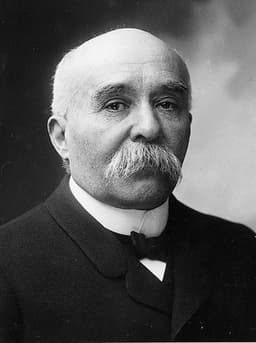
Georges Clemenceau
Politician · Modern
63.8Total
Basic Information
Born
1924
1841
Died
—
1929
Era
Modern
Modern
Nationality
Somalia
France
Occupation
Politician
Politician
Civilization
Other
Western
Score Comparison
Military (10%)
48.6
49.1
Political (20%)
33.6
70.3
Influence (20%)
54.1
65.0
Legacy (20%)
45.8
65.0
Leadership (15%)
41.5
78.0
Strategy (15%)
40.2
41.4
TOTAL
45.1
63.8
Abdillahi Qarshe — Complete Timeline
1945 AD
Role in Somali Youth LeaguePolitical Action
Abdillahi Qarshe joined the Somali Youth League, the leading independence movement. He used his musical talents to compose patriotic songs that mobilized support for Somali independence from colonial rule.
IndependenceActivismMusic
Impact: nationalconstructive
1950 AD
Pioneering Modern Somali MusicCultural
Abdillahi Qarshe pioneered modern Somali music by introducing new instruments and styles, blending traditional Somali poetry with contemporary melodies. His work influenced generations of Somali musicians.
MusicInnovationCulture
Impact: nationalconstructive
1960 AD
Composition of Somali National AnthemCultural◆ Major
Abdillahi Qarshe composed the music for the Somali national anthem, 'Qolobaa Calankeed,' which was adopted upon independence. This work became a symbol of Somali unity and national identity.
MusicNational AnthemIndependence
Impact: nationalconstructive
Georges Clemenceau — Complete Timeline
1917 AD
Became Prime Minister of France for the second timePolitical Action◆ Major
Clemenceau was appointed premier during a critical phase of World War I, after the failure of the Nivelle Offensive and mutinies in the French army. He formed a war government and vowed to pursue the war to victory, restoring morale and discipline.
World War ILeadershipWar Government
Impact: global
Suppressed the French army mutinies of 1917Political Action◆ Major
Clemenceau took a hard line against mutineers, ordering arrests and courts-martial. He also improved soldiers' conditions and leave. His actions restored order in the French army, allowing it to continue fighting effectively for the remainder of the war.
World War IMutinyDiscipline
Impact: nationaldestructive
1919 AD
Played a leading role in the Paris Peace ConferencePolitical Action◆ Major
Clemenceau chaired the Paris Peace Conference and was a key figure in drafting the Treaty of Versailles. He insisted on harsh terms for Germany, including reparations, territorial losses, and military restrictions, to ensure French security.
World War IPeace TreatyVersailles
Impact: global
1920 AD
Resigned as Prime MinisterPolitical Action
Clemenceau lost the presidential election to Paul Deschanel and subsequently resigned as prime minister. His departure marked the end of his wartime leadership. He retired from politics, having achieved his goal of victory and a punitive peace.
ResignationPoliticsPost-War
Impact: national
Expert Analysis
Origins
Abdillahi Qarshe (1924–1994) was born in the town of Luuq, in the Somali Region of Ethiopia, into a family of poets and musicians. His father, Sheikh Qarshe, was a religious scholar, and his mother, Asha, was a poet. He received a Quranic education and later attended school in Mogadishu. Qarshe's early exposure to traditional Somali poetry and music, combined with his father's influence, shaped his artistic sensibilities. He moved to Aden, Yemen, for work, where he encountered modern musical instruments like the oud and violin, which he would later introduce to Somali music.
Georges Clemenceau (1841–1929) was born in Mouilleron-en-Pareds, Vendée, France, into a family of doctors. His father, Benjamin Clemenceau, was a physician and a republican activist. Clemenceau studied medicine in Nantes and Paris, but his political involvement during the Franco-Prussian War and the Paris Commune drew him away from practice. He was influenced by his father's radical republicanism and the positivist philosophy of Auguste Comte. Clemenceau's early political career began as mayor of Montmartre in 1870.
Rise to Power
Qarshe rose to prominence through his musical activism within the Somali Youth League (SYL), the leading independence movement. In the 1940s and 1950s, he composed patriotic songs that rallied support for Somali unity and independence. His composition of the Somali national anthem, 'Qolobaa Calankeed,' adopted in 1960 upon independence, cemented his role as a cultural icon. He also pioneered modern Somali music by introducing instruments like the piano and violin, blending traditional poetry with contemporary melodies. His influence grew through radio broadcasts and live performances.
Clemenceau's rise was marked by his role as a radical journalist and politician. He served as a deputy from 1871, becoming known for his biting criticism of governments and his defense of republican values. He was a key figure in the Dreyfus Affair, publishing Émile Zola's 'J'Accuse…!' in his newspaper. His first premiership in 1906 was brief, but his second appointment in 1917 came during a crisis: French army mutinies and low morale after the Nivelle Offensive. Clemenceau's leadership restored order and unity, earning him the nickname 'The Tiger.'
Leadership & Governance
Qarshe's leadership was cultural and symbolic rather than political. As a musician and poet, he shaped Somali national identity through art. His governance approach was indirect: he used songs to communicate political messages, mobilize support for the SYL, and promote Somali language and culture. He did not hold formal political office, but his influence on public sentiment was significant. His score for political leadership is 33.6, reflecting his limited direct governance role.
Clemenceau's leadership was authoritarian and decisive. As premier, he suppressed the 1917 mutinies by ordering arrests and courts-martial, while also improving soldiers' conditions and leave. He centralized control and visited the front lines to boost morale. At the Paris Peace Conference, he insisted on harsh terms for Germany, including reparations and territorial losses, to ensure French security. His leadership style was confrontational and uncompromising, reflected in his political score of 70.3 and leadership score of 78.0.
Triumph & Tragedy
Qarshe's greatest success was composing the Somali national anthem, a symbol of independence and unity that endures today. He also pioneered modern Somali music, influencing generations of artists. His tragedy was the eventual collapse of the Somali state into civil war after 1991. His artistic vision of a unified Somalia was not realized. His influence declined as the country fragmented. His scores: influence 54.1, legacy 45.8.
Clemenceau's triumph was leading France to victory in World War I and restoring military discipline. He was a key architect of the Treaty of Versailles, which aimed to weaken Germany permanently. His tragedy was that the treaty's harshness contributed to German resentment, fueling the rise of Nazism. He also lost the 1920 presidential election and resigned, ending his political career on a low note. His legacy score is 65.0, reflecting his profound but controversial impact.
Character & Destiny
Qarshe was creative, idealistic, and committed to Somali nationalism. His character was shaped by his artistic temperament and religious upbringing. He believed in the power of music to unite people. His destiny was to be a cultural founder rather than a political leader. His scores for strategy (40.2) and military (48.6) are low, as he did not engage in warfare or strategic planning. Historical assessments view him as a pioneer but note his limited direct impact on governance.
Clemenceau was combative, pragmatic, and fiercely patriotic. He was known as 'The Tiger' for his ferocity in debate and governance. His character was shaped by his medical background and radical republicanism. He made quick decisions and was unafraid to use force. His destiny was to be a wartime leader who saved France but whose peace terms sparked future conflict. Historians praise his resolve but criticize his vindictiveness at Versailles.
Legacy
Qarshe's legacy is cultural: he is remembered as the father of modern Somali music and the composer of the national anthem. His songs continue to be played and sung in Somalia and among the diaspora. However, his impact on political structures is minimal. His work symbolizes Somali identity but did not prevent state collapse.
Clemenceau's legacy is political and diplomatic. He is remembered as a decisive war leader who preserved the Third Republic. The Treaty of Versailles, while controversial, shaped the interwar period. His hardline stance influenced French foreign policy for decades. He is ranked among France's greatest statesmen, with scores of 65.0 in both influence and legacy.
Conclusion
Georges Clemenceau had greater impact than Abdillahi Qarshe, based on scores (63.8 vs 45.1) and historical weight. Clemenceau directly shaped global events: he led France through World War I, suppressed mutinies, and dictated the Treaty of Versailles. His decisions affected millions and altered the course of European history. Qarshe, while culturally significant, operated on a smaller stage and his influence remained within Somalia. Clemenceau's political, leadership, and legacy scores are substantially higher (political: 70.3 vs 33.6; leadership: 78.0 vs 41.5). Thus, Clemenceau's impact on world history is greater.
Rankings
🥇
Georges ClemenceauLeader
Mil: 49.1Pol: 70.3Inf: 65.0
63.8
🥈
Abdillahi Qarshe
Mil: 48.6Pol: 33.6Inf: 54.1
45.1
+18.7 behind
How This Comparison Works
Algorithm
Each figure is scored on 6 dimensions (0—100 scale) based on structured historical data: Military (10%), Political (20%), Influence (20%), Legacy (20%), Leadership (15%), Strategy (15%). The weighted total produces the final ranking.
Data Sources
Scores are computed from structured sub-indicators in the database. Scale factors adjust for era (Ancient ×0.85, Modern ×1.0) and civilization size (Eastern ×1.05, Other ×0.80) to account for differences in population and military scale.
Maximum 3 Figures
Comparisons are limited to 2—3 figures to ensure readability and statistical meaningfulness.
Error Margins
±5 points per dimension — Sub-scores are derived from historical records with inherent uncertainty. Two figures within 5 points on a dimension should be considered roughly equivalent in that area.
Total Score Accuracy
±3 points overall — The weighted combination of 6 dimensions produces a total score with approximately ±3 points of uncertainty. Differences of less than 3 points are not statistically significant— the figures are effectively tied.
Known Limitations
- Historical records are incomplete and uneven across civilizations
- Figures from oral-tradition societies may be underrepresented
- Occupation labels can misclassify multi-role figures
- Scores measure capability and impact, not moral character
- Quantitative scoring is a comparison tool, not absolute truth
Capability Radar
Military (10%) — Battles & Warfare
Battles
23
30
Win Rate
21
32
Expansion
30
34
Political (20%) — Governance & Reform
Reform
30
80
Diplomacy
25
90
Economy
15
70
Influence (20%) — Cultural & Global Reach
Cultural
45
60
Global
20
80
Legacy (20%) — Historical Impact
Historical
40
85
Longevity
35
70
Leadership (15%) — Power & Stability
Tenure
20
85
Stability
10
75
Strategy (15%) — Tactics & Innovation
Strategy
31
35
Tactics
35
38
Reform
37
46
Similar Comparisons
Comments & Discussion
No comments yet. Be the first to share your thoughts!