Loading...
Abdel Fattah el-Sisi vs Reynaldo Bignone
Abdel Fattah el-Sisi leads by 16.2 pts · 2 figures compared
…
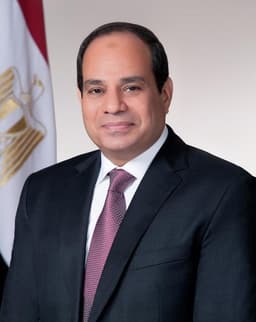
Abdel Fattah el-Sisi
General · Modern
57.0Total

Reynaldo Bignone
General · Modern
40.8Total
Basic Information
Born
1954
1928
Died
—
—
Era
Modern
Modern
Nationality
Egypt
Argentina
Occupation
General
General
Civilization
Middle Eastern
Western
Score Comparison
Military (10%)
50.0
10.2
Political (20%)
68.0
33.6
Influence (20%)
60.0
47.9
Legacy (20%)
42.5
38.3
Leadership (15%)
68.0
57.6
Strategy (15%)
60.0
45.0
TOTAL
57.0
40.8
Abdel Fattah el-Sisi — Complete Timeline
2013 AD
Led Military Coup Ousting President Mohamed MorsiPolitical Action
As Minister of Defense, General el-Sisi led the Egyptian military in removing President Mohamed Morsi from power after mass protests. He suspended the constitution and installed an interim government, sparking a crackdown on the Muslim Brotherhood.
Military CoupEgyptian PoliticsMuslim Brotherhood
Impact: nationaldestructive
Crackdown on Muslim Brotherhood and Political DissentPolitical Action◆ Major
Following the coup, el-Sisi oversaw a severe crackdown on the Muslim Brotherhood, including the violent dispersal of sit-ins at Rabaa al-Adawiya and Nahda squares that killed hundreds. Thousands were arrested, and the group was designated a terrorist organization.
Human RightsRepressionMuslim Brotherhood
Impact: nationaldestructive
2014 AD
Launched the Suez Canal ExpansionReform◆ Major
El-Sisi announced a major expansion of the Suez Canal, creating a new 35-kilometer waterway parallel to the existing canal. The project was completed in one year and aimed to increase canal capacity and boost Egypt's economy.
Suez CanalInfrastructureEconomic Development
Impact: globalconstructive
Elected President of EgyptPolitical Action◆ Major
El-Sisi won the presidential election with 96.9% of the vote, though the election was criticized for lacking genuine opposition. His presidency consolidated military rule and launched major infrastructure and economic projects.
ElectionPresidencyAuthoritarianism
Impact: national
2016 AD
Implemented Economic Reform Program with IMFReform◆ Major
El-Sisi's government secured a $12 billion loan from the International Monetary Fund and implemented austerity measures, including floating the Egyptian pound and cutting fuel subsidies. The reforms stabilized the economy but caused inflation and hardship for many Egyptians.
IMFEconomic ReformAusterity
Impact: national
Reynaldo Bignone — Complete Timeline
1982 AD
Appointed President of Argentina by the military juntaPolitical Action◆ Major
On July 1, 1982, Reynaldo Bignone was appointed President of Argentina by the military junta, succeeding Leopoldo Galtieri after the Falklands War defeat. Bignone's mandate was to oversee the transition back to civilian rule.
PresidencyMilitary DictatorshipTransition
Impact: national
1983 AD
Oversaw the transition to democracyPolitical Action
Bignone presided over the dismantling of the military dictatorship, including the repeal of repressive laws and the calling of free elections. On October 30, 1983, Ra
DemocratizationElectionsEnd of Dictatorship
Impact: nationalconstructive
Issued the 'Final Document' on the Dirty WarPolitical Action
In April 1983, Bignone's government issued the 'Final Document on the War against Subversion and Terrorism,' which justified the military's actions during the Dirty War and claimed that all missing persons were dead. The document was widely criticized by human rights groups.
Dirty WarHuman RightsOfficial Narrative
Impact: nationaldestructive
2010 AD
Convicted for human rights crimes and sentenced to life in prisonPolitical Action◆ Major
In 2010, Reynaldo Bignone was convicted by Argentine courts for human rights abuses committed during the Dirty War, including kidnapping, torture, and forced disappearances. He was sentenced to life in prison, reflecting the ongoing pursuit of justice.
Human Rights TrialDirty WarLife Sentence
Impact: nationaldestructive
Expert Analysis
Origins
Abdel Fattah el-Sisi was born on November 19, 1954, in Cairo, Egypt, into a middle-class family. His father was a clerk and his mother a housewife. He attended the Egyptian Military Academy, graduating in 1977, and later studied at the British Army Staff College and the US Army War College. His military career was conventional, rising through the ranks without notable combat experience.
Reynaldo Bignone was born on January 21, 1928, in Morón, Argentina. He entered the National Military College in 1944, graduating as an infantry officer. His early career was marked by staff and command positions within the Argentine Army. He served as secretary-general of the army and later as director of the Superior War School. Bignone was a career officer, deeply embedded in the military establishment.
Rise to Power
El-Sisi's rise to power came abruptly. In 2012, President Mohamed Morsi appointed him Minister of Defense. As mass protests erupted against Morsi's rule in June 2013, el-Sisi led a military coup on July 3, 2013, ousting Morsi. He suspended the constitution and installed an interim government. In May 2014, he was elected president with 96.9% of the vote, an election criticized for lacking genuine opposition. His political score of 68.0 reflects his ability to consolidate power through military force and manipulated elections.
Bignone's ascent occurred in the wake of Argentina's defeat in the Falklands War in June 1982. The military junta, disgraced by the loss, appointed Bignone as president on July 1, 1982, to oversee a transition back to civilian rule. He was chosen for his perceived moderation and ability to negotiate with political parties. Unlike el-Sisi, Bignone did not seize power through a coup but was selected by the crumbling regime. His political score of 33.6 indicates his limited agency during this period.
Leadership & Governance
El-Sisi governs as an authoritarian leader. He has centralized power, suppressed dissent, and controlled media. Under his rule, Egypt has seen a severe crackdown on the Muslim Brotherhood, with the violent dispersal of sit-ins at Rabaa al-Adawiya in August 2013 resulting in hundreds of deaths. He launched economic reforms, including a $12 billion IMF loan and floating the Egyptian pound, which stabilized the economy but caused hardship. His leadership score of 68.0 reflects his firm control but also his failure to foster democratic institutions.
Bignone's governance was transitional. He focused on dismantling the military dictatorship's repressive apparatus. He repealed laws that had granted the military impunity and called for free elections in October 1983. However, he also issued the 'Final Document on the War against Subversion and Terrorism' in April 1983, which justified the military's actions during the Dirty War, attempting to whitewash atrocities. His leadership score of 57.6 reflects his role in transitioning to democracy, albeit with a tarnished human rights record.
Triumph & Tragedy
El-Sisi's greatest success is the expansion of the Suez Canal, completed in August 2015, which increased canal capacity and revenue. However, his greatest failure is the systematic suppression of human rights, with thousands of political prisoners, torture, and forced disappearances. The crackdown has isolated Egypt internationally and fueled insurgency in Sinai. His legacy score of 42.5 reflects the deep polarization of his rule.
Bignone's triumph was overseeing a peaceful transition to democracy in Argentina after seven years of military rule. He handed over power to democratically elected President Raúl Alfonsín on December 10, 1983. His tragedy is his later conviction for human rights crimes committed during the Dirty War. In 2010, he was sentenced to life in prison for kidnapping, torture, and murder. His legacy score of 38.3 reflects the stain of these crimes.
Character & Destiny
El-Sisi is methodical and security-focused. He prioritizes stability over freedom, viewing dissent as a threat. His military background shapes his decision-making: decisive, hierarchical, and intolerant of opposition. This character led to his consolidation of power but also to international criticism for human rights abuses. His destiny is to be a strongman whose legacy is tied to both economic development and repression.
Bignone was a bureaucratic officer, lacking the charisma of earlier dictators. He was pragmatic, willing to negotiate a transition to democracy. However, his character was also shaped by institutional loyalty to the military and its ideology, leading him to defend the Dirty War. His destiny is to be remembered as the last dictator, a caretaker who facilitated democracy yet bore responsibility for past atrocities.
Legacy
El-Sisi's legacy is mixed. He has restored a measure of stability and economic growth, but at the cost of democratic freedoms. His regime has silenced opposition, with journalists and activists imprisoned. The Suez Canal expansion is a tangible achievement, but his human rights record taints it. In the long term, Egypt's political trajectory under his rule remains uncertain, with potential for future unrest.
Bignone's legacy is primarily as the transitional figure who ended military rule in Argentina. His role in the Dirty War, however, overshadows this. The 'Final Document' he issued attempted to justify state terrorism, but later trials and convictions, including his own, ensured accountability. Argentina's democracy has endured, partly due to the transition he oversaw, but his personal legacy is that of a convicted human rights violator.
Conclusion
Abdel Fattah el-Sisi has had a greater impact than Reynaldo Bignone, as reflected in his higher total score of 57.0 compared to Bignone's 40.8. El-Sisi's influence extends beyond Egypt's borders: he has shaped regional politics, suppressed the Muslim Brotherhood, and maintained a key role in Middle Eastern alliances. Bignone's impact was largely domestic and transitional. While Bignone oversaw a return to democracy, his role was reactive and his legacy defined by crimes. El-Sisi, for better or worse, has actively reshaped Egypt's political landscape and remains a central figure. The score gap of 16.2 points underscores el-Sisi's greater influence and leadership, even if his methods are authoritarian.
Rankings
🥇
Abdel Fattah el-SisiLeader
Mil: 50.0Pol: 68.0Inf: 60.0
57.0
🥈
Reynaldo Bignone
Mil: 10.2Pol: 33.6Inf: 47.9
40.8
+16.2 behind
How This Comparison Works
Algorithm
Each figure is scored on 6 dimensions (0—100 scale) based on structured historical data: Military (10%), Political (20%), Influence (20%), Legacy (20%), Leadership (15%), Strategy (15%). The weighted total produces the final ranking.
Data Sources
Scores are computed from structured sub-indicators in the database. Scale factors adjust for era (Ancient ×0.85, Modern ×1.0) and civilization size (Eastern ×1.05, Other ×0.80) to account for differences in population and military scale.
Maximum 3 Figures
Comparisons are limited to 2—3 figures to ensure readability and statistical meaningfulness.
Error Margins
±5 points per dimension — Sub-scores are derived from historical records with inherent uncertainty. Two figures within 5 points on a dimension should be considered roughly equivalent in that area.
Total Score Accuracy
±3 points overall — The weighted combination of 6 dimensions produces a total score with approximately ±3 points of uncertainty. Differences of less than 3 points are not statistically significant— the figures are effectively tied.
Known Limitations
- Historical records are incomplete and uneven across civilizations
- Figures from oral-tradition societies may be underrepresented
- Occupation labels can misclassify multi-role figures
- Scores measure capability and impact, not moral character
- Quantitative scoring is a comparison tool, not absolute truth
Capability Radar
Military (10%) — Battles & Warfare
Battles
15
5
Win Rate
20
5
Expansion
10
5
Political (20%) — Governance & Reform
Reform
35
10
Diplomacy
55
20
Economy
40
10
Influence (20%) — Cultural & Global Reach
Cultural
30
5
Global
40
10
Legacy (20%) — Historical Impact
Historical
25
20
Longevity
20
10
Leadership (15%) — Power & Stability
Tenure
60
30
Stability
45
10
Strategy (15%) — Tactics & Innovation
Strategy
30
5
Tactics
25
5
Reform
40
5
Similar Comparisons
Comments & Discussion
No comments yet. Be the first to share your thoughts!