Loading...
Abdel Fattah el-Sisi vs Kuroda Nagamasa
Abdel Fattah el-Sisi leads by 0.2 pts · 2 figures compared
…
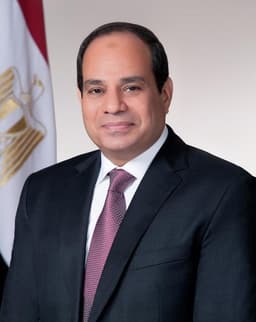
Abdel Fattah el-Sisi
General · Modern
57.0Total

Kuroda Nagamasa
General · Modern
56.8Total
Basic Information
Born
1954
1568
Died
—
1623
Era
Modern
Modern
Nationality
Egypt
Japan
Occupation
General
General
Civilization
Middle Eastern
Eastern
Score Comparison
Military (10%)
50.0
63.3
Political (20%)
68.0
62.7
Influence (20%)
60.0
57.2
Legacy (20%)
42.5
50.0
Leadership (15%)
68.0
62.0
Strategy (15%)
60.0
50.0
TOTAL
57.0
56.8
Abdel Fattah el-Sisi — Complete Timeline
2013 AD
Led Military Coup Ousting President Mohamed MorsiPolitical Action
As Minister of Defense, General el-Sisi led the Egyptian military in removing President Mohamed Morsi from power after mass protests. He suspended the constitution and installed an interim government, sparking a crackdown on the Muslim Brotherhood.
Military CoupEgyptian PoliticsMuslim Brotherhood
Impact: nationaldestructive
Crackdown on Muslim Brotherhood and Political DissentPolitical Action◆ Major
Following the coup, el-Sisi oversaw a severe crackdown on the Muslim Brotherhood, including the violent dispersal of sit-ins at Rabaa al-Adawiya and Nahda squares that killed hundreds. Thousands were arrested, and the group was designated a terrorist organization.
Human RightsRepressionMuslim Brotherhood
Impact: nationaldestructive
2014 AD
Launched the Suez Canal ExpansionReform◆ Major
El-Sisi announced a major expansion of the Suez Canal, creating a new 35-kilometer waterway parallel to the existing canal. The project was completed in one year and aimed to increase canal capacity and boost Egypt's economy.
Suez CanalInfrastructureEconomic Development
Impact: globalconstructive
Elected President of EgyptPolitical Action◆ Major
El-Sisi won the presidential election with 96.9% of the vote, though the election was criticized for lacking genuine opposition. His presidency consolidated military rule and launched major infrastructure and economic projects.
ElectionPresidencyAuthoritarianism
Impact: national
2016 AD
Implemented Economic Reform Program with IMFReform◆ Major
El-Sisi's government secured a $12 billion loan from the International Monetary Fund and implemented austerity measures, including floating the Egyptian pound and cutting fuel subsidies. The reforms stabilized the economy but caused inflation and hardship for many Egyptians.
IMFEconomic ReformAusterity
Impact: national
Kuroda Nagamasa — Complete Timeline
1590 AD
Siege of OdawaraWar
Kuroda Nagamasa participated in Toyotomi Hideyoshi's campaign against the Hojo clan. He served as a commander, contributing to the successful siege.
OdawaraHideyoshiCampaign
Impact: national
1600 AD
Battle of SekigaharaWar◆ Major
Kuroda Nagamasa fought for Tokugawa Ieyasu's Eastern Army. He commanded a contingent and played a role in the victory, which solidified Tokugawa's control over Japan.
SekigaharaEastern ArmyTokugawa
Impact: national
1614 AD
Siege of OsakaWar◆ Major
Kuroda Nagamasa fought for the Tokugawa shogunate during the winter and summer campaigns against Toyotomi Hideyori. He commanded troops in the siege, which ended with the destruction of the Toyotomi clan.
OsakaTokugawaSiege
Impact: national
Expert Analysis
Origins
Abdel Fattah el-Sisi was born on November 19, 1954, in Cairo, Egypt, into a middle-class family. His father was a shopkeeper, and his mother was a housewife. He attended the Egyptian Military Academy, graduating in 1977, and later studied at the British Army Staff College in the UK. El-Sisi's early career was marked by a steady rise through the ranks of the Egyptian military, with stints as a military attaché in Saudi Arabia and as commander of the Northern Military Region.
Kuroda Nagamasa was born on December 3, 1568, in Himeji, Japan, as the son of Kuroda Kanbei, a renowned strategist. He grew up in a samurai household during the Sengoku period, a time of constant warfare. Nagamasa was trained in military arts from a young age. He served under Toyotomi Hideyoshi and later Tokugawa Ieyasu, participating in key campaigns like the Siege of Odawara (1590) and the Battle of Sekigahara (1600).
Rise to Power
El-Sisi's rise began with his appointment as Minister of Defense in 2012 by President Mohamed Morsi. However, he led the military coup on July 3, 2013, that ousted Morsi after mass protests. He then served as interim leader and was elected president in 2014 with 96.9% of the vote, though the election was criticized for lacking genuine opposition. His consolidation of power involved suppressing the Muslim Brotherhood and other dissent.
Kuroda Nagamasa rose to prominence through his family's influence and his own military service. He fought for Toyotomi Hideyoshi at the Siege of Odawara (1590), which subdued the Hojo clan. His key turning point was the Battle of Sekigahara (1600), where he commanded troops for Tokugawa Ieyasu's Eastern Army. His loyalty and performance earned him a fief and a position as a daimyo under the Tokugawa shogunate.
Leadership & Governance
El-Sisi's leadership is characterized by centralized control and military-backed governance. He launched the Suez Canal expansion in 2014, completed in 2015, costing $8.2 billion. He implemented an economic reform program with the IMF, including floating the Egyptian pound and cutting subsidies, leading to inflation but also stabilizing the economy. His crackdown on the Muslim Brotherhood involved the violent dispersal of sit-ins at Rabaa al-Adawiya and N, resulting in hundreds of deaths. El-Sisi scores 68.0 in Leadership and 68.0 in Political, reflecting his firm control.
Kuroda Nagamasa ruled his fief with a focus on military readiness and loyalty to the Tokugawa shogunate. He participated in the Siege of Osaka (1614-1615), which destroyed the Toyotomi clan. His governance was typical of a daimyo: he maintained order, collected taxes, and provided troops for shogunate campaigns. He scores 62.0 in Leadership and 62.7 in Political, indicating competent but not exceptional administration.
Triumph & Tragedy
El-Sisi's triumphs include stabilizing Egypt after the 2011 revolution, expanding the Suez Canal, and securing IMF support. However, his tragedy lies in the severe human rights abuses: thousands of political prisoners, mass executions, and repression of free speech. The crackdown on the Muslim Brotherhood alienated a significant portion of the population. His military score of 50.0 reflects his background as a general, but his political maneuvering overshadows his military achievements.
Kuroda Nagamasa's triumphs include his role in the unification of Japan under Tokugawa Ieyasu. He fought bravely at Sekigahara and Osaka, contributing to the establishment of the Tokugawa shogunate. His tragedy is that he never achieved the prominence of his father, Kuroda Kanbei, or other major daimyo. He died in 1623, leaving a modest legacy. His military score of 63.3 indicates solid performance, but his influence score of 57.2 shows limited impact beyond his lifetime.
Character & Destiny
El-Sisi is driven by a desire for order and control, viewing himself as the protector of Egypt against instability. His decision-making is methodical and ruthless, as seen in the crackdown on dissent. His character has shaped his destiny: he remains in power through suppression, but his legacy is tainted by authoritarianism. Historians assess him as a strongman who restored stability at the cost of freedom.
Kuroda Nagamasa is remembered as a loyal and capable samurai, but not a visionary leader. He followed orders from superiors like Hideyoshi and Ieyasu. His character—dutiful and unambitious—meant he did not seek to expand his power or influence. His destiny was to be a reliable supporter of the shogunate, not a shogun himself. He scores 62.0 in Strategy, reflecting his competence in battle but not in grand strategy.
Legacy
El-Sisi's legacy is mixed: he restored Egypt's economy and security but at the cost of democratic freedoms. His Suez Canal expansion boosted national pride, but the human rights record has isolated Egypt internationally. His influence score of 60.0 indicates moderate impact, but his legacy score of 42.5 suggests a likely negative long-term assessment. Egypt under el-Sisi remains authoritarian, with no clear succession plan.
Kuroda Nagamasa's legacy is limited to his role in the unification of Japan. He is one of many samurai who served the Tokugawa. His family line continued as daimyo, but his personal impact is minor. His legacy score of 50.0 reflects average historical importance. He is not widely known outside of Japanese history enthusiasts.
Conclusion
Abdel Fattah el-Sisi has had a greater impact on the world than Kuroda Nagamasa, despite their similar total scores (57.0 vs 56.8). El-Sisi's decisions have shaped the lives of over 100 million Egyptians and affected regional stability in the Middle East. Kuroda Nagamasa, while a competent samurai, operated within a larger system and did not significantly alter the course of history. El-Sisi's higher political and influence scores (68.0 and 60.0) outweigh Kuroda's slightly better military score (63.3). In terms of lasting impact, el-Sisi's authoritarian model and economic reforms will be studied for decades, whereas Kuroda Nagamasa remains a footnote in Japanese history.
Rankings
🥇
Abdel Fattah el-SisiLeader
Mil: 50.0Pol: 68.0Inf: 60.0
57.0
🥈
Kuroda Nagamasa
Mil: 63.3Pol: 62.7Inf: 57.2
56.8
+0.2 behind
How This Comparison Works
Algorithm
Each figure is scored on 6 dimensions (0—100 scale) based on structured historical data: Military (10%), Political (20%), Influence (20%), Legacy (20%), Leadership (15%), Strategy (15%). The weighted total produces the final ranking.
Data Sources
Scores are computed from structured sub-indicators in the database. Scale factors adjust for era (Ancient ×0.85, Modern ×1.0) and civilization size (Eastern ×1.05, Other ×0.80) to account for differences in population and military scale.
Maximum 3 Figures
Comparisons are limited to 2—3 figures to ensure readability and statistical meaningfulness.
Error Margins
±5 points per dimension — Sub-scores are derived from historical records with inherent uncertainty. Two figures within 5 points on a dimension should be considered roughly equivalent in that area.
Total Score Accuracy
±3 points overall — The weighted combination of 6 dimensions produces a total score with approximately ±3 points of uncertainty. Differences of less than 3 points are not statistically significant— the figures are effectively tied.
Known Limitations
- Historical records are incomplete and uneven across civilizations
- Figures from oral-tradition societies may be underrepresented
- Occupation labels can misclassify multi-role figures
- Scores measure capability and impact, not moral character
- Quantitative scoring is a comparison tool, not absolute truth
Capability Radar
Military (10%) — Battles & Warfare
Battles
15
65
Win Rate
20
70
Expansion
10
55
Political (20%) — Governance & Reform
Reform
35
45
Diplomacy
55
60
Economy
40
50
Influence (20%) — Cultural & Global Reach
Cultural
30
40
Global
40
35
Legacy (20%) — Historical Impact
Historical
25
50
Longevity
20
45
Leadership (15%) — Power & Stability
Tenure
60
55
Stability
45
55
Strategy (15%) — Tactics & Innovation
Strategy
30
65
Tactics
25
60
Reform
40
40
Similar Comparisons
Comments & Discussion
No comments yet. Be the first to share your thoughts!