Loading...
Abdel Fattah el-Sisi vs Etienne Macdonald
Abdel Fattah el-Sisi leads by 3.2 pts · 2 figures compared
…
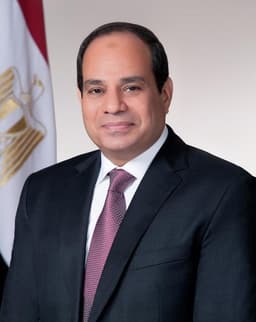
Abdel Fattah el-Sisi
General · Modern
57.0Total
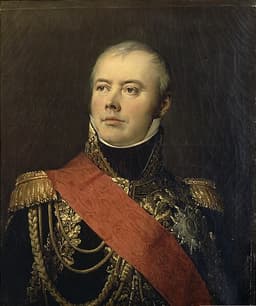
Etienne Macdonald
General · Modern
53.8Total
Basic Information
Born
1954
1765
Died
—
1840
Era
Modern
Modern
Nationality
Egypt
France
Occupation
General
General
Civilization
Middle Eastern
Western
Score Comparison
Military (10%)
50.0
67.5
Political (20%)
68.0
42.2
Influence (20%)
60.0
54.1
Legacy (20%)
42.5
46.7
Leadership (15%)
68.0
65.0
Strategy (15%)
60.0
57.5
TOTAL
57.0
53.8
Abdel Fattah el-Sisi — Complete Timeline
2013 AD
Led Military Coup Ousting President Mohamed MorsiPolitical Action
As Minister of Defense, General el-Sisi led the Egyptian military in removing President Mohamed Morsi from power after mass protests. He suspended the constitution and installed an interim government, sparking a crackdown on the Muslim Brotherhood.
Military CoupEgyptian PoliticsMuslim Brotherhood
Impact: nationaldestructive
Crackdown on Muslim Brotherhood and Political DissentPolitical Action◆ Major
Following the coup, el-Sisi oversaw a severe crackdown on the Muslim Brotherhood, including the violent dispersal of sit-ins at Rabaa al-Adawiya and Nahda squares that killed hundreds. Thousands were arrested, and the group was designated a terrorist organization.
Human RightsRepressionMuslim Brotherhood
Impact: nationaldestructive
2014 AD
Launched the Suez Canal ExpansionReform◆ Major
El-Sisi announced a major expansion of the Suez Canal, creating a new 35-kilometer waterway parallel to the existing canal. The project was completed in one year and aimed to increase canal capacity and boost Egypt's economy.
Suez CanalInfrastructureEconomic Development
Impact: globalconstructive
Elected President of EgyptPolitical Action◆ Major
El-Sisi won the presidential election with 96.9% of the vote, though the election was criticized for lacking genuine opposition. His presidency consolidated military rule and launched major infrastructure and economic projects.
ElectionPresidencyAuthoritarianism
Impact: national
2016 AD
Implemented Economic Reform Program with IMFReform◆ Major
El-Sisi's government secured a $12 billion loan from the International Monetary Fund and implemented austerity measures, including floating the Egyptian pound and cutting fuel subsidies. The reforms stabilized the economy but caused inflation and hardship for many Egyptians.
IMFEconomic ReformAusterity
Impact: national
Etienne Macdonald — Complete Timeline
1809 AD
Battle of WagramWar◆ Major
Macdonald commanded a corps at Wagram. He led a massive infantry assault that broke the Austrian center, earning him the baton of Marshal of the Empire on the battlefield.
Napoleonic WarsBattlePromotion
Impact: regional
1812 AD
Battle of the BerezinaWar◆ Major
Macdonald commanded the X Corps during the retreat from Russia. His corps covered the crossing of the Berezina River, suffering heavy losses but allowing the main army to escape.
Napoleonic WarsRetreatBerezina
Impact: regional
1813 AD
Battle of LeipzigWar◆ Major
Macdonald commanded a corps at Leipzig. His forces were routed by the Allies, and he was wounded while trying to rally his troops during the French defeat.
Napoleonic WarsBattleDefeatWounded
Impact: global
Battle of the KatzbachWar◆ Major
Macdonald commanded the French Army of the Bober at the Katzbach. His forces were defeated by Bl
Napoleonic WarsBattleDefeat
Impact: regional
1815 AD
Grand Chancellor of the Legion of HonourPolitical Action
Macdonald served as Grand Chancellor of the Legion of Honour under the Bourbon Restoration. He administered the order and maintained its prestige.
Legion of HonourBourbon RestorationAdministration
Impact: national
Expert Analysis
Origins
Abdel Fattah el-Sisi was born on November 19, 1954, in Cairo, Egypt, into a middle-class family. His father was a shopkeeper, and his mother was a homemaker. He attended the Egyptian Military Academy, graduating in 1977, and later studied at the Command and Staff College and the Higher Military Academy. His early career was shaped by the era of Anwar Sadat and Hosni Mubarak.
Étienne-Jacques-Joseph-Alexandre Macdonald was born on November 17, 1765, in Sedan, France, to a Scottish Jacobite father and a French mother. His family's Jacobite background meant they were loyal to the Stuart claim. Macdonald joined the French army in 1784, serving initially in the Irish Legion. He rose through the ranks during the French Revolutionary Wars, distinguishing himself at the Battle of Jemappes in 1792.
Rise to Power
El-Sisi's rise came through the military hierarchy. He served as military attaché in Saudi Arabia and later as head of military intelligence. In 2010, he was appointed director of military intelligence. In August 2012, President Mohamed Morsi appointed him Minister of Defense. On July 3, 2013, following mass protests against Morsi, el-Sisi led a military coup that ousted the elected president. He suspended the constitution and installed an interim government. In 2014, he resigned from the military and ran for president, winning with 96.9% of the vote in an election criticized for lacking genuine opposition.
Macdonald's rise was earned on the battlefield. He served under Napoleon in Italy and was promoted to general of division in 1799. He commanded the Army of Naples but was defeated at the Trebbia River in 1799. Despite setbacks, he remained loyal to Napoleon and was given command of a corps. His breakthrough came at the Battle of Wagram on July 5-6, 1809, where he led a massive infantry assault that broke the Austrian center. Napoleon awarded him the baton of Marshal of the Empire on the field.
Leadership & Governance
El-Sisi's leadership is authoritarian and centralized. He has consolidated power, suppressing political dissent, particularly against the Muslim Brotherhood. He launched economic reforms, including a $12 billion IMF loan program, floating the Egyptian pound, and cutting subsidies. He oversaw the Suez Canal expansion, completed in 2015. However, his rule has been marked by severe human rights abuses, including mass arrests and forced disappearances. His political score is 68.0, reflecting his grip on power, but his military score is only 50.0, as his military background is more political than operational.
Macdonald's leadership was tactical and on the battlefield. He commanded corps with discipline and courage but lacked the strategic brilliance of other marshals. He scored 67.5 in military, reflecting solid performance. He was known for his loyalty and bravery, but his independent command at the Katzbach in 1813 resulted in defeat by Blücher. After Napoleon's fall, he served the Bourbon Restoration as Grand Chancellor of the Legion of Honour, showing political adaptability.
Triumph & Tragedy
El-Sisi's greatest triumph is his consolidation of power and the Suez Canal expansion, which boosted Egypt's prestige. However, his greatest tragedy is the violent crackdown on the Muslim Brotherhood, including the Rabaa massacre in August 2013, where security forces killed hundreds of protesters. This led to international condemnation and entrenched instability. His legacy is tainted by repression, scoring only 42.5.
Macdonald's triumph was at Wagram, earning his marshal's baton. He also performed well at the Berezina, covering the French retreat. His tragedy was at Leipzig in 1813, where his corps was routed and he was wounded. The defeat contributed to Napoleon's downfall. He also suffered a defeat at the Katzbach earlier in 1813. His legacy is mixed, scoring 46.7.
Character & Destiny
El-Sisi is methodical and risk-averse in governance, but ruthless in suppressing opposition. His character shaped his destiny: he seized power to restore order but created a police state. He is seen as a strongman but lacks the charisma of earlier Egyptian leaders.
Macdonald was loyal and courageous, but not a strategic genius. His character led him to serve Napoleon faithfully, but he was often outmatched by opponents like Blücher. His Scottish heritage and Jacobite family gave him a sense of honor, but also a lack of political ambition.
Legacy
El-Sisi's legacy is still unfolding. He has reshaped Egypt's political landscape, crushing the Muslim Brotherhood and restoring military rule. His economic reforms have stabilized the economy but at a social cost. His influence score is 60.0, but his legacy is uncertain due to repression.
Macdonald's legacy is as a capable but not exceptional marshal. He is remembered for his service at Wagram and the Berezina, but also for his defeats. His name is inscribed on the Arc de Triomphe, and he remains a minor figure in Napoleonic lore.
Conclusion
El-Sisi has greater impact due to his direct influence on a nation of over 100 million people. His total score of 57.0 edges out Macdonald's 53.8. While Macdonald was a competent general, el-Sisi's actions have reshaped Egypt and the Middle East. His authoritarian rule and economic reforms define modern Egypt. Macdonald's military achievements, while notable, are confined to a historical era. Thus, el-Sisi holds greater contemporary relevance and impact.
Rankings
🥇
Abdel Fattah el-SisiLeader
Mil: 50.0Pol: 68.0Inf: 60.0
57.0
🥈
Etienne Macdonald
Mil: 67.5Pol: 42.2Inf: 54.1
53.8
+3.2 behind
How This Comparison Works
Algorithm
Each figure is scored on 6 dimensions (0—100 scale) based on structured historical data: Military (10%), Political (20%), Influence (20%), Legacy (20%), Leadership (15%), Strategy (15%). The weighted total produces the final ranking.
Data Sources
Scores are computed from structured sub-indicators in the database. Scale factors adjust for era (Ancient ×0.85, Modern ×1.0) and civilization size (Eastern ×1.05, Other ×0.80) to account for differences in population and military scale.
Maximum 3 Figures
Comparisons are limited to 2—3 figures to ensure readability and statistical meaningfulness.
Error Margins
±5 points per dimension — Sub-scores are derived from historical records with inherent uncertainty. Two figures within 5 points on a dimension should be considered roughly equivalent in that area.
Total Score Accuracy
±3 points overall — The weighted combination of 6 dimensions produces a total score with approximately ±3 points of uncertainty. Differences of less than 3 points are not statistically significant— the figures are effectively tied.
Known Limitations
- Historical records are incomplete and uneven across civilizations
- Figures from oral-tradition societies may be underrepresented
- Occupation labels can misclassify multi-role figures
- Scores measure capability and impact, not moral character
- Quantitative scoring is a comparison tool, not absolute truth
Capability Radar
Military (10%) — Battles & Warfare
Battles
15
65
Win Rate
20
60
Expansion
10
55
Political (20%) — Governance & Reform
Reform
35
20
Diplomacy
55
40
Economy
40
25
Influence (20%) — Cultural & Global Reach
Cultural
30
25
Global
40
30
Legacy (20%) — Historical Impact
Historical
25
40
Longevity
20
30
Leadership (15%) — Power & Stability
Tenure
60
45
Stability
45
35
Strategy (15%) — Tactics & Innovation
Strategy
30
60
Tactics
25
55
Reform
40
30
Similar Comparisons
Comments & Discussion
No comments yet. Be the first to share your thoughts!