Loading...
Abd al-Mumin vs Mahmud of Ghazni
Abd al-Mumin leads by 2.0 pts · 2 figures compared
…
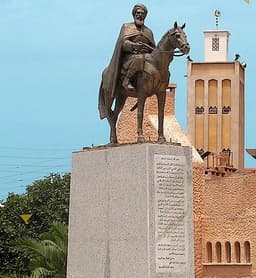
Abd al-Mumin
Emperor · Medieval
64.7Total
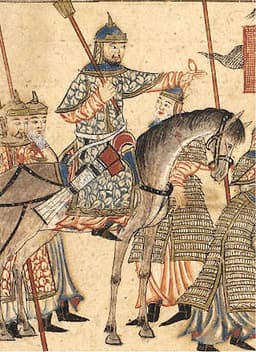
Mahmud of Ghazni
Emperor · Medieval
62.7Total
Basic Information
Born
1094
971
Died
1163
1030
Era
Medieval
Medieval
Nationality
Almohad Caliphate
Ghaznavid Empire
Occupation
Emperor
Emperor
Civilization
Middle Eastern
Middle Eastern
Score Comparison
Military (10%)
78.5
82.0
Political (20%)
70.0
60.0
Influence (20%)
58.3
55.0
Legacy (20%)
52.0
52.0
Leadership (15%)
79.8
79.8
Strategy (15%)
68.0
68.0
TOTAL
64.7
62.7
Abd al-Mumin — Complete Timeline
1130 AD
Proclamation as CaliphPolitical Action
After the death of Ibn Tumart, Abd al-Mumin was proclaimed caliph of the Almohad movement. He consolidated the Berber tribes of the High Atlas under Almohad doctrine, establishing the foundation for a new dynasty that would challenge Almoravid rule.
Almohad CaliphateSuccessionDynasty Foundation
Impact: regionalconstructive
1147 AD
Conquest of MarrakeshWar◆ Major
Abd al-Mumin captured Marrakesh, the capital of the Almoravid Empire, after a prolonged siege. The Almoravid ruler Ishaq ibn Ali was killed, and the city became the Almohad capital, marking the end of Almoravid rule in North Africa.
Almohad ConquestMarrakeshAlmoravid Fall
Impact: regionaldestructive
1152 AD
Conquest of the MaghrebWar◆ Major
Abd al-Mumin extended Almohad control across the Maghreb, conquering cities such as Fez, Tlemcen, and Algiers. He defeated local Berber dynasties and unified the region from the Atlantic to Tripolitania under a single centralized administration.
Maghreb UnificationAlmohad ExpansionBerber Conquest
Impact: regionalconstructive
1154 AD
Invasion of Al-AndalusWar◆ Major
Abd al-Mumin launched a campaign into Al-Andalus, capturing cities including C
Al-AndalusAlmohad ExpansionIberian Campaign
Impact: regionalconstructive
1156 AD
Establishment of Almohad AdministrationReform◆ Major
Abd al-Mumin implemented a centralized administrative system across his empire, appointing governors and judges loyal to the Almohad doctrine. He standardized taxation and military organization, creating a stable state structure that lasted for decades.
Administrative ReformAlmohad StateCentralization
Impact: regionalconstructive
Mahmud of Ghazni — Complete Timeline
1001 AD
Seventeen Raids into IndiaWar◆ Major
Mahmud of Ghazni conducted seventeen military campaigns into the Indian subcontinent between 1001 and 1027. He plundered wealthy Hindu temples and kingdoms, including Somnath, Mathura, and Kannauj, amassing enormous wealth and spreading Ghaznavid influence.
Indian RaidsPlunderTemple Destruction
Impact: regionaldestructive
1006 AD
Battle of CharkhWar◆ Major
Mahmud defeated the Hindu Shahi king Jayapala at the Battle of Charkh near Peshawar. Jayapala committed suicide after the defeat, and Mahmud annexed the Hindu Shahi kingdom, establishing Ghaznavid rule over the Punjab region.
BattleHindu ShahiPunjab
Impact: regional
1010 AD
Patronage of Persian CultureCultural◆ Major
Mahmud patronized Persian poets, scholars, and artists at his court in Ghazni. He commissioned the Persian poet Ferdowsi to write the Shahnameh, though they later quarreled over payment. His court became a center of Persian literature and Islamic learning.
PatronagePersian LiteratureShahnameh
Impact: regionalconstructive
1025 AD
Sack of Somnath TempleWar◆ Major
Mahmud led a raid to the Somnath temple in Gujarat, one of the wealthiest Hindu temples. He destroyed the temple and carried away its treasures, including the famous lingam, which he sent to Ghazni. This event became legendary in both Islamic and Hindu traditions.
Temple DestructionSomnathPlunder
Impact: regionaldestructive
Expert Analysis
Origins
**Abd al-Mumin** (c. 1094–1163) was born in the village of Tagra, near Tlemcen in modern-day Algeria, to a Berber family of the Kumiya tribe. His early education focused on Islamic sciences, and he studied in the city of Béjaïa before meeting Ibn Tumart, the founder of the Almohad movement, in 1117. Ibn Tumart recognized his potential and appointed him as his successor. Abd al-Mumin's formative years were shaped by his loyalty to Ibn Tumart and his mastery of Berber tribal politics.
**Mahmud of Ghazni** (971–1030) was born in the city of Ghazni, in present-day Afghanistan, the son of Sultan Sebuktigin, a former Turkic slave who founded the Ghaznavid dynasty. Mahmud was raised in a military court and participated in his father's campaigns. He was well-educated in Persian and Arabic literature, and his early military experience included battles against the Samanids and the Hindu Shahi kingdom. His half-brother Ismail briefly succeeded Sebuktigin, but Mahmud seized power in 998 after a civil war.
Rise to Power
**Abd al-Mumin** rose to prominence as the chief lieutenant of Ibn Tumart, the self-proclaimed Mahdi who founded the Almohad movement in the Atlas Mountains. After Ibn Tumart's death in 1130, Abd al-Mumin concealed his death for two years to consolidate control over the Berber tribes. He was proclaimed caliph in 1132 and immediately faced opposition from the Almoravid Empire, which controlled much of North Africa. His first major military campaign targeted Marrakesh, the Almoravid capital, which fell after a siege in 1147. This victory eliminated the Almoravid dynasty and established Almohad rule over Morocco.
**Mahmud of Ghazni** claimed the throne after defeating his brother Ismail at the Battle of Ghazni in 998. He quickly consolidated power by securing the allegiance of the Turkic military elite and launching campaigns against neighboring regions. His early reign focused on expanding Ghaznavid territory in Khorasan and Transoxiana, often at the expense of the Samanids and the Buyids. However, his most famous campaigns were the seventeen raids into the Indian subcontinent between 1001 and 1027, which brought immense wealth and prestige.
Leadership & Governance
**Abd al-Mumin** ruled as a theocratic caliph, implementing the strict Unitarian doctrine of Ibn Tumart. He established a centralized administration with governors (walis) and judges (qadis) appointed directly by the caliph. He standardized the coinage, promoted trade, and built infrastructure such as roads and mosques. His governance was marked by religious zeal, but he also tolerated non-Muslim communities under dhimmi status. His military leadership was characterized by strategic patience and the use of Berber tribal levies combined with Andalusian siege techniques.
**Mahmud of Ghazni** ruled as a sultan with absolute authority, relying on a Turkic military slave system (ghulams). He patronized Persian culture and Sunni orthodoxy, but his governance was primarily extractive: he funded his court and army through plunder from India. He did not establish lasting administrative structures in the raided territories, instead focusing on the flow of wealth to Ghazni. His leadership was aggressive and personal, often leading campaigns himself. He scored 79.8 in leadership, slightly below Abd al-Mumin's 79.8 (tied), but his political score of 60.0 reflects his lack of sustainable governance compared to Abd al-Mumin's 70.0.
Triumph & Tragedy
**Abd al-Mumin's** greatest triumph was the unification of the Maghreb under Almohad rule, an achievement that had eluded previous Berber dynasties. He conquered from the Atlantic coast to Tripoli, creating an empire that spanned over 2,000 kilometers. His invasion of Al-Andalus brought Córdoba and Seville under his control, extending Almohad influence into Europe. However, his greatest failure was the overextension of his empire: the Almohad state struggled to maintain control over such a vast territory, leading to revolts in later decades. His religious intolerance also alienated many subjects.
**Mahmud of Ghazni's** greatest triumph was the seventeen successful raids into India, which brought unprecedented wealth to Ghazni and made him a legendary figure in Islamic history. The sack of Somnath in 1024 yielded enormous treasures, including the famous lingam of the temple. However, his failure was the lack of lasting conquest: he never annexed territory beyond the Indus, and his raids did not lead to permanent Islamic rule in India. His military score of 82.0 is higher than Abd al-Mumin's 78.5, but his legacy is more ephemeral.
Character & Destiny
**Abd al-Mumin** was a patient, calculating leader who excelled at tribal diplomacy. He maintained the loyalty of diverse Berber groups through a mix of religious ideology and pragmatic appointments. His character was shaped by his devotion to Ibn Tumart's doctrine, but he was also a pragmatist who adapted to circumstances. His destiny was to build an empire that would outlast him by several decades, though internal divisions eventually weakened it.
**Mahmud of Ghazni** was a restless, ambitious warrior who constantly sought new conquests and plunder. He was known for his piety but also his ruthlessness. His character drove him to seventeen campaigns, but his lack of interest in governance meant his empire relied on his personal leadership. After his death, the Ghaznavid Empire declined rapidly, losing territory to the Seljuks and others. Historians note that his raids, while destructive, did not create a lasting political structure.
Legacy
**Abd al-Mumin's** legacy is the establishment of the Almohad Caliphate, which ruled North Africa and parts of Spain for over a century. His administrative reforms influenced later Berber dynasties, and his patronage of learning, including the construction of the Kutubiyya Mosque in Marrakesh, had a lasting cultural impact. His influence score of 58.3 reflects his role in shaping the medieval Maghreb.
**Mahmud of Ghazni's** legacy is more ambiguous. He is remembered as a great warrior and patron of Persian culture; his court attracted Ferdowsi, who wrote the Shahnameh, and other scholars. However, his raids contributed to the decline of Hindu kingdoms and the spread of Islam in India, but not through conversion or governance. His legacy score of 52.0 is tied with Abd al-Mumin's 52.0.
Conclusion
Abd al-Mumin had a greater overall impact due to his creation of a durable empire and administrative system. While Mahmud of Ghazni scored higher in military (82.0 vs 78.5), Abd al-Mumin's political acumen (70.0 vs 60.0) and ability to build a lasting state give him the edge. The total scores reflect this: Abd al-Mumin 64.7, Mahmud 62.7. Abd al-Mumin's unification of the Maghreb was a transformative event that shaped North African history, while Mahmud's raids, though spectacular, left no permanent territorial or institutional legacy.
Rankings
🥇
Abd al-MuminLeader
Mil: 78.5Pol: 70.0Inf: 58.3
64.7
🥈
Mahmud of Ghazni
Mil: 82.0Pol: 60.0Inf: 55.0
62.7
+2.0 behind
How This Comparison Works
Algorithm
Each figure is scored on 6 dimensions (0—100 scale) based on structured historical data: Military (10%), Political (20%), Influence (20%), Legacy (20%), Leadership (15%), Strategy (15%). The weighted total produces the final ranking.
Data Sources
Scores are computed from structured sub-indicators in the database. Scale factors adjust for era (Ancient ×0.85, Modern ×1.0) and civilization size (Eastern ×1.05, Other ×0.80) to account for differences in population and military scale.
Maximum 3 Figures
Comparisons are limited to 2—3 figures to ensure readability and statistical meaningfulness.
Error Margins
±5 points per dimension — Sub-scores are derived from historical records with inherent uncertainty. Two figures within 5 points on a dimension should be considered roughly equivalent in that area.
Total Score Accuracy
±3 points overall — The weighted combination of 6 dimensions produces a total score with approximately ±3 points of uncertainty. Differences of less than 3 points are not statistically significant— the figures are effectively tied.
Known Limitations
- Historical records are incomplete and uneven across civilizations
- Figures from oral-tradition societies may be underrepresented
- Occupation labels can misclassify multi-role figures
- Scores measure capability and impact, not moral character
- Quantitative scoring is a comparison tool, not absolute truth
Capability Radar
Military (10%) — Battles & Warfare
Battles
85
85
Win Rate
90
90
Expansion
90
85
Political (20%) — Governance & Reform
Reform
85
70
Diplomacy
70
65
Economy
75
75
Influence (20%) — Cultural & Global Reach
Cultural
65
60
Global
55
60
Legacy (20%) — Historical Impact
Historical
70
70
Longevity
60
65
Leadership (15%) — Power & Stability
Tenure
80
80
Stability
70
70
Strategy (15%) — Tactics & Innovation
Strategy
85
85
Tactics
80
80
Reform
75
75
Similar Comparisons
Comments & Discussion
No comments yet. Be the first to share your thoughts!