Loading...
Abd al-Mumin vs Alfonso X of Castile
Abd al-Mumin leads by 10.1 pts · 2 figures compared
…
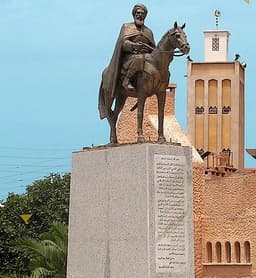
Abd al-Mumin
Emperor · Medieval
64.7Total
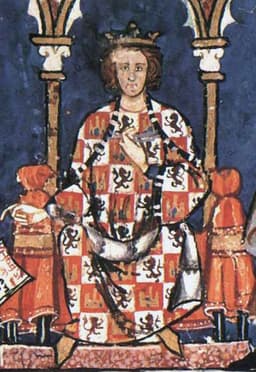
Alfonso X of Castile
Emperor · Medieval
54.6Total
Basic Information
Born
1094
1221
Died
1163
1284
Era
Medieval
Medieval
Nationality
Almohad Caliphate
Holy Roman Empire
Occupation
Emperor
Emperor
Civilization
Middle Eastern
Western
Score Comparison
Military (10%)
78.5
45.0
Political (20%)
70.0
53.8
Influence (20%)
58.3
65.0
Legacy (20%)
52.0
40.0
Leadership (15%)
79.8
65.0
Strategy (15%)
68.0
60.0
TOTAL
64.7
54.6
Abd al-Mumin — Complete Timeline
1130 AD
Proclamation as CaliphPolitical Action
After the death of Ibn Tumart, Abd al-Mumin was proclaimed caliph of the Almohad movement. He consolidated the Berber tribes of the High Atlas under Almohad doctrine, establishing the foundation for a new dynasty that would challenge Almoravid rule.
Almohad CaliphateSuccessionDynasty Foundation
Impact: regionalconstructive
1147 AD
Conquest of MarrakeshWar◆ Major
Abd al-Mumin captured Marrakesh, the capital of the Almoravid Empire, after a prolonged siege. The Almoravid ruler Ishaq ibn Ali was killed, and the city became the Almohad capital, marking the end of Almoravid rule in North Africa.
Almohad ConquestMarrakeshAlmoravid Fall
Impact: regionaldestructive
1152 AD
Conquest of the MaghrebWar◆ Major
Abd al-Mumin extended Almohad control across the Maghreb, conquering cities such as Fez, Tlemcen, and Algiers. He defeated local Berber dynasties and unified the region from the Atlantic to Tripolitania under a single centralized administration.
Maghreb UnificationAlmohad ExpansionBerber Conquest
Impact: regionalconstructive
1154 AD
Invasion of Al-AndalusWar◆ Major
Abd al-Mumin launched a campaign into Al-Andalus, capturing cities including C
Al-AndalusAlmohad ExpansionIberian Campaign
Impact: regionalconstructive
1156 AD
Establishment of Almohad AdministrationReform◆ Major
Abd al-Mumin implemented a centralized administrative system across his empire, appointing governors and judges loyal to the Almohad doctrine. He standardized taxation and military organization, creating a stable state structure that lasted for decades.
Administrative ReformAlmohad StateCentralization
Impact: regionalconstructive
Alfonso X of Castile — Complete Timeline
1252 AD
Commissioned the Alfonsine TablesCultural◆ Major
Alfonso X commissioned the Alfonsine Tables, a set of astronomical tables based on Ptolemaic models. These tables were used by European astronomers for centuries and became a standard reference in medieval science.
AstronomyScienceCultural Patronage
Impact: globalconstructive
1257 AD
Elected King of GermanyPolitical Action◆ Major
Alfonso X of Castile was elected King of Germany by a faction of prince-electors, opposing Richard of Cornwall. This election was part of the Great Interregnum, with Alfonso receiving support from the Hohenstaufen loyalists and the Papacy.
ElectionGreat InterregnumCastilian Claim
Impact: regional
Never Visited GermanyPolitical Action◆ Major
Alfonso X never traveled to Germany to assert his claim to the throne. His absence weakened his authority, and he was unable to secure effective control over the German kingdom, leaving the title contested.
AbsenceGreat InterregnumRival Claimant
Impact: regional
1275 AD
Renounced Claim to German ThronePolitical Action◆ Major
Alfonso X formally renounced his claim to the German throne in favor of Rudolf of Habsburg. This renunciation ended the Great Interregnum and allowed Rudolf to be recognized as the legitimate king of Germany.
RenunciationGreat InterregnumRudolf of Habsburg
Impact: regional
Expert Analysis
Origins
Abd al-Mumin was born around 1094 in the village of Tagra, near Tlemcen in present-day Algeria. He belonged to the Zenata Berber tribe and received a traditional Islamic education. He met Ibn Tumart, the founder of the Almohad movement, during a journey to the east and became his foremost disciple. After Ibn Tumart's death in 1130, Abd al-Mumin emerged as the leader of the Almohads, consolidating the Berber tribes of the High Atlas under his authority.
Alfonso X was born on November 23, 1221, in Toledo, Castile, as the eldest son of King Ferdinand III of Castile and Elisabeth of Swabia. He received a comprehensive education in sciences, languages, and law, reflecting the multicultural environment of Toledo. His upbringing prepared him for kingship but also fostered intellectual pursuits that would later define his reign.
Rise to Power
Abd al-Mumin's rise began after the death of Ibn Tumart in 1130. He was proclaimed caliph of the Almohad movement, despite not being a Masmuda Berber like many followers. He skillfully navigated tribal rivalries and military campaigns. In 1147, after a prolonged siege, he captured Marrakesh, the capital of the Almoravid Empire, killing the Almoravid ruler Ishaq ibn Ali. This victory marked the effective end of Almoravid rule. He then extended Almohad control across the Maghreb, conquering Fez (1145), Tlemcen (1145), and Algiers (1152), defeating local Berber dynasties such as the Banu Ghaniya.
Alfonso X ascended to the Castilian throne in 1252 upon the death of his father. However, his ambition extended beyond Iberia. In 1257, he was elected King of Germany by a faction of prince-electors opposed to Richard of Cornwall, as part of the Great Interregnum. Alfonso never visited Germany, and his claim remained nominal. He was unable to secure effective control, and his absence weakened his authority. He formally renounced his claim in 1275 in favor of Rudolf of Habsburg.
Leadership & Governance
Abd al-Mumin established a centralized administrative system across his empire, appointing governors and judges loyal to the Almohad doctrine. He standardized tax collection and promoted the Almohad religious ideology, which emphasized the unity of God and rejected anthropomorphism. His governance was effective in maintaining control over a vast territory stretching from present-day Morocco to Tripoli. He also launched campaigns into Al-Andalus, capturing Córdoba (1148) and Seville (1147) from the Almoravid remnants. His military score of 78.5 reflects his conquests, while his political score of 70.0 indicates his administrative success.
Alfonso X's governance focused on legal and cultural reforms. He commissioned the Alfonsine Tables, astronomical tables based on Ptolemaic models that were used by European astronomers for centuries. He also oversaw the compilation of the Siete Partidas, a comprehensive legal code that influenced later Spanish law. However, his military and political scores are lower (45.0 and 53.8 respectively), as he faced rebellions from nobles and failed to assert his claim to the German throne. His leadership score of 65.0 reflects his intellectual patronage but also his inability to manage internal conflicts.
Triumph & Tragedy
Abd al-Mumin's greatest triumph was the unification of the Maghreb under Almohad rule, creating an empire that rivaled the earlier Almoravids. He successfully integrated Berber and Arab elements into a cohesive state. His tragedy came in his later years when he faced challenges from the Banu Ghaniya and internal dissent. He died in 1163, leaving a relatively stable empire to his successors, but the Almohad state later declined due to overextension and religious rigidity.
Alfonso X's triumph was his intellectual legacy. The Alfonsine Tables remained standard in Europe until the 16th century. His legal codes and promotion of translation from Arabic made Toledo a center of learning. His tragedy was his political failure: he never secured the German throne, his military campaigns against the Moors were inconclusive, and he faced a rebellion by his son Sancho in his final years. He died in 1284, disillusioned and overshadowed by his failures.
Character & Destiny
Abd al-Mumin was a pragmatic and determined leader. He combined religious zeal with political acumen, using the Almohad doctrine to unite diverse tribes. His character shaped his destiny: his ability to delegate and maintain loyalty allowed him to build a vast empire. However, his harsh suppression of dissent created long-term instability. Historical assessments credit him as a founder of a major dynasty, but his legacy is often overshadowed by the later Almohad decline.
Alfonso X was a scholar-king, more interested in learning than in warfare. His intellectual curiosity drove his patronage, but his lack of political focus led to his failures. He was described as a 'wise king' but not a strong one. His character led him to pursue the German throne without the means to enforce it, wasting resources. His destiny was to be remembered for his cultural contributions rather than his political achievements.
Legacy
Abd al-Mumin's legacy is the Almohad Empire, which dominated the western Islamic world for over a century. His centralized administration influenced later Maghreb states. However, his religious intolerance and forced conversions contributed to the eventual fragmentation of the empire. His legacy score of 52.0 reflects this mixed impact.
Alfonso X's legacy is primarily cultural. The Alfonsine Tables advanced astronomy, and the Siete Partidas laid foundations for Spanish law. His patronage of translations preserved and transmitted knowledge from Arabic and Hebrew sources. His legacy score of 40.0 is lower, partly because his political failures overshadowed his intellectual work. He is remembered as 'the Wise' but also as a king who overreached.
Conclusion
Abd al-Mumin had a greater impact in terms of immediate power and territorial control. His total score of 64.7 significantly exceeds Alfonso X's 54.6. While Alfonso X's intellectual contributions were valuable, they did not match the scale of Abd al-Mumin's empire-building. Abd al-Mumin's military and leadership scores (78.5 and 79.8) demonstrate his effectiveness as a conqueror and ruler. Alfonso X's political failures and lack of military success limit his impact. Therefore, Abd al-Mumin is the more significant historical figure in terms of power and influence.
Rankings
🥇
Abd al-MuminLeader
Mil: 78.5Pol: 70.0Inf: 58.3
64.7
🥈
Alfonso X of Castile
Mil: 45.0Pol: 53.8Inf: 65.0
54.6
+10.1 behind
How This Comparison Works
Algorithm
Each figure is scored on 6 dimensions (0—100 scale) based on structured historical data: Military (10%), Political (20%), Influence (20%), Legacy (20%), Leadership (15%), Strategy (15%). The weighted total produces the final ranking.
Data Sources
Scores are computed from structured sub-indicators in the database. Scale factors adjust for era (Ancient ×0.85, Modern ×1.0) and civilization size (Eastern ×1.05, Other ×0.80) to account for differences in population and military scale.
Maximum 3 Figures
Comparisons are limited to 2—3 figures to ensure readability and statistical meaningfulness.
Error Margins
±5 points per dimension — Sub-scores are derived from historical records with inherent uncertainty. Two figures within 5 points on a dimension should be considered roughly equivalent in that area.
Total Score Accuracy
±3 points overall — The weighted combination of 6 dimensions produces a total score with approximately ±3 points of uncertainty. Differences of less than 3 points are not statistically significant— the figures are effectively tied.
Known Limitations
- Historical records are incomplete and uneven across civilizations
- Figures from oral-tradition societies may be underrepresented
- Occupation labels can misclassify multi-role figures
- Scores measure capability and impact, not moral character
- Quantitative scoring is a comparison tool, not absolute truth
Capability Radar
Military (10%) — Battles & Warfare
Battles
85
30
Win Rate
90
25
Expansion
90
30
Political (20%) — Governance & Reform
Reform
85
70
Diplomacy
70
55
Economy
75
65
Influence (20%) — Cultural & Global Reach
Cultural
65
85
Global
55
60
Legacy (20%) — Historical Impact
Historical
70
80
Longevity
60
75
Leadership (15%) — Power & Stability
Tenure
80
60
Stability
70
40
Strategy (15%) — Tactics & Innovation
Strategy
85
40
Tactics
80
35
Reform
75
45
Similar Comparisons
Comments & Discussion
No comments yet. Be the first to share your thoughts!