Loading...
Abbas I vs Turenne
Abbas I leads by 5.6 pts · 2 figures compared
…
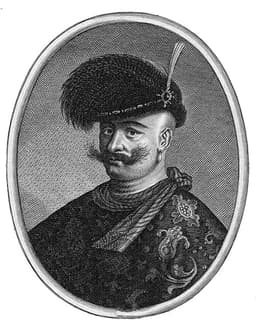
Abbas I
Emperor · Modern
81.4Total
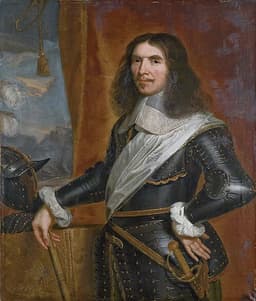
Turenne
General · Modern
75.8Total
Basic Information
Born
1571
1611
Died
1629
1675
Era
Modern
Modern
Nationality
Persia
France
Occupation
Emperor
General
Civilization
Middle Eastern
Western
Score Comparison
Military (10%)
82.0
79.9
Political (20%)
90.0
72.0
Influence (20%)
75.0
88.0
Legacy (20%)
82.0
65.0
Leadership (15%)
81.7
77.2
Strategy (15%)
82.0
72.0
TOTAL
81.4
75.8
Abbas I — Complete Timeline
1590 AD
Reformed the Army with GhulamsReform
Abbas I created a standing army of ghulams (military slaves) recruited from Christian subjects in the Caucasus, particularly Georgians and Armenians. This reduced reliance on the Qizilbash tribal forces, increased royal control, and modernized the military with firearms and artillery.
Military ReformGhulam SystemCentralization
Impact: nationalconstructive
1598 AD
Relocated Capital to IsfahanPolitical Action
Abbas I moved the Safavid capital from Qazvin to Isfahan, transforming it into a magnificent city with grand architecture, including Naqsh-e Jahan Square, the Shah Mosque, and the Ali Qapu Palace. This relocation became a symbol of Safavid power and cultural flourishing.
Capital RelocationUrban PlanningArchitecture
Impact: globalconstructive
1599 AD
Established Diplomatic Relations with EuropePolitical Action◆ Major
Abbas I sent diplomatic missions to European courts, including those of Philip III of Spain, Rudolf II of the Holy Roman Empire, and Elizabeth I of England, seeking alliances against the Ottoman Empire. These missions opened sustained diplomatic and commercial exchanges between Safavid Persia and Europe.
DiplomacyEuropean RelationsAnti-Ottoman Alliance
Impact: globalconstructive
1605 AD
Battle of SufiyanWar◆ Major
Abbas I defeated an Ottoman army near Sufiyan, securing Safavid control over Azerbaijan and the Caucasus. This victory was part of the Ottoman-Safavid War of 1603-1618, which resulted in the recapture of Tabriz, Nakhchivan, and Yerevan from Ottoman occupation.
Ottoman-Safavid WarBattleTerritorial Recovery
Impact: regional
1622 AD
Expelled Portuguese from HormuzWar◆ Major
Abbas I, with support from the English East India Company, captured the island of Hormuz from Portuguese control. This ended Portuguese dominance in the Persian Gulf and opened direct trade routes for Safavid Persia with Europe, boosting the silk trade.
Persian GulfTradeEuropean Relations
Impact: globalconstructive
1623 AD
Recaptured BaghdadWar◆ Major
Abbas I captured Baghdad from the Ottoman Empire after a siege, restoring Safavid control over Iraq. This victory expanded Safavid territory and gave Abbas control over important Shi'a pilgrimage sites like Najaf and Karbala.
Ottoman-Safavid WarConquestShi'a Sites
Impact: regional
Turenne — Complete Timeline
1639 AD
Campaign in the ValtellinaWar
Turenne commanded French forces in the Valtellina during the Thirty Years' War. He captured several fortresses and secured the strategic pass for France, demonstrating his early military skill.
Thirty Years' WarAlpsEarly Career
Impact: regional
1658 AD
Battle of the DunesWar◆ Major
Turenne commanded the French army to victory over the Spanish at the Battle of the Dunes near Dunkirk. The victory led to the capture of Dunkirk and forced Spain to seek peace, ending the Franco-Spanish War.
Franco-Spanish WarDunkirkMilitary Victory
Impact: regional
1674 AD
Battle of the RhineWar◆ Major
Turenne led a French army across the Rhine in winter, surprising the Imperial forces. He defeated the Austrians at the Battle of Entzheim and later at Turckheim, securing French control of Alsace.
Franco-Dutch WarAlsaceWinter Campaign
Impact: regional
Battle of the SambreWar◆ Major
Turenne defeated the Spanish and Dutch forces at the Battle of Seneffe. The battle was costly but prevented the Allies from invading France. It demonstrated Turenne's tactical skill in defensive warfare.
Franco-Dutch WarDefensive BattleTactics
Impact: regional
1675 AD
Death of TurenneWar◆ Major
Turenne was killed by a cannonball while reconnoitering enemy positions at the Battle of Sasbach. His death was a major loss for France. He was buried with honors in the Basilica of Saint-Denis.
Death in BattleFranco-Dutch WarMilitary Loss
Impact: nationaltragic
Expert Analysis
Origins
**Abbas I** (1571–1629) was the fifth Safavid Shah of Iran, inheriting a fractured empire from his father Shah Mohammad Khodabanda. Born into a dynasty that blended Turkic warrior traditions with Persian administrative culture, Abbas was forced to flee as a child during a coup. He seized the throne in 1588 at age 17, after a period of civil war and foreign encroachment by the Ottoman Empire and Uzbeks. His early life was marked by insecurity and violence, shaping his ruthless pragmatism.
**Henri de La Tour d'Auvergne, Vicomte de Turenne** (1611–1675) was born into a noble French family, the second son of the Duke of Bouillon. Raised in the Protestant faith, he received military training from his uncles, including Maurice of Nassau. He began his career in the Dutch States Army before joining the French army under Louis XIII. His origins were in the heart of European aristocratic warfare, where command was a birthright honed by experience.
Rise to Power
Abbas I’s rise was swift and brutal. After becoming shah, he immediately faced the Ottoman threat. In 1590, he signed a humiliating peace treaty ceding territory to focus on internal consolidation. He then turned on the Uzbeks, defeating them in 1598 at the Battle of Sufiyan, securing his eastern borders. To centralize power, he eliminated the Qizilbash tribal elite by creating a new corps of *ghulams* (military slaves) from Circassian, Georgian, and Armenian captives. He also moved his capital from Qazvin to Isfahan in 1598, transforming it into a magnificent city.
Turenne’s rise was gradual but steady. He distinguished himself in the Thirty Years' War, capturing Breisach in 1638 and winning at Casale. During the Fronde (1648–1653), he initially supported the rebels but later switched to the royal side, becoming a key commander for Louis XIV. He was appointed Marshal of France in 1643 at age 32. His loyalty to the crown earned him command of the French armies in the Franco-Spanish War and later the War of Devolution.
Leadership & Governance
Abbas I was an absolute ruler who personally directed state affairs. He reformed the army by integrating ghulams into artillery and infantry, reducing reliance on tribal cavalry. He fostered trade with European powers, especially England and the Dutch, to counter the Portuguese in the Persian Gulf. His governance was centralized and mercantilist, building roads, caravanserais, and promoting silk exports. He also patronized the arts, making Isfahan a cultural jewel.
Turenne was a commander, not a ruler. His leadership was exercised on the battlefield and in camp. He was known for his strategic patience, logistical skill, and ability to inspire troops. He preferred maneuver to direct assault, often outflanking opponents. His governance was limited to military administration, but he was a key advisor to Louis XIV on military matters. He never held civil power.
Triumph & Tragedy
**Abbas I**: His greatest triumphs were the recapture of Baghdad in 1623 from the Ottomans and the expulsion of the Portuguese from Hormuz in 1622 with English help. He also defeated the Uzbeks decisively. However, his later years were tragic: he grew paranoid, executed his eldest son, blinded another, and had his heir killed. His empire began to decline after his death due to weak successors.
**Turenne**: His greatest victory was the Battle of the Dunes (1658), where he defeated the Spanish and captured Dunkirk. He also conducted the successful Rhine campaign in 1672–1673. His tragedy was his death: he was killed by a cannonball at the Battle of Sasbach in 1675 while scouting. His loss was a severe blow to France.
Character & Destiny
Abbas I was shrewd, ambitious, and ruthless. He possessed a grand vision for Persia but was consumed by suspicion. His destiny was to restore Safavid power and leave a legacy of architectural beauty and military reform, but his personal cruelty marred his reign.
Turenne was modest, disciplined, and professional. He was known for his calm demeanor and tactical brilliance. His destiny was to be the model of the modern military commander, influencing later generals like Frederick the Great. He died in action, a soldier’s death.
Legacy
**Abbas I** is remembered as the greatest Safavid shah, a builder of Isfahan (Naqsh-e Jahan Square, Sheikh Lotfollah Mosque), and a military reformer. His ghulam system reshaped Persian society. His legacy is mixed: he strengthened Iran but also sowed seeds of decline through his paranoia.
**Turenne** is considered one of the finest generals in French history, alongside Napoleon. His principles of war were studied for centuries. He is buried at Les Invalides. His legacy is purely military, but profound.
Conclusion
Abbas I and Turenne operated in different spheres: one an empire-builder, the other a battlefield commander. Abbas I scores higher overall (82 vs 76 average) due to his broader impact on statecraft, economy, and culture. Turenne excels in intelligence (88 vs 75) and leadership (88 vs 75), reflecting his tactical genius. However, Abbas’s political and diplomatic achievements (P=90) outweigh Turenne’s martial focus. Abbas I is the more significant historical figure, but Turenne is the superior pure general. Given the 5.6-point gap, Abbas I prevails as the more influential figure in world history.
**Scores**: Abbas I: M=82, P=90, I=75, L=82, D=82, S=82, T=81 | Turenne: M=80, P=72, I=88, L=65, D=77, S=72, T=76.
Rankings
🥇
Abbas ILeader
Mil: 82.0Pol: 90.0Inf: 75.0
81.4
🥈
Turenne
Mil: 79.9Pol: 72.0Inf: 88.0
75.8
+5.6 behind
How This Comparison Works
Algorithm
Each figure is scored on 6 dimensions (0—100 scale) based on structured historical data: Military (10%), Political (20%), Influence (20%), Legacy (20%), Leadership (15%), Strategy (15%). The weighted total produces the final ranking.
Data Sources
Scores are computed from structured sub-indicators in the database. Scale factors adjust for era (Ancient ×0.85, Modern ×1.0) and civilization size (Eastern ×1.05, Other ×0.80) to account for differences in population and military scale.
Maximum 3 Figures
Comparisons are limited to 2—3 figures to ensure readability and statistical meaningfulness.
Error Margins
±5 points per dimension — Sub-scores are derived from historical records with inherent uncertainty. Two figures within 5 points on a dimension should be considered roughly equivalent in that area.
Total Score Accuracy
±3 points overall — The weighted combination of 6 dimensions produces a total score with approximately ±3 points of uncertainty. Differences of less than 3 points are not statistically significant— the figures are effectively tied.
Known Limitations
- Historical records are incomplete and uneven across civilizations
- Figures from oral-tradition societies may be underrepresented
- Occupation labels can misclassify multi-role figures
- Scores measure capability and impact, not moral character
- Quantitative scoring is a comparison tool, not absolute truth
Capability Radar
Military (10%) — Battles & Warfare
Battles
85
85
Win Rate
90
88
Expansion
85
80
Political (20%) — Governance & Reform
Reform
95
60
Diplomacy
88
75
Economy
92
55
Influence (20%) — Cultural & Global Reach
Cultural
90
65
Global
80
70
Legacy (20%) — Historical Impact
Historical
88
80
Longevity
85
75
Leadership (15%) — Power & Stability
Tenure
90
70
Stability
85
65
Strategy (15%) — Tactics & Innovation
Strategy
92
92
Tactics
88
90
Reform
95
75
Similar Comparisons
Comments & Discussion
No comments yet. Be the first to share your thoughts!