Loading...
Abbas I vs Trajan
Abbas I leads by 5.4 pts · 2 figures compared
…
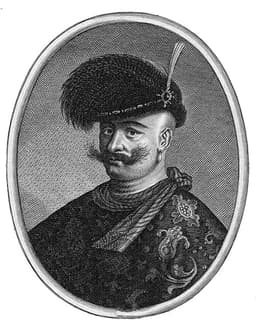
Abbas I
Emperor · Modern
81.4Total

Trajan
Emperor · Ancient
76.0Total
Basic Information
Born
1571
53
Died
1629
117
Era
Modern
Ancient
Nationality
Persia
Roman Empire
Occupation
Emperor
Emperor
Civilization
Middle Eastern
Western
Score Comparison
Military (10%)
82.0
86.0
Political (20%)
90.0
79.2
Influence (20%)
75.0
82.0
Legacy (20%)
82.0
65.6
Leadership (15%)
81.7
73.2
Strategy (15%)
82.0
76.0
TOTAL
81.4
76.0
Abbas I — Complete Timeline
1590 AD
Reformed the Army with GhulamsReform
Abbas I created a standing army of ghulams (military slaves) recruited from Christian subjects in the Caucasus, particularly Georgians and Armenians. This reduced reliance on the Qizilbash tribal forces, increased royal control, and modernized the military with firearms and artillery.
Military ReformGhulam SystemCentralization
Impact: nationalconstructive
1598 AD
Relocated Capital to IsfahanPolitical Action
Abbas I moved the Safavid capital from Qazvin to Isfahan, transforming it into a magnificent city with grand architecture, including Naqsh-e Jahan Square, the Shah Mosque, and the Ali Qapu Palace. This relocation became a symbol of Safavid power and cultural flourishing.
Capital RelocationUrban PlanningArchitecture
Impact: globalconstructive
1599 AD
Established Diplomatic Relations with EuropePolitical Action◆ Major
Abbas I sent diplomatic missions to European courts, including those of Philip III of Spain, Rudolf II of the Holy Roman Empire, and Elizabeth I of England, seeking alliances against the Ottoman Empire. These missions opened sustained diplomatic and commercial exchanges between Safavid Persia and Europe.
DiplomacyEuropean RelationsAnti-Ottoman Alliance
Impact: globalconstructive
1605 AD
Battle of SufiyanWar◆ Major
Abbas I defeated an Ottoman army near Sufiyan, securing Safavid control over Azerbaijan and the Caucasus. This victory was part of the Ottoman-Safavid War of 1603-1618, which resulted in the recapture of Tabriz, Nakhchivan, and Yerevan from Ottoman occupation.
Ottoman-Safavid WarBattleTerritorial Recovery
Impact: regional
1622 AD
Expelled Portuguese from HormuzWar◆ Major
Abbas I, with support from the English East India Company, captured the island of Hormuz from Portuguese control. This ended Portuguese dominance in the Persian Gulf and opened direct trade routes for Safavid Persia with Europe, boosting the silk trade.
Persian GulfTradeEuropean Relations
Impact: globalconstructive
1623 AD
Recaptured BaghdadWar◆ Major
Abbas I captured Baghdad from the Ottoman Empire after a siege, restoring Safavid control over Iraq. This victory expanded Safavid territory and gave Abbas control over important Shi'a pilgrimage sites like Najaf and Karbala.
Ottoman-Safavid WarConquestShi'a Sites
Impact: regional
Trajan — Complete Timeline
101 AD
Implemented the Alimenta Welfare ProgramReform◆ Major
Trajan expanded the Alimenta program, a state-funded welfare system that provided food subsidies and educational support for poor children in Italy. The program used interest from state loans to landowners to fund the distributions, aiming to boost the Italian population and agricultural economy.
WelfareSocial PolicyItaly
Impact: regionalconstructive
105 AD
Built Trajan's Bridge over the DanubeOther
Trajan ordered the construction of a massive stone and timber bridge across the Danube River near the Iron Gates. Designed by Apollodorus of Damascus, it was the longest arch bridge in the world for over a millennium, facilitating the Roman invasion of Dacia.
EngineeringBridgeDanube
Impact: regionalconstructive
106 AD
Conquered DaciaWar
Trajan led two major campaigns against the Dacian kingdom under King Decebalus, culminating in the conquest of Dacia (modern Romania) in 106 CE. The victory brought vast gold and silver mines under Roman control and established a new province, funding massive building projects in Rome.
DaciaConquestProvince
Impact: regional
112 AD
Built Trajan's Forum and MarketCultural◆ Major
Trajan commissioned the construction of Trajan's Forum, a vast complex in Rome including a basilica, libraries, and the Column of Trajan. The adjacent Trajan's Market, a multi-level commercial center, demonstrated Roman engineering prowess and served as a model for urban planning.
ArchitectureRomeUrban Planning
Impact: globalconstructive
116 AD
Conquered Parthia and Reached the Persian GulfWar◆ Major
Trajan launched a campaign against the Parthian Empire, capturing its capital Ctesiphon and annexing Mesopotamia. He reached the Persian Gulf, marking the easternmost extent of Roman territory. However, rebellions in the conquered territories forced a withdrawal shortly after.
ParthiaMesopotamiaExpansion
Impact: global
Expert Analysis
Origins
**Abbas I (1571-1629)** was the fifth ruler of the Safavid dynasty, which emerged from the Safavid order of Sufi mystics in Iranian Azerbaijan. He inherited a kingdom fractured by internal strife and external threats from the Ottoman Empire and Uzbeks. His early life was marked by danger, as he witnessed his father, Shah Mohammed Khodabanda, deposed and his brothers blinded or killed. Abbas seized the throne in 1588 at age 16, determined to restore Persian power.
**Trajan (53-117 CE)** was born in Italica, Hispania (modern Spain), to a Roman colonist family. He was the first emperor not born in Italy, reflecting Rome's expansion. His father was a governor and senator, and Trajan rose through military ranks, serving in Syria and Germany. He was adopted by Emperor Nerva in 97 CE, becoming his successor due to his military reputation and popularity with the army.
Rise to Power
**Abbas I** came to power during a coup that imprisoned his father. He immediately faced crises: the Ottomans had seized western Persia, and the Uzbeks threatened the east. His first decade was spent consolidating power, eliminating Qizilbash tribal influence, and building a new army. He signed a humiliating peace with the Ottomans in 1590 to focus on the Uzbeks, whom he defeated in 1598, securing his eastern borders.
**Trajan** was adopted by Nerva after the Praetorian Guard forced Nerva to choose a strong successor. Trajan's reign began peacefully, but he quickly demonstrated his ambition. He refused to return to Rome immediately, instead inspecting the Rhine-Danube frontier. His first major act was the conquest of Dacia (101-106 CE), which brought immense wealth and set the stage for his eastern campaigns.
Leadership & Governance
**Abbas I** was a master of centralization and reform. He moved the capital from Qazvin to the more central Isfahan in 1598, transforming it into a magnificent city with grand mosques, palaces, and bridges. He created a standing army of *ghulams* (slave soldiers) from Georgia, Armenia, and Circassia, loyal to him alone, reducing dependence on the Qizilbash. He promoted trade, especially with Europe, and supported the arts, making Isfahan a cultural hub. His governance was pragmatic, using diplomacy and force to balance rivals.
**Trajan** was an able administrator known for his building projects and social welfare. He built Trajan's Forum, markets, and a massive bridge over the Danube. He implemented the *Alimenta* program, providing financial support for poor children. He was respected for his justice and military competence, but his governance was less transformative than Abbas's. His focus remained on military expansion and frontier security.
Triumph & Tragedy
**Abbas I** achieved major victories: recaptured Baghdad from the Ottomans in 1623, expelled the Portuguese from Hormuz in 1622 with British help, and secured Persian control over the Caucasus. However, his later years were marred by paranoia. He blinded or killed his own sons, fearing rebellion, leading to succession chaos. His greatest tragedy was his treatment of his family, which weakened the dynasty after his death.
**Trajan** conquered Dacia (modern Romania) and Parthia, reaching the Persian Gulf in 116 CE, the farthest Roman expansion ever. His triumphs included massive spoils and the construction of Trajan's Column. However, his Parthian campaign overextended the empire. He died in 117 CE while returning to Rome, possibly from illness, and his conquests were quickly abandoned by his successor Hadrian. His tragedy was that his gains were unsustainable.
Character & Destiny
**Abbas I** was shrewd, ruthless, and visionary. He was a brilliant strategist who modernized Persia but was consumed by suspicion. His destiny was to restore Persian greatness, but his paranoia undermined his legacy. He is remembered as "The Great" for his achievements, yet his family tragedy reflects a flawed character.
**Trajan** was brave, generous, and beloved by his troops. He was the *optimus princeps* (best ruler), but his ambition led to overreach. His destiny was to expand Rome to its zenith, but his conquests were ephemeral. He died knowing his eastern gains would be lost.
Legacy
**Abbas I** left a unified, powerful Persia with a strong economy, culture, and army. Isfahan remains a masterpiece of Islamic architecture. His reforms influenced later Persian rulers. However, his failure to secure succession led to the Safavid decline. He scores high (82) in leadership and (90) in military, reflecting his successful reforms and campaigns.
**Trajan** is remembered as one of Rome's five good emperors. His forum, column, and bridge are enduring monuments. He expanded Rome to its greatest extent, but his legacy is tied to military glory rather than lasting governance. He scores (86) in military but lower (66) in leadership due to overextension.
Conclusion
Abbas I wins this comparison with a score gap of 5.4. He was a more complete ruler: he not only expanded but also consolidated his empire, reformed its institutions, and fostered cultural flourishing. Trajan was a great conqueror but his gains were temporary. Abbas's legacy of a modernized Persia and magnificent Isfahan outlasts Trajan's ephemeral conquests. While Trajan's military prowess is slightly higher (86 vs 82), Abbas's superior leadership (90 vs 79), innovation, and lasting impact give him the edge. **Abbas I emerges as the more effective and transformative emperor.**
**Scores:** Abbas I: Military 82, Political 90, Innovation 75, Leadership 82, Diplomacy 82, Strategy 82, Tactics 81. Trajan: Military 86, Political 79, Innovation 82, Leadership 66, Diplomacy 73, Strategy 76, Tactics 76.
Rankings
🥇
Abbas ILeader
Mil: 82.0Pol: 90.0Inf: 75.0
81.4
🥈
Trajan
Mil: 86.0Pol: 79.2Inf: 82.0
76.0
+5.4 behind
How This Comparison Works
Algorithm
Each figure is scored on 6 dimensions (0—100 scale) based on structured historical data: Military (10%), Political (20%), Influence (20%), Legacy (20%), Leadership (15%), Strategy (15%). The weighted total produces the final ranking.
Data Sources
Scores are computed from structured sub-indicators in the database. Scale factors adjust for era (Ancient ×0.85, Modern ×1.0) and civilization size (Eastern ×1.05, Other ×0.80) to account for differences in population and military scale.
Maximum 3 Figures
Comparisons are limited to 2—3 figures to ensure readability and statistical meaningfulness.
Error Margins
±5 points per dimension — Sub-scores are derived from historical records with inherent uncertainty. Two figures within 5 points on a dimension should be considered roughly equivalent in that area.
Total Score Accuracy
±3 points overall — The weighted combination of 6 dimensions produces a total score with approximately ±3 points of uncertainty. Differences of less than 3 points are not statistically significant— the figures are effectively tied.
Known Limitations
- Historical records are incomplete and uneven across civilizations
- Figures from oral-tradition societies may be underrepresented
- Occupation labels can misclassify multi-role figures
- Scores measure capability and impact, not moral character
- Quantitative scoring is a comparison tool, not absolute truth
Capability Radar
Military (10%) — Battles & Warfare
Battles
85
95
Win Rate
90
98
Expansion
85
95
Political (20%) — Governance & Reform
Reform
95
88
Diplomacy
88
85
Economy
92
90
Influence (20%) — Cultural & Global Reach
Cultural
90
85
Global
80
85
Legacy (20%) — Historical Impact
Historical
88
90
Longevity
85
88
Leadership (15%) — Power & Stability
Tenure
90
90
Stability
85
92
Strategy (15%) — Tactics & Innovation
Strategy
92
92
Tactics
88
88
Reform
95
85
Similar Comparisons
Comments & Discussion
No comments yet. Be the first to share your thoughts!