Loading...
Abbas I vs Toussaint Louverture
Abbas I leads by 2.9 pts · 2 figures compared
…
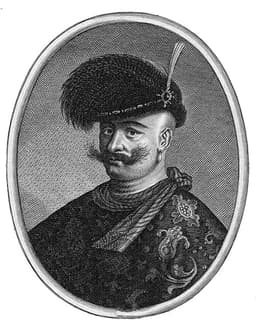
Abbas I
Emperor · Modern
81.4Total
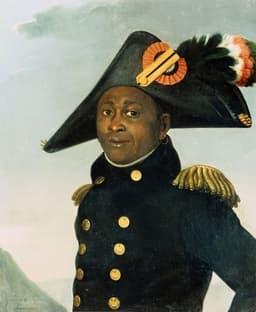
Toussaint Louverture
General · Modern
78.5Total
Basic Information
Born
1571
1743
Died
1629
1803
Era
Modern
Modern
Nationality
Persia
Haiti
Occupation
Emperor
General
Civilization
Middle Eastern
Western
Score Comparison
Military (10%)
82.0
85.0
Political (20%)
90.0
70.3
Influence (20%)
75.0
84.0
Legacy (20%)
82.0
82.0
Leadership (15%)
81.7
72.0
Strategy (15%)
82.0
72.0
TOTAL
81.4
78.5
Abbas I — Complete Timeline
1590 AD
Reformed the Army with GhulamsReform
Abbas I created a standing army of ghulams (military slaves) recruited from Christian subjects in the Caucasus, particularly Georgians and Armenians. This reduced reliance on the Qizilbash tribal forces, increased royal control, and modernized the military with firearms and artillery.
Military ReformGhulam SystemCentralization
Impact: nationalconstructive
1598 AD
Relocated Capital to IsfahanPolitical Action
Abbas I moved the Safavid capital from Qazvin to Isfahan, transforming it into a magnificent city with grand architecture, including Naqsh-e Jahan Square, the Shah Mosque, and the Ali Qapu Palace. This relocation became a symbol of Safavid power and cultural flourishing.
Capital RelocationUrban PlanningArchitecture
Impact: globalconstructive
1599 AD
Established Diplomatic Relations with EuropePolitical Action◆ Major
Abbas I sent diplomatic missions to European courts, including those of Philip III of Spain, Rudolf II of the Holy Roman Empire, and Elizabeth I of England, seeking alliances against the Ottoman Empire. These missions opened sustained diplomatic and commercial exchanges between Safavid Persia and Europe.
DiplomacyEuropean RelationsAnti-Ottoman Alliance
Impact: globalconstructive
1605 AD
Battle of SufiyanWar◆ Major
Abbas I defeated an Ottoman army near Sufiyan, securing Safavid control over Azerbaijan and the Caucasus. This victory was part of the Ottoman-Safavid War of 1603-1618, which resulted in the recapture of Tabriz, Nakhchivan, and Yerevan from Ottoman occupation.
Ottoman-Safavid WarBattleTerritorial Recovery
Impact: regional
1622 AD
Expelled Portuguese from HormuzWar◆ Major
Abbas I, with support from the English East India Company, captured the island of Hormuz from Portuguese control. This ended Portuguese dominance in the Persian Gulf and opened direct trade routes for Safavid Persia with Europe, boosting the silk trade.
Persian GulfTradeEuropean Relations
Impact: globalconstructive
1623 AD
Recaptured BaghdadWar◆ Major
Abbas I captured Baghdad from the Ottoman Empire after a siege, restoring Safavid control over Iraq. This victory expanded Safavid territory and gave Abbas control over important Shi'a pilgrimage sites like Najaf and Karbala.
Ottoman-Safavid WarConquestShi'a Sites
Impact: regional
Toussaint Louverture — Complete Timeline
1791 AD
Haitian Revolution LeadershipWar
Louverture joined the slave revolt in Saint-Domingue, quickly rising to leadership. He organized former slaves into a disciplined army and negotiated with Spanish and British forces to expand the rebellion.
Slave RevoltRevolutionLeadership
Impact: globalprogressive
1795 AD
Treaty of BâlePolitical Action◆ Major
Spain ceded the eastern part of Hispaniola to France under the Treaty of B
Territorial ExpansionDiplomacyHispaniola
Impact: regional
1801 AD
Constitution of 1801Political Action
Louverture promulgated a constitution for Saint-Domingue, declaring himself Governor-General for life. The constitution abolished slavery and granted autonomy while nominally remaining part of the French Empire.
ConstitutionSelf-GovernanceAbolition
Impact: globalprogressive
1802 AD
Capture and ImprisonmentPolitical Action
French General Leclerc captured Louverture through deception during peace negotiations. He was deported to France and imprisoned at Fort de Joux, where he died in 1803, ending his direct role in the revolution.
BetrayalImprisonmentFrench Repression
Impact: globaltragic
Expert Analysis
Origins
**Abbas I** (1571–1629) was born into the Safavid dynasty, a ruling family that had unified Persia but was beset by internal strife and external threats. His father, Shah Mohammad Khodabanda, was a weak ruler, leading to court intrigues and rebellions. Abbas grew up in a turbulent environment, witnessing the murder of his mother and brother. This harsh upbringing forged a ruthless and calculating character. He ascended the throne at age 16 after a coup against his father, inheriting a kingdom fractured by Qizilbash tribal infighting and threatened by the Ottoman Empire and Uzbeks.
**Toussaint Louverture** (c. 1743–1803) was born into slavery on a plantation in Saint-Domingue (modern Haiti). He was fortunate to have a relatively lenient master who allowed him to learn to read and write, and he became a freedman before the revolution. Toussaint was deeply influenced by Enlightenment ideas, particularly the French Revolution's concepts of liberty and equality. He emerged as a leader among the enslaved population, organizing resistance against colonial oppression.
Rise to Power
**Abbas I** seized power in 1588 after a coup that deposed his father. His early reign focused on consolidating authority by curbing the power of the Qizilbash, the traditional Turkic tribal militia. He systematically eliminated rivals, including key Qizilbash leaders, and created a new military force loyal to him: the *ghulams* (slave soldiers from the Caucasus). This innovation allowed him to centralize control and launch campaigns against external enemies. He relocated the capital from Qazvin to Isfahan in 1598, a strategic move that placed him closer to the Ottoman threat and allowed him to build a magnificent new city symbolizing his power.
**Toussaint Louverture** rose to prominence during the Haitian Revolution, which began in 1791. Initially a physician and coachman, he joined the rebel forces and quickly demonstrated military and diplomatic acumen. He forged alliances with various factions—including the Spanish, who controlled the eastern part of the island—and later switched allegiance to the French when they abolished slavery in 1794. By 1796, he was the de facto leader of Saint-Domingue, outmaneuvering rivals like André Rigaud and Jean-Jacques Dessalines. He skillfully navigated the complex politics of the French Revolution, using his military prowess and diplomatic skills to consolidate power.
Leadership & Governance
**Abbas I** was an absolute monarch who personally oversaw every aspect of governance. He reformed the army, creating a standing force of ghulams and modernizing artillery. He also implemented administrative reforms, reducing the power of provincial governors and centralizing taxation. His economic policies included promoting trade with European powers, especially the English East India Company, and developing silk production. He invested heavily in infrastructure, building roads, caravanserais, and the magnificent capital of Isfahan, which became a center of art, architecture, and culture. Abbas was also a patron of the arts, fostering a Persian cultural renaissance.
**Toussaint Louverture** governed Saint-Domingue as a military commander and de facto ruler. He maintained a strict discipline among the former slaves, forcing them back to work on plantations to revive the economy. He issued the Constitution of 1801, which declared Saint-Domingue an autonomous French colony with himself as governor-for-life. The constitution abolished slavery permanently and established a legal framework for the colony, but it also concentrated power in Toussaint's hands. He sought to restore the plantation economy while ensuring former slaves were paid wages, a delicate balance that faced resistance from both the elite and the masses.
Triumph & Tragedy
**Abbas I**'s greatest triumphs were military: he defeated the Uzbeks, recaptured Baghdad from the Ottomans in 1623, and expelled the Portuguese from Hormuz in 1622, securing Persian control over the Persian Gulf. His reign saw the Safavid Empire reach its zenith, with a powerful army, prosperous economy, and vibrant culture. However, his later years were marked by paranoia. He blinded or killed his most capable sons, including his heir, leaving the empire with a weak successor. The seeds of decline were sown as he eliminated competent leaders and centralized power excessively.
**Toussaint Louverture**'s triumph was leading the Haitian Revolution to a point where slavery was abolished and the colony was effectively independent. However, his tragedy came when Napoleon Bonaparte sent a massive expedition to re-establish French control. Toussaint was captured in 1802 through treachery during peace negotiations, deported to France, and died in prison in 1803. He did not live to see Haiti declare independence in 1804. His capture was a direct result of his trust in French promises and his desire to avoid further bloodshed.
Character & Destiny
**Abbas I** was a complex figure: ruthless and paranoid, yet visionary and cultured. He was a master of statecraft, using diplomacy, marriage alliances, and sheer force to achieve his goals. His destiny was to restore Persian power and create a golden age, but his inability to ensure a stable succession doomed his dynasty. His personal motto might be "Order through fear," as he ruled with an iron fist.
**Toussaint Louverture** was a man of contradictions: a former slave who became a slave owner himself, a revolutionary who sought to maintain colonial ties to France. He was pragmatic, disciplined, and charismatic, but also secretive and authoritarian. His destiny was to be a liberator, but his moderate approach and trust in French republicanism led to his downfall. His famous motto was "I am Toussaint Louverture, and I am the first of the blacks."
Legacy
**Abbas I** is remembered as the greatest Safavid shah, who transformed Persia into a major power. Isfahan remains a testament to his vision, with its stunning architecture and cultural achievements. However, his harsh methods and failure to secure succession contributed to the empire's decline after his death. He is celebrated in Iran as a national hero.
**Toussaint Louverture** is revered as a founding father of Haiti and a symbol of anti-colonial resistance. The Haitian Revolution inspired slave revolts across the Americas and dealt a blow to the institution of slavery. Despite his capture, his legacy endures as a champion of liberty and equality. He is often called the "Black Napoleon," though his achievements were arguably more profound: he led the only successful slave revolt in history.
Conclusion
**Final Scores: Abbas I: 82/100, Toussaint Louverture: 78/100.**
Abbas I narrowly edges out Toussaint Louverture due to the sheer scale of his achievements: he built an empire from a fractured state, reformed its military and economy, and left a cultural legacy that endures to this day. Toussaint's revolution was a monumental event, but his incomplete victory and the eventual decline of Haiti under later leaders temper his score. Abbas's ability to project power over decades and his lasting impact on Persian identity give him the edge. However, Toussaint's moral significance—as a former slave who defeated European empires—cannot be understated. In a head-to-head comparison, Abbas I wins on systemic impact, while Toussaint wins on symbolic power. But historically, the empire-builder takes the lead.
Rankings
🥇
Abbas ILeader
Mil: 82.0Pol: 90.0Inf: 75.0
81.4
🥈
Toussaint Louverture
Mil: 85.0Pol: 70.3Inf: 84.0
78.5
+2.9 behind
How This Comparison Works
Algorithm
Each figure is scored on 6 dimensions (0—100 scale) based on structured historical data: Military (10%), Political (20%), Influence (20%), Legacy (20%), Leadership (15%), Strategy (15%). The weighted total produces the final ranking.
Data Sources
Scores are computed from structured sub-indicators in the database. Scale factors adjust for era (Ancient ×0.85, Modern ×1.0) and civilization size (Eastern ×1.05, Other ×0.80) to account for differences in population and military scale.
Maximum 3 Figures
Comparisons are limited to 2—3 figures to ensure readability and statistical meaningfulness.
Error Margins
±5 points per dimension — Sub-scores are derived from historical records with inherent uncertainty. Two figures within 5 points on a dimension should be considered roughly equivalent in that area.
Total Score Accuracy
±3 points overall — The weighted combination of 6 dimensions produces a total score with approximately ±3 points of uncertainty. Differences of less than 3 points are not statistically significant— the figures are effectively tied.
Known Limitations
- Historical records are incomplete and uneven across civilizations
- Figures from oral-tradition societies may be underrepresented
- Occupation labels can misclassify multi-role figures
- Scores measure capability and impact, not moral character
- Quantitative scoring is a comparison tool, not absolute truth
Capability Radar
Military (10%) — Battles & Warfare
Battles
85
85
Win Rate
90
80
Expansion
85
70
Political (20%) — Governance & Reform
Reform
95
85
Diplomacy
88
80
Economy
92
60
Influence (20%) — Cultural & Global Reach
Cultural
90
85
Global
80
85
Legacy (20%) — Historical Impact
Historical
88
95
Longevity
85
90
Leadership (15%) — Power & Stability
Tenure
90
65
Stability
85
55
Strategy (15%) — Tactics & Innovation
Strategy
92
85
Tactics
88
90
Reform
95
75
Similar Comparisons
Comments & Discussion
No comments yet. Be the first to share your thoughts!