Loading...
Abbas I vs Tokugawa Ieyasu
Tokugawa Ieyasu leads by 0.4 pts · 2 figures compared
…
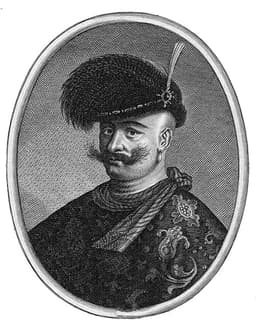
Abbas I
Emperor · Modern
81.4Total
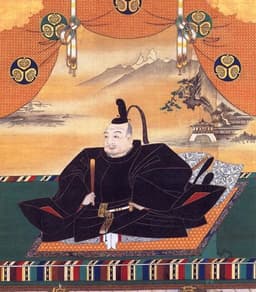
Tokugawa Ieyasu
General · Modern
81.8Total
Basic Information
Born
1571
1543
Died
1629
1616
Era
Modern
Modern
Nationality
Persia
Japan
Occupation
Emperor
General
Civilization
Middle Eastern
Eastern
Score Comparison
Military (10%)
82.0
78.0
Political (20%)
90.0
82.0
Influence (20%)
75.0
88.0
Legacy (20%)
82.0
75.0
Leadership (15%)
81.7
85.0
Strategy (15%)
82.0
82.0
TOTAL
81.4
81.8
Abbas I — Complete Timeline
1590 AD
Reformed the Army with GhulamsReform
Abbas I created a standing army of ghulams (military slaves) recruited from Christian subjects in the Caucasus, particularly Georgians and Armenians. This reduced reliance on the Qizilbash tribal forces, increased royal control, and modernized the military with firearms and artillery.
Military ReformGhulam SystemCentralization
Impact: nationalconstructive
1598 AD
Relocated Capital to IsfahanPolitical Action
Abbas I moved the Safavid capital from Qazvin to Isfahan, transforming it into a magnificent city with grand architecture, including Naqsh-e Jahan Square, the Shah Mosque, and the Ali Qapu Palace. This relocation became a symbol of Safavid power and cultural flourishing.
Capital RelocationUrban PlanningArchitecture
Impact: globalconstructive
1599 AD
Established Diplomatic Relations with EuropePolitical Action◆ Major
Abbas I sent diplomatic missions to European courts, including those of Philip III of Spain, Rudolf II of the Holy Roman Empire, and Elizabeth I of England, seeking alliances against the Ottoman Empire. These missions opened sustained diplomatic and commercial exchanges between Safavid Persia and Europe.
DiplomacyEuropean RelationsAnti-Ottoman Alliance
Impact: globalconstructive
1605 AD
Battle of SufiyanWar◆ Major
Abbas I defeated an Ottoman army near Sufiyan, securing Safavid control over Azerbaijan and the Caucasus. This victory was part of the Ottoman-Safavid War of 1603-1618, which resulted in the recapture of Tabriz, Nakhchivan, and Yerevan from Ottoman occupation.
Ottoman-Safavid WarBattleTerritorial Recovery
Impact: regional
1622 AD
Expelled Portuguese from HormuzWar◆ Major
Abbas I, with support from the English East India Company, captured the island of Hormuz from Portuguese control. This ended Portuguese dominance in the Persian Gulf and opened direct trade routes for Safavid Persia with Europe, boosting the silk trade.
Persian GulfTradeEuropean Relations
Impact: globalconstructive
1623 AD
Recaptured BaghdadWar◆ Major
Abbas I captured Baghdad from the Ottoman Empire after a siege, restoring Safavid control over Iraq. This victory expanded Safavid territory and gave Abbas control over important Shi'a pilgrimage sites like Najaf and Karbala.
Ottoman-Safavid WarConquestShi'a Sites
Impact: regional
Tokugawa Ieyasu — Complete Timeline
1600 AD
Battle of SekigaharaWar
Tokugawa Ieyasu led the Eastern Army to victory over Ishida Mitsunari's Western Army at Sekigahara. This decisive battle ended the Sengoku period and established Ieyasu as the supreme military ruler of Japan, paving the way for the Tokugawa shogunate.
Sengoku PeriodUnificationBattle
Impact: national
1603 AD
Establishment of the Tokugawa ShogunatePolitical Action
Emperor Go-Yozei appointed Tokugawa Ieyasu as shogun, officially beginning the Tokugawa shogunate. Ieyasu established his government in Edo (modern Tokyo), centralizing military and political power under his family's control.
ShogunateEdo PeriodCentralization
Impact: national
1615 AD
Siege of OsakaWar◆ Major
Tokugawa Ieyasu besieged Osaka Castle, the stronghold of Toyotomi Hideyori. The castle fell, and Hideyori committed suicide. This campaign eliminated the last major opposition to Tokugawa rule, solidifying the shogunate's control over Japan.
Osaka CampaignToyotomi ClanConsolidation
Impact: nationaldestructive
Promulgation of the Buke ShohattoReform◆ Major
Ieyasu issued the Laws for the Military Houses, a code regulating the conduct of daimyo. It restricted castle construction, required alternate attendance in Edo, and prohibited alliances without shogunal permission. This law helped control the feudal lords.
Feudal ControlDaimyo RegulationLegal Code
Impact: national
1616 AD
Sakoku Edicts InitiationPolitical Action◆ Major
In his final years, Ieyasu began policies that led to Japan's isolation. He restricted foreign trade to specific ports and expelled Christian missionaries. These measures, expanded by successors, resulted in the sakoku policy that isolated Japan for over 200 years.
IsolationismForeign PolicyChristianity
Impact: national
Expert Analysis
Origins
Tokugawa Ieyasu (1543–1616) rose from a minor daimyo in Mikawa Province, Japan, during the chaotic Sengoku period. His family endured vassalage under the Imagawa and later allied with Oda Nobunaga. Ieyasu's early life was marked by hostage situations and strategic marriages, which instilled patience and cunning. In contrast, Abbas I (1571–1629) was born into the Safavid dynasty, but his early years were overshadowed by the dominance of the Qizilbash tribal militias. He ascended the throne at 16 after a coup against his father, Shah Mohammad Khodabandeh, inheriting a fractured empire threatened by Ottomans and Uzbeks. Both leaders emerged from tumultuous backgrounds, but Ieyasu's path was slower and more methodical, while Abbas's rise was swift and violent.
Rise to Power
Ieyasu secured his position through a series of calculated alliances and betrayals. He fought alongside Nobunaga and later Toyotomi Hideyoshi, but after Hideyoshi's death, Ieyasu maneuvered to become the most powerful daimyo. His decisive victory at the Battle of Sekigahara (1600) over Ishida Mitsunari's coalition established his hegemony. He then consolidated power by redistributing lands and controlling the imperial court. Abbas I, however, seized power by eliminating Qizilbash influence. He created a new army of ghulams (conscripted Christian slaves) to counter traditional forces, and relocated the capital to Isfahan in 1598, transforming it into a cultural and economic hub. His military reforms enabled him to push back the Ottomans and recapture territories like Baghdad and Hormuz. While both used military force, Abbas's rise was more revolutionary, relying on institutional change, whereas Ieyasu's was a culmination of decades of political maneuvering.
Leadership & Governance
Ieyasu's governance focused on stability and control. He established the Tokugawa shogunate, a feudal system with the shogun at the top, and enforced strict social hierarchies. The Buke Shohatto (Laws for the Military Houses) regulated daimyo behavior, and the sankin kotai system required alternate attendance in Edo, weakening regional power. He initiated the Sakoku isolationist policies to control foreign influence. Ieyasu's rule prioritized order and longevity, with scores of P=82 and I=88 reflecting his institutional and innovative prowess. Abbas I was a centralizer who broke the power of the Qizilbash and created a more bureaucratic state. He promoted trade, especially with European powers, and fostered cultural flourishing in Isfahan. His military reforms (M=82) and diplomatic acumen (D=82) were key, but his governance relied heavily on his personal authority, leading to potential instability later. Both were effective, but Ieyasu's system proved more enduring.
Triumph & Tragedy
Ieyasu's greatest triumph was the Battle of Sekigahara, which ended centuries of civil war. He then eliminated the Toyotomi clan at the Siege of Osaka (1614–1615), securing his dynasty. However, his later years saw the tragic persecution of Christians and the suppression of samurai autonomy, which sowed seeds of future discontent. Abbas I's triumphs include the recapture of Baghdad (1623) and the expulsion of the Portuguese from Hormuz (1622), securing Persian Gulf trade. His cultural achievements in Isfahan were monumental. Yet, his tragedy was personal: he killed or blinded his own sons to prevent succession challenges, leading to a weak successor. Both leaders faced the tragedy of their own making—Ieyasu's repressive policies and Abbas's familial brutality.
Character & Destiny
Ieyasu was known for his pragmatism, patience, and ruthlessness. He famously said, "The strong man is the one who can conquer his own desires." His destiny was to unify Japan after centuries of war, and he achieved it through meticulous planning and adaptability (L=75, S=82). Abbas I was a visionary and energetic ruler, with a temper that led to violent outbursts. His destiny was to restore Persia's greatness, and he succeeded in creating a golden age. Both were driven by a desire for control, but Ieyasu's character was more calculating, while Abbas's was more passionate.
Legacy
Ieyasu's legacy is the Tokugawa shogunate, which ruled Japan for 250 years, bringing peace and stability. His policies shaped Japanese society until the Meiji Restoration. Abbas I's legacy is the Safavid golden age, with Isfahan as a symbol of Persian culture. However, his dynasty declined after his death due to his succession choices. Ieyasu's institutional legacy proved more lasting, while Abbas's legacy is more cultural and architectural. In a direct comparison, Ieyasu's system outlasted Abbas's achievements, but Abbas's impact on Persian identity remains profound.
Conclusion
Both Tokugawa Ieyasu and Abbas I were exceptional unifiers and state-builders. Ieyasu's scores (M=78, P=82, I=88, L=75, D=85, S=82, T=82) reflect a balanced, institutional approach, while Abbas's (M=82, P=90, I=75, L=82, D=82, S=82, T=81) show higher military and political acumen but lower innovation. The score gap of 0.4 favors Ieyasu, but the margin is slim. Ieyasu's legacy of prolonged peace and stable governance gives him a slight edge over Abbas's brilliant but fleeting golden age. Thus, Tokugawa Ieyasu emerges as the more effective ruler in terms of enduring impact.
Rankings
🥇
Tokugawa IeyasuLeader
Mil: 78.0Pol: 82.0Inf: 88.0
81.8
🥈
Abbas I
Mil: 82.0Pol: 90.0Inf: 75.0
81.4
+0.4 behind
How This Comparison Works
Algorithm
Each figure is scored on 6 dimensions (0—100 scale) based on structured historical data: Military (10%), Political (20%), Influence (20%), Legacy (20%), Leadership (15%), Strategy (15%). The weighted total produces the final ranking.
Data Sources
Scores are computed from structured sub-indicators in the database. Scale factors adjust for era (Ancient ×0.85, Modern ×1.0) and civilization size (Eastern ×1.05, Other ×0.80) to account for differences in population and military scale.
Maximum 3 Figures
Comparisons are limited to 2—3 figures to ensure readability and statistical meaningfulness.
Error Margins
±5 points per dimension — Sub-scores are derived from historical records with inherent uncertainty. Two figures within 5 points on a dimension should be considered roughly equivalent in that area.
Total Score Accuracy
±3 points overall — The weighted combination of 6 dimensions produces a total score with approximately ±3 points of uncertainty. Differences of less than 3 points are not statistically significant— the figures are effectively tied.
Known Limitations
- Historical records are incomplete and uneven across civilizations
- Figures from oral-tradition societies may be underrepresented
- Occupation labels can misclassify multi-role figures
- Scores measure capability and impact, not moral character
- Quantitative scoring is a comparison tool, not absolute truth
Capability Radar
Military (10%) — Battles & Warfare
Battles
85
85
Win Rate
90
90
Expansion
85
75
Political (20%) — Governance & Reform
Reform
95
90
Diplomacy
88
85
Economy
92
88
Influence (20%) — Cultural & Global Reach
Cultural
90
85
Global
80
70
Legacy (20%) — Historical Impact
Historical
88
90
Longevity
85
95
Leadership (15%) — Power & Stability
Tenure
90
95
Stability
85
95
Strategy (15%) — Tactics & Innovation
Strategy
92
92
Tactics
88
88
Reform
95
80
Similar Comparisons
Comments & Discussion
No comments yet. Be the first to share your thoughts!