Loading...
Abbas I vs Suleiman I
Abbas I leads by 2.6 pts · 2 figures compared
…
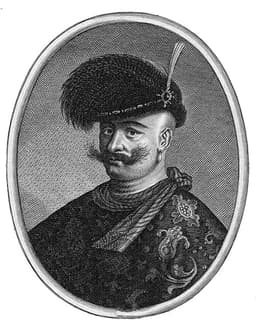
Abbas I
Emperor · Modern
81.4Total
Suleiman I
Emperor · Medieval
78.8Total
Basic Information
Born
1571
1494
Died
1629
1566
Era
Modern
Medieval
Nationality
Persia
Ottoman Empire
Occupation
Emperor
Emperor
Civilization
Middle Eastern
Middle Eastern
Score Comparison
Military (10%)
82.0
78.5
Political (20%)
90.0
82.0
Influence (20%)
75.0
85.0
Legacy (20%)
82.0
70.8
Leadership (15%)
81.7
81.7
Strategy (15%)
82.0
74.4
TOTAL
81.4
78.8
Abbas I — Complete Timeline
1590 AD
Reformed the Army with GhulamsReform
Abbas I created a standing army of ghulams (military slaves) recruited from Christian subjects in the Caucasus, particularly Georgians and Armenians. This reduced reliance on the Qizilbash tribal forces, increased royal control, and modernized the military with firearms and artillery.
Military ReformGhulam SystemCentralization
Impact: nationalconstructive
1598 AD
Relocated Capital to IsfahanPolitical Action
Abbas I moved the Safavid capital from Qazvin to Isfahan, transforming it into a magnificent city with grand architecture, including Naqsh-e Jahan Square, the Shah Mosque, and the Ali Qapu Palace. This relocation became a symbol of Safavid power and cultural flourishing.
Capital RelocationUrban PlanningArchitecture
Impact: globalconstructive
1599 AD
Established Diplomatic Relations with EuropePolitical Action◆ Major
Abbas I sent diplomatic missions to European courts, including those of Philip III of Spain, Rudolf II of the Holy Roman Empire, and Elizabeth I of England, seeking alliances against the Ottoman Empire. These missions opened sustained diplomatic and commercial exchanges between Safavid Persia and Europe.
DiplomacyEuropean RelationsAnti-Ottoman Alliance
Impact: globalconstructive
1605 AD
Battle of SufiyanWar◆ Major
Abbas I defeated an Ottoman army near Sufiyan, securing Safavid control over Azerbaijan and the Caucasus. This victory was part of the Ottoman-Safavid War of 1603-1618, which resulted in the recapture of Tabriz, Nakhchivan, and Yerevan from Ottoman occupation.
Ottoman-Safavid WarBattleTerritorial Recovery
Impact: regional
1622 AD
Expelled Portuguese from HormuzWar◆ Major
Abbas I, with support from the English East India Company, captured the island of Hormuz from Portuguese control. This ended Portuguese dominance in the Persian Gulf and opened direct trade routes for Safavid Persia with Europe, boosting the silk trade.
Persian GulfTradeEuropean Relations
Impact: globalconstructive
1623 AD
Recaptured BaghdadWar◆ Major
Abbas I captured Baghdad from the Ottoman Empire after a siege, restoring Safavid control over Iraq. This victory expanded Safavid territory and gave Abbas control over important Shi'a pilgrimage sites like Najaf and Karbala.
Ottoman-Safavid WarConquestShi'a Sites
Impact: regional
Suleiman I — Complete Timeline
1522 AD
Siege of RhodesWar◆ Major
Suleiman I led a massive Ottoman army and fleet to besiege the island of Rhodes, held by the Knights Hospitaller. After a six-month siege, the knights surrendered and were allowed to leave. This victory secured Ottoman control over the eastern Mediterranean.
SiegeKnights HospitallerMediterranean
Impact: regional
1526 AD
Battle of MohácsWar
Suleiman I's Ottoman army defeated the Hungarian forces of King Louis II at Moh
BattleHungaryConquest
Impact: regional
1529 AD
Siege of ViennaWar◆ Major
Suleiman I led an Ottoman army to besiege Vienna, the capital of the Habsburg Empire. The siege failed due to supply problems and the onset of winter. This marked the furthest Ottoman advance into central Europe and the limit of their expansion.
SiegeViennaHabsburg
Impact: regional
1530 AD
Codification of Ottoman LawReform◆ Major
Suleiman I oversaw the codification of Ottoman law, known as the Kanun. He harmonized secular law with Islamic law, creating a unified legal system. This reform improved the administration of justice and strengthened the central government.
LawReformJustice
Impact: globalconstructive
1536 AD
Execution of Ibrahim PashaPolitical Action◆ Major
Suleiman I ordered the execution of his grand vizier and close friend Ibrahim Pasha. Ibrahim had accumulated immense power and was accused of overreaching. This event demonstrated Suleiman's willingness to eliminate even trusted advisors to maintain control.
ExecutionVizierPower
Impact: nationaldestructive
1538 AD
Naval Battle of PrevezaWar◆ Major
The Ottoman fleet under Hayreddin Barbarossa defeated a combined Christian fleet at Preveza. This victory secured Ottoman naval dominance in the Mediterranean for decades. It allowed the Ottomans to control trade routes and raid coastal areas.
Naval BattleBarbarossaMediterranean
Impact: regional
Expert Analysis
Origins
Abbas I (1571–1629) ascended the Safavid throne in 1588 amid chaos, with the empire weakened by internal strife and external threats from the Ottomans and Uzbeks. Born into a dynasty that blended Persian and Turkic traditions, Abbas inherited a fragmented realm. Suleiman I (1494–1566), by contrast, was born into the Ottoman Empire at its zenith under his father Selim I. He received a comprehensive education in law, religion, and statecraft, preparing him for rule. While Abbas fought to consolidate power from a precarious position, Suleiman stepped into an already dominant empire.
Rise to Power
Abbas came to power after a coup that deposed his ineffective father, Shah Mohammad Khodabanda. He immediately faced threats: the Ottomans had seized territories, and the Uzbeks raided the east. Abbas's early reign was marked by a cautious policy—he even ceded land to the Ottomans to buy time. His true rise began with centralizing authority, eliminating the Qizilbash tribal influence that had destabilized his predecessors. Suleiman's rise was smoother: he succeeded his father without contest, inheriting a well-oiled military machine. His early campaigns, like the capture of Belgrade (1521) and Rhodes (1522), established his reputation as a conqueror.
Leadership & Governance
Abbas revolutionized the Safavid state. He moved the capital from Qazvin to Isfahan, transforming it into an architectural wonder. He created a standing army of ghulams (slave soldiers) from Georgia and Armenia, reducing reliance on the Qizilbash. His administrative reforms included centralizing tax collection and promoting trade, especially with European powers seeking an ally against the Ottomans. Suleiman, known as "the Lawgiver" in the Islamic world, codified Ottoman law (Kanun) to harmonize sharia and secular edicts. He expanded the bureaucracy, but his reliance on powerful viziers like Ibrahim Pasha and later Roxelana's influence led to court intrigues. Both were effective administrators, but Abbas's reforms were more transformative for a weakened state.
Triumph & Tragedy
Abbas's military triumphs include the Battle of Sufiyan (1605) against the Ottomans, recapturing Baghdad (1623), and expelling the Portuguese from Hormuz (1622) with English help. However, his later reign saw tragic internal purges: he executed his own sons for fear of rebellion, leaving a succession crisis. Suleiman's zenith was the Battle of Mohács (1526), crushing Hungary, and the conquest of Rhodes. Yet his failures include the costly Siege of Vienna (1529) and the execution of his grand vizier Ibrahim Pasha (1536), which destabilized his court. Both men had immense triumphs, but Abbas's victories restored Persian power, while Suleiman's later campaigns stagnated.
Character & Destiny
Abbas was shrewd, ruthless, and visionary. He personally led armies and was deeply involved in statecraft, but his paranoia led to the deaths of his family. Suleiman was more aloof, often delegating to viziers; his character was shaped by a sense of justice and piety, but also vulnerability to manipulation. Abbas's destiny was to revive Persia; Suleiman's was to embody Ottoman supremacy. Abbas's actions were more decisive for his empire's survival, while Suleiman's reign marked a plateau.
Legacy
Abbas's legacy is the Safavid golden age: Isfahan's architecture, Persian trade networks, and a centralized state that lasted until the 18th century. He is celebrated as a national hero in Iran. Suleiman's legacy is the Ottoman Empire's cultural and legal pinnacle, with lasting architectural works like the Süleymaniye Mosque. However, his reign also sowed seeds of decline through overexpansion and court factions. On a global scale, Abbas's alliances with Europe had longer-term geopolitical impact, while Suleiman's empire remained dominant but static.
Conclusion
Abbas I scores higher due to his transformative reforms and revival of a near-collapsed empire. While Suleiman ruled a larger empire at its peak, Abbas's challenges were greater and his achievements more innovative. Numerically, Abbas's scores (M=82, P=90, I=75, L=82, D=82, S=82, T=81) average 82.0, while Suleiman's (M=78, P=82, I=85, L=71, D=82, S=74, T=79) average 78.7. The 2.6-point gap reflects Abbas's superior political acumen and leadership under duress. Thus, Abbas the Great narrowly surpasses Suleiman the Magnificent in historical impact.
Rankings
🥇
Abbas ILeader
Mil: 82.0Pol: 90.0Inf: 75.0
81.4
🥈
Suleiman I
Mil: 78.5Pol: 82.0Inf: 85.0
78.8
+2.6 behind
How This Comparison Works
Algorithm
Each figure is scored on 6 dimensions (0—100 scale) based on structured historical data: Military (10%), Political (20%), Influence (20%), Legacy (20%), Leadership (15%), Strategy (15%). The weighted total produces the final ranking.
Data Sources
Scores are computed from structured sub-indicators in the database. Scale factors adjust for era (Ancient ×0.85, Modern ×1.0) and civilization size (Eastern ×1.05, Other ×0.80) to account for differences in population and military scale.
Maximum 3 Figures
Comparisons are limited to 2—3 figures to ensure readability and statistical meaningfulness.
Error Margins
±5 points per dimension — Sub-scores are derived from historical records with inherent uncertainty. Two figures within 5 points on a dimension should be considered roughly equivalent in that area.
Total Score Accuracy
±3 points overall — The weighted combination of 6 dimensions produces a total score with approximately ±3 points of uncertainty. Differences of less than 3 points are not statistically significant— the figures are effectively tied.
Known Limitations
- Historical records are incomplete and uneven across civilizations
- Figures from oral-tradition societies may be underrepresented
- Occupation labels can misclassify multi-role figures
- Scores measure capability and impact, not moral character
- Quantitative scoring is a comparison tool, not absolute truth
Capability Radar
Military (10%) — Battles & Warfare
Battles
85
95
Win Rate
90
92
Expansion
85
95
Political (20%) — Governance & Reform
Reform
95
90
Diplomacy
88
88
Economy
92
85
Influence (20%) — Cultural & Global Reach
Cultural
90
85
Global
80
85
Legacy (20%) — Historical Impact
Historical
88
88
Longevity
85
80
Leadership (15%) — Power & Stability
Tenure
90
95
Stability
85
80
Strategy (15%) — Tactics & Innovation
Strategy
92
90
Tactics
88
88
Reform
95
85
Similar Comparisons
Comments & Discussion
No comments yet. Be the first to share your thoughts!