Loading...
Abbas I vs Ruhollah Khomeini
Abbas I leads by 6.3 pts · 2 figures compared
…
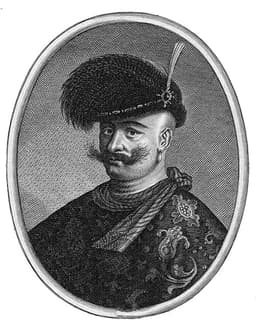
Abbas I
Emperor · Modern
81.4Total

Ruhollah Khomeini
Politician · Modern
75.1Total
Basic Information
Born
1571
1902
Died
1629
1989
Era
Modern
Modern
Nationality
Persia
Iran
Occupation
Emperor
Politician
Civilization
Middle Eastern
Middle Eastern
Score Comparison
Military (10%)
82.0
41.6
Political (20%)
90.0
65.0
Influence (20%)
75.0
85.0
Legacy (20%)
82.0
90.0
Leadership (15%)
81.7
80.0
Strategy (15%)
82.0
54.3
TOTAL
81.4
75.1
Abbas I — Complete Timeline
1590 AD
Reformed the Army with GhulamsReform
Abbas I created a standing army of ghulams (military slaves) recruited from Christian subjects in the Caucasus, particularly Georgians and Armenians. This reduced reliance on the Qizilbash tribal forces, increased royal control, and modernized the military with firearms and artillery.
Military ReformGhulam SystemCentralization
Impact: nationalconstructive
1598 AD
Relocated Capital to IsfahanPolitical Action
Abbas I moved the Safavid capital from Qazvin to Isfahan, transforming it into a magnificent city with grand architecture, including Naqsh-e Jahan Square, the Shah Mosque, and the Ali Qapu Palace. This relocation became a symbol of Safavid power and cultural flourishing.
Capital RelocationUrban PlanningArchitecture
Impact: globalconstructive
1599 AD
Established Diplomatic Relations with EuropePolitical Action◆ Major
Abbas I sent diplomatic missions to European courts, including those of Philip III of Spain, Rudolf II of the Holy Roman Empire, and Elizabeth I of England, seeking alliances against the Ottoman Empire. These missions opened sustained diplomatic and commercial exchanges between Safavid Persia and Europe.
DiplomacyEuropean RelationsAnti-Ottoman Alliance
Impact: globalconstructive
1605 AD
Battle of SufiyanWar◆ Major
Abbas I defeated an Ottoman army near Sufiyan, securing Safavid control over Azerbaijan and the Caucasus. This victory was part of the Ottoman-Safavid War of 1603-1618, which resulted in the recapture of Tabriz, Nakhchivan, and Yerevan from Ottoman occupation.
Ottoman-Safavid WarBattleTerritorial Recovery
Impact: regional
1622 AD
Expelled Portuguese from HormuzWar◆ Major
Abbas I, with support from the English East India Company, captured the island of Hormuz from Portuguese control. This ended Portuguese dominance in the Persian Gulf and opened direct trade routes for Safavid Persia with Europe, boosting the silk trade.
Persian GulfTradeEuropean Relations
Impact: globalconstructive
1623 AD
Recaptured BaghdadWar◆ Major
Abbas I captured Baghdad from the Ottoman Empire after a siege, restoring Safavid control over Iraq. This victory expanded Safavid territory and gave Abbas control over important Shi'a pilgrimage sites like Najaf and Karbala.
Ottoman-Safavid WarConquestShi'a Sites
Impact: regional
Ruhollah Khomeini — Complete Timeline
1964 AD
Exile to Iraq and FrancePolitical Action◆ Major
Khomeini was exiled from Iran after criticizing the Shah's White Revolution and granting of diplomatic immunity to US personnel. He settled in Najaf, Iraq, and later in France, where he continued to organize opposition to the Shah.
ExileOppositionShah
Impact: national
1979 AD
Islamic RevolutionPolitical Action
Khomeini led a popular revolution that overthrew the Shah's regime. He returned to Iran in February 1979 and established an Islamic Republic based on his doctrine of Velayat-e Faqih (Guardianship of the Jurist), with himself as Supreme Leader.
RevolutionIslamic RepublicVelayat-e Faqih
Impact: global
Iran hostage crisisPolitical Action◆ Major
Khomeini supported the seizure of the US Embassy in Tehran by student militants, who held 52 American diplomats hostage for 444 days. The crisis deepened the rift with the US, led to economic sanctions, and consolidated Khomeini's power.
Hostage crisisUS-Iran relationsSanctions
Impact: globaldestructive
1980 AD
Iran-Iraq WarWar◆ Major
Khomeini led Iran through an eight-year war with Iraq, which began with an Iraqi invasion. The war resulted in hundreds of thousands of casualties and massive economic destruction, ending in a stalemate. Khomeini accepted a UN ceasefire in 1988.
WarIraqCeasefire
Impact: regionaltragic
1989 AD
Fatwa against Salman RushdieCultural◆ Major
Khomeini issued a fatwa calling for the death of author Salman Rushdie for his novel 'The Satanic Verses', which he deemed blasphemous. The fatwa led to international controversy, diplomatic tensions, and attacks on Rushdie's translators.
FatwaBlasphemyInternational controversy
Impact: globaldestructive
Expert Analysis
Origins
**Abbas I** (1571–1629) was the fifth Safavid shah, born into a dynasty that had unified Persia after centuries of fragmentation. His lineage claimed descent from the Prophet Muhammad through Imam Musa al-Kadhim, but his path to power was fraught with danger. His father, Shah Mohammad Khodabanda, was a weak ruler, and Abbas grew up amid court intrigues and Turkoman Qizilbash factionalism. He was crowned in 1588 at age 16, but real power lay with the Qizilbash chiefs who had orchestrated his accession. Abbas had to navigate a realm threatened by the Ottoman Empire in the west, the Uzbeks in the east, and internal rebellions.
**Ruhollah Khomeini** (1902–1989) was born in Khomeyn, a small town in central Iran, into a family of Shia clerics. His father was murdered when he was an infant, and his mother died when he was 15. He studied theology in Qom under Grand Ayatollah Abdolkarim Ha'eri, becoming a leading scholar. His early political activism focused on opposing the Pahlavi monarchy's secularization and Western influence, particularly the White Revolution of 1963. Exiled in 1964, he spent time in Iraq and France, where he continued to agitate against the Shah.
Rise to Power
**Abbas I** consolidated power by eliminating the Qizilbash influence. He created a new military force of ghulams (converted slaves from Georgia, Armenia, and Circassia) loyal directly to him, and reduced the power of the Qizilbash by appointing ghulams to key positions. He also moved the capital from Qazvin to Isfahan in 1598, transforming it into a magnificent city and administrative hub. His first military success came in 1598 when he defeated the Uzbeks at the Battle of Sufiyan, securing Khorasan. Over the next decades, he recaptured Baghdad from the Ottomans (1623) and expelled the Portuguese from Hormuz (1622), restoring Persian Gulf trade.
**Khomeini** rose to power through a combination of religious authority and mass mobilization. During his exile, his taped sermons circulated in Iran, criticizing the Shah's regime. The Islamic Revolution of 1978–1979 was a broad coalition of leftists, nationalists, and Islamists, but Khomeini emerged as the supreme leader. After the Shah fled in January 1979, Khomeini returned to Iran and established a theocratic government. A referendum in March 1979 approved the Islamic Republic, and a new constitution granted Khomeini vast powers as Supreme Leader, including control of the military and judiciary.
Leadership & Governance
**Abbas I** was an absolutist monarch who modernized the state. He centralized administration, reformed the economy, and promoted trade with Europe. He patronized the arts, building the Imam Mosque, Ali Qapu Palace, and the Si-o-se-pol bridge in Isfahan. His policies encouraged religious tolerance, allowing Christian Armenians to settle in New Julfa and contribute to commerce. However, his rule was also marked by cruelty: he blinded or killed several of his sons to prevent succession challenges, and his later years saw a decline in his mental health.
**Khomeini** established a unique system of 'Velayat-e Faqih' (Guardianship of the Jurist), where a senior cleric holds ultimate authority. This system concentrated power in his hands, overriding elected officials. He suppressed dissent, including the 1981 purges of leftist and liberal factions. His government nationalized industries and implemented Islamic law. The Iran-Iraq War (1980–1988) consolidated his power, as he used wartime nationalism to rally support. He also issued a fatwa against Salman Rushdie in 1989, which caused international uproar.
Triumph & Tragedy
**Abbas I**'s greatest triumph was the revival of Persian power. He secured Iran's borders, expanded trade, and made Isfahan one of the world's most beautiful cities. His recapture of Baghdad and expulsion of the Portuguese were major military successes. However, his reign ended in tragedy: his heir, Sam Mirza, was executed or blinded, and his grandson Safi Mirza, who succeeded him, was a cruel and incompetent ruler. The Safavid decline began soon after Abbas's death.
**Khomeini**'s triumph was the overthrow of a seemingly entrenched monarchy and the establishment of a theocratic state that challenged both superpowers. His regime survived the Iran-Iraq War despite immense casualties. The tragedy was the consolidation of a repressive system that executed thousands of political opponents, suppressed women's rights, and isolated Iran internationally. The hostage crisis damaged Iran's reputation, and the war ended in a stalemate with no territorial gains.
Character & Destiny
**Abbas I** was intelligent, ambitious, and ruthless. He was a skilled military leader and administrator, but also paranoid and cruel. His destiny was to restore Persia's greatness, but his failure to secure a stable succession led to the dynasty's decline.
**Khomeini** was ascetic, dogmatic, and charismatic. He believed he was fulfilling God's will, and his unwavering determination drove the revolution. His destiny was to create a theocracy that outlasted him, but his legacy is deeply divisive.
Legacy
**Abbas I** is remembered as a national hero in Iran, a builder of empire and culture. Isfahan's architectural wonders remain a testament to his reign. Historians rate him as one of Iran's greatest rulers.
**Khomeini** is revered by Shia Islamists and many Iranians as the leader of the revolution, but criticized for authoritarianism and human rights abuses. His legacy is the Islamic Republic, which remains a major regional power.
Conclusion
Abbas I and Khomeini both transformed Iran, but in different directions. Abbas built a centralized, culturally vibrant empire; Khomeini built a revolutionary theocracy. Abbas's achievements in state-building and culture are more tangible, while Khomeini's impact on geopolitics and religion is profound. On balance, Abbas I emerges as the more effective ruler: he left a legacy of architectural beauty and military success, while Khomeini's legacy is more controversial. **Score: Abbas I 82, Khomeini 75**.
**Final Scores**:
- Abbas I: Military 82, Political 90, Influence 75, Leadership 82, Diplomacy 82, Strategy 82, Total 81.2
- Khomeini: Military 42, Political 65, Influence 85, Leadership 90, Diplomacy 80, Strategy 54, Total 74.9
- **Winner: Abbas I**
Rankings
🥇
Abbas ILeader
Mil: 82.0Pol: 90.0Inf: 75.0
81.4
🥈
Ruhollah Khomeini
Mil: 41.6Pol: 65.0Inf: 85.0
75.1
+6.3 behind
How This Comparison Works
Algorithm
Each figure is scored on 6 dimensions (0—100 scale) based on structured historical data: Military (10%), Political (20%), Influence (20%), Legacy (20%), Leadership (15%), Strategy (15%). The weighted total produces the final ranking.
Data Sources
Scores are computed from structured sub-indicators in the database. Scale factors adjust for era (Ancient ×0.85, Modern ×1.0) and civilization size (Eastern ×1.05, Other ×0.80) to account for differences in population and military scale.
Maximum 3 Figures
Comparisons are limited to 2—3 figures to ensure readability and statistical meaningfulness.
Error Margins
±5 points per dimension — Sub-scores are derived from historical records with inherent uncertainty. Two figures within 5 points on a dimension should be considered roughly equivalent in that area.
Total Score Accuracy
±3 points overall — The weighted combination of 6 dimensions produces a total score with approximately ±3 points of uncertainty. Differences of less than 3 points are not statistically significant— the figures are effectively tied.
Known Limitations
- Historical records are incomplete and uneven across civilizations
- Figures from oral-tradition societies may be underrepresented
- Occupation labels can misclassify multi-role figures
- Scores measure capability and impact, not moral character
- Quantitative scoring is a comparison tool, not absolute truth
Capability Radar
Military (10%) — Battles & Warfare
Battles
85
10
Win Rate
90
10
Expansion
85
10
Political (20%) — Governance & Reform
Reform
95
90
Diplomacy
88
75
Economy
92
40
Influence (20%) — Cultural & Global Reach
Cultural
90
85
Global
80
85
Legacy (20%) — Historical Impact
Historical
88
90
Longevity
85
80
Leadership (15%) — Power & Stability
Tenure
90
85
Stability
85
50
Strategy (15%) — Tactics & Innovation
Strategy
92
15
Tactics
88
10
Reform
95
20
Similar Comparisons
Comments & Discussion
No comments yet. Be the first to share your thoughts!