Loading...
Abbas I vs Mustafa Kemal Ataturk
Abbas I leads by 1.4 pts · 2 figures compared
…
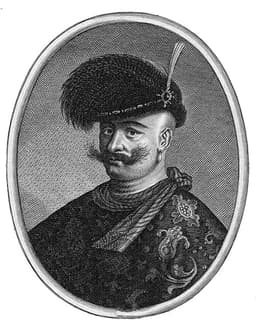
Abbas I
Emperor · Modern
81.4Total
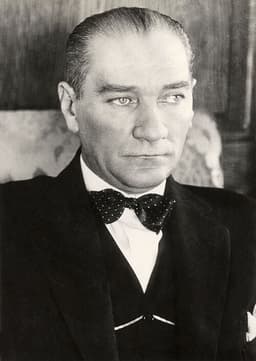
Mustafa Kemal Ataturk
Politician · Modern
80.0Total
Basic Information
Born
1571
1881
Died
1629
1938
Era
Modern
Modern
Nationality
Persia
Turkey
Occupation
Emperor
Politician
Civilization
Middle Eastern
Middle Eastern
Score Comparison
Military (10%)
82.0
75.0
Political (20%)
90.0
85.0
Influence (20%)
75.0
75.0
Legacy (20%)
82.0
90.0
Leadership (15%)
81.7
80.0
Strategy (15%)
82.0
65.0
TOTAL
81.4
80.0
Abbas I — Complete Timeline
1590 AD
Reformed the Army with GhulamsReform
Abbas I created a standing army of ghulams (military slaves) recruited from Christian subjects in the Caucasus, particularly Georgians and Armenians. This reduced reliance on the Qizilbash tribal forces, increased royal control, and modernized the military with firearms and artillery.
Military ReformGhulam SystemCentralization
Impact: nationalconstructive
1598 AD
Relocated Capital to IsfahanPolitical Action
Abbas I moved the Safavid capital from Qazvin to Isfahan, transforming it into a magnificent city with grand architecture, including Naqsh-e Jahan Square, the Shah Mosque, and the Ali Qapu Palace. This relocation became a symbol of Safavid power and cultural flourishing.
Capital RelocationUrban PlanningArchitecture
Impact: globalconstructive
1599 AD
Established Diplomatic Relations with EuropePolitical Action◆ Major
Abbas I sent diplomatic missions to European courts, including those of Philip III of Spain, Rudolf II of the Holy Roman Empire, and Elizabeth I of England, seeking alliances against the Ottoman Empire. These missions opened sustained diplomatic and commercial exchanges between Safavid Persia and Europe.
DiplomacyEuropean RelationsAnti-Ottoman Alliance
Impact: globalconstructive
1605 AD
Battle of SufiyanWar◆ Major
Abbas I defeated an Ottoman army near Sufiyan, securing Safavid control over Azerbaijan and the Caucasus. This victory was part of the Ottoman-Safavid War of 1603-1618, which resulted in the recapture of Tabriz, Nakhchivan, and Yerevan from Ottoman occupation.
Ottoman-Safavid WarBattleTerritorial Recovery
Impact: regional
1622 AD
Expelled Portuguese from HormuzWar◆ Major
Abbas I, with support from the English East India Company, captured the island of Hormuz from Portuguese control. This ended Portuguese dominance in the Persian Gulf and opened direct trade routes for Safavid Persia with Europe, boosting the silk trade.
Persian GulfTradeEuropean Relations
Impact: globalconstructive
1623 AD
Recaptured BaghdadWar◆ Major
Abbas I captured Baghdad from the Ottoman Empire after a siege, restoring Safavid control over Iraq. This victory expanded Safavid territory and gave Abbas control over important Shi'a pilgrimage sites like Najaf and Karbala.
Ottoman-Safavid WarConquestShi'a Sites
Impact: regional
Mustafa Kemal Ataturk — Complete Timeline
1915 AD
Battle of GallipoliWar
As a colonel, Mustafa Kemal commanded Ottoman forces at Gallipoli, successfully repelling Allied landings. His leadership at critical points like Chunuk Bair made him a national hero and laid the foundation for his political career.
World War IOttoman EmpireMilitary Victory
Impact: regional
1919 AD
Turkish War of IndependenceWar
Kemal organized and led the Turkish National Movement against the Allied occupation of Anatolia and the Treaty of S
Independence WarNational MovementAnkara
Impact: nationalconstructive
1922 AD
Abolition of the SultanatePolitical Action◆ Major
The Grand National Assembly of Turkey, under Kemal's leadership, abolished the Ottoman Sultanate, ending 600 years of imperial rule. This severed the link with the old regime and paved the way for the proclamation of the Republic.
SultanateRepublicPolitical Reform
Impact: nationalprogressive
1923 AD
Proclamation of the Republic of TurkeyPolitical Action
Kemal declared Turkey a republic, becoming its first president. He moved the capital to Ankara and initiated a series of radical reforms to modernize and secularize the state, including the adoption of a new legal code and the Latin alphabet.
RepublicModernizationSecularism
Impact: globalprogressive
1925 AD
Adoption of the Hat LawReform◆ Major
Kemal introduced the Hat Law, banning the fez and encouraging Western-style hats. This was part of his broader cultural revolution to secularize and Westernize Turkish society, symbolizing the break with Ottoman traditions.
Cultural ReformSecularismWesternization
Impact: nationalprogressive
1934 AD
Granting of Women's SuffrageReform◆ Major
Kemal's government granted women the right to vote and stand for election in national elections, ahead of many European countries. This reform was part of his commitment to gender equality and modernization of Turkish society.
Women's RightsSuffrageModernization
Impact: nationalprogressive
Expert Analysis
Origins
**Abbas I** (1571–1629) was born into the Safavid dynasty, a Shi'a Muslim empire that had ruled Persia since 1501. His father, Shah Mohammad Khodabanda, was a weak ruler, and Abbas grew up amid court intrigues and tribal conflicts. He ascended the throne at age 16 after a coup that deposed his father, and he quickly learned the arts of survival and statecraft. His early years were marked by the need to consolidate power against the Qizilbash Turkic tribes who had brought the Safavids to power but now threatened stability.
**Mustafa Kemal Ataturk** (1881–1938) was born in Ottoman Salonika (now Thessaloniki, Greece) to a secular middle-class family. He attended military schools, graduating from the Ottoman Military Academy in 1905. He was influenced by the Young Turk movement and the Enlightenment ideas of nationalism, positivism, and secularism. His military career began in the declining Ottoman Empire, which was losing territory and authority to European powers. Unlike Abbas, Ataturk came from a non-royal background and rose through merit in a modern army.
Rise to Power
**Abbas I** seized power in 1587 with the help of the Qizilbash, but he soon realized that these tribal forces were a threat to central authority. He slowly built a new army of *ghulams* (slave soldiers) from the Caucasus, especially Armenians and Georgians, who were loyal only to him. He also reduced the influence of the Qizilbash by reorganizing the bureaucracy and appointing non-tribal administrators. His turning point came when he relocated the capital from Qazvin to Isfahan in 1598, a move that symbolized a new era of centralized rule and cultural flourishing.
**Ataturk** rose to prominence through his military successes. He distinguished himself at the Battle of Gallipoli (1915) during World War I, where he repelled Allied forces and became a national hero. After the Ottoman defeat in 1918, he organized the Turkish National Movement, resisting the partition of Anatolia by the Treaty of Sèvres. He led the Turkish War of Independence (1919–1923), defeating Greek, Armenian, and French forces. His political acumen led to the abolition of the Ottoman sultanate in 1922 and the proclamation of the Republic of Turkey in 1923, with himself as its first president.
Leadership & Governance
**Abbas I** is known for his centralization policies. He created a standing army of 40,000 ghulams, equipped with muskets and artillery, reducing reliance on tribal cavalry. He also reformed the administration, appointing Persian bureaucrats over Turkic nobles, and built roads, caravanserais, and bridges to boost trade. His capital, Isfahan, became a masterpiece of Islamic architecture with its grand mosques, palaces, and public squares. He was a patron of the arts, encouraging carpet weaving, miniature painting, and metalwork. However, his rule was autocratic; he eliminated rivals, including his own sons, and imposed heavy taxes.
**Ataturk** implemented a radical modernization program known as Kemalism, based on six principles: republicanism, nationalism, populism, statism, secularism, and reformism. He abolished the caliphate, closed Islamic courts, replaced Sharia law with Swiss civil law, and adopted the Latin alphabet. He granted women suffrage and encouraged Western dress, including the Hat Law (1925). His economic policies were state-led, with five-year plans and industrialization. He also promoted a secular Turkish identity, downplaying Ottoman and Islamic heritage.
Triumph & Tragedy
**Abbas I** achieved major military successes: he recaptured Baghdad from the Ottomans in 1623, expelled the Portuguese from Hormuz in 1622 (with English help), and secured Persian control over the Caucasus. His reign saw a cultural renaissance, but his later years were marred by paranoia. He blinded or killed his sons to prevent coups, leading to a succession crisis. His grandson Safi, who succeeded him, was weak and reversed many reforms.
**Ataturk** triumphed in the War of Independence and established a stable republic. His reforms transformed Turkey into a modern, secular nation-state. However, his policies were sometimes authoritarian: he suppressed opposition, exiled critics, and enforced secularism harshly, alienating religious conservatives. The population exchange with Greece uprooted 1.5 million people. His death in 1938 left a legacy of adoration but also debate about his methods.
Character & Destiny
**Abbas I** was a shrewd, calculating ruler who combined ruthless ambition with cultural sophistication. He was a master of realpolitik, playing European powers against the Ottomans and using English ships to oust the Portuguese. His destiny was to restore Persian power after decades of decline, but his paranoia ultimately undermined his dynasty.
**Ataturk** was a visionary, disciplined, and charismatic leader. He was a pragmatist who believed in science and reason, once saying, "The only guide is science." His destiny was to rescue Turkey from collapse and reinvent it as a modern nation. He died of cirrhosis at 57, but his image remains revered in Turkey.
Legacy
**Abbas I** is remembered as the greatest Safavid shah, who made Isfahan one of the world's most beautiful cities. His architectural and cultural achievements endure, but his political system declined after his death. His scores: Military 82, Political 90, Intelligence 75, Leadership 82, Diplomacy 82, Strategy 82, Tactics 81.
**Ataturk** is the founder of modern Turkey, whose reforms continue to shape the country. His legacy is contested: secularists venerate him, while Islamists criticize his authoritarianism. His scores: Military 75, Political 85, Intelligence 75, Leadership 90, Diplomacy 80, Strategy 65, Tactics 80.
Conclusion
Both leaders were transformative, but **Abbas I** emerges slightly ahead with a score gap of 1.4. He built a lasting cultural legacy and revived Persia's power, while Ataturk's achievements were more institutional but also more fragile. Abbas's political acumen (90) and strategic vision (82) outweigh Ataturk's leadership (90) but lower military and strategy scores. Ultimately, Abbas's creation of a vibrant empire that lasted a century more than Ataturk's personal influence gives him the edge.
Rankings
🥇
Abbas ILeader
Mil: 82.0Pol: 90.0Inf: 75.0
81.4
🥈
Mustafa Kemal Ataturk
Mil: 75.0Pol: 85.0Inf: 75.0
80.0
+1.4 behind
How This Comparison Works
Algorithm
Each figure is scored on 6 dimensions (0—100 scale) based on structured historical data: Military (10%), Political (20%), Influence (20%), Legacy (20%), Leadership (15%), Strategy (15%). The weighted total produces the final ranking.
Data Sources
Scores are computed from structured sub-indicators in the database. Scale factors adjust for era (Ancient ×0.85, Modern ×1.0) and civilization size (Eastern ×1.05, Other ×0.80) to account for differences in population and military scale.
Maximum 3 Figures
Comparisons are limited to 2—3 figures to ensure readability and statistical meaningfulness.
Error Margins
±5 points per dimension — Sub-scores are derived from historical records with inherent uncertainty. Two figures within 5 points on a dimension should be considered roughly equivalent in that area.
Total Score Accuracy
±3 points overall — The weighted combination of 6 dimensions produces a total score with approximately ±3 points of uncertainty. Differences of less than 3 points are not statistically significant— the figures are effectively tied.
Known Limitations
- Historical records are incomplete and uneven across civilizations
- Figures from oral-tradition societies may be underrepresented
- Occupation labels can misclassify multi-role figures
- Scores measure capability and impact, not moral character
- Quantitative scoring is a comparison tool, not absolute truth
Capability Radar
Military (10%) — Battles & Warfare
Battles
85
85
Win Rate
90
90
Expansion
85
60
Political (20%) — Governance & Reform
Reform
95
98
Diplomacy
88
85
Economy
92
75
Influence (20%) — Cultural & Global Reach
Cultural
90
90
Global
80
80
Legacy (20%) — Historical Impact
Historical
88
95
Longevity
85
85
Leadership (15%) — Power & Stability
Tenure
90
85
Stability
85
70
Strategy (15%) — Tactics & Innovation
Strategy
92
85
Tactics
88
88
Reform
95
80
Similar Comparisons
Comments & Discussion
No comments yet. Be the first to share your thoughts!