Loading...
This comparison has not been analyzed yet.
One-time AI generation (~1 minute). Scores and timeline are already available below.
Abbas I vs Minh Mang
Abbas I leads by 25.5 pts · 2 figures compared
…
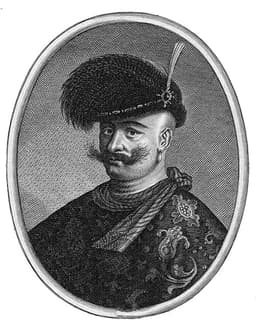
Abbas I
Emperor · Modern
81.4Total

Minh Mang
Emperor · Modern
55.9Total
Basic Information
Born
1571
1791
Died
1629
1841
Era
Modern
Modern
Nationality
Persia
Vietnam
Occupation
Emperor
Emperor
Civilization
Middle Eastern
Eastern
Score Comparison
Military (10%)
82.0
40.0
Political (20%)
90.0
53.8
Influence (20%)
75.0
59.0
Legacy (20%)
82.0
49.2
Leadership (15%)
81.7
72.0
Strategy (15%)
82.0
60.0
TOTAL
81.4
55.9
Abbas I — Complete Timeline
1590 AD
Reformed the Army with GhulamsReform
Abbas I created a standing army of ghulams (military slaves) recruited from Christian subjects in the Caucasus, particularly Georgians and Armenians. This reduced reliance on the Qizilbash tribal forces, increased royal control, and modernized the military with firearms and artillery.
Military ReformGhulam SystemCentralization
Impact: nationalconstructive
1598 AD
Relocated Capital to IsfahanPolitical Action
Abbas I moved the Safavid capital from Qazvin to Isfahan, transforming it into a magnificent city with grand architecture, including Naqsh-e Jahan Square, the Shah Mosque, and the Ali Qapu Palace. This relocation became a symbol of Safavid power and cultural flourishing.
Capital RelocationUrban PlanningArchitecture
Impact: globalconstructive
1599 AD
Established Diplomatic Relations with EuropePolitical Action◆ Major
Abbas I sent diplomatic missions to European courts, including those of Philip III of Spain, Rudolf II of the Holy Roman Empire, and Elizabeth I of England, seeking alliances against the Ottoman Empire. These missions opened sustained diplomatic and commercial exchanges between Safavid Persia and Europe.
DiplomacyEuropean RelationsAnti-Ottoman Alliance
Impact: globalconstructive
1605 AD
Battle of SufiyanWar◆ Major
Abbas I defeated an Ottoman army near Sufiyan, securing Safavid control over Azerbaijan and the Caucasus. This victory was part of the Ottoman-Safavid War of 1603-1618, which resulted in the recapture of Tabriz, Nakhchivan, and Yerevan from Ottoman occupation.
Ottoman-Safavid WarBattleTerritorial Recovery
Impact: regional
1622 AD
Expelled Portuguese from HormuzWar◆ Major
Abbas I, with support from the English East India Company, captured the island of Hormuz from Portuguese control. This ended Portuguese dominance in the Persian Gulf and opened direct trade routes for Safavid Persia with Europe, boosting the silk trade.
Persian GulfTradeEuropean Relations
Impact: globalconstructive
1623 AD
Recaptured BaghdadWar◆ Major
Abbas I captured Baghdad from the Ottoman Empire after a siege, restoring Safavid control over Iraq. This victory expanded Safavid territory and gave Abbas control over important Shi'a pilgrimage sites like Najaf and Karbala.
Ottoman-Safavid WarConquestShi'a Sites
Impact: regional
Minh Mang — Complete Timeline
1820 AD
Reformed Confucian AdministrationReform◆ Major
Minh Mang reorganized the Vietnamese bureaucracy based on Confucian principles, centralizing power and reducing regional autonomy. He expanded the civil service examination system and promoted Neo-Confucian orthodoxy.
ReformConfucianismBureaucracy
Impact: nationalconstructive
1833 AD
Implemented Anti-Christian EdictsPolitical Action◆ Major
Minh Mang issued a series of edicts banning Christianity and ordering the destruction of churches. Missionaries were executed or expelled, and Vietnamese Christians were persecuted. This policy increased tensions with France and led to future French intervention.
ChristianityPersecutionEdict
Impact: nationaldestructive
1835 AD
Suppressed Le Van Khoi RebellionWar◆ Major
Minh Mang ordered the brutal suppression of the Le Van Khoi rebellion in southern Vietnam. The revolt, led by a Catholic convert, was crushed with mass executions, and Minh Mang intensified his persecution of Christian missionaries and converts.
RebellionPersecutionCatholic
Impact: nationaldestructive
This comparison has not been analyzed yet.
One-time AI generation (~1 minute). Scores and timeline are already available below.
Rankings
🥇
Abbas ILeader
Mil: 82.0Pol: 90.0Inf: 75.0
81.4
🥈
Minh Mang
Mil: 40.0Pol: 53.8Inf: 59.0
55.9
+25.5 behind
How This Comparison Works
Algorithm
Each figure is scored on 6 dimensions (0—100 scale) based on structured historical data: Military (10%), Political (20%), Influence (20%), Legacy (20%), Leadership (15%), Strategy (15%). The weighted total produces the final ranking.
Data Sources
Scores are computed from structured sub-indicators in the database. Scale factors adjust for era (Ancient ×0.85, Modern ×1.0) and civilization size (Eastern ×1.05, Other ×0.80) to account for differences in population and military scale.
Maximum 3 Figures
Comparisons are limited to 2—3 figures to ensure readability and statistical meaningfulness.
Error Margins
±5 points per dimension — Sub-scores are derived from historical records with inherent uncertainty. Two figures within 5 points on a dimension should be considered roughly equivalent in that area.
Total Score Accuracy
±3 points overall — The weighted combination of 6 dimensions produces a total score with approximately ±3 points of uncertainty. Differences of less than 3 points are not statistically significant— the figures are effectively tied.
Known Limitations
- Historical records are incomplete and uneven across civilizations
- Figures from oral-tradition societies may be underrepresented
- Occupation labels can misclassify multi-role figures
- Scores measure capability and impact, not moral character
- Quantitative scoring is a comparison tool, not absolute truth
Capability Radar
Military (10%) — Battles & Warfare
Battles
85
45
Win Rate
90
50
Expansion
85
40
Political (20%) — Governance & Reform
Reform
95
65
Diplomacy
88
40
Economy
92
55
Influence (20%) — Cultural & Global Reach
Cultural
90
55
Global
80
30
Legacy (20%) — Historical Impact
Historical
88
50
Longevity
85
45
Leadership (15%) — Power & Stability
Tenure
90
60
Stability
85
50
Strategy (15%) — Tactics & Innovation
Strategy
92
45
Tactics
88
40
Reform
95
55
Similar Comparisons
Comments & Discussion
No comments yet. Be the first to share your thoughts!