Loading...
Abbas I vs King David
Abbas I leads by 6.1 pts · 2 figures compared
…
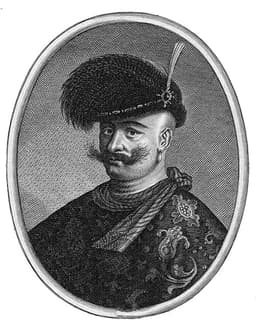
Abbas I
Emperor · Modern
81.4Total

King David
Emperor · Ancient
75.3Total
Basic Information
Born
1571
-1010
Died
1629
-970
Era
Modern
Ancient
Nationality
Persia
Israel
Occupation
Emperor
Emperor
Civilization
Middle Eastern
Middle Eastern
Score Comparison
Military (10%)
82.0
72.0
Political (20%)
90.0
72.0
Influence (20%)
75.0
88.0
Legacy (20%)
82.0
70.0
Leadership (15%)
81.7
72.0
Strategy (15%)
82.0
70.0
TOTAL
81.4
75.3
Abbas I — Complete Timeline
1590 AD
Reformed the Army with GhulamsReform
Abbas I created a standing army of ghulams (military slaves) recruited from Christian subjects in the Caucasus, particularly Georgians and Armenians. This reduced reliance on the Qizilbash tribal forces, increased royal control, and modernized the military with firearms and artillery.
Military ReformGhulam SystemCentralization
Impact: nationalconstructive
1598 AD
Relocated Capital to IsfahanPolitical Action
Abbas I moved the Safavid capital from Qazvin to Isfahan, transforming it into a magnificent city with grand architecture, including Naqsh-e Jahan Square, the Shah Mosque, and the Ali Qapu Palace. This relocation became a symbol of Safavid power and cultural flourishing.
Capital RelocationUrban PlanningArchitecture
Impact: globalconstructive
1599 AD
Established Diplomatic Relations with EuropePolitical Action◆ Major
Abbas I sent diplomatic missions to European courts, including those of Philip III of Spain, Rudolf II of the Holy Roman Empire, and Elizabeth I of England, seeking alliances against the Ottoman Empire. These missions opened sustained diplomatic and commercial exchanges between Safavid Persia and Europe.
DiplomacyEuropean RelationsAnti-Ottoman Alliance
Impact: globalconstructive
1605 AD
Battle of SufiyanWar◆ Major
Abbas I defeated an Ottoman army near Sufiyan, securing Safavid control over Azerbaijan and the Caucasus. This victory was part of the Ottoman-Safavid War of 1603-1618, which resulted in the recapture of Tabriz, Nakhchivan, and Yerevan from Ottoman occupation.
Ottoman-Safavid WarBattleTerritorial Recovery
Impact: regional
1622 AD
Expelled Portuguese from HormuzWar◆ Major
Abbas I, with support from the English East India Company, captured the island of Hormuz from Portuguese control. This ended Portuguese dominance in the Persian Gulf and opened direct trade routes for Safavid Persia with Europe, boosting the silk trade.
Persian GulfTradeEuropean Relations
Impact: globalconstructive
1623 AD
Recaptured BaghdadWar◆ Major
Abbas I captured Baghdad from the Ottoman Empire after a siege, restoring Safavid control over Iraq. This victory expanded Safavid territory and gave Abbas control over important Shi'a pilgrimage sites like Najaf and Karbala.
Ottoman-Safavid WarConquestShi'a Sites
Impact: regional
King David — Complete Timeline
1010 BC
Anointed as King of JudahPolitical Action◆ Major
After Saul's death, David was anointed king over the tribe of Judah at Hebron. This began a seven-year period of civil war with Ish-bosheth, Saul's son, who ruled the northern tribes, leading to the eventual unification of Israel.
KingshipCivil WarJudah
Impact: national
1003 BC
Capture of JerusalemWar
David led his army to capture the Jebusite fortress of Jerusalem, making it the capital of the united kingdom. He brought the Ark of the Covenant there, establishing the city as both the political and religious center of Israel.
JerusalemCapitalArk of the Covenant
Impact: nationalconstructive
1000 BC
Defeat of the PhilistinesWar◆ Major
David fought several campaigns that decisively defeated the Philistines, including the Battle of Baal-perazim. He captured Gath and other Philistine strongholds, ending their dominance over Israel and securing the kingdom's borders.
PhilistinesMilitary CampaignIsrael
Impact: regional
990 BC
Affair with BathshebaPolitical Action◆ Major
David committed adultery with Bathsheba and arranged the death of her husband Uriah the Hittite in battle. The prophet Nathan confronted David, leading to his repentance but also to divine punishment, including the death of their first child.
ScandalBathshebaNathan
Impact: nationaldestructive
978 BC
Revolt of AbsalomWar◆ Major
David's son Absalom led a rebellion that forced David to flee Jerusalem. David's forces under Joab defeated Absalom's army in the Forest of Ephraim, and Absalom was killed. David returned to Jerusalem but the kingdom was weakened.
RebellionCivil WarAbsalom
Impact: nationaltragic
Expert Analysis
Origins
**Abbas I** (1571–1629) was the fifth Safavid shah of Persia, born into a dynasty founded by Shah Ismail I. He ascended the throne in 1588 at age 16 after a period of internal strife and external threats from the Ottoman Empire and Uzbek tribes. His early life was marked by court intrigues and the need to consolidate power. Abbas was the son of Shah Mohammad Khodabanda, a weak ruler, and Mahd-i Ulya, a powerful queen who was later executed. This turbulent upbringing forged a shrewd, ruthless, and ambitious leader determined to restore Persian glory.
**King David** (c. 1040–970 BCE) rose from humble beginnings as a shepherd in Bethlehem. He was the youngest son of Jesse and was anointed by the prophet Samuel as the future king of Israel while Saul still reigned. His early fame came from slaying the Philistine giant Goliath, which catapulted him into national prominence. David's origins are deeply rooted in the tribal confederation of ancient Israel, and his rise was marked by a combination of military prowess, political acumen, and divine favor. He spent years as an outlaw fleeing King Saul's jealousy before finally becoming king.
Rise to Power
**Abbas I** came to power after a coup that deposed his father. He immediately faced threats: the Ottomans had seized Tabriz and much of the northwest, while the Uzbeks raided Khorasan. Abbas initially sued for peace with the Ottomans, ceding territory to buy time. He then focused on internal consolidation, eliminating potential rivals (including blinding or killing his own sons). His strategic genius lay in his patience and long-term planning. He systematically rebuilt the army, creating a loyal corps of ghulams (slave soldiers) from Circassian, Georgian, and Armenian captives, reducing reliance on the traditional Qizilbash tribal forces. This reformed army allowed him to first defeat the Uzbeks in 1598, then turn against the Ottomans, recapturing Tabriz, Baghdad, and much of the Caucasus.
**King David** rose to power through a combination of military success and political maneuvering. After killing Goliath, he became a celebrated warrior in Saul's court, marrying Saul's daughter Michal and forming a close bond with Saul's son Jonathan. However, Saul's jealousy forced David into exile, where he became a mercenary leader for the Philistines while maintaining loyalty to Israel. After Saul's death in battle, David was anointed king of Judah in Hebron. A protracted civil war followed between David and Saul's son Ish-bosheth, which David won. He then was anointed king over all Israel, unifying the twelve tribes. David's rise was marked by his ability to inspire loyalty, his military cunning, and his reputation as a man after God's own heart.
Leadership & Governance
**Abbas I** was a master of statecraft and centralization. He moved the capital from Qazvin to Isfahan, transforming it into a magnificent city with grand architecture, gardens, and trade routes. He encouraged trade with European powers, especially the English East India Company, to counter the Ottoman and Portuguese influence. He reformed the economy, built roads, and promoted Persian art and culture. His governance was absolute but efficient; he created a bureaucracy staffed by merit, not birth. He also forcibly relocated Armenians from Julfa to Isfahan to boost silk trade. Abbas was a patron of Shi'a Islam but tolerated other religions for political gain. His leadership style was hands-on, often leading campaigns personally, and he was known for his justice (though harsh) and accessibility to subjects.
**King David** ruled as a tribal monarch over a united kingdom of Israel and Judah. He established Jerusalem as the political and religious capital, bringing the Ark of the Covenant there. He organized a central government with officials like Joab (army commander) and Zadok (priest). David's governance was a blend of charismatic leadership and divine mandate. He expanded Israel's borders through conquest, defeating Philistines, Moabites, Ammonites, Edomites, and Arameans. He administered justice personally, but his reign was also marked by internal strife, including the rebellion of his son Absalom. David's leadership was deeply personal; he inspired fierce loyalty but also faced severe family conflicts.
Triumph & Tragedy
**Abbas I**'s greatest triumphs include the recapture of Baghdad in 1623, the expulsion of the Portuguese from Hormuz in 1622 (with English help), and the defeat of the Uzbeks, securing Persia's eastern borders. His capital Isfahan became a jewel of Islamic civilization. However, his reign had dark sides: he became increasingly paranoid, executing or blinding his most capable sons (including the brilliant but rebellious Prince Safi). His later years saw a decline in military success, and his harsh policies toward minorities (e.g., forced conversions of Georgians) sowed resentment. The tragedy of his reign was that his achievements were not sustained by his successors; his grandson Safi would undo much of his work.
**King David**'s triumphs include the capture of Jerusalem, the establishment of a united Israelite kingdom, and military victories that secured Israel's borders. He is also celebrated as a poet (author of many Psalms) and a man of deep faith. However, his reign was marred by personal tragedy: his adultery with Bathsheba and murder of her husband Uriah brought divine judgment, leading to the death of their first child. His later years saw the revolt of his son Absalom, who forced David to flee Jerusalem. David's grief over Absalom's death is a poignant moment. The tragedy of David's life is that his great sin and family dysfunction cast a shadow over his achievements.
Character & Destiny
**Abbas I** was ambitious, intelligent, and ruthless. He was a visionary builder and a skilled diplomat. His character combined Persian grandeur with pragmatic cruelty. He believed in his destiny to restore Persia's greatness, and he largely succeeded. His paranoia in later years, however, led to the elimination of talented heirs, ensuring his dynasty's decline. He scored high in military (82), political (90), and strategic (82) metrics, reflecting his effectiveness.
**King David** was complex: a warrior, poet, sinner, and repentant. He was deeply emotional, capable of great love and great cruelty. His destiny was to be the founder of a royal line that would lead to the Messiah in Jewish and Christian tradition. His character flaws, especially with Bathsheba, show a man who struggled with power and desire. His sincerity in repentance is a key aspect of his legacy. David's scores: military (72), political (72), intellectual (88) - the last reflecting his poetic and administrative skills.
Legacy
**Abbas I** is remembered as the greatest Safavid shah, who transformed Persia into a major power. Isfahan's architectural wonders (Naqsh-e Jahan Square, Imam Mosque) are UNESCO World Heritage sites. His military reforms and centralization shaped Persian governance for centuries. However, his legacy is mixed due to his brutal treatment of his family and minorities. Score: 81 overall.
**King David** is a foundational figure in Judaism, Christianity, and Islam. He is the archetypal king, the author of Psalms, and the ancestor of Jesus. His dynasty (the House of David) became a symbol of messianic hope. His legacy is both religious and historical; he united Israel and established Jerusalem. Despite his sins, he is revered as a man after God's own heart. Score: 74.9 overall.
Conclusion
Abbas I surpasses King David in overall scores (81.0 vs 74.9), reflecting his greater impact as an emperor in terms of military conquest, political centralization, and cultural achievement. While David's legacy is profound in religious terms, Abbas's tangible accomplishments in state-building and empire expansion are more measurable. Abbas's strategic reforms and territorial gains outshine David's tribal unification. However, David's moral complexity and enduring spiritual influence give him a unique stature. For raw imperial effectiveness, Abbas I is the greater emperor.
**Score Gap: 6.1 points**
Rankings
🥇
Abbas ILeader
Mil: 82.0Pol: 90.0Inf: 75.0
81.4
🥈
King David
Mil: 72.0Pol: 72.0Inf: 88.0
75.3
+6.1 behind
How This Comparison Works
Algorithm
Each figure is scored on 6 dimensions (0—100 scale) based on structured historical data: Military (10%), Political (20%), Influence (20%), Legacy (20%), Leadership (15%), Strategy (15%). The weighted total produces the final ranking.
Data Sources
Scores are computed from structured sub-indicators in the database. Scale factors adjust for era (Ancient ×0.85, Modern ×1.0) and civilization size (Eastern ×1.05, Other ×0.80) to account for differences in population and military scale.
Maximum 3 Figures
Comparisons are limited to 2—3 figures to ensure readability and statistical meaningfulness.
Error Margins
±5 points per dimension — Sub-scores are derived from historical records with inherent uncertainty. Two figures within 5 points on a dimension should be considered roughly equivalent in that area.
Total Score Accuracy
±3 points overall — The weighted combination of 6 dimensions produces a total score with approximately ±3 points of uncertainty. Differences of less than 3 points are not statistically significant— the figures are effectively tied.
Known Limitations
- Historical records are incomplete and uneven across civilizations
- Figures from oral-tradition societies may be underrepresented
- Occupation labels can misclassify multi-role figures
- Scores measure capability and impact, not moral character
- Quantitative scoring is a comparison tool, not absolute truth
Capability Radar
Military (10%) — Battles & Warfare
Battles
85
75
Win Rate
90
85
Expansion
85
80
Political (20%) — Governance & Reform
Reform
95
80
Diplomacy
88
75
Economy
92
70
Influence (20%) — Cultural & Global Reach
Cultural
90
95
Global
80
90
Legacy (20%) — Historical Impact
Historical
88
95
Longevity
85
95
Leadership (15%) — Power & Stability
Tenure
90
85
Stability
85
65
Strategy (15%) — Tactics & Innovation
Strategy
92
85
Tactics
88
80
Reform
95
70
Similar Comparisons
Comments & Discussion
No comments yet. Be the first to share your thoughts!