Loading...
Abbas I vs Ivan III the Great
Abbas I leads by 6.1 pts · 2 figures compared
…
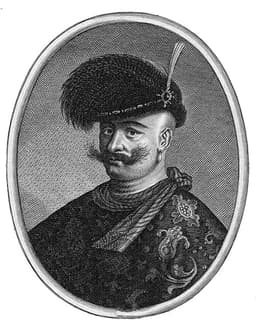
Abbas I
Emperor · Modern
81.4Total
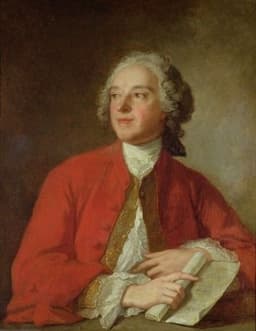
Ivan III the Great
Emperor · Medieval
75.3Total
Basic Information
Born
1571
1440
Died
1629
1505
Era
Modern
Medieval
Nationality
Persia
Muscovy
Occupation
Emperor
Emperor
Civilization
Middle Eastern
Western
Score Comparison
Military (10%)
82.0
76.0
Political (20%)
90.0
70.0
Influence (20%)
75.0
75.0
Legacy (20%)
82.0
80.0
Leadership (15%)
81.7
78.0
Strategy (15%)
82.0
67.2
TOTAL
81.4
75.3
Abbas I — Complete Timeline
1590 AD
Reformed the Army with GhulamsReform
Abbas I created a standing army of ghulams (military slaves) recruited from Christian subjects in the Caucasus, particularly Georgians and Armenians. This reduced reliance on the Qizilbash tribal forces, increased royal control, and modernized the military with firearms and artillery.
Military ReformGhulam SystemCentralization
Impact: nationalconstructive
1598 AD
Relocated Capital to IsfahanPolitical Action
Abbas I moved the Safavid capital from Qazvin to Isfahan, transforming it into a magnificent city with grand architecture, including Naqsh-e Jahan Square, the Shah Mosque, and the Ali Qapu Palace. This relocation became a symbol of Safavid power and cultural flourishing.
Capital RelocationUrban PlanningArchitecture
Impact: globalconstructive
1599 AD
Established Diplomatic Relations with EuropePolitical Action◆ Major
Abbas I sent diplomatic missions to European courts, including those of Philip III of Spain, Rudolf II of the Holy Roman Empire, and Elizabeth I of England, seeking alliances against the Ottoman Empire. These missions opened sustained diplomatic and commercial exchanges between Safavid Persia and Europe.
DiplomacyEuropean RelationsAnti-Ottoman Alliance
Impact: globalconstructive
1605 AD
Battle of SufiyanWar◆ Major
Abbas I defeated an Ottoman army near Sufiyan, securing Safavid control over Azerbaijan and the Caucasus. This victory was part of the Ottoman-Safavid War of 1603-1618, which resulted in the recapture of Tabriz, Nakhchivan, and Yerevan from Ottoman occupation.
Ottoman-Safavid WarBattleTerritorial Recovery
Impact: regional
1622 AD
Expelled Portuguese from HormuzWar◆ Major
Abbas I, with support from the English East India Company, captured the island of Hormuz from Portuguese control. This ended Portuguese dominance in the Persian Gulf and opened direct trade routes for Safavid Persia with Europe, boosting the silk trade.
Persian GulfTradeEuropean Relations
Impact: globalconstructive
1623 AD
Recaptured BaghdadWar◆ Major
Abbas I captured Baghdad from the Ottoman Empire after a siege, restoring Safavid control over Iraq. This victory expanded Safavid territory and gave Abbas control over important Shi'a pilgrimage sites like Najaf and Karbala.
Ottoman-Safavid WarConquestShi'a Sites
Impact: regional
Ivan III the Great — Complete Timeline
1472 AD
Marriage to Sophia PalaiologinaPolitical Action◆ Major
Ivan III married Sophia (Zoe) Palaiologina, niece of the last Byzantine emperor. This marriage allowed Ivan to claim succession to the Byzantine Empire, adopt the double-headed eagle as a symbol, and promote Moscow as the Third Rome.
ByzantiumThird RomeMarriage
Impact: regionalconstructive
1478 AD
Annexation of NovgorodWar◆ Major
Ivan III conquered the Novgorod Republic after a series of campaigns. He abolished the veche (assembly) and removed the veche bell, incorporating Novgorod's vast territories into the Grand Principality of Moscow.
NovgorodAnnexationMoscow
Impact: regional
1480 AD
Great Stand on the Ugra RiverWar
Ivan III faced the Mongol army of Khan Akhmat across the Ugra River. After weeks of stalemate, the Mongols withdrew without battle. This event ended 240 years of Mongol suzerainty over Russia.
Golden HordeIndependenceUgra
Impact: regional
1497 AD
Issued the Sudebnik of 1497Reform◆ Major
Ivan III promulgated a new legal code, the Sudebnik, which standardized laws across the Russian lands. It restricted peasant mobility by limiting the time for transfer between landowners, a step toward serfdom.
Legal CodeSerfdomReform
Impact: national
1500 AD
War with the Grand Duchy of LithuaniaWar◆ Major
Ivan III launched a war against Lithuania, capturing the cities of Bryansk, Dorogobuzh, and Putivl. The war ended with the Truce of 1503, which ceded significant territories to Moscow.
LithuaniaTerritorial ExpansionWar
Impact: regional
Expert Analysis
Origins
**Abbas I** (1571–1629) was born into the Safavid dynasty, a Shia theocracy that had consolidated power in Persia but was beset by internal strife and external threats from the Ottomans and Uzbeks. His father, Shah Mohammad Khodabanda, was a weak ruler, leading to factional chaos. Abbas seized the throne at age 16 in a coup, inheriting a fractured realm.
**Ivan III** (1440–1505), known as Ivan the Great, was born into the Rurik dynasty of the Grand Duchy of Moscow. He became Grand Prince in 1462, inheriting a small but growing state that was still a vassal of the Mongol Golden Horde. His predecessors had slowly expanded Moscow's territory, but Ivan faced the challenge of unifying Russian principalities and throwing off Mongol domination.
Both rulers emerged from turbulent backgrounds: Abbas from a struggling empire, Ivan from a subordinate principality. Their origins set the stage for transformative reigns.
Rise to Power
Abbas I came to power in 1587 after a coup against his father. He immediately faced an existential crisis: the Ottomans had seized vast territories in the west, and the Uzbeks were raiding from the east. To stabilize his rule, he made a humiliating peace with the Ottomans, ceding land, to buy time. This pragmatic move allowed him to focus on internal consolidation.
Ivan III ascended peacefully in 1462 but quickly asserted authority. His first major step was to stop paying tribute to the Great Horde (successor to the Golden Horde), a bold move that culminated in the **Great Stand on the Ugra River** in 1480. After a tense standoff, the Mongols withdrew, effectively ending Mongol rule over Russia. This victory cemented Ivan's reputation as a liberator and unifier.
Both men rose by decisive action: Abbas through a coup and strategic retreat, Ivan through defiance and luck. Their paths diverged in style but converged in ambition.
Leadership & Governance
**Abbas I** was a reformer and centralizer. He moved the capital from Qazvin to **Isfahan**, transforming it into a magnificent city with grand mosques, palaces, and public squares. He reformed the army by creating a corps of **Ghulams** (slave soldiers) loyal to him, reducing reliance on tribal Qizilbash warriors. This strengthened his authority and modernized the military. He also promoted trade, especially with European powers, and encouraged religious tolerance to attract merchants.
**Ivan III** was a consolidator and lawgiver. He annexed **Novgorod** in 1478 after a brutal campaign, incorporating its vast territories into Moscow. His marriage to **Sophia Palaiologina**, niece of the last Byzantine emperor, allowed him to claim the legacy of Rome and adopt Byzantine court rituals. He issued the **Sudebnik of 1497**, a legal code that standardized laws and extended Moscow's jurisdiction. He also expanded the Kremlin's fortifications.
Both were strong centralizers: Abbas through military and economic reforms, Ivan through territorial absorption and legal codification. Abbas's governance was more innovative in military structure; Ivan's in legal and symbolic unification.
Triumph & Tragedy
**Abbas I**'s greatest triumphs were military. He recaptured **Tabriz** and **Baghdad** from the Ottomans, and in 1603–1607, he won a decisive war against them. In 1622, with English help, he **expelled the Portuguese** from Hormuz, securing Persian trade routes. His reign saw Persia reach its peak power. However, his later years were marred by tragedy: he blinded or killed his own sons to prevent rebellion, leaving a succession crisis.
**Ivan III**'s triumphs include the bloodless victory at the Ugra River, the annexation of Novgorod, and successful wars against Lithuania, expanding Moscow's territory threefold. He also secured alliances through marriage. His tragedy was less personal: his eldest son died in 1490, leading to a succession struggle between his grandson Dmitry and son Vasily. Ivan eventually chose Vasily, but the conflict weakened the court.
Abbas's triumphs were more dramatic and his tragedies more brutal; Ivan's victories were steady but less spectacular.
Character & Destiny
Abbas I was energetic, cunning, and ruthless. He personally led campaigns and was a master of diplomacy. His destiny was to restore Persian glory and create a golden age. Ivan III was cautious, calculating, and determined. He rarely led armies but directed strategy from Moscow. His destiny was to forge a unified Russian state and end Mongol subjugation.
Both were pragmatic: Abbas used cruelty to secure power; Ivan used patience. Their characters shaped their nations' paths: Persia's resurgence and Russia's emergence.
Legacy
Abbas I is remembered as **Abbas the Great**, the builder of Isfahan and the architect of Safavid Iran's golden age. His reforms laid the foundation for a century of prosperity, but his killing of heirs led to decline after his death.
Ivan III is known as the **Gatherer of the Russian Lands**, the founder of the unified Russian state. His legal code and territorial expansions set the stage for Ivan the Terrible and the Russian Empire. His legacy is more enduring: he ended Mongol rule and created a national identity.
Conclusion
**Score: Abbas I 82, Ivan III 76.** Abbas's higher scores reflect his greater impact on military reform, economic development, and cultural flourishing. While Ivan's unification of Russia was historically crucial, Abbas's achievements in creating a centralized, powerful state with a vibrant capital are more impressive in scope and innovation. Abbas wins through superior leadership and transformative governance.
**Final Verdict: Abbas I is the greater ruler.**
Rankings
🥇
Abbas ILeader
Mil: 82.0Pol: 90.0Inf: 75.0
81.4
🥈
Ivan III the Great
Mil: 76.0Pol: 70.0Inf: 75.0
75.3
+6.1 behind
How This Comparison Works
Algorithm
Each figure is scored on 6 dimensions (0—100 scale) based on structured historical data: Military (10%), Political (20%), Influence (20%), Legacy (20%), Leadership (15%), Strategy (15%). The weighted total produces the final ranking.
Data Sources
Scores are computed from structured sub-indicators in the database. Scale factors adjust for era (Ancient ×0.85, Modern ×1.0) and civilization size (Eastern ×1.05, Other ×0.80) to account for differences in population and military scale.
Maximum 3 Figures
Comparisons are limited to 2—3 figures to ensure readability and statistical meaningfulness.
Error Margins
±5 points per dimension — Sub-scores are derived from historical records with inherent uncertainty. Two figures within 5 points on a dimension should be considered roughly equivalent in that area.
Total Score Accuracy
±3 points overall — The weighted combination of 6 dimensions produces a total score with approximately ±3 points of uncertainty. Differences of less than 3 points are not statistically significant— the figures are effectively tied.
Known Limitations
- Historical records are incomplete and uneven across civilizations
- Figures from oral-tradition societies may be underrepresented
- Occupation labels can misclassify multi-role figures
- Scores measure capability and impact, not moral character
- Quantitative scoring is a comparison tool, not absolute truth
Capability Radar
Military (10%) — Battles & Warfare
Battles
85
75
Win Rate
90
80
Expansion
85
85
Political (20%) — Governance & Reform
Reform
95
80
Diplomacy
88
85
Economy
92
70
Influence (20%) — Cultural & Global Reach
Cultural
90
70
Global
80
70
Legacy (20%) — Historical Impact
Historical
88
85
Longevity
85
80
Leadership (15%) — Power & Stability
Tenure
90
85
Stability
85
75
Strategy (15%) — Tactics & Innovation
Strategy
92
85
Tactics
88
70
Reform
95
65
Similar Comparisons
Comments & Discussion
No comments yet. Be the first to share your thoughts!