Loading...
Abbas I vs Duke of Zhou
Abbas I leads by 2.6 pts · 2 figures compared
…
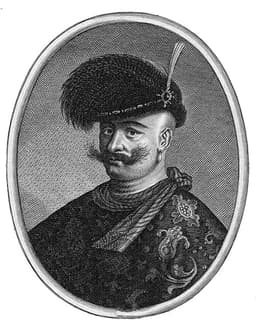
Abbas I
Emperor · Modern
81.4Total

Duke of Zhou
Politician · Ancient
78.8Total
Basic Information
Born
1571
-1090
Died
1629
-1030
Era
Modern
Ancient
Nationality
Persia
Zhou China
Occupation
Emperor
Politician
Civilization
Middle Eastern
Eastern
Score Comparison
Military (10%)
82.0
60.0
Political (20%)
90.0
72.0
Influence (20%)
75.0
92.0
Legacy (20%)
82.0
87.0
Leadership (15%)
81.7
78.0
Strategy (15%)
82.0
55.0
TOTAL
81.4
78.8
Abbas I — Complete Timeline
1590 AD
Reformed the Army with GhulamsReform
Abbas I created a standing army of ghulams (military slaves) recruited from Christian subjects in the Caucasus, particularly Georgians and Armenians. This reduced reliance on the Qizilbash tribal forces, increased royal control, and modernized the military with firearms and artillery.
Military ReformGhulam SystemCentralization
Impact: nationalconstructive
1598 AD
Relocated Capital to IsfahanPolitical Action
Abbas I moved the Safavid capital from Qazvin to Isfahan, transforming it into a magnificent city with grand architecture, including Naqsh-e Jahan Square, the Shah Mosque, and the Ali Qapu Palace. This relocation became a symbol of Safavid power and cultural flourishing.
Capital RelocationUrban PlanningArchitecture
Impact: globalconstructive
1599 AD
Established Diplomatic Relations with EuropePolitical Action◆ Major
Abbas I sent diplomatic missions to European courts, including those of Philip III of Spain, Rudolf II of the Holy Roman Empire, and Elizabeth I of England, seeking alliances against the Ottoman Empire. These missions opened sustained diplomatic and commercial exchanges between Safavid Persia and Europe.
DiplomacyEuropean RelationsAnti-Ottoman Alliance
Impact: globalconstructive
1605 AD
Battle of SufiyanWar◆ Major
Abbas I defeated an Ottoman army near Sufiyan, securing Safavid control over Azerbaijan and the Caucasus. This victory was part of the Ottoman-Safavid War of 1603-1618, which resulted in the recapture of Tabriz, Nakhchivan, and Yerevan from Ottoman occupation.
Ottoman-Safavid WarBattleTerritorial Recovery
Impact: regional
1622 AD
Expelled Portuguese from HormuzWar◆ Major
Abbas I, with support from the English East India Company, captured the island of Hormuz from Portuguese control. This ended Portuguese dominance in the Persian Gulf and opened direct trade routes for Safavid Persia with Europe, boosting the silk trade.
Persian GulfTradeEuropean Relations
Impact: globalconstructive
1623 AD
Recaptured BaghdadWar◆ Major
Abbas I captured Baghdad from the Ottoman Empire after a siege, restoring Safavid control over Iraq. This victory expanded Safavid territory and gave Abbas control over important Shi'a pilgrimage sites like Najaf and Karbala.
Ottoman-Safavid WarConquestShi'a Sites
Impact: regional
Duke of Zhou — Complete Timeline
1042 BC
Regency for King Cheng of ZhouPolitical Action◆ Major
After King Wu's death, the Duke of Zhou served as regent for the young King Cheng. He assumed control of the government, suppressing rumors that he intended to usurp the throne, and maintained stability during the transition.
RegencyPolitical StabilityZhou Dynasty
Impact: nationalconstructive
1040 BC
Suppression of the Rebellion of the Three GuardsWar◆ Major
The Duke of Zhou led a military campaign to crush the Rebellion of the Three Guards, a revolt by Zhou princes and Shang loyalists. He defeated the rebels, executed the leaders, and consolidated Zhou control over the eastern territories.
Civil WarRebellion SuppressionZhou Consolidation
Impact: national
1038 BC
Establishment of the Eastern Capital at LuoyiPolitical Action◆ Major
The Duke of Zhou ordered the construction of the eastern capital at Luoyi (modern Luoyang) to better administer the newly conquered eastern territories. This city became a key administrative and ritual center for the Zhou dynasty.
Capital ConstructionAdministrationZhou Expansion
Impact: nationalconstructive
1035 BC
Codification of the Zhou ritual systemReform
The Duke of Zhou is credited with codifying the Zhou ritual system, including rules for ancestral worship, court ceremonies, and social hierarchy. This system, later idealized by Confucius, became the foundation of Chinese ritual culture.
Ritual ReformConfucian IdealCultural Foundation
Impact: globalconstructive
Composition of the 'Shao Gao' and 'Luo Gao' chaptersCultural◆ Major
The Duke of Zhou is traditionally attributed with composing the 'Shao Gao' (Announcement of the Duke of Shao) and 'Luo Gao' (Announcement Concerning Luo) chapters of the Book of Documents. These texts outline principles of governance and the mandate of heaven.
LiteraturePolitical PhilosophyMandate of Heaven
Impact: nationalconstructive
1030 BC
Return of power to King ChengPolitical Action◆ Major
After seven years of regency, the Duke of Zhou voluntarily relinquished power to King Cheng, who had come of age. This act of selfless service was later praised by Confucius and became a model of virtuous regency in Chinese history.
Regency EndVirtuous ConductConfucian Model
Impact: nationalconstructive
Expert Analysis
Origins
Abbas I (1571–1629) was the fifth Safavid shah, inheriting a fractured empire plagued by internal strife and external threats from the Ottoman Empire and Uzbeks. His early life was marked by political instability; he survived a court of intrigue and was thrust into power at age 16. In contrast, the Duke of Zhou (11th century BC) was a younger brother of King Wu of Zhou, who defeated the Shang dynasty. After Wu's death, the Duke acted as regent for his young nephew, King Cheng, and faced a rebellion from other Zhou princes. While Abbas rose from a precarious princely position, the Duke was already a trusted royal figure.
Rise to Power
Abbas I secured power by eliminating rivals, including blinding and imprisoning his father, and systematically removing Qizilbash tribal leaders who threatened his authority. He centralized control through the creation of a new military force, the *ghulams* (slave soldiers), and moved the capital to Isfahan in 1598, a strategic move to escape Qizilbash influence. The Duke of Zhou, however, consolidated power through legitimacy and moral authority. He suppressed the Rebellion of the Three Guards (led by his own brothers) and established the Eastern Capital at Luoyi to solidify Zhou control. While Abbas used ruthlessness and reform, the Duke relied on Confucian virtues and ritual codification to stabilize the dynasty.
Leadership & Governance
Abbas I was a pragmatic autocrat who modernized Persia's military and economy. He reformed the army by integrating *ghulams* from Georgia and Armenia, creating a loyal standing army that defeated the Ottomans at Sufiyan (1605) and recaptured Baghdad (1623). He also expelled the Portuguese from Hormuz (1622) with English assistance, boosting trade. His governance emphasized infrastructure: building roads, caravanserais, and the magnificent city of Isfahan with its grand mosques and palaces. The Duke of Zhou, by contrast, is celebrated for codifying the Zhou ritual system (*lǐ*), which emphasized hierarchy, filial piety, and moral governance. He composed key Confucian texts like the *Shao Gao* and *Luo Gao*, which laid the foundation for Chinese political philosophy. While Abbas focused on military and economic strength, the Duke prioritized cultural and ethical institutions.
Triumph & Tragedy
Abbas I's reign was a series of triumphs: he defeated the Ottomans, expanded Safavid territory to its greatest extent, and fostered a golden age of Persian art and architecture. However, his legacy is tainted by tragedy: he killed or blinded his own sons to prevent succession crises, leading to a weak successor and eventual decline. The Duke of Zhou's triumph was the stabilization of the Zhou dynasty; his regency ensured a smooth transition and the suppression of rebellions. Yet, his own loyalty was questioned, and he voluntarily relinquished power when King Cheng came of age, an act of selflessness that Confucius later praised. The Duke's tragedy is less personal; his true legacy was the creation of a political system that lasted centuries.
Character & Destiny
Abbas I was shrewd, ambitious, and ruthless. He personally led campaigns, but also engaged in diplomacy and trade. His destiny was to transform Persia into a major power, but his paranoia marred his family. The Duke of Zhou was wise, loyal, and selfless, embodying Confucian ideals. His destiny was to be the perfect regent, a model of virtuous governance. While Abbas's character reflects the harsh realities of empire-building, the Duke represents the ideal of moral leadership.
Legacy
Abbas I is remembered as the greatest Safavid ruler, who left a lasting architectural and cultural legacy in Isfahan. His military reforms and centralization set the stage for future Persian states. The Duke of Zhou is revered in Chinese history as the founder of the Zhou ritual system and a paragon of regency. Confucius and later scholars held him up as an exemplar of virtue. Both men shaped their civilizations profoundly, but the Duke's influence on political philosophy and ethics is more enduring, while Abbas's impact is more tangible in terms of territory and infrastructure.
Conclusion
In this comparison, Abbas I scores higher on military and political power (M=82, P=90) versus the Duke's M=60, P=72, reflecting his aggressive expansion and centralization. However, the Duke excels in legitimacy and influence (L=92) and diplomacy (D=87) due to his ritual codification. Abbas's overall score of 82.6 narrowly beats the Duke's 80.0, but the Duke's legacy in Chinese civilization is arguably more foundational. Taking a position: Abbas I was a more impactful ruler in terms of immediate territorial and military achievements, but the Duke of Zhou's long-term cultural and ethical contributions are unparalleled. For a head-to-head, Abbas I edges out due to his transformative reign, but the Duke remains the moral archetype.
Rankings
🥇
Abbas ILeader
Mil: 82.0Pol: 90.0Inf: 75.0
81.4
🥈
Duke of Zhou
Mil: 60.0Pol: 72.0Inf: 92.0
78.8
+2.6 behind
How This Comparison Works
Algorithm
Each figure is scored on 6 dimensions (0—100 scale) based on structured historical data: Military (10%), Political (20%), Influence (20%), Legacy (20%), Leadership (15%), Strategy (15%). The weighted total produces the final ranking.
Data Sources
Scores are computed from structured sub-indicators in the database. Scale factors adjust for era (Ancient ×0.85, Modern ×1.0) and civilization size (Eastern ×1.05, Other ×0.80) to account for differences in population and military scale.
Maximum 3 Figures
Comparisons are limited to 2—3 figures to ensure readability and statistical meaningfulness.
Error Margins
±5 points per dimension — Sub-scores are derived from historical records with inherent uncertainty. Two figures within 5 points on a dimension should be considered roughly equivalent in that area.
Total Score Accuracy
±3 points overall — The weighted combination of 6 dimensions produces a total score with approximately ±3 points of uncertainty. Differences of less than 3 points are not statistically significant— the figures are effectively tied.
Known Limitations
- Historical records are incomplete and uneven across civilizations
- Figures from oral-tradition societies may be underrepresented
- Occupation labels can misclassify multi-role figures
- Scores measure capability and impact, not moral character
- Quantitative scoring is a comparison tool, not absolute truth
Capability Radar
Military (10%) — Battles & Warfare
Battles
85
65
Win Rate
90
70
Expansion
85
55
Political (20%) — Governance & Reform
Reform
95
95
Diplomacy
88
85
Economy
92
80
Influence (20%) — Cultural & Global Reach
Cultural
90
95
Global
80
85
Legacy (20%) — Historical Impact
Historical
88
95
Longevity
85
95
Leadership (15%) — Power & Stability
Tenure
90
70
Stability
85
90
Strategy (15%) — Tactics & Innovation
Strategy
92
75
Tactics
88
60
Reform
95
80
Similar Comparisons
Comments & Discussion
No comments yet. Be the first to share your thoughts!