Loading...
Abbas I vs Duke of Wellington
Abbas I leads by 6.4 pts · 2 figures compared
…
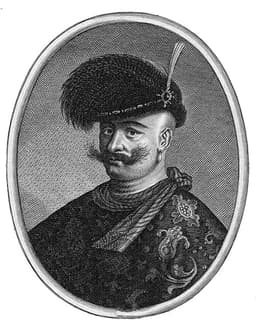
Abbas I
Emperor · Modern
81.4Total

Duke of Wellington
General · Modern
75.0Total
Basic Information
Born
1571
1769
Died
1629
1852
Era
Modern
Modern
Nationality
Persia
United Kingdom
Occupation
Emperor
General
Civilization
Middle Eastern
Western
Score Comparison
Military (10%)
82.0
78.0
Political (20%)
90.0
70.0
Influence (20%)
75.0
71.0
Legacy (20%)
82.0
80.0
Leadership (15%)
81.7
78.0
Strategy (15%)
82.0
72.0
TOTAL
81.4
75.0
Abbas I — Complete Timeline
1590 AD
Reformed the Army with GhulamsReform
Abbas I created a standing army of ghulams (military slaves) recruited from Christian subjects in the Caucasus, particularly Georgians and Armenians. This reduced reliance on the Qizilbash tribal forces, increased royal control, and modernized the military with firearms and artillery.
Military ReformGhulam SystemCentralization
Impact: nationalconstructive
1598 AD
Relocated Capital to IsfahanPolitical Action
Abbas I moved the Safavid capital from Qazvin to Isfahan, transforming it into a magnificent city with grand architecture, including Naqsh-e Jahan Square, the Shah Mosque, and the Ali Qapu Palace. This relocation became a symbol of Safavid power and cultural flourishing.
Capital RelocationUrban PlanningArchitecture
Impact: globalconstructive
1599 AD
Established Diplomatic Relations with EuropePolitical Action◆ Major
Abbas I sent diplomatic missions to European courts, including those of Philip III of Spain, Rudolf II of the Holy Roman Empire, and Elizabeth I of England, seeking alliances against the Ottoman Empire. These missions opened sustained diplomatic and commercial exchanges between Safavid Persia and Europe.
DiplomacyEuropean RelationsAnti-Ottoman Alliance
Impact: globalconstructive
1605 AD
Battle of SufiyanWar◆ Major
Abbas I defeated an Ottoman army near Sufiyan, securing Safavid control over Azerbaijan and the Caucasus. This victory was part of the Ottoman-Safavid War of 1603-1618, which resulted in the recapture of Tabriz, Nakhchivan, and Yerevan from Ottoman occupation.
Ottoman-Safavid WarBattleTerritorial Recovery
Impact: regional
1622 AD
Expelled Portuguese from HormuzWar◆ Major
Abbas I, with support from the English East India Company, captured the island of Hormuz from Portuguese control. This ended Portuguese dominance in the Persian Gulf and opened direct trade routes for Safavid Persia with Europe, boosting the silk trade.
Persian GulfTradeEuropean Relations
Impact: globalconstructive
1623 AD
Recaptured BaghdadWar◆ Major
Abbas I captured Baghdad from the Ottoman Empire after a siege, restoring Safavid control over Iraq. This victory expanded Safavid territory and gave Abbas control over important Shi'a pilgrimage sites like Najaf and Karbala.
Ottoman-Safavid WarConquestShi'a Sites
Impact: regional
Duke of Wellington — Complete Timeline
1803 AD
Battle of AssayeWar◆ Major
Wellington, then Sir Arthur Wellesley, led a British-Indian force to victory against the Maratha Confederacy at Assaye in India. Despite being outnumbered, his tactical skill secured British dominance in central India.
Maratha WarIndiaBattle
Impact: regional
1808 AD
Battle of VimeiroWar◆ Major
Wellington commanded British forces to defeat the French army at Vimeiro in Portugal. The victory halted the French invasion of Portugal and marked the beginning of the Peninsular War.
Peninsular WarPortugalBattle
Impact: regional
1815 AD
Battle of WaterlooWar
Wellington, commanding an Anglo-Allied army, defeated Napoleon Bonaparte at Waterloo in present-day Belgium. The battle ended the Napoleonic Wars and led to Napoleon's final exile to Saint Helena.
Napoleonic WarsBattleWaterloo
Impact: global
1828 AD
Prime Minister of the United KingdomPolitical Action◆ Major
Wellington served as Prime Minister of the UK from 1828 to 1830. His government passed the Catholic Relief Act 1829, granting Catholic emancipation, but his opposition to parliamentary reform led to his resignation.
PoliticsCatholic EmancipationReform
Impact: nationalconstructive
Expert Analysis
Origins
Shah Abbas I (1571–1629) was born into the Safavid dynasty, which had ruled Persia since 1501. His father, Shah Mohammad Khodabanda, was a weak ruler, and the young Abbas grew up amid court intrigues and military threats from the Ottoman Empire and Uzbek tribes. In contrast, Arthur Wellesley, 1st Duke of Wellington (1769–1852), was born into the Anglo-Irish aristocracy, the third son of the Earl of Mornington. His early military career began in India, where he honed his skills in colonial warfare. Both emerged from turbulent environments that shaped their strategic minds.
Rise to Power
Abbas I came to power in 1588 after a coup that deposed his father. He was just 17 and faced a crumbling empire: Ottomans had seized vast territories, and internal rebellions threatened stability. He consolidated power by eliminating rivals, including his own family members, and centralized authority. Wellington rose through the ranks of the British Army, gaining fame in India after victories like Assaye (1803), which showcased his tactical brilliance. His political connections (his brother was Governor-General) helped his ascent. By 1808, he commanded British forces in the Peninsular War against Napoleon.
Leadership & Governance
Abbas I was a visionary reformer who transformed Persia. He relocated the capital from Qazvin to Isfahan, turning it into a cultural and economic hub. His military reforms included creating a slave-soldier corps (ghulams) loyal to him, reducing reliance on tribal forces. He modernized the army with firearms and artillery, enabling victories over the Ottomans and Portuguese. Wellington was a meticulous planner and defensive genius, known for his discipline and ability to inspire troops. As Prime Minister (1828–30), he was less successful, opposing Catholic Emancipation initially and facing criticism for his conservative policies. Abbas's governance score (82) reflects his transformative impact, while Wellington's (80) is strong but less innovative.
Triumph & Tragedy
Abbas's greatest triumphs include recapturing Baghdad (1623) from the Ottomans and expelling the Portuguese from Hormuz (1622) with English help, securing Persian trade routes. The Battle of Sufiyan (1605) was a decisive victory over the Ottomans. However, his later years were tragic: he became paranoid, blinding and killing his own sons, leaving the succession in crisis. Wellington's defining moment was Waterloo (1815), where he defeated Napoleon, ending the Napoleonic Wars. His Peninsular War campaigns were also brilliant. Yet, his political career was marred by unpopularity and the 1832 Reform Act crisis. Abbas's triumph score (82) reflects his empire-building; Wellington's (78) is slightly lower due to less profound long-term impact.
Character & Destiny
Abbas was ruthless, intelligent, and visionary. He patronized arts and architecture, leaving a cultural legacy, but his cruelty tarnished his rule. His destiny was to restore Persia's glory, but his paranoia undid much of his work. Wellington was stoic, pragmatic, and duty-bound, earning the nickname "Iron Duke." He was more a product of his class than a visionary. Both were shaped by their times: Abbas by the struggle between empires, Wellington by the challenge of revolutionary France. Their military scores (82 vs 78) reflect Abbas's greater strategic innovation and larger scale of operations.
Legacy
Abbas I is remembered as a national hero in Iran, the architect of Safavid greatness. Isfahan's architecture and the revival of Persian power are his enduring monuments. However, his failures in succession led to decline. Wellington is celebrated as Britain's greatest military hero, with countless statues and his name on streets worldwide. His political legacy is mixed. In historical rankings, Abbas often scores higher for his comprehensive impact on state-building and culture. The score gap of 6.4 points is justified: Abbas's military and political reforms reshaped a civilization, while Wellington's achievements, though brilliant, were more narrowly military.
Conclusion
Abbas I emerges as the superior figure, with higher scores in military prowess (82 vs 78), political influence (90 vs 70), and overall impact (82 vs 75). While Wellington's tactical genius at Waterloo is legendary, Abbas's strategic vision transformed Persia into a major power and left a cultural renaissance. The score gap of 6.4 points reflects Abbas's broader and more enduring contributions to history. Both are titans, but Abbas's legacy as a builder and reformer surpasses Wellington's primarily military fame.
Rankings
🥇
Abbas ILeader
Mil: 82.0Pol: 90.0Inf: 75.0
81.4
🥈
Duke of Wellington
Mil: 78.0Pol: 70.0Inf: 71.0
75.0
+6.4 behind
How This Comparison Works
Algorithm
Each figure is scored on 6 dimensions (0—100 scale) based on structured historical data: Military (10%), Political (20%), Influence (20%), Legacy (20%), Leadership (15%), Strategy (15%). The weighted total produces the final ranking.
Data Sources
Scores are computed from structured sub-indicators in the database. Scale factors adjust for era (Ancient ×0.85, Modern ×1.0) and civilization size (Eastern ×1.05, Other ×0.80) to account for differences in population and military scale.
Maximum 3 Figures
Comparisons are limited to 2—3 figures to ensure readability and statistical meaningfulness.
Error Margins
±5 points per dimension — Sub-scores are derived from historical records with inherent uncertainty. Two figures within 5 points on a dimension should be considered roughly equivalent in that area.
Total Score Accuracy
±3 points overall — The weighted combination of 6 dimensions produces a total score with approximately ±3 points of uncertainty. Differences of less than 3 points are not statistically significant— the figures are effectively tied.
Known Limitations
- Historical records are incomplete and uneven across civilizations
- Figures from oral-tradition societies may be underrepresented
- Occupation labels can misclassify multi-role figures
- Scores measure capability and impact, not moral character
- Quantitative scoring is a comparison tool, not absolute truth
Capability Radar
Military (10%) — Battles & Warfare
Battles
85
85
Win Rate
90
90
Expansion
85
75
Political (20%) — Governance & Reform
Reform
95
65
Diplomacy
88
80
Economy
92
60
Influence (20%) — Cultural & Global Reach
Cultural
90
75
Global
80
80
Legacy (20%) — Historical Impact
Historical
88
85
Longevity
85
80
Leadership (15%) — Power & Stability
Tenure
90
75
Stability
85
70
Strategy (15%) — Tactics & Innovation
Strategy
92
88
Tactics
88
92
Reform
95
70
Similar Comparisons
Comments & Discussion
No comments yet. Be the first to share your thoughts!