Loading...
Abbas I vs Cleisthenes
Abbas I leads by 3.1 pts · 2 figures compared
…
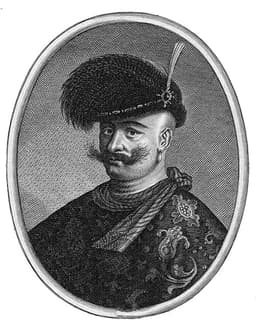
Abbas I
Emperor · Modern
81.4Total
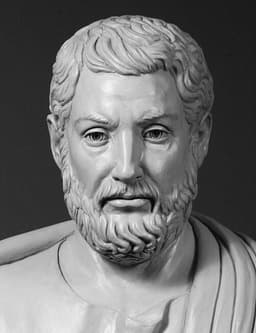
Cleisthenes
Politician · Ancient
78.3Total
Basic Information
Born
1571
-570
Died
1629
-508
Era
Modern
Ancient
Nationality
Persia
Greece
Occupation
Emperor
Politician
Civilization
Middle Eastern
Western
Score Comparison
Military (10%)
82.0
49.4
Political (20%)
90.0
62.7
Influence (20%)
75.0
92.0
Legacy (20%)
82.0
92.0
Leadership (15%)
81.7
72.0
Strategy (15%)
82.0
71.3
TOTAL
81.4
78.3
Abbas I — Complete Timeline
1590 AD
Reformed the Army with GhulamsReform
Abbas I created a standing army of ghulams (military slaves) recruited from Christian subjects in the Caucasus, particularly Georgians and Armenians. This reduced reliance on the Qizilbash tribal forces, increased royal control, and modernized the military with firearms and artillery.
Military ReformGhulam SystemCentralization
Impact: nationalconstructive
1598 AD
Relocated Capital to IsfahanPolitical Action
Abbas I moved the Safavid capital from Qazvin to Isfahan, transforming it into a magnificent city with grand architecture, including Naqsh-e Jahan Square, the Shah Mosque, and the Ali Qapu Palace. This relocation became a symbol of Safavid power and cultural flourishing.
Capital RelocationUrban PlanningArchitecture
Impact: globalconstructive
1599 AD
Established Diplomatic Relations with EuropePolitical Action◆ Major
Abbas I sent diplomatic missions to European courts, including those of Philip III of Spain, Rudolf II of the Holy Roman Empire, and Elizabeth I of England, seeking alliances against the Ottoman Empire. These missions opened sustained diplomatic and commercial exchanges between Safavid Persia and Europe.
DiplomacyEuropean RelationsAnti-Ottoman Alliance
Impact: globalconstructive
1605 AD
Battle of SufiyanWar◆ Major
Abbas I defeated an Ottoman army near Sufiyan, securing Safavid control over Azerbaijan and the Caucasus. This victory was part of the Ottoman-Safavid War of 1603-1618, which resulted in the recapture of Tabriz, Nakhchivan, and Yerevan from Ottoman occupation.
Ottoman-Safavid WarBattleTerritorial Recovery
Impact: regional
1622 AD
Expelled Portuguese from HormuzWar◆ Major
Abbas I, with support from the English East India Company, captured the island of Hormuz from Portuguese control. This ended Portuguese dominance in the Persian Gulf and opened direct trade routes for Safavid Persia with Europe, boosting the silk trade.
Persian GulfTradeEuropean Relations
Impact: globalconstructive
1623 AD
Recaptured BaghdadWar◆ Major
Abbas I captured Baghdad from the Ottoman Empire after a siege, restoring Safavid control over Iraq. This victory expanded Safavid territory and gave Abbas control over important Shi'a pilgrimage sites like Najaf and Karbala.
Ottoman-Safavid WarConquestShi'a Sites
Impact: regional
Cleisthenes — Complete Timeline
510 BC
Expulsion of the PeisistratidsPolitical Action◆ Major
Cleisthenes, with the support of the Alcmaeonid family and Spartan assistance, led the overthrow of the tyrant Hippias, son of Peisistratus. This ended the Peisistratid tyranny in Athens and opened the way for democratic reforms.
Tyranny OverthrownAthensSparta
Impact: nationalconstructive
508 BC
Reforms of CleisthenesReform
Cleisthenes reorganized the Athenian citizen body into ten new tribes based on demes, replacing the old four Ionian tribes. He established the Council of 500 (Boule) and introduced ostracism, creating a system of isonomia (equal rights) that is considered the foundation of Athenian democracy.
Athenian DemocracyConstitutional ReformAncient Greece
Impact: globalprogressive
507 BC
Introduction of OstracismReform◆ Major
Cleisthenes instituted ostracism, a procedure allowing Athenian citizens to vote annually to exile a prominent citizen deemed a threat to democracy for ten years. This mechanism aimed to prevent the rise of a new tyrant and stabilize the democratic system.
Athenian DemocracyPolitical MechanismExile
Impact: national
Expert Analysis
Origins
**Abbas I** (1571-1629) emerged from the Safavid dynasty's turmoil. Ascended the throne in 1588 after a civil war and threats from the Ottomans and Uzbeks. His early life was shaped by the need to consolidate power and restore Persia's glory.
**Cleisthenes** (c. 570-508 BCE) was an Athenian aristocrat from the Alcmaeonid family. He rose to prominence after the expulsion of the tyrant Hippias (the Peisistratids) in 510 BCE, leveraging his family's influence to champion democratic reforms.
Rise to Power
Abbas I seized control at age 17 by overthrowing his ineffective father, Shah Mohammad Khodabanda. He quickly eliminated rivals and centralized authority, often through ruthless means. His rise was marked by military necessity and strategic cunning.
Cleisthenes initially vied for power against Isagoras, a conservative rival. When Isagoras gained Spartan support, Cleisthenes appealed to the Athenian demos (common people) for backing. This alliance enabled him to outmaneuver Isagoras and implement radical reforms after a popular uprising in 508 BCE.
Leadership & Governance
Abbas I was an autocratic reformer. He modernized Persia by relocating the capital to Isfahan (a turning point), creating a magnificent city that symbolized his power. He reformed the army by incorporating ghulams (slave soldiers from the Caucasus), reducing reliance on tribal Qizilbash, and establishing a standing army. His administrative reforms strengthened central control and fostered trade.
Cleisthenes is hailed as the "Father of Athenian Democracy." His reforms (the turning point) reorganized Athenian society into ten tribes based on demes (local districts), breaking aristocratic power. He created the Council of 500 (Boule) chosen by lot, and introduced ostracism to expel potential tyrants. His governance emphasized civic participation and equality before the law, though limited to male citizens.
Triumph & Tragedy
**Abbas I's triumphs:** He recaptured Baghdad from the Ottomans (major event), expelled the Portuguese from Hormuz (major event) with English assistance, securing Persian Gulf trade, and won the Battle of Sufiyan (major event) against the Uzbeks. His reign saw a cultural and economic golden age. **Tragedy:** He became paranoid in his later years, blinding or killing his sons, leading to a succession crisis and weakening the Safavid dynasty after his death.
**Cleisthenes' triumphs:** His reforms established a stable democracy that lasted nearly two centuries. The expulsion of the Peisistratids (major event) and introduction of ostracism (major event) were key. **Tragedy:** He was ostracized himself around 507 BCE, a victim of his own system. However, his legacy endured as Athens became a leading power.
Character & Destiny
Abbas I was a shrewd, ambitious, and sometimes cruel leader. His destiny was to revive Persia's greatness, but his personal flaws sowed seeds of decline. Cleisthenes was a visionary reformer, willing to share power with the people. His destiny was to invent a political system that would influence Western civilization for millennia.
Legacy
Abbas I's legacy is visible in Isfahan's architecture, Persian art, and the strengthening of Shi'a Islam as a state religion. He is remembered as a builder and unifier. Cleisthenes' legacy is the concept of democracy itself. His reforms inspired later democratic movements and government structures worldwide.
Conclusion
**Scores:** Abbas I (M=82, P=90, I=75, L=82, D=82, S=82, T=81) vs Cleisthenes (M=49, P=63, I=92, L=92, D=72, S=71, T=78). The overall score gap is 3.1 in favor of Abbas I. While Cleisthenes excels in innovation and leadership, Abbas I's broader impact on military, political, and cultural spheres gives him the edge. **Winner: Abbas I.** His transformation of Persia into a formidable empire outweighs Cleisthenes' foundational but more localized democratic reforms.
Rankings
🥇
Abbas ILeader
Mil: 82.0Pol: 90.0Inf: 75.0
81.4
🥈
Cleisthenes
Mil: 49.4Pol: 62.7Inf: 92.0
78.3
+3.1 behind
How This Comparison Works
Algorithm
Each figure is scored on 6 dimensions (0—100 scale) based on structured historical data: Military (10%), Political (20%), Influence (20%), Legacy (20%), Leadership (15%), Strategy (15%). The weighted total produces the final ranking.
Data Sources
Scores are computed from structured sub-indicators in the database. Scale factors adjust for era (Ancient ×0.85, Modern ×1.0) and civilization size (Eastern ×1.05, Other ×0.80) to account for differences in population and military scale.
Maximum 3 Figures
Comparisons are limited to 2—3 figures to ensure readability and statistical meaningfulness.
Error Margins
±5 points per dimension — Sub-scores are derived from historical records with inherent uncertainty. Two figures within 5 points on a dimension should be considered roughly equivalent in that area.
Total Score Accuracy
±3 points overall — The weighted combination of 6 dimensions produces a total score with approximately ±3 points of uncertainty. Differences of less than 3 points are not statistically significant— the figures are effectively tied.
Known Limitations
- Historical records are incomplete and uneven across civilizations
- Figures from oral-tradition societies may be underrepresented
- Occupation labels can misclassify multi-role figures
- Scores measure capability and impact, not moral character
- Quantitative scoring is a comparison tool, not absolute truth
Capability Radar
Military (10%) — Battles & Warfare
Battles
85
58
Win Rate
90
62
Expansion
85
59
Political (20%) — Governance & Reform
Reform
95
95
Diplomacy
88
70
Economy
92
40
Influence (20%) — Cultural & Global Reach
Cultural
90
85
Global
80
85
Legacy (20%) — Historical Impact
Historical
88
90
Longevity
85
95
Leadership (15%) — Power & Stability
Tenure
90
30
Stability
85
60
Strategy (15%) — Tactics & Innovation
Strategy
92
62
Tactics
88
67
Reform
95
72
Similar Comparisons
Comments & Discussion
No comments yet. Be the first to share your thoughts!