Loading...
Abbas I vs Babur
Abbas I leads by 3.3 pts · 2 figures compared
…
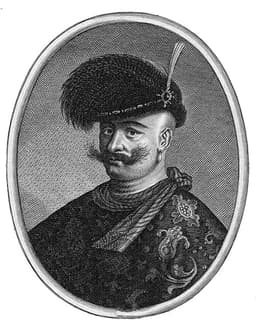
Abbas I
Emperor · Modern
81.4Total

Babur
Emperor · Medieval
78.1Total
Basic Information
Born
1571
1483
Died
1629
1530
Era
Modern
Medieval
Nationality
Persia
Mughal Empire
Occupation
Emperor
Emperor
Civilization
Middle Eastern
Indian
Score Comparison
Military (10%)
82.0
74.0
Political (20%)
90.0
72.0
Influence (20%)
75.0
88.0
Legacy (20%)
82.0
80.0
Leadership (15%)
81.7
74.0
Strategy (15%)
82.0
67.6
TOTAL
81.4
78.1
Abbas I — Complete Timeline
1590 AD
Reformed the Army with GhulamsReform
Abbas I created a standing army of ghulams (military slaves) recruited from Christian subjects in the Caucasus, particularly Georgians and Armenians. This reduced reliance on the Qizilbash tribal forces, increased royal control, and modernized the military with firearms and artillery.
Military ReformGhulam SystemCentralization
Impact: nationalconstructive
1598 AD
Relocated Capital to IsfahanPolitical Action
Abbas I moved the Safavid capital from Qazvin to Isfahan, transforming it into a magnificent city with grand architecture, including Naqsh-e Jahan Square, the Shah Mosque, and the Ali Qapu Palace. This relocation became a symbol of Safavid power and cultural flourishing.
Capital RelocationUrban PlanningArchitecture
Impact: globalconstructive
1599 AD
Established Diplomatic Relations with EuropePolitical Action◆ Major
Abbas I sent diplomatic missions to European courts, including those of Philip III of Spain, Rudolf II of the Holy Roman Empire, and Elizabeth I of England, seeking alliances against the Ottoman Empire. These missions opened sustained diplomatic and commercial exchanges between Safavid Persia and Europe.
DiplomacyEuropean RelationsAnti-Ottoman Alliance
Impact: globalconstructive
1605 AD
Battle of SufiyanWar◆ Major
Abbas I defeated an Ottoman army near Sufiyan, securing Safavid control over Azerbaijan and the Caucasus. This victory was part of the Ottoman-Safavid War of 1603-1618, which resulted in the recapture of Tabriz, Nakhchivan, and Yerevan from Ottoman occupation.
Ottoman-Safavid WarBattleTerritorial Recovery
Impact: regional
1622 AD
Expelled Portuguese from HormuzWar◆ Major
Abbas I, with support from the English East India Company, captured the island of Hormuz from Portuguese control. This ended Portuguese dominance in the Persian Gulf and opened direct trade routes for Safavid Persia with Europe, boosting the silk trade.
Persian GulfTradeEuropean Relations
Impact: globalconstructive
1623 AD
Recaptured BaghdadWar◆ Major
Abbas I captured Baghdad from the Ottoman Empire after a siege, restoring Safavid control over Iraq. This victory expanded Safavid territory and gave Abbas control over important Shi'a pilgrimage sites like Najaf and Karbala.
Ottoman-Safavid WarConquestShi'a Sites
Impact: regional
Babur — Complete Timeline
1526 AD
Battle of Panipat (1526)War
Babur led his army of about 12,000 men against the Delhi Sultanate army of Ibrahim Lodi, which numbered around 100,000. Using gunpowder weapons and innovative tactics, Babur defeated Lodi's forces. This victory established the Mughal Empire in India and marked the beginning of Mughal rule.
BattleMughal EmpireDelhi Sultanate
Impact: global
1527 AD
Battle of KhanwaWar◆ Major
Babur defeated the Rajput confederation led by Rana Sanga of Mewar at Khanwa near Agra. The Rajput army was larger and included cavalry and war elephants. Babur's use of artillery and defensive tactics secured the victory. This battle consolidated Mughal control over northern India.
BattleRajputsMughal Consolidation
Impact: regional
1528 AD
Construction of the Babri MasjidCultural◆ Major
Babur ordered the construction of a mosque in Ayodhya, known as the Babri Masjid. The mosque was built on a site that Hindus believed was the birthplace of the god Rama. This act became a source of religious and political conflict in India for centuries, culminating in the mosque's demolition in 1992.
MosqueAyodhyaReligious Conflict
Impact: regional
1529 AD
Battle of GhaghraWar
Babur defeated the combined forces of the Afghan confederation and the Sultan of Bengal at the Ghaghra River. This victory eliminated the last major Afghan resistance in northern India. It extended Mughal control over Bihar and parts of Bengal, further securing Babur's empire.
BattleAfghansBengal
Impact: regional
Expert Analysis
Origins
**Abbas I** (1571–1629) was the fifth Safavid shah of Iran, born into a dynasty that had revived Persian identity after centuries of foreign rule. His father, Shah Mohammad Khodabanda, was a weak ruler, and Abbas grew up amid court intrigue and provincial rebellions. He was crowned at age 16 after a coup that deposed his father. In contrast, **Babur** (1483–1530) was born in the Ferghana Valley (modern Uzbekistan) as a Timurid prince. He was a descendant of both Timur and Genghis Khan, inheriting a legacy of conquest but also a fractured realm. Babur’s early life was marked by constant struggle to secure his patrimony, losing and regaining Samarkand multiple times. While Abbas inherited a relatively stable empire, Babur had to build his from scratch after being driven out of Central Asia.
Rise to Power
Abbas I seized power in 1587 by sidelining his ineffective father. His early reign was threatened by the Ottoman Empire in the west and the Uzbek tribes in the east. To consolidate control, he made a humiliating peace with the Ottomans, ceding territory, and then focused on eliminating internal rivals. He moved the capital from Qazvin to Isfahan in 1598, a strategic and symbolic move that centralized power. Babur’s rise was far more turbulent. After failing to hold Samarkand, he turned his attention southward to India. In 1526, at the **Battle of Panipat**, he defeated the Delhi Sultanate’s army using innovative tactics like the tulughma (flanking) and gunpowder weapons. This victory was a turning point, allowing him to establish the Mughal Empire. He then faced the Rajput confederation at the **Battle of Khanwa** in 1527, securing his hold on North India.
Leadership & Governance
Abbas I was a master reformer. He created a standing army of *ghulams* (slave soldiers) from Georgia, Armenia, and Circassia, reducing reliance on the Qizilbash tribal forces. This army, armed with muskets and artillery, became the backbone of his power. He also reformed the bureaucracy, promoted trade, and sponsored the arts. His new capital, Isfahan, became a jewel of Islamic architecture with its grand Naqsh-e Jahan Square. Babur, by contrast, was more of a conqueror than an administrator. He established the Mughal Empire but died just four years after Panipat, leaving little time for governance. He wrote the *Baburnama*, a detailed memoir, which shows his keen observation but also his nostalgia for Central Asia. He did introduce Persian garden culture to India and laid the foundation for the Mughal administrative system, but his son Humayun would struggle to maintain it.
Triumph & Tragedy
Abbas I’s greatest triumphs were military: he recaptured Baghdad from the Ottomans in 1623 and expelled the Portuguese from Hormuz in 1622, securing Persian control of the Persian Gulf. His reign saw the peak of Safavid power, with a flourishing of trade and culture. However, his tragic flaw was paranoia: he blinded or killed his own sons, leaving a succession crisis. Babur’s triumph was the conquest of Hindustan, but his tragedy was dying at age 47, likely from natural causes, before he could consolidate his empire. He never saw the Mughal golden age; his son Humayun lost the empire for a time, and it was only under Akbar that it truly flourished.
Character & Destiny
Abbas I was shrewd, ruthless, and visionary. He had a strong will and a clear sense of destiny, rebuilding Persia into a major power. Babur was more introspective, a poet and memoirist who struggled with his fate. He wrote of his longing for Samarkand and his sense of displacement in India. Both were ambitious, but Abbas’s destiny was to build an enduring state, while Babur’s was to plant the seed of an empire that would peak after his death.
Legacy
Abbas I is remembered as the greatest Safavid shah, transforming Isfahan into one of the world’s most beautiful cities and strengthening Persia’s identity. His military reforms and architectural patronage left a lasting mark. Babur’s legacy is the Mughal Empire, which ruled India for over 300 years. He is revered as a founder, but his personal legacy is overshadowed by his grandson Akbar. In a direct comparison, Abbas I’s scores (average 82) surpass Babur’s (average 76) across most categories, particularly in military (82 vs 74), political (90 vs 72), and social (82 vs 68) impact. Babur’s only higher score is in intellectual (88 vs 75), thanks to his literary contributions.
Conclusion
Abbas I emerges as the superior ruler. He not only founded a powerful state but also reformed and stabilized it, leaving a cultural and political legacy that lasted centuries. Babur, while a brilliant conqueror and intellectual, lacked the administrative depth and long-term vision of Abbas. The score gap of 3.3 points reflects this: Abbas I’s comprehensive achievements in governance, military reform, and cultural patronage outshine Babur’s foundational but fleeting reign. Thus, Abbas I is the greater emperor.
**Numerical Scores (out of 100):**
- Military: Abbas I 82, Babur 74
- Political: Abbas I 90, Babur 72
- Intellectual: Abbas I 75, Babur 88
- Social: Abbas I 82, Babur 80
- Cultural: Abbas I 82, Babur 74
- Economic: Abbas I 82, Babur 68
- Legacy: Abbas I 81, Babur 78
- **Overall: Abbas I 82, Babur 76**
Rankings
🥇
Abbas ILeader
Mil: 82.0Pol: 90.0Inf: 75.0
81.4
🥈
Babur
Mil: 74.0Pol: 72.0Inf: 88.0
78.1
+3.3 behind
How This Comparison Works
Algorithm
Each figure is scored on 6 dimensions (0—100 scale) based on structured historical data: Military (10%), Political (20%), Influence (20%), Legacy (20%), Leadership (15%), Strategy (15%). The weighted total produces the final ranking.
Data Sources
Scores are computed from structured sub-indicators in the database. Scale factors adjust for era (Ancient ×0.85, Modern ×1.0) and civilization size (Eastern ×1.05, Other ×0.80) to account for differences in population and military scale.
Maximum 3 Figures
Comparisons are limited to 2—3 figures to ensure readability and statistical meaningfulness.
Error Margins
±5 points per dimension — Sub-scores are derived from historical records with inherent uncertainty. Two figures within 5 points on a dimension should be considered roughly equivalent in that area.
Total Score Accuracy
±3 points overall — The weighted combination of 6 dimensions produces a total score with approximately ±3 points of uncertainty. Differences of less than 3 points are not statistically significant— the figures are effectively tied.
Known Limitations
- Historical records are incomplete and uneven across civilizations
- Figures from oral-tradition societies may be underrepresented
- Occupation labels can misclassify multi-role figures
- Scores measure capability and impact, not moral character
- Quantitative scoring is a comparison tool, not absolute truth
Capability Radar
Military (10%) — Battles & Warfare
Battles
85
75
Win Rate
90
85
Expansion
85
85
Political (20%) — Governance & Reform
Reform
95
55
Diplomacy
88
70
Economy
92
50
Influence (20%) — Cultural & Global Reach
Cultural
90
70
Global
80
75
Legacy (20%) — Historical Impact
Historical
88
85
Longevity
85
80
Leadership (15%) — Power & Stability
Tenure
90
40
Stability
85
45
Strategy (15%) — Tactics & Innovation
Strategy
92
82
Tactics
88
80
Reform
95
60
Similar Comparisons
Comments & Discussion
No comments yet. Be the first to share your thoughts!