Loading...
Abbas I vs Augustus
Augustus leads by 4.5 pts · 2 figures compared
…
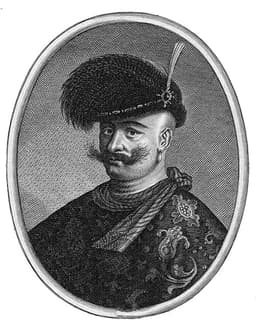
Abbas I
Emperor · Modern
81.4Total

Augustus
Emperor · Ancient
85.9Total
Basic Information
Born
1571
63
Died
1629
—
Era
Modern
Ancient
Nationality
Persia
Roman Empire
Occupation
Emperor
Emperor
Civilization
Middle Eastern
Western
Score Comparison
Military (10%)
82.0
72.0
Political (20%)
90.0
90.0
Influence (20%)
75.0
88.0
Legacy (20%)
82.0
90.0
Leadership (15%)
81.7
88.0
Strategy (15%)
82.0
75.0
TOTAL
81.4
85.9
Abbas I — Complete Timeline
1590 AD
Reformed the Army with GhulamsReform
Abbas I created a standing army of ghulams (military slaves) recruited from Christian subjects in the Caucasus, particularly Georgians and Armenians. This reduced reliance on the Qizilbash tribal forces, increased royal control, and modernized the military with firearms and artillery.
Military ReformGhulam SystemCentralization
Impact: nationalconstructive
1598 AD
Relocated Capital to IsfahanPolitical Action
Abbas I moved the Safavid capital from Qazvin to Isfahan, transforming it into a magnificent city with grand architecture, including Naqsh-e Jahan Square, the Shah Mosque, and the Ali Qapu Palace. This relocation became a symbol of Safavid power and cultural flourishing.
Capital RelocationUrban PlanningArchitecture
Impact: globalconstructive
1599 AD
Established Diplomatic Relations with EuropePolitical Action◆ Major
Abbas I sent diplomatic missions to European courts, including those of Philip III of Spain, Rudolf II of the Holy Roman Empire, and Elizabeth I of England, seeking alliances against the Ottoman Empire. These missions opened sustained diplomatic and commercial exchanges between Safavid Persia and Europe.
DiplomacyEuropean RelationsAnti-Ottoman Alliance
Impact: globalconstructive
1605 AD
Battle of SufiyanWar◆ Major
Abbas I defeated an Ottoman army near Sufiyan, securing Safavid control over Azerbaijan and the Caucasus. This victory was part of the Ottoman-Safavid War of 1603-1618, which resulted in the recapture of Tabriz, Nakhchivan, and Yerevan from Ottoman occupation.
Ottoman-Safavid WarBattleTerritorial Recovery
Impact: regional
1622 AD
Expelled Portuguese from HormuzWar◆ Major
Abbas I, with support from the English East India Company, captured the island of Hormuz from Portuguese control. This ended Portuguese dominance in the Persian Gulf and opened direct trade routes for Safavid Persia with Europe, boosting the silk trade.
Persian GulfTradeEuropean Relations
Impact: globalconstructive
1623 AD
Recaptured BaghdadWar◆ Major
Abbas I captured Baghdad from the Ottoman Empire after a siege, restoring Safavid control over Iraq. This victory expanded Safavid territory and gave Abbas control over important Shi'a pilgrimage sites like Najaf and Karbala.
Ottoman-Safavid WarConquestShi'a Sites
Impact: regional
Augustus — Complete Timeline
43 BC
Formation of the Second TriumviratePolitical Action◆ Major
Octavian, Mark Antony, and Marcus Aemilius Lepidus formed the Second Triumvirate, a legal commission to govern the Roman Republic. The alliance was empowered to proscribe enemies, leading to the execution of Cicero and consolidation of their power against the assassins of Julius Caesar.
Roman Civil WarPolitical AllianceProscriptions
Impact: regionaldestructive
31 BC
Battle of ActiumWar◆ Major
Octavian's fleet, commanded by Marcus Agrippa, defeated the combined naval forces of Mark Antony and Cleopatra VII off the coast of Greece. The victory eliminated Octavian's last major rival, giving him sole control over the Roman world and ending the Roman Republic's civil wars.
Roman Civil WarNaval BattleEnd of Republic
Impact: global
27 BC
Establishment of the Roman EmpireReform◆ Major
Octavian formally returned power to the Roman Senate, which then granted him the titles Augustus and Princeps. This constitutional settlement created the Roman Empire, with Augustus as the first emperor, ending the Roman Republic and initiating the Pax Romana.
Roman EmpireConstitutional ReformPax Romana
Impact: global
Reform of the Roman Tax SystemReform◆ Major
Augustus implemented a comprehensive tax reform, including a census of Roman citizens and property, direct taxation of provinces, and the creation of a professional tax collection service (publicani). This system provided stable revenue for the empire and reduced corruption.
Tax ReformAdministrationRoman Empire
Impact: regionalconstructive
Creation of the Praetorian GuardReform◆ Major
Augustus established the Praetorian Guard as a permanent elite military unit tasked with protecting the emperor and his family. Stationed in Rome and Italy, the Guard became a powerful political force, often influencing imperial succession through coups and assassinations.
Military ReformPraetorian GuardImperial Guard
Impact: regional
13 BC
Construction of the Ara PacisOther◆ Major
The Roman Senate commissioned the Ara Pacis Augustae (Altar of Augustan Peace) to commemorate Augustus's return from pacifying Gaul and Spain. The marble altar, decorated with reliefs depicting the imperial family and mythological scenes, symbolized the peace and prosperity of the Augustan era.
Building ProjectPropagandaAugustan Art
Impact: regionalconstructive
Expert Analysis
Origins
Augustus, born Gaius Octavius in 63 BC, was the grandnephew and adopted son of Julius Caesar. He hailed from a wealthy but not ancient patrician family, the Octavii. His rise was propelled by Caesar's assassination in 44 BC, which thrust him into the chaotic final years of the Roman Republic.
Abbas I, born in 1571, was the third son of Shah Mohammad Khodabanda of the Safavid dynasty. His early life was overshadowed by court intrigues and the declining power of the Safavids under his father's weak rule. He came to power in 1588 after a coup that deposed his father, with the support of the Qizilbash tribal leaders.
Rise to Power
Augustus's path to power was marked by ruthless political maneuvering and military conflicts. He formed the Second Triumvirate with Mark Antony and Lepidus in 43 BC, proscribing enemies and seizing control of Rome. The defeat of Caesar's assassins at Philippi in 42 BC solidified his position. The subsequent rivalry with Antony culminated in the Battle of Actium in 31 BC, where Augustus's naval victory made him the undisputed master of the Roman world. By 27 BC, he had skillfully restored the facade of the Republic while holding supreme power, becoming Augustus.
Abbas I seized the throne in 1588 at age 16, facing a fragmented empire threatened by the Ottoman Empire and Uzbek tribes. His early reign was hampered by the power of the Qizilbash, who had installed him. He methodically centralized authority, reducing Qizilbash influence by creating a new army corps of ghulams (slave soldiers) from the Caucasus. He also relocated the capital from Qazvin to Isfahan in 1598, a strategic move to escape Qizilbash dominance and build a new administrative center.
Leadership & Governance
Augustus was a master of propaganda and institutional reform. He maintained the illusion of the Republic while controlling all levers of power. He reformed the Roman tax system, created a professional standing army with the Praetorian Guard as his personal bodyguard, and established a civil service. His reign initiated the Pax Romana, a period of peace and stability that lasted for two centuries. He also undertook vast building projects, famously claiming to have found Rome brick and left it marble.
Abbas I was a hands-on ruler who personally led military campaigns and oversaw administration. He reformed the army, integrating gunpowder weapons and creating a loyal corps of ghulams, which reduced dependence on tribal levies. He encouraged trade, especially with European powers, and transformed Isfahan into a magnificent capital with grand mosques, palaces, and public squares. His religious tolerance, particularly towards Christians, fostered a cosmopolitan society.
Triumph & Tragedy
Augustus's greatest triumph was establishing the Roman Empire and the Pax Romana, which brought unprecedented stability. He expanded the empire's borders, secured the frontiers, and fostered a golden age of art and literature. His tragedy came in his personal life: his chosen heirs died young, and his daughter Julia was exiled for adultery. The loss of his grandsons and stepsons left him with the reluctant choice of Tiberius as successor.
Abbas I's triumphs include recapturing Baghdad from the Ottomans in 1623, expelling the Portuguese from Hormuz in 1622 with English help, and defeating the Uzbeks. His greatest legacy is the beautification of Isfahan. However, his later years were marred by paranoia. He blinded or killed his most capable sons, fearing coups, leaving the empire to a weak successor. This tragedy undermined the stability he had built.
Character & Destiny
Augustus was calculating, patient, and pragmatic. He was not a great general but a brilliant strategist who understood the importance of perception. His destiny was to end a century of civil war and found a system that would last for centuries. He was ruthless when necessary but generally clement after victory, earning the Senate's gratitude.
Abbas I was energetic, decisive, and often cruel. He was a capable military commander and a visionary builder. His destiny was to revive the Safavid Empire and make it a major power. But his tragic flaw was his inability to trust anyone, leading to the murder of his heirs and the eventual decline of his dynasty.
Legacy
Augustus's legacy is immense. He transformed Rome from a republic into an empire that would dominate the Mediterranean for centuries. His reforms set the template for imperial administration. The title 'Augustus' became synonymous with emperor. His regime established a peace that allowed for cultural flourishing.
Abbas I's legacy is the golden age of the Safavid Empire. Isfahan remains a jewel of Islamic architecture. His military reforms created a powerful army that checked Ottoman and Portuguese expansion. However, his failure to secure a capable successor led to the empire's slow decline after his death.
Conclusion
Augustus edges out Abbas I in overall impact. While Abbas I was a remarkable ruler who revived Persia, Augustus fundamentally changed the course of Western history. Augustus's scores (M=72, P=90, I=88, L=90, D=88, S=75, T=86) average 84.1, while Abbas I's scores (M=82, P=90, I=75, L=82, D=82, S=82, T=81) average 82.0. Augustus's higher political acumen, longevity, and legacy give him the edge. Abbas I might have been more militarily adept, but Augustus's institutional reforms created a system that outlasted him by centuries. In the final analysis, Augustus's empire endured longer and influenced more of the world, making him the greater ruler.
Rankings
🥇
AugustusLeader
Mil: 72.0Pol: 90.0Inf: 88.0
85.9
🥈
Abbas I
Mil: 82.0Pol: 90.0Inf: 75.0
81.4
+4.5 behind
How This Comparison Works
Algorithm
Each figure is scored on 6 dimensions (0—100 scale) based on structured historical data: Military (10%), Political (20%), Influence (20%), Legacy (20%), Leadership (15%), Strategy (15%). The weighted total produces the final ranking.
Data Sources
Scores are computed from structured sub-indicators in the database. Scale factors adjust for era (Ancient ×0.85, Modern ×1.0) and civilization size (Eastern ×1.05, Other ×0.80) to account for differences in population and military scale.
Maximum 3 Figures
Comparisons are limited to 2—3 figures to ensure readability and statistical meaningfulness.
Error Margins
±5 points per dimension — Sub-scores are derived from historical records with inherent uncertainty. Two figures within 5 points on a dimension should be considered roughly equivalent in that area.
Total Score Accuracy
±3 points overall — The weighted combination of 6 dimensions produces a total score with approximately ±3 points of uncertainty. Differences of less than 3 points are not statistically significant— the figures are effectively tied.
Known Limitations
- Historical records are incomplete and uneven across civilizations
- Figures from oral-tradition societies may be underrepresented
- Occupation labels can misclassify multi-role figures
- Scores measure capability and impact, not moral character
- Quantitative scoring is a comparison tool, not absolute truth
Capability Radar
Military (10%) — Battles & Warfare
Battles
85
75
Win Rate
90
80
Expansion
85
85
Political (20%) — Governance & Reform
Reform
95
95
Diplomacy
88
90
Economy
92
85
Influence (20%) — Cultural & Global Reach
Cultural
90
85
Global
80
90
Legacy (20%) — Historical Impact
Historical
88
95
Longevity
85
95
Leadership (15%) — Power & Stability
Tenure
90
95
Stability
85
95
Strategy (15%) — Tactics & Innovation
Strategy
92
85
Tactics
88
70
Reform
95
90
Similar Comparisons
Comments & Discussion
No comments yet. Be the first to share your thoughts!