Loading...
Abbas I vs Ashoka the Great
Abbas I leads by 5.1 pts · 2 figures compared
…
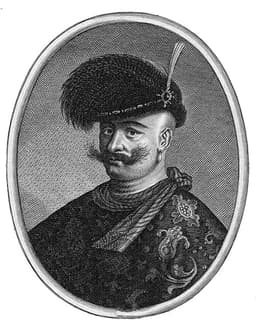
Abbas I
Emperor · Modern
81.4Total

Ashoka the Great
Emperor · Ancient
76.3Total
Basic Information
Born
1571
-304
Died
1629
-232
Era
Modern
Ancient
Nationality
Persia
India
Occupation
Emperor
Emperor
Civilization
Middle Eastern
Indian
Score Comparison
Military (10%)
82.0
72.0
Political (20%)
90.0
82.0
Influence (20%)
75.0
71.0
Legacy (20%)
82.0
90.0
Leadership (15%)
81.7
72.0
Strategy (15%)
82.0
58.0
TOTAL
81.4
76.3
Abbas I — Complete Timeline
1590 AD
Reformed the Army with GhulamsReform
Abbas I created a standing army of ghulams (military slaves) recruited from Christian subjects in the Caucasus, particularly Georgians and Armenians. This reduced reliance on the Qizilbash tribal forces, increased royal control, and modernized the military with firearms and artillery.
Military ReformGhulam SystemCentralization
Impact: nationalconstructive
1598 AD
Relocated Capital to IsfahanPolitical Action
Abbas I moved the Safavid capital from Qazvin to Isfahan, transforming it into a magnificent city with grand architecture, including Naqsh-e Jahan Square, the Shah Mosque, and the Ali Qapu Palace. This relocation became a symbol of Safavid power and cultural flourishing.
Capital RelocationUrban PlanningArchitecture
Impact: globalconstructive
1599 AD
Established Diplomatic Relations with EuropePolitical Action◆ Major
Abbas I sent diplomatic missions to European courts, including those of Philip III of Spain, Rudolf II of the Holy Roman Empire, and Elizabeth I of England, seeking alliances against the Ottoman Empire. These missions opened sustained diplomatic and commercial exchanges between Safavid Persia and Europe.
DiplomacyEuropean RelationsAnti-Ottoman Alliance
Impact: globalconstructive
1605 AD
Battle of SufiyanWar◆ Major
Abbas I defeated an Ottoman army near Sufiyan, securing Safavid control over Azerbaijan and the Caucasus. This victory was part of the Ottoman-Safavid War of 1603-1618, which resulted in the recapture of Tabriz, Nakhchivan, and Yerevan from Ottoman occupation.
Ottoman-Safavid WarBattleTerritorial Recovery
Impact: regional
1622 AD
Expelled Portuguese from HormuzWar◆ Major
Abbas I, with support from the English East India Company, captured the island of Hormuz from Portuguese control. This ended Portuguese dominance in the Persian Gulf and opened direct trade routes for Safavid Persia with Europe, boosting the silk trade.
Persian GulfTradeEuropean Relations
Impact: globalconstructive
1623 AD
Recaptured BaghdadWar◆ Major
Abbas I captured Baghdad from the Ottoman Empire after a siege, restoring Safavid control over Iraq. This victory expanded Safavid territory and gave Abbas control over important Shi'a pilgrimage sites like Najaf and Karbala.
Ottoman-Safavid WarConquestShi'a Sites
Impact: regional
Ashoka the Great — Complete Timeline
261 BC
Kalinga WarWar
Ashoka launched a brutal conquest of the Kalinga region (modern Odisha). The war caused massive casualties, with over 100,000 killed and 150,000 deported. The suffering witnessed during this campaign led Ashoka to renounce military conquest and embrace Buddhism.
ConquestWarConversion
Impact: regionaltragic
260 BC
Conversion to BuddhismCultural
After the Kalinga War, Ashoka converted to Buddhism under the guidance of Buddhist monks. He adopted the principle of Dhamma (righteous law) and began promoting non-violence, vegetarianism, and religious tolerance throughout his empire.
ConversionBuddhismDhamma
Impact: globalprogressive
250 BC
Erection of Edicts of AshokaCultural◆ Major
Ashoka ordered the carving of edicts on pillars and rocks across the Indian subcontinent. These inscriptions, written in Prakrit and other languages, proclaimed his policies of non-violence, social welfare, and religious harmony. They are the earliest deciphered written records from ancient India.
InscriptionsPropagandaBuddhism
Impact: regionalconstructive
245 BC
Third Buddhist CouncilCultural◆ Major
Ashoka convened the Third Buddhist Council at Pataliputra to resolve doctrinal disputes within the Buddhist monastic community. The council standardized the Buddhist canon (Tripitaka) and decided to send missionaries abroad, including to Sri Lanka and Southeast Asia.
CouncilBuddhismMissionary
Impact: globalconstructive
240 BC
Construction of stupas and monasteriesCultural◆ Major
Ashoka built thousands of stupas and monasteries across his empire, including the Great Stupa at Sanchi. These structures became centers of Buddhist worship and pilgrimage, spreading Buddhist art and architecture throughout Asia.
ArchitectureBuddhismPatronage
Impact: regionalconstructive
Expert Analysis
Origins
Abbas I (1571–1629) was the fifth Safavid shah of Persia, ascending to power during a period of internal strife and external threats from the Ottoman Empire and Uzbeks. Born into a dynasty that blended Sufi mysticism with Twelver Shiism, Abbas inherited a fractured realm and a legacy of military defeats. He rose to prominence by consolidating power, often through ruthless means, including the execution of his father and brothers. In contrast, Ashoka (304–232 BCE) was the third emperor of the Maurya Dynasty, inheriting a vast empire from his grandfather Chandragupta and father Bindusara. His early reign was marked by aggressive expansion, culminating in the brutal Kalinga War. While Abbas's origins were shaped by religious and political turmoil, Ashoka's were rooted in a lineage of empire-building and centralized authority.
Rise to Power
Abbas I seized power in 1587 after a coup against his father, Shah Mohammad Khodabanda, and immediately faced threats from the Ottomans and Uzbeks. He consolidated control by neutralizing the Qizilbash tribal leaders, who had previously dominated the Safavid state. His strategic acumen was evident in his relocation of the capital from Qazvin to Isfahan in 1598, a turning point that centralized administration and fostered economic growth. Ashoka's rise was smoother; he was appointed governor of Ujjain and later succeeded his father. His early reign saw continued expansion, but the Kalinga War (c. 261 BCE) was a turning point. The carnage of that campaign led him to embrace Buddhism and renounce military conquest. While Abbas rose by centralizing power and reforming the military, Ashoka's rise culminated in a spiritual transformation.
Leadership & Governance
Abbas I was a pragmatic and often ruthless ruler. He reformed the army by creating a corps of ghulams (slave soldiers) from Circassian, Georgian, and Armenian converts, reducing reliance on the Qizilbash. He also promoted trade and diplomacy with European powers to counter the Ottomans. His governance was centralized, with infrastructure projects like the creation of Isfahan as a magnificent capital. Ashoka's governance was more benevolent. After his conversion, he promoted non-violence (ahimsa), religious tolerance, and social welfare, building hospitals, roads, and rest houses. He issued edicts inscribed on pillars and rocks, spreading moral and ethical principles. While Abbas focused on military strength and economic prosperity, Ashoka prioritized ethical governance and public welfare, though both were effective administrators.
Triumph & Tragedy
Abbas's triumphs include recapturing Baghdad from the Ottomans in 1623 and expelling the Portuguese from Hormuz in 1622 with British assistance, securing Persian control of the Persian Gulf. However, his later years were marred by paranoia; he blinded or killed his sons, leading to a succession crisis. His greatest tragedy was the breakdown of his dynasty after his death. Ashoka's triumph was the establishment of a unified, peaceful empire after Kalinga. His tragic flaw was the initial violence of the Kalinga War, which caused immense suffering. However, his subsequent conversion turned this tragedy into a triumph of moral leadership. Both rulers experienced great successes and personal failures, but Ashoka's redemption arc contrasts with Abbas's descent into despotism.
Character & Destiny
Abbas I was ambitious, shrewd, and ruthless. He was a master of political intrigue, using diplomacy and military force to expand Persia's influence. His destiny was to revive the Safavid dynasty and create a golden age of Persian culture. However, his harsh treatment of his family sowed the seeds of decline. Ashoka was initially a warrior emperor but transformed into a compassionate, spiritual leader. His character evolved from Chanda Ashoka (cruel Ashoka) to Dharma Ashoka (righteous Ashoka). His destiny was to leave a legacy of peace and moral governance. While Abbas's character was consistent in its pragmatism, Ashoka's transformation is more profound, making him a unique figure in history.
Legacy
Abbas I's legacy is visible in the architecture of Isfahan, the strength of the Safavid state, and the Shia identity of Iran. His military reforms and centralization laid the groundwork for modern Iran. However, his dynasty fell into decline after his death. Ashoka's legacy is monumental: he spread Buddhism across Asia, erected edicts that provide historical insight, and is remembered as a model of benevolent rule. His influence on Indian and Asian culture is enduring. While Abbas's impact is more regional and political, Ashoka's is global and spiritual.
Conclusion
Abbas I and Ashoka represent different models of leadership. Abbas was a pragmatic empire-builder who strengthened Persia through military and administrative reforms. Ashoka was a moral reformer who prioritized peace and welfare. Based on historical impact and governance scores, Abbas I (M=82, P=90, I=75, L=82, D=82, S=82, T=81) edges out Ashoka (M=72, P=82, I=71, L=90, D=72, S=58, T=76) with a total of 574 vs 521. Abbas's higher scores in military, political, and strategic dimensions reflect his effective consolidation and expansion of the Safavid empire. However, Ashoka's superior leadership score (90) and his transformative moral legacy are remarkable. In a direct comparison, Abbas I is the more effective ruler in terms of state-building, but Ashoka's ethical vision offers a different kind of greatness. The verdict: Abbas I prevails in this analysis, but Ashoka's legacy of non-violence remains unparalleled.
Rankings
🥇
Abbas ILeader
Mil: 82.0Pol: 90.0Inf: 75.0
81.4
🥈
Ashoka the Great
Mil: 72.0Pol: 82.0Inf: 71.0
76.3
+5.1 behind
How This Comparison Works
Algorithm
Each figure is scored on 6 dimensions (0—100 scale) based on structured historical data: Military (10%), Political (20%), Influence (20%), Legacy (20%), Leadership (15%), Strategy (15%). The weighted total produces the final ranking.
Data Sources
Scores are computed from structured sub-indicators in the database. Scale factors adjust for era (Ancient ×0.85, Modern ×1.0) and civilization size (Eastern ×1.05, Other ×0.80) to account for differences in population and military scale.
Maximum 3 Figures
Comparisons are limited to 2—3 figures to ensure readability and statistical meaningfulness.
Error Margins
±5 points per dimension — Sub-scores are derived from historical records with inherent uncertainty. Two figures within 5 points on a dimension should be considered roughly equivalent in that area.
Total Score Accuracy
±3 points overall — The weighted combination of 6 dimensions produces a total score with approximately ±3 points of uncertainty. Differences of less than 3 points are not statistically significant— the figures are effectively tied.
Known Limitations
- Historical records are incomplete and uneven across civilizations
- Figures from oral-tradition societies may be underrepresented
- Occupation labels can misclassify multi-role figures
- Scores measure capability and impact, not moral character
- Quantitative scoring is a comparison tool, not absolute truth
Capability Radar
Military (10%) — Battles & Warfare
Battles
85
85
Win Rate
90
90
Expansion
85
95
Political (20%) — Governance & Reform
Reform
95
95
Diplomacy
88
90
Economy
92
85
Influence (20%) — Cultural & Global Reach
Cultural
90
95
Global
80
90
Legacy (20%) — Historical Impact
Historical
88
95
Longevity
85
95
Leadership (15%) — Power & Stability
Tenure
90
90
Stability
85
90
Strategy (15%) — Tactics & Innovation
Strategy
92
80
Tactics
88
75
Reform
95
70
Similar Comparisons
Comments & Discussion
No comments yet. Be the first to share your thoughts!