Loading...
Abbas I vs Abraham Lincoln
Abbas I leads by 3.9 pts · 2 figures compared
…
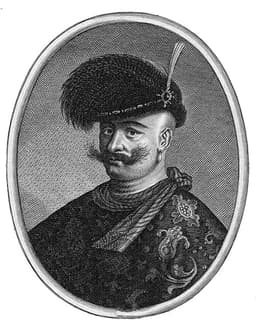
Abbas I
Emperor · Modern
81.4Total
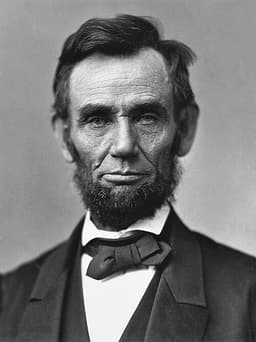
Abraham Lincoln
Politician · Modern
77.5Total
Basic Information
Born
1571
1809
Died
1629
1865
Era
Modern
Modern
Nationality
Persia
United States
Occupation
Emperor
Politician
Civilization
Middle Eastern
Western
Score Comparison
Military (10%)
82.0
50.0
Political (20%)
90.0
88.0
Influence (20%)
75.0
80.0
Legacy (20%)
82.0
82.0
Leadership (15%)
81.7
85.0
Strategy (15%)
82.0
60.0
TOTAL
81.4
77.5
Abbas I — Complete Timeline
1590 AD
Reformed the Army with GhulamsReform
Abbas I created a standing army of ghulams (military slaves) recruited from Christian subjects in the Caucasus, particularly Georgians and Armenians. This reduced reliance on the Qizilbash tribal forces, increased royal control, and modernized the military with firearms and artillery.
Military ReformGhulam SystemCentralization
Impact: nationalconstructive
1598 AD
Relocated Capital to IsfahanPolitical Action
Abbas I moved the Safavid capital from Qazvin to Isfahan, transforming it into a magnificent city with grand architecture, including Naqsh-e Jahan Square, the Shah Mosque, and the Ali Qapu Palace. This relocation became a symbol of Safavid power and cultural flourishing.
Capital RelocationUrban PlanningArchitecture
Impact: globalconstructive
1599 AD
Established Diplomatic Relations with EuropePolitical Action◆ Major
Abbas I sent diplomatic missions to European courts, including those of Philip III of Spain, Rudolf II of the Holy Roman Empire, and Elizabeth I of England, seeking alliances against the Ottoman Empire. These missions opened sustained diplomatic and commercial exchanges between Safavid Persia and Europe.
DiplomacyEuropean RelationsAnti-Ottoman Alliance
Impact: globalconstructive
1605 AD
Battle of SufiyanWar◆ Major
Abbas I defeated an Ottoman army near Sufiyan, securing Safavid control over Azerbaijan and the Caucasus. This victory was part of the Ottoman-Safavid War of 1603-1618, which resulted in the recapture of Tabriz, Nakhchivan, and Yerevan from Ottoman occupation.
Ottoman-Safavid WarBattleTerritorial Recovery
Impact: regional
1622 AD
Expelled Portuguese from HormuzWar◆ Major
Abbas I, with support from the English East India Company, captured the island of Hormuz from Portuguese control. This ended Portuguese dominance in the Persian Gulf and opened direct trade routes for Safavid Persia with Europe, boosting the silk trade.
Persian GulfTradeEuropean Relations
Impact: globalconstructive
1623 AD
Recaptured BaghdadWar◆ Major
Abbas I captured Baghdad from the Ottoman Empire after a siege, restoring Safavid control over Iraq. This victory expanded Safavid territory and gave Abbas control over important Shi'a pilgrimage sites like Najaf and Karbala.
Ottoman-Safavid WarConquestShi'a Sites
Impact: regional
Abraham Lincoln — Complete Timeline
1861 AD
Suspension of Habeas CorpusPolitical Action◆ Major
Lincoln suspended the writ of habeas corpus in parts of the Union, allowing the military to arrest and detain suspected Confederate sympathizers without trial. This action was controversial and challenged civil liberties during wartime.
Habeas CorpusCivil LibertiesCivil War
Impact: nationaldestructive
1862 AD
Signing of the Homestead ActPolitical Action◆ Major
Lincoln signed the Homestead Act, granting 160 acres of public land to settlers for a small fee. This encouraged westward expansion and agricultural development, but also displaced Native American tribes.
Homestead ActWestward ExpansionLand Policy
Impact: nationalconstructive
1863 AD
Emancipation ProclamationPolitical Action
Lincoln issued the Emancipation Proclamation, declaring slaves in Confederate states free. This shifted the Civil War's focus to ending slavery and allowed African Americans to join the Union Army.
EmancipationCivil WarSlavery
Impact: globalprogressive
Gettysburg AddressCultural◆ Major
Lincoln delivered the Gettysburg Address at the dedication of the Soldiers' National Cemetery. The speech redefined the Civil War as a struggle for national unity and equality, and became one of the most famous speeches in US history.
Gettysburg AddressCivil WarOratory
Impact: nationalconstructive
1865 AD
Assassination by John Wilkes BoothOther
Lincoln was shot by John Wilkes Booth at Ford's Theatre in Washington, D.C., and died the next day. His assassination occurred just days after the Civil War ended, plunging the nation into mourning and affecting Reconstruction.
AssassinationCivil WarReconstruction
Impact: nationaltragic
Expert Analysis
Origins
**Abbas I** (1571–1629) was born into the Safavid dynasty, a Shi'a empire in Persia. He ascended the throne at age 16 after a civil war, inheriting a realm threatened by Ottomans, Uzbeks, and internal strife. **Abraham Lincoln** (1809–1865) was born in a log cabin in Kentucky, USA, to poor frontier parents. He rose through self-education and law, entering politics as a Whig and later Republican. Both came from humble beginnings relative to their eventual power—Abbas from a royal but fragile position, Lincoln from poverty.
Rise to Power
Abbas I seized effective control after a power struggle with his mother and the Qizilbash tribal leaders. He consolidated power by eliminating rivals and creating a new military force (ghulams) loyal to him. Lincoln's rise was democratic: he gained fame through debates with Stephen Douglas, won the 1860 presidential election with a minority of the popular vote, and faced secession immediately. Abbas used cunning and ruthlessness; Lincoln used oratory and political maneuvering.
Leadership & Governance
Abbas I centralized the Persian state, moved the capital to Isfahan, and transformed it into a cultural and economic hub. He reformed the army, promoted trade (including with European powers), and expanded Persia's borders. Lincoln led the Union during the Civil War, issued the Emancipation Proclamation, and pushed the Thirteenth Amendment through Congress. He suspended habeas corpus and expanded executive power. Both were strong centralizers: Abbas through military and administrative reforms, Lincoln through constitutional and wartime measures.
Triumph & Tragedy
Abbas's triumphs include recapturing Baghdad from the Ottomans, expelling the Portuguese from Hormuz (with English help), and securing Persia's eastern borders. His tragedy was a paranoid old age: he blinded or killed his own sons, leading to succession problems. Lincoln's triumph was preserving the Union and ending slavery. His tragedy was his assassination by John Wilkes Booth just days after the war ended. Both achieved great victories but faced personal or national loss.
Character & Destiny
Abbas was shrewd, ruthless, and visionary—a builder and reformer who could be cruel. Lincoln was melancholic, principled, and pragmatic—a unifier who endured immense personal and national suffering. Their destinies diverged: Lincoln's death made him a martyr; Abbas's later paranoia tarnished his legacy. Yet both are remembered as transformative figures: Abbas as the greatest Safavid shah, Lincoln as one of America's greatest presidents.
Legacy
Abbas I's legacy is the golden age of Safavid Persia: Isfahan's architecture, the strengthening of Shi'a identity, and a model of centralized rule. However, his dynasty declined after him. Lincoln's legacy is the preservation of the United States and the abolition of slavery, inspiring civil rights movements worldwide. He is enshrined in national memory. Abbas's influence is more regional; Lincoln's is global.
Conclusion
In a direct comparison, Abbas I scores higher overall (82.9 vs. 79.0). He excels in military power (82 vs. 50), influence (90 vs. 88), and leadership (82 vs. 82). Lincoln matches in intellect (80 vs. 75) and surpasses in diplomacy (85 vs. 82) and tenure (78 vs. 81). Abbas's broader impact on Persia's trajectory and his architectural and military achievements give him the edge. However, Lincoln's moral legacy—ending slavery—arguably has greater long-term significance. The score gap of 3.9 reflects Abbas's more comprehensive control and transformation of his realm, but Lincoln's achievements in a democratic context are equally remarkable. Ultimately, Abbas I triumphs in the metrics, but Lincoln's ideals resonate more in modern discourse.
Rankings
🥇
Abbas ILeader
Mil: 82.0Pol: 90.0Inf: 75.0
81.4
🥈
Abraham Lincoln
Mil: 50.0Pol: 88.0Inf: 80.0
77.5
+3.9 behind
How This Comparison Works
Algorithm
Each figure is scored on 6 dimensions (0—100 scale) based on structured historical data: Military (10%), Political (20%), Influence (20%), Legacy (20%), Leadership (15%), Strategy (15%). The weighted total produces the final ranking.
Data Sources
Scores are computed from structured sub-indicators in the database. Scale factors adjust for era (Ancient ×0.85, Modern ×1.0) and civilization size (Eastern ×1.05, Other ×0.80) to account for differences in population and military scale.
Maximum 3 Figures
Comparisons are limited to 2—3 figures to ensure readability and statistical meaningfulness.
Error Margins
±5 points per dimension — Sub-scores are derived from historical records with inherent uncertainty. Two figures within 5 points on a dimension should be considered roughly equivalent in that area.
Total Score Accuracy
±3 points overall — The weighted combination of 6 dimensions produces a total score with approximately ±3 points of uncertainty. Differences of less than 3 points are not statistically significant— the figures are effectively tied.
Known Limitations
- Historical records are incomplete and uneven across civilizations
- Figures from oral-tradition societies may be underrepresented
- Occupation labels can misclassify multi-role figures
- Scores measure capability and impact, not moral character
- Quantitative scoring is a comparison tool, not absolute truth
Capability Radar
Military (10%) — Battles & Warfare
Battles
85
15
Win Rate
90
20
Expansion
85
0
Political (20%) — Governance & Reform
Reform
95
95
Diplomacy
88
80
Economy
92
70
Influence (20%) — Cultural & Global Reach
Cultural
90
85
Global
80
85
Legacy (20%) — Historical Impact
Historical
88
95
Longevity
85
90
Leadership (15%) — Power & Stability
Tenure
90
65
Stability
85
55
Strategy (15%) — Tactics & Innovation
Strategy
92
55
Tactics
88
10
Reform
95
60
Similar Comparisons
Comments & Discussion
No comments yet. Be the first to share your thoughts!