Loading...
Analysis will be generated on first visit.
Scores and timeline are available below. The page will refresh automatically when ready.
Qin Shi Huang vs Zheng He
Qin Shi Huang leads by 28.6 pts · 2 figures compared
…
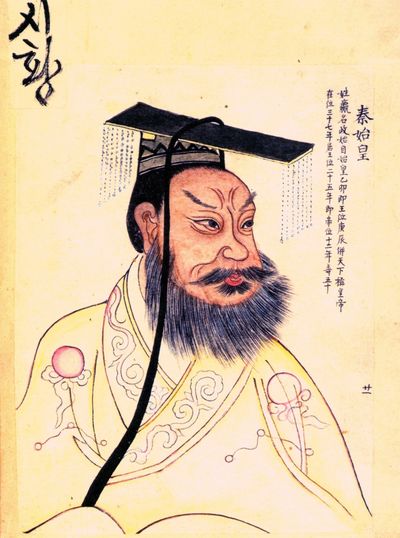
Qin Shi Huang
Emperor · Ancient
83.5Total

Zheng He
Explorer · Medieval
54.9Total
Basic Information
Born
-259
1371
Died
-210
1433
Era
Ancient
Medieval
Nationality
China
China
Occupation
Emperor
Explorer
Civilization
Eastern
Eastern
Score Comparison
Military (10%)
80.0
23.3
Political (20%)
88.0
56.5
Influence (20%)
82.0
73.7
Legacy (20%)
85.0
66.8
Leadership (15%)
88.0
45.0
Strategy (15%)
75.0
42.5
TOTAL
83.5
54.9
Rankings
🥇
Qin Shi HuangLeader
Mil: 80.0Pol: 88.0Inf: 82.0
83.5
🥈
Zheng He
Mil: 23.3Pol: 56.5Inf: 73.7
54.9
+28.6 behind
How This Comparison Works
Algorithm
Each figure is scored on 6 dimensions (0—100 scale) based on structured historical data: Military (10%), Political (20%), Influence (20%), Legacy (20%), Leadership (15%), Strategy (15%). The weighted total produces the final ranking.
Data Sources
Scores are computed from structured sub-indicators in the database. Scale factors adjust for era (Ancient ×0.85, Modern ×1.0) and civilization size (Eastern ×1.05, Other ×0.80) to account for differences in population and military scale.
Maximum 3 Figures
Comparisons are limited to 2—3 figures to ensure readability and statistical meaningfulness.
Error Margins
±5 points per dimension — Sub-scores are derived from historical records with inherent uncertainty. Two figures within 5 points on a dimension should be considered roughly equivalent in that area.
Total Score Accuracy
±3 points overall — The weighted combination of 6 dimensions produces a total score with approximately ±3 points of uncertainty. Differences of less than 3 points are not statistically significant— the figures are effectively tied.
Known Limitations
- Historical records are incomplete and uneven across civilizations
- Figures from oral-tradition societies may be underrepresented
- Occupation labels can misclassify multi-role figures
- Scores measure capability and impact, not moral character
- Quantitative scoring is a comparison tool, not absolute truth
Capability Radar
Military (10%) — Battles & Warfare
Battles
85
20
Win Rate
90
30
Expansion
90
65
Political (20%) — Governance & Reform
Reform
95
30
Diplomacy
75
85
Economy
90
70
Influence (20%) — Cultural & Global Reach
Cultural
95
70
Global
85
55
Legacy (20%) — Historical Impact
Historical
95
65
Longevity
95
60
Leadership (15%) — Power & Stability
Tenure
70
50
Stability
65
60
Strategy (15%) — Tactics & Innovation
Strategy
85
75
Tactics
80
60
Reform
95
40
Analysis will be generated on first visit.
Scores and timeline are available below. The page will refresh automatically when ready.
Qin Shi Huang — Complete Timeline
246 BC
Construction of the Mausoleum and Terracotta ArmyOther◆ Major
Qin Shi Huang commissioned a vast mausoleum complex near Xi'an, guarded by thousands of life-sized terracotta soldiers, horses, and chariots. The project employed hundreds of thousands of workers and reflected his obsession with immortality and imperial power.
Impact: global
230 BC
Conquest of the Six Warring StatesWar
From 230 to 221 BCE, Ying Zheng led the Qin state in a series of campaigns that conquered the Han, Zhao, Wei, Chu, Yan, and Qi states. This unified China under a single ruler for the first time, ending the Warring States period.
Impact: global
221 BC
Standardization of Writing, Currency, and MeasurementsReform◆ Major
Qin Shi Huang ordered the standardization of Chinese script, currency, and weights and measures across the unified empire. This facilitated administration, trade, and cultural integration, laying a foundation for future dynasties.
Impact: globalconstructive
Proclamation of the Qin DynastyPolitical Action
After conquering the last independent state, Ying Zheng declared himself Shi Huangdi (First Emperor), founding the Qin Dynasty. He adopted a new title to signify his supreme authority and initiated centralized imperial rule.
Impact: global
214 BC
Initiation of the Great Wall ConstructionOther◆ Major
Qin Shi Huang ordered the connection and extension of existing northern fortifications to create a unified defensive wall against nomadic Xiongnu raids. This project involved massive conscripted labor and became the precursor to the later Great Wall.
Impact: regional
213 BC
Burning of Books and Burying of ScholarsPolitical Action◆ Major
On the advice of Li Si, Qin Shi Huang ordered the burning of historical records and philosophical texts not aligned with Legalist doctrine. He also had 460 Confucian scholars buried alive to suppress dissent and consolidate ideological control.
Impact: nationaldestructive
Zheng He — Complete Timeline
1405 AD
First Treasure Fleet VoyageOther
Zheng He commanded the first of seven voyages, leading a fleet of over 300 ships from Nanjing. The expedition visited Champa, Java, Sumatra, and Calicut, establishing diplomatic and trade relations. This began the largest naval expeditions in pre-modern history.
Ming dynastyMaritime explorationDiplomacy
Impact: globalconstructive
1413 AD
Fourth Voyage to the Middle EastOther◆ Major
Zheng He's fourth voyage reached Hormuz in the Persian Gulf. The fleet carried envoys from 30 states back to China. This voyage extended Ming influence into the Middle East and demonstrated the fleet's capacity for long-distance navigation.
Ming dynastyMaritime explorationDiplomacy
Impact: globalconstructive
1431 AD
Seventh Voyage to East AfricaOther◆ Major
Zheng He's final voyage visited East Africa, including Mogadishu, Malindi, and Mombasa. The fleet brought back giraffes and other exotic animals to the Ming court. This was the last of the treasure fleet expeditions before the voyages were discontinued.
Ming dynastyMaritime explorationEast Africa
Impact: globalconstructive
Similar Comparisons
Comments & Discussion
WALL-BUILDER6/17/2026
Basic timeline error: Zheng He sailed 1405-1433, not "fifteen centuries" after Qin. That's closer to 1600 years. Also, Qin died 210 BC, Zheng He died 1433—that's 1,643 years. Sloppy framing. The real contrast is about interior vs. maritime vision. Qin obsessed over fixed borders; Zheng sought floating tributaries. Both were deeply authoritarian. Don't romanticize Zheng—his fleet was a projection of Ming imperial will, not some proto-globalist peace corps. Every giraffe came with an implicit thre
墨家铁粉6/17/2026
说“郑和搭桥、始皇筑墙”太片面了。秦始皇修灵渠沟通珠江长江水系,这可不是墙,是航运工程。郑和带的是宝船,但他也帮永乐帝铲除海外反抗势力,在旧港灭了一整窝华人海盗。两人都在扩展帝国控制半径,只是一个用陆军,一个用水师。别把郑和包装成和平天使,他是带刀出海的。
DATA-DRIVEN6/17/2026
Qin's population around 40 million, his corvée projects mobilized ~2 million annually, about 5% of total population. Zheng's fleet: 317 ships at peak, crew around 27,000. That's 0.0007% of Ming population (est. 65 million). The scale difference is staggering. Qin built walls visible from space. Zheng built voyages barely traceable two generations later. One moved earth, the other moved people. Their historical footprints aren't comparable.
江南文士6/17/2026
焚书坑儒是里程碑式的文化灾难,但郑和船队失踪后,明朝海防档案也被刘大夏烧了。两个朝代都在处理知识遗产时犯了罪:秦把百家争鸣烧成灰,明把远洋记录塞进火堆。儒生恨嬴政烧他们典籍,可后来儒家官僚也亲手毁了郑和的航海日志。自己掌权也未必比暴君聪明。历史最爱讽刺循环。