Loading...
Analysis will be generated on first visit.
Scores and timeline are available below. The page will refresh automatically when ready.
Pierre Savorgnan de Brazza vs Qin Shi Huang
Qin Shi Huang leads by 33.1 pts · 2 figures compared
…

Pierre Savorgnan de Brazza
Explorer · Modern
50.4Total
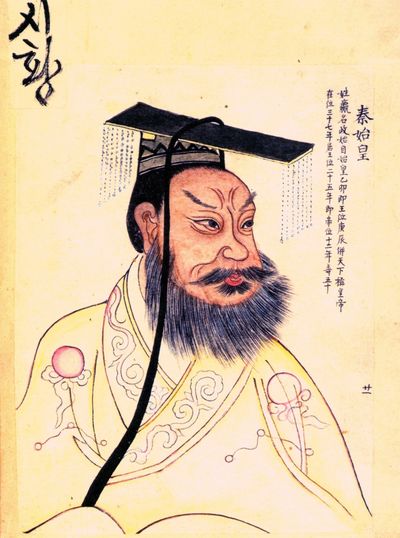
Qin Shi Huang
Emperor · Ancient
83.5Total
Basic Information
Born
1852
-259
Died
1905
-210
Era
Modern
Ancient
Nationality
France
China
Occupation
Explorer
Emperor
Civilization
Western
Eastern
Score Comparison
Military (10%)
22.0
80.0
Political (20%)
47.1
88.0
Influence (20%)
71.5
82.0
Legacy (20%)
59.5
85.0
Leadership (15%)
37.4
88.0
Strategy (15%)
46.6
75.0
TOTAL
50.4
83.5
Rankings
🥇
Qin Shi HuangLeader
Mil: 80.0Pol: 88.0Inf: 82.0
83.5
🥈
Pierre Savorgnan de Brazza
Mil: 22.0Pol: 47.1Inf: 71.5
50.4
+33.1 behind
How This Comparison Works
Algorithm
Each figure is scored on 6 dimensions (0—100 scale) based on structured historical data: Military (10%), Political (20%), Influence (20%), Legacy (20%), Leadership (15%), Strategy (15%). The weighted total produces the final ranking.
Data Sources
Scores are computed from structured sub-indicators in the database. Scale factors adjust for era (Ancient ×0.85, Modern ×1.0) and civilization size (Eastern ×1.05, Other ×0.80) to account for differences in population and military scale.
Maximum 3 Figures
Comparisons are limited to 2—3 figures to ensure readability and statistical meaningfulness.
Error Margins
±5 points per dimension — Sub-scores are derived from historical records with inherent uncertainty. Two figures within 5 points on a dimension should be considered roughly equivalent in that area.
Total Score Accuracy
±3 points overall — The weighted combination of 6 dimensions produces a total score with approximately ±3 points of uncertainty. Differences of less than 3 points are not statistically significant— the figures are effectively tied.
Known Limitations
- Historical records are incomplete and uneven across civilizations
- Figures from oral-tradition societies may be underrepresented
- Occupation labels can misclassify multi-role figures
- Scores measure capability and impact, not moral character
- Quantitative scoring is a comparison tool, not absolute truth
Capability Radar
Military (10%) — Battles & Warfare
Battles
5
85
Win Rate
5
90
Expansion
40
90
Political (20%) — Governance & Reform
Reform
25
95
Diplomacy
70
75
Economy
20
90
Influence (20%) — Cultural & Global Reach
Cultural
30
95
Global
40
85
Legacy (20%) — Historical Impact
Historical
40
95
Longevity
30
95
Leadership (15%) — Power & Stability
Tenure
30
70
Stability
30
65
Strategy (15%) — Tactics & Innovation
Strategy
20
85
Tactics
10
80
Reform
5
95
Analysis will be generated on first visit.
Scores and timeline are available below. The page will refresh automatically when ready.
Pierre Savorgnan de Brazza — Complete Timeline
1875 AD
Exploration of the Congo RiverInvention◆ Major
Pierre Savorgnan de Brazza led an expedition to explore the Congo River basin, traveling from the coast into the interior. He established friendly relations with local chiefs, particularly the Teke people, and claimed territories for France without resorting to military force.
CongoExplorationColonialism
Impact: regionalconstructive
1880 AD
Founding of BrazzavillePolitical Action
De Brazza signed a treaty with King Makoko of the Teke people, establishing a French protectorate over the north bank of the Congo River. He founded the settlement of Brazzaville, which became the capital of French Congo. This was achieved without bloodshed, contrasting with Belgian King Leopold II's brutal methods.
CongoColonialismDiplomacy
Impact: regionalconstructive
Treaty with King MakokoPolitical Action◆ Major
De Brazza negotiated a treaty with King Makoko of the Teke people, granting France control over the territory that became the French Congo. The treaty was notable for being voluntary and non-coercive, a rare example of peaceful colonial expansion in Africa.
CongoTreatyColonialism
Impact: regionalconstructive
1886 AD
Commissioner-General of French CongoPolitical Action◆ Major
De Brazza was appointed Commissioner-General of the French Congo, overseeing the administration of the colony. He implemented policies that respected local customs and opposed the use of forced labor, but his humane approach was later undermined by concession companies that exploited the region.
CongoAdministrationColonial Policy
Impact: regionalconstructive
1905 AD
Investigation into Congo AtrocitiesPolitical Action◆ Major
De Brazza was sent by the French government to investigate reports of atrocities committed by concession companies in the French Congo. His report documented widespread abuses, including forced labor and violence. However, the French government suppressed the report, and de Brazza died shortly after returning.
CongoHuman RightsColonial Abuses
Impact: regionaltragic
Qin Shi Huang — Complete Timeline
246 BC
Construction of the Mausoleum and Terracotta ArmyOther◆ Major
Qin Shi Huang commissioned a vast mausoleum complex near Xi'an, guarded by thousands of life-sized terracotta soldiers, horses, and chariots. The project employed hundreds of thousands of workers and reflected his obsession with immortality and imperial power.
Impact: global
230 BC
Conquest of the Six Warring StatesWar
From 230 to 221 BCE, Ying Zheng led the Qin state in a series of campaigns that conquered the Han, Zhao, Wei, Chu, Yan, and Qi states. This unified China under a single ruler for the first time, ending the Warring States period.
Impact: global
221 BC
Standardization of Writing, Currency, and MeasurementsReform◆ Major
Qin Shi Huang ordered the standardization of Chinese script, currency, and weights and measures across the unified empire. This facilitated administration, trade, and cultural integration, laying a foundation for future dynasties.
Impact: globalconstructive
Proclamation of the Qin DynastyPolitical Action
After conquering the last independent state, Ying Zheng declared himself Shi Huangdi (First Emperor), founding the Qin Dynasty. He adopted a new title to signify his supreme authority and initiated centralized imperial rule.
Impact: global
214 BC
Initiation of the Great Wall ConstructionOther◆ Major
Qin Shi Huang ordered the connection and extension of existing northern fortifications to create a unified defensive wall against nomadic Xiongnu raids. This project involved massive conscripted labor and became the precursor to the later Great Wall.
Impact: regional
213 BC
Burning of Books and Burying of ScholarsPolitical Action◆ Major
On the advice of Li Si, Qin Shi Huang ordered the burning of historical records and philosophical texts not aligned with Legalist doctrine. He also had 460 Confucian scholars buried alive to suppress dissent and consolidate ideological control.
Impact: nationaldestructive
Similar Comparisons
Comments & Discussion
CarthagoCrusher6/17/2026
Qin Shi Huang wasn't just brutal—he was brutally efficient. Standardizing weights, measures, and script across a fractured China required the same ruthless logic that destroyed the Zhou nobility. De Brazza's "gentle conquest" is romanticized: he still enabled French colonial exploitation, just with fewer massacres. The real tragedy is that both men built systems that outlasted their human limits.
BrazenSociologist6/17/2026
把秦始皇和布拉柴放在一起比较?这根本是逻辑错位。秦始皇统一的是有千年文字传统的华夏文明共同体,布拉柴面对的是非洲部落社会。前者建立郡县制、修驰道、统一文字,为后世两千年帝国制度奠基;后者不过是欧洲殖民浪潮中的一个代理人罢了。没有共同政治传统,哪来公平比较?
HereticNumismatist6/17/2026
Let's check the body count: Qin Shi Huang's military campaigns killed hundreds of thousands, plus forced labor deaths for the Great Wall and his tomb. De Brazza? Maybe a few dozen deaths from exploration hazards. But here's the twist—Qin's harsh Legalist laws created the first unified Chinese state that lasted, while de Brazza's Congo eventually became Leopold II's genocidal nightmare. Morality doesn't scale with empire.
BitterAnnalist6/17/2026
别被“温和征服者”的人设骗了。布拉柴·萨沃尼昂的“谈判”建立在法国枪炮的阴影下,非洲国王们的“同意”不过是对更强大武力的理性投降。秦始皇至少赤裸裸地公开他的铁腕统治,没有披着人道主义外衣。十九世纪的殖民者在道德上比公元前三世纪的皇帝更虚伪,没有资格站在道德高地上。
SloganSmelter6/17/2026
One built the Terracotta Army to guard his tomb for eternity. The other founded Brazzaville with a handshake. Both men understood that power requires a physical symbol. Qin's clay soldiers represent total control over life and death itself. De Brazza's treaty represents the illusion of mutual respect between unequal parties. Which is more honest? The answer is clear: at least the Emperor didn't pretend you had a choice.