Loading...
Analysis will be generated on first visit.
Scores and timeline are available below. The page will refresh automatically when ready.
Pedro Alvares Cabral vs Qin Shi Huang
Qin Shi Huang leads by 36.3 pts · 2 figures compared
…

Pedro Alvares Cabral
Explorer · Medieval
47.2Total
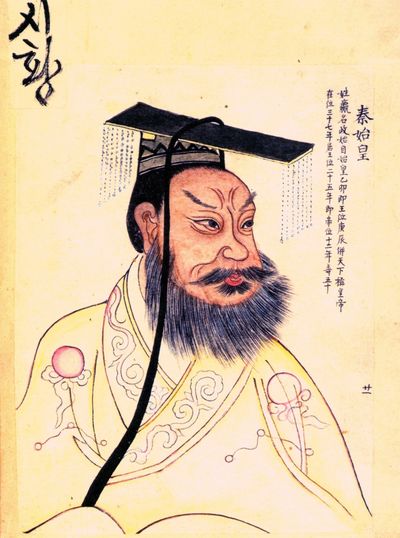
Qin Shi Huang
Emperor · Ancient
83.5Total
Basic Information
Born
1467
-259
Died
1520
-210
Era
Medieval
Ancient
Nationality
Portugal
China
Occupation
Explorer
Emperor
Civilization
Western
Eastern
Score Comparison
Military (10%)
21.8
80.0
Political (20%)
34.2
88.0
Influence (20%)
74.2
82.0
Legacy (20%)
62.9
85.0
Leadership (15%)
30.5
88.0
Strategy (15%)
41.1
75.0
TOTAL
47.2
83.5
Rankings
🥇
Qin Shi HuangLeader
Mil: 80.0Pol: 88.0Inf: 82.0
83.5
🥈
Pedro Alvares Cabral
Mil: 21.8Pol: 34.2Inf: 74.2
47.2
+36.3 behind
How This Comparison Works
Algorithm
Each figure is scored on 6 dimensions (0—100 scale) based on structured historical data: Military (10%), Political (20%), Influence (20%), Legacy (20%), Leadership (15%), Strategy (15%). The weighted total produces the final ranking.
Data Sources
Scores are computed from structured sub-indicators in the database. Scale factors adjust for era (Ancient ×0.85, Modern ×1.0) and civilization size (Eastern ×1.05, Other ×0.80) to account for differences in population and military scale.
Maximum 3 Figures
Comparisons are limited to 2—3 figures to ensure readability and statistical meaningfulness.
Error Margins
±5 points per dimension — Sub-scores are derived from historical records with inherent uncertainty. Two figures within 5 points on a dimension should be considered roughly equivalent in that area.
Total Score Accuracy
±3 points overall — The weighted combination of 6 dimensions produces a total score with approximately ±3 points of uncertainty. Differences of less than 3 points are not statistically significant— the figures are effectively tied.
Known Limitations
- Historical records are incomplete and uneven across civilizations
- Figures from oral-tradition societies may be underrepresented
- Occupation labels can misclassify multi-role figures
- Scores measure capability and impact, not moral character
- Quantitative scoring is a comparison tool, not absolute truth
Capability Radar
Military (10%) — Battles & Warfare
Battles
10
85
Win Rate
15
90
Expansion
30
90
Political (20%) — Governance & Reform
Reform
10
95
Diplomacy
25
75
Economy
15
90
Influence (20%) — Cultural & Global Reach
Cultural
40
95
Global
55
85
Legacy (20%) — Historical Impact
Historical
55
95
Longevity
50
95
Leadership (15%) — Power & Stability
Tenure
20
70
Stability
15
65
Strategy (15%) — Tactics & Innovation
Strategy
20
85
Tactics
10
80
Reform
5
95
Analysis will be generated on first visit.
Scores and timeline are available below. The page will refresh automatically when ready.
Pedro Alvares Cabral — Complete Timeline
1500 AD
Battle of CalicutWar◆ Major
After reaching India, Cabral established a trading post in Calicut. Conflict with local Muslim merchants led to an attack on the Portuguese factory. Cabral retaliated by bombarding the city and seizing Muslim ships, escalating tensions.
ConflictIndiaTrade
Impact: regionaldestructive
Appointment as commander of a fleet to IndiaPolitical Action◆ Major
King Manuel I of Portugal appointed Pedro
ExplorationIndiaPortuguese Empire
Impact: global
Discovery of BrazilInvention◆ Major
While following da Gama's route, Cabral's fleet made a westward swing and sighted land on the coast of Brazil. He claimed the territory for Portugal, naming it the Island of Vera Cruz. This discovery led to Portuguese colonization of South America.
DiscoveryBrazilColonialism
Impact: globalconstructive
Establishment of trade relations with CochinPolitical Action◆ Major
After the conflict in Calicut, Cabral sailed to Cochin, where he formed an alliance with the local ruler. He loaded his ships with spices and established a trading post, laying the foundation for Portuguese influence in Kerala.
TradeAllianceIndia
Impact: regionalconstructive
1501 AD
Return to Portugal and loss of favorPolitical Action
Cabral returned to Portugal with a valuable cargo of spices, but his fleet suffered heavy losses. Despite his success, he fell out of favor at court and was not given another command. He retired from active service.
ReturnDisgracePortuguese Empire
Impact: nationaltragic
Qin Shi Huang — Complete Timeline
246 BC
Construction of the Mausoleum and Terracotta ArmyOther◆ Major
Qin Shi Huang commissioned a vast mausoleum complex near Xi'an, guarded by thousands of life-sized terracotta soldiers, horses, and chariots. The project employed hundreds of thousands of workers and reflected his obsession with immortality and imperial power.
Impact: global
230 BC
Conquest of the Six Warring StatesWar
From 230 to 221 BCE, Ying Zheng led the Qin state in a series of campaigns that conquered the Han, Zhao, Wei, Chu, Yan, and Qi states. This unified China under a single ruler for the first time, ending the Warring States period.
Impact: global
221 BC
Standardization of Writing, Currency, and MeasurementsReform◆ Major
Qin Shi Huang ordered the standardization of Chinese script, currency, and weights and measures across the unified empire. This facilitated administration, trade, and cultural integration, laying a foundation for future dynasties.
Impact: globalconstructive
Proclamation of the Qin DynastyPolitical Action
After conquering the last independent state, Ying Zheng declared himself Shi Huangdi (First Emperor), founding the Qin Dynasty. He adopted a new title to signify his supreme authority and initiated centralized imperial rule.
Impact: global
214 BC
Initiation of the Great Wall ConstructionOther◆ Major
Qin Shi Huang ordered the connection and extension of existing northern fortifications to create a unified defensive wall against nomadic Xiongnu raids. This project involved massive conscripted labor and became the precursor to the later Great Wall.
Impact: regional
213 BC
Burning of Books and Burying of ScholarsPolitical Action◆ Major
On the advice of Li Si, Qin Shi Huang ordered the burning of historical records and philosophical texts not aligned with Legalist doctrine. He also had 460 Confucian scholars buried alive to suppress dissent and consolidate ideological control.
Impact: nationaldestructive
Similar Comparisons
Comments & Discussion
HuangAboveHoofbeats6/17/2026
Qin Shi Huang actually built road networks more extensive than Rome's via Appia, yet historical pop culture reduces him to terra cotta afterthought. Cabral? Dude literally stumbled upon Brazil because he swung too wide around Africa's doldrums—Gama's route was the real blueprint. One guy engineered an entire civilization's backbone; the other had favorable currents and got a country named after someone else. That's not comparable unless you think a lucky GPS glitch equals designing the map.
铁骑孤魂6/17/2026
拿一个迷航的葡萄牙贵族跟始皇帝比?拜托,Cabral连自己发现的是新大陆都不知道,还以为是海盗窝。始皇帝三十七年书同文车同轨,光修驰道就九千公里,把分散的战国焊成一个国家。后世骂他焚书坑儒,可没有大一统的骨架,中华文明早就碎成饺子馅了。Cabral顶多算个海上的烂柯人。
Skeptical_Scribe6/17/2026
This analysis parrots the "Qin built China" myth but conveniently ignores how much of his "unification" was symbolic, not substantive. The script standardization took centuries to actually implement across regions, and the road network decayed quickly under Han incompetence. Meanwhile, Cabral's "accidental" discovery triggered Portugal's systematic colonization of Brazil—actually naming and mapping 1,500 km of coastline within a decade. Impact per square kilometer of inhabited territory? Cabral
墨守成規6/17/2026
軍事史告訴我們:始皇帝是第一個整合騎兵、弩機與後勤體系的戰國霸主。他的軍隊有標準化弩箭和補給鏈,能同時打匈奴和百越。Cabral艦隊最多帶兩百葡萄牙人和十幾門炮,連本地酋長都打不贏,還得靠收買。說他"開拓大陸"?他連個哨所都沒留下,真正殖民是半世紀後的事了。這不是發現,是路過加迷路。
Classicist_Counterpoint6/17/2026
The real metric isn't empire longevity but cognitive horizon: Qin Shi Huang collapsed the known Chinese world into a single entity, while Cabral proved Ptolemaic geography had it all wrong about the Indian Ocean's closure. One man looked inward, codifying an entire civilization's bureaucracy; the other looked outward, demolishing ancient certainties. Cabral's failure at court reflects Portugal's inability to grasp paradigm shifts—not his own mediocrity. History favors builders, but it needs expl
歧路過客6/17/2026
梁啟超說過,Cabral是"無意之大發現者",正是這種無意讓他在東西方比較中顯得蒼白。始皇帝固然殘暴,但他的目標極其清晰:朕為始皇帝,後世以計數,二世