Loading...
Analysis will be generated on first visit.
Scores and timeline are available below. The page will refresh automatically when ready.
Marco Polo vs Qin Shi Huang
Qin Shi Huang leads by 30.5 pts · 2 figures compared
…

Marco Polo
Explorer · Medieval
53.0Total
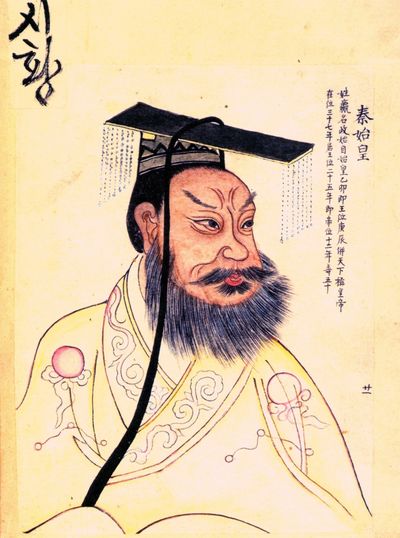
Qin Shi Huang
Emperor · Ancient
83.5Total
Basic Information
Born
1254
-259
Died
1324
-210
Era
Medieval
Ancient
Nationality
Italy
China
Occupation
Explorer
Emperor
Civilization
Western
Eastern
Score Comparison
Military (10%)
23.4
80.0
Political (20%)
38.7
88.0
Influence (20%)
74.0
82.0
Legacy (20%)
69.7
85.0
Leadership (15%)
43.1
88.0
Strategy (15%)
51.4
75.0
TOTAL
53.0
83.5
Rankings
🥇
Qin Shi HuangLeader
Mil: 80.0Pol: 88.0Inf: 82.0
83.5
🥈
Marco Polo
Mil: 23.4Pol: 38.7Inf: 74.0
53.0
+30.5 behind
How This Comparison Works
Algorithm
Each figure is scored on 6 dimensions (0—100 scale) based on structured historical data: Military (10%), Political (20%), Influence (20%), Legacy (20%), Leadership (15%), Strategy (15%). The weighted total produces the final ranking.
Data Sources
Scores are computed from structured sub-indicators in the database. Scale factors adjust for era (Ancient ×0.85, Modern ×1.0) and civilization size (Eastern ×1.05, Other ×0.80) to account for differences in population and military scale.
Maximum 3 Figures
Comparisons are limited to 2—3 figures to ensure readability and statistical meaningfulness.
Error Margins
±5 points per dimension — Sub-scores are derived from historical records with inherent uncertainty. Two figures within 5 points on a dimension should be considered roughly equivalent in that area.
Total Score Accuracy
±3 points overall — The weighted combination of 6 dimensions produces a total score with approximately ±3 points of uncertainty. Differences of less than 3 points are not statistically significant— the figures are effectively tied.
Known Limitations
- Historical records are incomplete and uneven across civilizations
- Figures from oral-tradition societies may be underrepresented
- Occupation labels can misclassify multi-role figures
- Scores measure capability and impact, not moral character
- Quantitative scoring is a comparison tool, not absolute truth
Capability Radar
Military (10%) — Battles & Warfare
Battles
13
85
Win Rate
15
90
Expansion
23
90
Political (20%) — Governance & Reform
Reform
0
95
Diplomacy
30
75
Economy
20
90
Influence (20%) — Cultural & Global Reach
Cultural
75
95
Global
75
85
Legacy (20%) — Historical Impact
Historical
80
95
Longevity
85
95
Leadership (15%) — Power & Stability
Tenure
0
70
Stability
0
65
Strategy (15%) — Tactics & Innovation
Strategy
24
85
Tactics
26
80
Reform
31
95
Analysis will be generated on first visit.
Scores and timeline are available below. The page will refresh automatically when ready.
Marco Polo — Complete Timeline
1271 AD
Journey to the Mongol courtOther
Marco Polo, with his father and uncle, departed Venice for Asia. They traveled the Silk Road, reaching the court of Kublai Khan in Shangdu (Xanadu) around 1275. Polo entered the Khan's service, becoming a trusted envoy.
ExplorationSilk RoadMongol Empire
Impact: globalconstructive
1275 AD
Service under Kublai KhanPolitical Action◆ Major
Polo served as an envoy for Kublai Khan, traveling throughout China and possibly to Burma and India. He reported on the empire's administration, trade, and customs, gaining detailed knowledge that later formed the basis of his book.
DiplomacyTravelChina
Impact: regionalconstructive
1295 AD
Return to VeniceOther◆ Major
Polo returned to Venice after 24 years in Asia, traveling by sea via Sumatra and Persia. His return was marked by the wealth he brought, but his accounts of Asia were met with skepticism by contemporaries.
ReturnTravelVenice
Impact: regional
1298 AD
Publication of 'The Travels of Marco Polo'Cultural
While imprisoned in Genoa, Polo dictated his travel account to Rustichello da Pisa. The book described Asian geography, cultures, and the wealth of the Mongol Empire, inspiring later explorers like Christopher Columbus.
LiteratureExplorationInfluence
Impact: globalconstructive
Qin Shi Huang — Complete Timeline
246 BC
Construction of the Mausoleum and Terracotta ArmyOther◆ Major
Qin Shi Huang commissioned a vast mausoleum complex near Xi'an, guarded by thousands of life-sized terracotta soldiers, horses, and chariots. The project employed hundreds of thousands of workers and reflected his obsession with immortality and imperial power.
Impact: global
230 BC
Conquest of the Six Warring StatesWar
From 230 to 221 BCE, Ying Zheng led the Qin state in a series of campaigns that conquered the Han, Zhao, Wei, Chu, Yan, and Qi states. This unified China under a single ruler for the first time, ending the Warring States period.
Impact: global
221 BC
Standardization of Writing, Currency, and MeasurementsReform◆ Major
Qin Shi Huang ordered the standardization of Chinese script, currency, and weights and measures across the unified empire. This facilitated administration, trade, and cultural integration, laying a foundation for future dynasties.
Impact: globalconstructive
Proclamation of the Qin DynastyPolitical Action
After conquering the last independent state, Ying Zheng declared himself Shi Huangdi (First Emperor), founding the Qin Dynasty. He adopted a new title to signify his supreme authority and initiated centralized imperial rule.
Impact: global
214 BC
Initiation of the Great Wall ConstructionOther◆ Major
Qin Shi Huang ordered the connection and extension of existing northern fortifications to create a unified defensive wall against nomadic Xiongnu raids. This project involved massive conscripted labor and became the precursor to the later Great Wall.
Impact: regional
213 BC
Burning of Books and Burying of ScholarsPolitical Action◆ Major
On the advice of Li Si, Qin Shi Huang ordered the burning of historical records and philosophical texts not aligned with Legalist doctrine. He also had 460 Confucian scholars buried alive to suppress dissent and consolidate ideological control.
Impact: nationaldestructive
Similar Comparisons
Comments & Discussion
QIN_THE_BUTCHER6/17/2026
Calling Qin Shi Huang a "unifier" is like calling a chainsaw a "tree rearranger." The guy buried 460 scholars alive for disagreeing with him, forced millions into slave labor to build the Great Wall, and standardized everything from axle widths to written characters at swordpoint. Compare that to Marco Polo, who at worst exaggerated his travel stories. One guy’s legacy is a unified China built on corpses; the other’s is a travelogue that sparked genuine cultural exchange. I know who I’d rather h
数据侦探6/17/2026
别吹“西方视角看东方”了。马可·波罗号称在元朝待了17年,但中文史料里找不到他任何记录——没官职、没赏赐、没印章。对比秦始皇,光《史记》里的秦朝官僚名单就能写几本书。波罗就是个吹牛皮的旅行博主,蹭了丝绸之路的热度。我们搞历史的,最烦这种靠“据说”撑起来的传奇。
CENTER_OF_THE_WORLD6/17/2026
As a classics scholar, I have to laugh at this forced dichotomy. Qin Shi Huang represents the pinnacle of ancient statecraft—standardized writing, weights, measures, currency. He created the bureaucratic template that made China work for 2,000 years. Marco Polo? He brought back spaghetti and gunpowder myths. One man reshaped the lives of millions; the other wrote a medieval bestseller. The comparison isn't between equals—it's between a tectonic force and a tourist.
长城孤魂6/17/2026
你们这些西方史学家总拿“连接东西方”来拔高波罗,但真正的文明奠基者是秦始皇。他把分裂的七国拧成一股绳,统一文字让南北能沟通,修驰道让货物流通更顺畅。波罗就是个商人,记了一堆道听途说的故事回欧洲邀功。要不是元朝驿路系统发达——那还是继承秦制——他连撒马尔罕都到不了。记住了:上等人打基础,下等人捡现成。