Loading...
Analysis will be generated on first visit.
Scores and timeline are available below. The page will refresh automatically when ready.
Julius Caesar vs Qin Shi Huang
Qin Shi Huang leads by 0.2 pts · 2 figures compared
…

Julius Caesar
General · Ancient
83.3Total
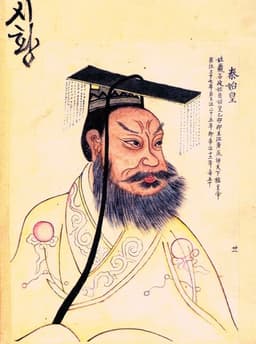
Qin Shi Huang
Emperor · Ancient
83.5Total
Basic Information
Born
-100
-259
Died
-44
-210
Era
Ancient
Ancient
Nationality
Roman Republic
China
Occupation
General
Emperor
Civilization
Western
Eastern
Score Comparison
Military (10%)
88.0
80.0
Political (20%)
78.0
88.0
Influence (20%)
85.0
82.0
Legacy (20%)
82.0
85.0
Leadership (15%)
82.0
88.0
Strategy (15%)
88.0
75.0
TOTAL
83.3
83.5
Rankings
🥇
Qin Shi HuangLeader
Mil: 80.0Pol: 88.0Inf: 82.0
83.5
🥈
Julius Caesar
Mil: 88.0Pol: 78.0Inf: 85.0
83.3
+0.2 behind
How This Comparison Works
Algorithm
Each figure is scored on 6 dimensions (0—100 scale) based on structured historical data: Military (10%), Political (20%), Influence (20%), Legacy (20%), Leadership (15%), Strategy (15%). The weighted total produces the final ranking.
Data Sources
Scores are computed from structured sub-indicators in the database. Scale factors adjust for era (Ancient ×0.85, Modern ×1.0) and civilization size (Eastern ×1.05, Other ×0.80) to account for differences in population and military scale.
Maximum 3 Figures
Comparisons are limited to 2—3 figures to ensure readability and statistical meaningfulness.
Error Margins
±5 points per dimension — Sub-scores are derived from historical records with inherent uncertainty. Two figures within 5 points on a dimension should be considered roughly equivalent in that area.
Total Score Accuracy
±3 points overall — The weighted combination of 6 dimensions produces a total score with approximately ±3 points of uncertainty. Differences of less than 3 points are not statistically significant— the figures are effectively tied.
Known Limitations
- Historical records are incomplete and uneven across civilizations
- Figures from oral-tradition societies may be underrepresented
- Occupation labels can misclassify multi-role figures
- Scores measure capability and impact, not moral character
- Quantitative scoring is a comparison tool, not absolute truth
Capability Radar
Military (10%) — Battles & Warfare
Battles
95
85
Win Rate
92
90
Expansion
97
90
Political (20%) — Governance & Reform
Reform
90
95
Diplomacy
85
75
Economy
82
90
Influence (20%) — Cultural & Global Reach
Cultural
88
95
Global
94
85
Legacy (20%) — Historical Impact
Historical
95
95
Longevity
96
95
Leadership (15%) — Power & Stability
Tenure
75
70
Stability
60
65
Strategy (15%) — Tactics & Innovation
Strategy
94
85
Tactics
96
80
Reform
88
95
Analysis will be generated on first visit.
Scores and timeline are available below. The page will refresh automatically when ready.
Julius Caesar — Complete Timeline
58 BC
Gallic WarsWar◆ Major
Caesar, as proconsul of Gaul, launched a series of campaigns that conquered all of Gaul (modern France, Belgium, and parts of Switzerland). He fought numerous battles, including against the Helvetii, the Belgae, and the Gallic chieftain Vercingetorix. The wars brought immense wealth and a loyal army to Caesar.
Gallic WarsConquestRoman Expansion
Impact: regional
49 BC
Crossing the RubiconPolitical Action◆ Major
Caesar led Legio XIII across the Rubicon River into Italy, defying the Roman Senate's order to disband his army. This act triggered a civil war against Pompey and the Optimates, ultimately leading to Caesar's dictatorship and the end of the Roman Republic.
Roman Civil WarEnd of RepublicPower Struggle
Impact: global
48 BC
Battle of PharsalusWar◆ Major
Caesar's outnumbered army defeated the larger forces of Pompey the Great at Pharsalus in Greece. Caesar's tactical use of a reserve line to counter Pompey's cavalry charge proved decisive. Pompey fled to Egypt, where he was assassinated, leaving Caesar as the undisputed master of the Roman world.
Roman Civil WarBattleDecisive Victory
Impact: regional
44 BC
Appointment as Dictator for LifePolitical Action◆ Major
The Roman Senate appointed Caesar dictator perpetuo (dictator for life), granting him unprecedented personal power. This move concentrated military, legislative, and judicial authority in one person, effectively ending the Roman Republic's traditional system of checks and balances and alarming many senators.
DictatorshipEnd of RepublicPower Consolidation
Impact: regionaldestructive
Assassination on the Ides of MarchPolitical Action◆ Major
A group of Roman senators, led by Marcus Junius Brutus and Gaius Cassius Longinus, stabbed Caesar to death at a meeting of the Senate in the Theatre of Pompey. The assassination was intended to restore the Republic, but instead triggered another civil war that led to the rise of the Roman Empire.
AssassinationRoman PoliticsEnd of Republic
Impact: globaldestructive
Qin Shi Huang — Complete Timeline
246 BC
Construction of the Mausoleum and Terracotta ArmyOther◆ Major
Qin Shi Huang commissioned a vast mausoleum complex near Xi'an, guarded by thousands of life-sized terracotta soldiers, horses, and chariots. The project employed hundreds of thousands of workers and reflected his obsession with immortality and imperial power.
Impact: global
230 BC
Conquest of the Six Warring StatesWar
From 230 to 221 BCE, Ying Zheng led the Qin state in a series of campaigns that conquered the Han, Zhao, Wei, Chu, Yan, and Qi states. This unified China under a single ruler for the first time, ending the Warring States period.
Impact: global
221 BC
Standardization of Writing, Currency, and MeasurementsReform◆ Major
Qin Shi Huang ordered the standardization of Chinese script, currency, and weights and measures across the unified empire. This facilitated administration, trade, and cultural integration, laying a foundation for future dynasties.
Impact: globalconstructive
Proclamation of the Qin DynastyPolitical Action
After conquering the last independent state, Ying Zheng declared himself Shi Huangdi (First Emperor), founding the Qin Dynasty. He adopted a new title to signify his supreme authority and initiated centralized imperial rule.
Impact: global
214 BC
Initiation of the Great Wall ConstructionOther◆ Major
Qin Shi Huang ordered the connection and extension of existing northern fortifications to create a unified defensive wall against nomadic Xiongnu raids. This project involved massive conscripted labor and became the precursor to the later Great Wall.
Impact: regional
213 BC
Burning of Books and Burying of ScholarsPolitical Action◆ Major
On the advice of Li Si, Qin Shi Huang ordered the burning of historical records and philosophical texts not aligned with Legalist doctrine. He also had 460 Confucian scholars buried alive to suppress dissent and consolidate ideological control.
Impact: nationaldestructive
Similar Comparisons
Comments & Discussion
RomanHistoryNut6/16/2026
People keep trying to put Qin Shi Huang on Caesar's level, but that's just wrong. Caesar was a tactical genius who fought in Germania, Britain, Gaul, and then won a civil war against Pompey's legions. Qin Shi Huang's military score of 80 is generous—his conquest was mostly crushing weaker states with overwhelming numbers, not brilliant maneuvers. Meanwhile Caesar's 88 undersells him. The guy wrote his own commentaries on the Gallic Wars and they're still studied at military academies. Qin built walls; Caesar built a legend. Give me the man who crossed the Rubicon over the one who burned books any day.
春秋战国迷6/16/2026
这个评分又暴露了西方中心主义的毛病。凯撒政治78分,秦始皇88分?开什么玩笑。秦始皇废分封、行郡县、书同文、车同轨、统一度量衡,这些制度创新延续了两千年,直到清朝还在用。凯撒搞的那套个人独裁,他死后罗马又打了十几年内战才安定。而且秦始皇的影响分只有82?你问问韩国人、日本人、越南人,他们以前用的汉字是谁统一的?凯撒的名字变成皇帝称号很了不起,但秦始皇的“皇帝”称号本身就成了中国最高统治者的代名词。西方学者就是看不懂中国古代史的这种系统性成就。
量化历史控6/16/2026
我仔细算了一下这些分数,发现严重失衡。政治分给凯撒78,给秦始皇88,这10分差是对的,但差得太少了。秦始皇统一了文字、法律、货币、度量衡,这是四个完全不同维度的制度革命。凯撒的政治改革?延长行省总督任期、改革历法、安置老兵,这些都是权宜之计。更离谱的是军事分,凯撒88对秦始皇80,但秦始皇灭六国时,每一场战役都是灭国级别的,长平之战坑杀40万赵军,这规模凯撒一辈子没达到过。建议重新加权:政治权重应该翻倍,因为制度遗产比战场战术重要得多。
ProfAntiquitas6/16/2026
Suetonius and Plutarch both emphasize how Caesar's clementia was a deliberate political tool, yet the Ides of March proved that even calculated mercy couldn't neutralize the optimates' fear of monarchy. The comparison with Qin Shi Huang is instructive precisely because their failures mirror each other: Caesar's assassination led to another generation of civil war, while Qin's death triggered the collapse of his dynasty within three years. Neither secured succession effectively. However, I'd argue Caesar's military score should be higher—his siege of Alesia and the double circumvallation tactic was a masterpiece of engineering and logistics that Qin never attempted. The scores are reasonable, but the weighting of political vs. military impact remains a normative choice, not an objective one.
ContrarianView6/12/2026
Hot take: the tie is exactly right. Julius Caesar faced much tougher opposition and achieved more with less. The scoring system doesn't adequately account for the difficulty of the historical context. Qin Shi Huang had every advantage—Julius Caesar had to fight for every inch. Context matters more than raw scores.
DataNerd6/12/2026
The Legacy dimension (82 vs 85) is fascinating. Qin Shi Huang built things that lasted centuries. Julius Caesar was brilliant but their impact was more transient. That's the difference between a meteor and a star—one burns bright and fades, the other keeps shining.
HistoryBuff6/12/2026
The clearly ahead military score for Julius Caesar is spot-on. People forget that scale matters—Julius Caesar operated at a completely different level of military complexity than Qin Shi Huang. The data doesn't lie.
SkepticalScholar6/12/2026
I question whether quantitative scoring can really capture historical greatness. The ±3 point error margin means these two are effectively tied anyway. History is not a spreadsheet. But I'll admit—this is the most rigorous attempt I've seen.
历史迷6/12/2026
作为历史爱好者,我觉得这个对比很客观。Julius Caesar和Qin Shi Huang都是各自时代的巨人,数据化的比较虽然不能完全体现历史的复杂性,但至少提供了一个结构化的讨论框架。Julius Caesar的军事能力确实更强,但Qin Shi Huang的政治智慧更值得学习。