Loading...
Analysis will be generated on first visit.
Scores and timeline are available below. The page will refresh automatically when ready.
Juan Ponce de Leon vs Qin Shi Huang
Qin Shi Huang leads by 40.4 pts · 2 figures compared
…

Juan Ponce de Leon
Explorer · Medieval
43.1Total
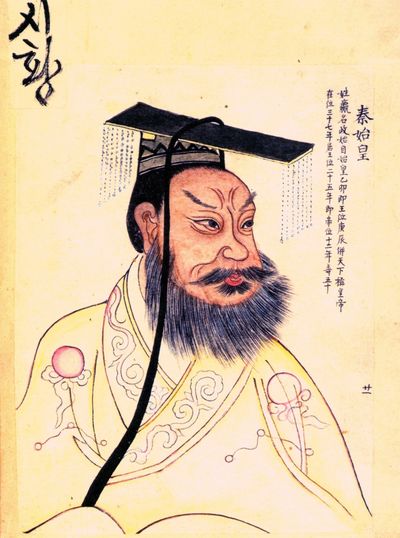
Qin Shi Huang
Emperor · Ancient
83.5Total
Basic Information
Born
1474
-259
Died
1521
-210
Era
Medieval
Ancient
Nationality
Spain
China
Occupation
Explorer
Emperor
Civilization
Western
Eastern
Score Comparison
Military (10%)
20.3
80.0
Political (20%)
34.0
88.0
Influence (20%)
62.5
82.0
Legacy (20%)
48.2
85.0
Leadership (15%)
26.7
88.0
Strategy (15%)
54.0
75.0
TOTAL
43.1
83.5
Rankings
🥇
Qin Shi HuangLeader
Mil: 80.0Pol: 88.0Inf: 82.0
83.5
🥈
Juan Ponce de Leon
Mil: 20.3Pol: 34.0Inf: 62.5
43.1
+40.4 behind
How This Comparison Works
Algorithm
Each figure is scored on 6 dimensions (0—100 scale) based on structured historical data: Military (10%), Political (20%), Influence (20%), Legacy (20%), Leadership (15%), Strategy (15%). The weighted total produces the final ranking.
Data Sources
Scores are computed from structured sub-indicators in the database. Scale factors adjust for era (Ancient ×0.85, Modern ×1.0) and civilization size (Eastern ×1.05, Other ×0.80) to account for differences in population and military scale.
Maximum 3 Figures
Comparisons are limited to 2—3 figures to ensure readability and statistical meaningfulness.
Error Margins
±5 points per dimension — Sub-scores are derived from historical records with inherent uncertainty. Two figures within 5 points on a dimension should be considered roughly equivalent in that area.
Total Score Accuracy
±3 points overall — The weighted combination of 6 dimensions produces a total score with approximately ±3 points of uncertainty. Differences of less than 3 points are not statistically significant— the figures are effectively tied.
Known Limitations
- Historical records are incomplete and uneven across civilizations
- Figures from oral-tradition societies may be underrepresented
- Occupation labels can misclassify multi-role figures
- Scores measure capability and impact, not moral character
- Quantitative scoring is a comparison tool, not absolute truth
Capability Radar
Military (10%) — Battles & Warfare
Battles
10
85
Win Rate
10
90
Expansion
20
90
Political (20%) — Governance & Reform
Reform
0
95
Diplomacy
10
75
Economy
10
90
Influence (20%) — Cultural & Global Reach
Cultural
30
95
Global
20
85
Legacy (20%) — Historical Impact
Historical
30
95
Longevity
20
95
Leadership (15%) — Power & Stability
Tenure
20
70
Stability
10
65
Strategy (15%) — Tactics & Innovation
Strategy
10
85
Tactics
10
80
Reform
0
95
Analysis will be generated on first visit.
Scores and timeline are available below. The page will refresh automatically when ready.
Juan Ponce de Leon — Complete Timeline
1509 AD
Governorship of Puerto RicoPolitical Action◆ Major
Ponce de Le
GovernorshipColonizationPuerto Rico
Impact: regionalconstructive
1513 AD
Discovery of FloridaOther
Ponce de Le
Age of DiscoveryFloridaExploration
Impact: globalconstructive
Search for the Fountain of YouthOther
Ponce de Le
MythExplorationFountain of Youth
Impact: regional
1521 AD
Second expedition to FloridaOther◆ Major
Ponce de Le
ExplorationFloridaColonization
Impact: regionaltragic
Death from wound in CubaOther◆ Major
Ponce de Le
DeathFloridaPoisoned Arrow
Impact: regionaltragic
Qin Shi Huang — Complete Timeline
246 BC
Construction of the Mausoleum and Terracotta ArmyOther◆ Major
Qin Shi Huang commissioned a vast mausoleum complex near Xi'an, guarded by thousands of life-sized terracotta soldiers, horses, and chariots. The project employed hundreds of thousands of workers and reflected his obsession with immortality and imperial power.
Impact: global
230 BC
Conquest of the Six Warring StatesWar
From 230 to 221 BCE, Ying Zheng led the Qin state in a series of campaigns that conquered the Han, Zhao, Wei, Chu, Yan, and Qi states. This unified China under a single ruler for the first time, ending the Warring States period.
Impact: global
221 BC
Standardization of Writing, Currency, and MeasurementsReform◆ Major
Qin Shi Huang ordered the standardization of Chinese script, currency, and weights and measures across the unified empire. This facilitated administration, trade, and cultural integration, laying a foundation for future dynasties.
Impact: globalconstructive
Proclamation of the Qin DynastyPolitical Action
After conquering the last independent state, Ying Zheng declared himself Shi Huangdi (First Emperor), founding the Qin Dynasty. He adopted a new title to signify his supreme authority and initiated centralized imperial rule.
Impact: global
214 BC
Initiation of the Great Wall ConstructionOther◆ Major
Qin Shi Huang ordered the connection and extension of existing northern fortifications to create a unified defensive wall against nomadic Xiongnu raids. This project involved massive conscripted labor and became the precursor to the later Great Wall.
Impact: regional
213 BC
Burning of Books and Burying of ScholarsPolitical Action◆ Major
On the advice of Li Si, Qin Shi Huang ordered the burning of historical records and philosophical texts not aligned with Legalist doctrine. He also had 460 Confucian scholars buried alive to suppress dissent and consolidate ideological control.
Impact: nationaldestructive
Similar Comparisons
Comments & Discussion
FLA-FLA-DABBA-DOO6/17/2026
Ponce de León is basically the original Florida man—stumbling around looking for magic water while the First Emperor was busy inventing the post office, standardizing axle widths, and connecting walls into THE Wall. Qin built a state that functioned; Ponce built a legacy of disappointment. Give me the guy who unified weights and measures over the one who named a swamp any day.|秦始皇上线了标准化2.0,庞塞还在玩单机版寻宝游戏。一个修长城防匈奴,一个找喷泉防皱纹——格局差距肉眼可见。||
LEGALIST_OR_BUST6/17/2026
拿秦始皇跟庞塞比?这是用《史记》对比《国家地理》边栏小广告。一个搞书同文车同轨,让你今天能看懂两千年前的竹简;另一个带头盔踩沼泽,除了留下“佛罗里达”这个地名就没啥硬通货了。比起能屈能伸的秦弩,庞塞找的那个青春泉根本不存在——但法律派系的郡县制可是运行了二十多个世纪。||Qin Shi Huang's standardized script let you read 2,200-year-old bamboo slips today. Ponce de León's spring? Still waiting on that download.||
MYTHBUSTER_30006/17/2026
Let's kill the "Fountain of Youth" narrative—Ponce wasn't even looking for it in 1513; that got tacked on later by romantic historians. He was hunting slaves, gold, and land for encomiendas. Meanwhile, Qin Shi Huang was literally commissioning mercury maps of his empire while searching for immortality elixirs that slowly poisoned him. Both were chasing impossible dreams, but only one built a bureaucracy that lasted till 1912.||别把庞塞浪漫化:1513年他根本没找青春泉,那是后来编的。他实际在找奴隶和黄金。而秦始皇一边被水银慢慢毒死,一边建起了沿用两千年的行政体系