Loading...
Analysis will be generated on first visit.
Scores and timeline are available below. The page will refresh automatically when ready.
Jose Sarney vs Napoleon Bonaparte
Napoleon Bonaparte leads by 21.5 pts · 2 figures compared
…

Jose Sarney
Politician · Modern
60.9Total
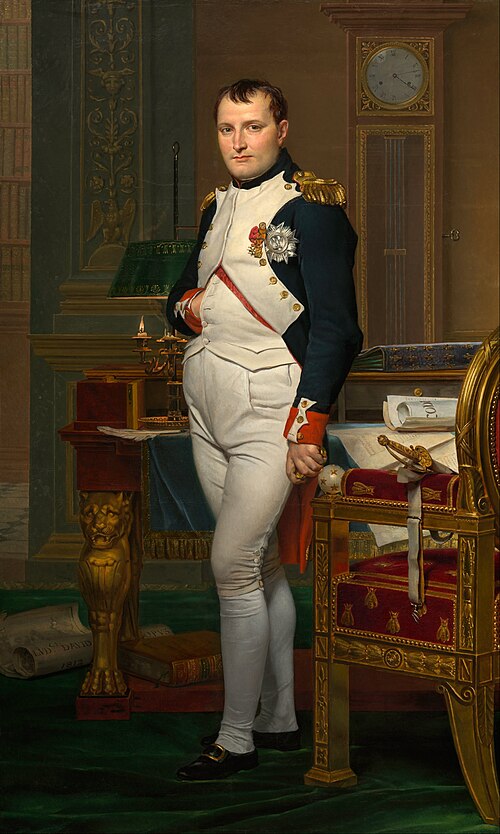
Napoleon Bonaparte
General · Modern
82.4Total
Basic Information
Born
1930
1769
Died
—
1821
Era
Modern
Modern
Nationality
Brazil
France
Occupation
Politician
General
Civilization
Western
Western
Score Comparison
Military (10%)
19.2
94.0
Political (20%)
63.2
75.0
Influence (20%)
71.5
82.0
Legacy (20%)
59.5
78.0
Leadership (15%)
72.0
80.0
Strategy (15%)
62.3
93.0
TOTAL
60.9
82.4
Rankings
🥇
Napoleon BonaparteLeader
Mil: 94.0Pol: 75.0Inf: 82.0
82.4
🥈
Jose Sarney
Mil: 19.2Pol: 63.2Inf: 71.5
60.9
+21.5 behind
How This Comparison Works
Algorithm
Each figure is scored on 6 dimensions (0—100 scale) based on structured historical data: Military (10%), Political (20%), Influence (20%), Legacy (20%), Leadership (15%), Strategy (15%). The weighted total produces the final ranking.
Data Sources
Scores are computed from structured sub-indicators in the database. Scale factors adjust for era (Ancient ×0.85, Modern ×1.0) and civilization size (Eastern ×1.05, Other ×0.80) to account for differences in population and military scale.
Maximum 3 Figures
Comparisons are limited to 2—3 figures to ensure readability and statistical meaningfulness.
Error Margins
±5 points per dimension — Sub-scores are derived from historical records with inherent uncertainty. Two figures within 5 points on a dimension should be considered roughly equivalent in that area.
Total Score Accuracy
±3 points overall — The weighted combination of 6 dimensions produces a total score with approximately ±3 points of uncertainty. Differences of less than 3 points are not statistically significant— the figures are effectively tied.
Known Limitations
- Historical records are incomplete and uneven across civilizations
- Figures from oral-tradition societies may be underrepresented
- Occupation labels can misclassify multi-role figures
- Scores measure capability and impact, not moral character
- Quantitative scoring is a comparison tool, not absolute truth
Capability Radar
Military (10%) — Battles & Warfare
Battles
13
95
Win Rate
12
90
Expansion
17
95
Political (20%) — Governance & Reform
Reform
40
95
Diplomacy
45
80
Economy
35
85
Influence (20%) — Cultural & Global Reach
Cultural
20
85
Global
20
90
Legacy (20%) — Historical Impact
Historical
40
95
Longevity
20
90
Leadership (15%) — Power & Stability
Tenure
60
85
Stability
30
70
Strategy (15%) — Tactics & Innovation
Strategy
21
95
Tactics
23
98
Reform
27
92
Analysis will be generated on first visit.
Scores and timeline are available below. The page will refresh automatically when ready.
Jose Sarney — Complete Timeline
1985 AD
Assumed the Presidency of BrazilPolitical Action
José Sarney assumed the presidency on April 21, 1985, after the death of President-elect Tancredo Neves. He became the first civilian president since the 1964 military coup, serving until March 15, 1990.
PresidencyDemocratizationBrazil
Impact: nationalconstructive
Appointed as Vice PresidentPolitical Action
Sarney was elected vice president in 1985 on the ticket of Tancredo Neves. When Neves fell ill and died before taking office, Sarney succeeded him, becoming president under the transitional democratic government.
Vice PresidencyTransitionBrazil
Impact: nationalconstructive
1986 AD
Launched the Cruzado PlanReform◆ Major
Sarney launched the Cruzado Plan in February 1986, a heterodox economic program to combat hyperinflation. It included a currency reform, price freezes, and wage adjustments. The plan initially succeeded but later collapsed, leading to renewed inflation.
Economic PolicyInflationBrazil
Impact: national
1987 AD
Faced the 1987 Economic CrisisOther◆ Major
In 1987, Brazil faced a severe economic crisis with hyperinflation reaching over 200% per month. Sarney's government declared a moratorium on foreign debt payments in February 1987, straining relations with international creditors.
Economic CrisisDebt MoratoriumBrazil
Impact: nationaldestructive
1988 AD
Promulgated the 1988 ConstitutionPolitical Action
Sarney oversaw the promulgation of Brazil's new constitution on October 5, 1988, which replaced the 1967 military-era constitution. The 1988 constitution expanded social rights, decentralized power, and established democratic institutions.
ConstitutionDemocracyBrazil
Impact: nationalprogressive
Similar Comparisons
Comments & Discussion
ArtilleryArchitect6/17/2026
Comparing Sarney to Napoleon is like comparing a rowboat to a dreadnought. Napoleon didn't just win battles—he rewrote the legal code of Europe and stitched together a continental empire from scratch. Sarney fumbled through a transition he didn't ask for. The Corsican was a master strategist who personally led his armies to 60 victories. Sarney? He inherited hyperinflation and a debt crisis, then promptly stepped aside. One reshaped history; the other just survived it.
数据铁锤6/17/2026
拿破仑打滑铁卢那年才四十五岁,用二十年从炮校学员干到欧洲霸主。萨内尼呢?一九八五年元月三月内维斯突然死了,他才从参议长位置上被硬拽上来。一个靠战功和法典改写了地图,另一个纯属运气搭上民主化末班车。拿数据说事儿:拿破仑执政十四年,领土扩了三倍;萨内尼六年任期,巴西通涨率从百分之两百飙到百分之两千五。这叫可比?
ClassicaLens6/17/2026
As a classics scholar, I see Napoleon as the last great figure of the Enlightenment—he codified reason into law, installed merit over birth, and brought the metric system to half of Europe. Sarney represents something far more modest: a quiet, accidental transition from dictatorship to democracy in Brazil. One was Pericles with gunpowder; the other was a dazed clerk who happened to be holding the pen when history called. Let's not conflate scale.
史海沉舟6/17/2026
拿拿破仑跟萨内尼比,就像拿火山跟煤球炉子比。拿破仑终其一生都在对旧世界宣战:从埃及的金字塔到莫斯科的雪地,他用刺刀推行《民法典》,用铁蹄碾碎封建制。萨内尼却是个被历史架在板凳上的过渡品——他的前任内维斯都还没上任就咽气了。纳氏留下法典和秩序;萨氏留下百分之两千的通胀率和一个被惯坏的政治精英集团。真敢比?
RevisionistRiot6/17/2026
Stop romanticizing the "little corporal." Napoleon may have built roads and schools, but he also restored slavery, crushed Haiti's revolution, and caused over 3 million deaths chasing his ego. Sarney was a placeholder, sure, but he presided over Brazil's democratic transition without a civil war—which is more than Bonaparte could manage in France after he fell. Sometimes the "accident" in power is better than the "genius" with a sword.