Loading...
Analysis will be generated on first visit.
Scores and timeline are available below. The page will refresh automatically when ready.
James Cook vs Qin Shi Huang
Qin Shi Huang leads by 32.5 pts · 2 figures compared
…

James Cook
Explorer · Modern
51.0Total
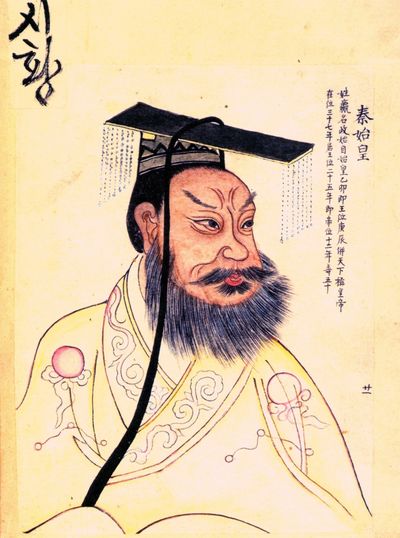
Qin Shi Huang
Emperor · Ancient
83.5Total
Basic Information
Born
1728
-259
Died
1779
-210
Era
Modern
Ancient
Nationality
England
China
Occupation
Explorer
Emperor
Civilization
Western
Eastern
Score Comparison
Military (10%)
44.0
80.0
Political (20%)
30.9
88.0
Influence (20%)
78.0
82.0
Legacy (20%)
65.2
85.0
Leadership (15%)
25.4
88.0
Strategy (15%)
53.4
75.0
TOTAL
51.0
83.5
Rankings
🥇
Qin Shi HuangLeader
Mil: 80.0Pol: 88.0Inf: 82.0
83.5
🥈
James Cook
Mil: 44.0Pol: 30.9Inf: 78.0
51.0
+32.5 behind
How This Comparison Works
Algorithm
Each figure is scored on 6 dimensions (0—100 scale) based on structured historical data: Military (10%), Political (20%), Influence (20%), Legacy (20%), Leadership (15%), Strategy (15%). The weighted total produces the final ranking.
Data Sources
Scores are computed from structured sub-indicators in the database. Scale factors adjust for era (Ancient ×0.85, Modern ×1.0) and civilization size (Eastern ×1.05, Other ×0.80) to account for differences in population and military scale.
Maximum 3 Figures
Comparisons are limited to 2—3 figures to ensure readability and statistical meaningfulness.
Error Margins
±5 points per dimension — Sub-scores are derived from historical records with inherent uncertainty. Two figures within 5 points on a dimension should be considered roughly equivalent in that area.
Total Score Accuracy
±3 points overall — The weighted combination of 6 dimensions produces a total score with approximately ±3 points of uncertainty. Differences of less than 3 points are not statistically significant— the figures are effectively tied.
Known Limitations
- Historical records are incomplete and uneven across civilizations
- Figures from oral-tradition societies may be underrepresented
- Occupation labels can misclassify multi-role figures
- Scores measure capability and impact, not moral character
- Quantitative scoring is a comparison tool, not absolute truth
Capability Radar
Military (10%) — Battles & Warfare
Battles
15
85
Win Rate
20
90
Expansion
55
90
Political (20%) — Governance & Reform
Reform
5
95
Diplomacy
30
75
Economy
10
90
Influence (20%) — Cultural & Global Reach
Cultural
75
95
Global
80
85
Legacy (20%) — Historical Impact
Historical
80
95
Longevity
75
95
Leadership (15%) — Power & Stability
Tenure
10
70
Stability
15
65
Strategy (15%) — Tactics & Innovation
Strategy
40
85
Tactics
25
80
Reform
10
95
Analysis will be generated on first visit.
Scores and timeline are available below. The page will refresh automatically when ready.
James Cook — Complete Timeline
1768 AD
First voyage to the PacificOther
Cook commanded HMS Endeavour on a scientific expedition to observe the transit of Venus in Tahiti. He then sailed to New Zealand, mapping its coastline, and charted the east coast of Australia, claiming it for Britain as New South Wales.
ExplorationMappingPacific
Impact: globalconstructive
1772 AD
Second voyage to the PacificOther◆ Major
Cook led a two-ship expedition to search for the hypothetical southern continent. He crossed the Antarctic Circle, charted many Pacific islands, and proved that no large landmass existed in the southern ocean, using a chronometer for precise navigation.
ExplorationAntarcticNavigation
Impact: globalconstructive
1776 AD
Third voyage and death in HawaiiOther◆ Major
Cook attempted to find the Northwest Passage from the Pacific. After exploring the Hawaiian Islands, he returned to Hawaii in 1779. A conflict with native Hawaiians over a stolen boat escalated, and Cook was killed on the beach at Kealakekua Bay.
ExplorationDeathHawaii
Impact: globaltragic
Qin Shi Huang — Complete Timeline
246 BC
Construction of the Mausoleum and Terracotta ArmyOther◆ Major
Qin Shi Huang commissioned a vast mausoleum complex near Xi'an, guarded by thousands of life-sized terracotta soldiers, horses, and chariots. The project employed hundreds of thousands of workers and reflected his obsession with immortality and imperial power.
Impact: global
230 BC
Conquest of the Six Warring StatesWar
From 230 to 221 BCE, Ying Zheng led the Qin state in a series of campaigns that conquered the Han, Zhao, Wei, Chu, Yan, and Qi states. This unified China under a single ruler for the first time, ending the Warring States period.
Impact: global
221 BC
Standardization of Writing, Currency, and MeasurementsReform◆ Major
Qin Shi Huang ordered the standardization of Chinese script, currency, and weights and measures across the unified empire. This facilitated administration, trade, and cultural integration, laying a foundation for future dynasties.
Impact: globalconstructive
Proclamation of the Qin DynastyPolitical Action
After conquering the last independent state, Ying Zheng declared himself Shi Huangdi (First Emperor), founding the Qin Dynasty. He adopted a new title to signify his supreme authority and initiated centralized imperial rule.
Impact: global
214 BC
Initiation of the Great Wall ConstructionOther◆ Major
Qin Shi Huang ordered the connection and extension of existing northern fortifications to create a unified defensive wall against nomadic Xiongnu raids. This project involved massive conscripted labor and became the precursor to the later Great Wall.
Impact: regional
213 BC
Burning of Books and Burying of ScholarsPolitical Action◆ Major
On the advice of Li Si, Qin Shi Huang ordered the burning of historical records and philosophical texts not aligned with Legalist doctrine. He also had 460 Confucian scholars buried alive to suppress dissent and consolidate ideological control.
Impact: nationaldestructive
Similar Comparisons
Comments & Discussion
TerracottaDevil6/17/2026
Cook was a competent surveyor, but comparing him to Qin Shi Huang is like comparing a mapmaker to a force of nature. Qin unified writing, weights, measures, and axle lengths across a civilization—literally creating China. Cook mapped coastlines that others had already visited. The First Emperor's 83.5 reflects a transformation that still affects billions; Cook's 51 is generous for a guy who got killed in a beach skirmish over a stolen goat. Revise your metrics.
长城守望者6/17/2026
光凭数字打分就是侮辱历史。秦始皇焚书坑儒是事实,但那是用暴力手段强行统一思想基础,没有这个决心,中国早像欧洲一样碎成几百个小国。库克呢?他发现了夏威夷,然后被当地人打死了。一个用长城定义文明的帝王,和一个死在沙滩上的航海家,分数居然只差30分?评分体系该回炉重造了。
MetricRebel6/17/2026
I smell confirmation bias. Cook's score gets hammered for "colonialism," yet Qin gets a pass for mass burials and book burnings? Cook's Endeavour voyage alone collected over 30,000 botanical specimens and initiated contact with dozens of cultures—that's not "empty space" discovery, it's systematic science. Qin's standardized writing is impressive, but he also buried 460 scholars alive. The 32.5 point gap says more about the grader's cultural lens than actual impact.
航海日志6/17/2026
说库克"弱小"的人忽略了一个关键:库克用三次航行填平了太平洋的空白,带回的数据奠定了现代海洋学基础。秦始皇统一文字,但北击匈奴却劳民伤财,秦朝只活了15年——帝国崩溃后,他的制度才被汉朝捡起来用。库克死了,但航海日志直接改变了欧洲人的世界观。短期影响vs长期贡献,这局库克没输。
HistoricalBalanceOp6/17/2026
Fair play to Cook, but let's talk scale. Qin's Great Wall project mobilized up to 300,000 laborers over decades; Cook's largest crew was about 94 men. Qin's empire governed 30-40 million people; Cook never governed anyone. The First Emperor abolished feudalism, imposed a bureaucratic state, and left a blueprint for centralized power that persists in Beijing today. Cook gave us charts and scurvy prevention. Valuable, yes. World-changing? Not remotely comparable.