Loading...
Analysis will be generated on first visit.
Scores and timeline are available below. The page will refresh automatically when ready.
Jacques Cartier vs Qin Shi Huang
Qin Shi Huang leads by 36.5 pts · 2 figures compared
…

Jacques Cartier
Explorer · Medieval
47.0Total
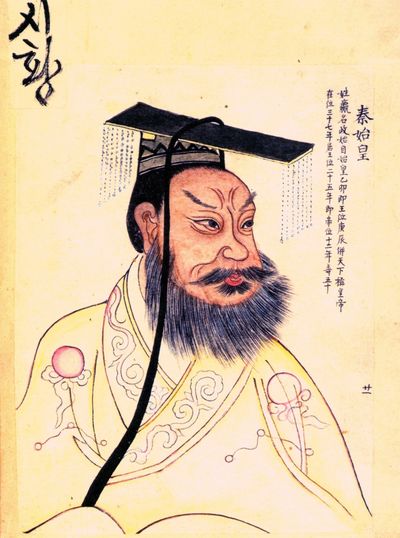
Qin Shi Huang
Emperor · Ancient
83.5Total
Basic Information
Born
1491
-259
Died
1557
-210
Era
Medieval
Ancient
Nationality
France
China
Occupation
Explorer
Emperor
Civilization
Western
Eastern
Score Comparison
Military (10%)
19.3
80.0
Political (20%)
37.7
88.0
Influence (20%)
67.8
82.0
Legacy (20%)
55.0
85.0
Leadership (15%)
33.6
88.0
Strategy (15%)
52.7
75.0
TOTAL
47.0
83.5
Rankings
🥇
Qin Shi HuangLeader
Mil: 80.0Pol: 88.0Inf: 82.0
83.5
🥈
Jacques Cartier
Mil: 19.3Pol: 37.7Inf: 67.8
47.0
+36.5 behind
How This Comparison Works
Algorithm
Each figure is scored on 6 dimensions (0—100 scale) based on structured historical data: Military (10%), Political (20%), Influence (20%), Legacy (20%), Leadership (15%), Strategy (15%). The weighted total produces the final ranking.
Data Sources
Scores are computed from structured sub-indicators in the database. Scale factors adjust for era (Ancient ×0.85, Modern ×1.0) and civilization size (Eastern ×1.05, Other ×0.80) to account for differences in population and military scale.
Maximum 3 Figures
Comparisons are limited to 2—3 figures to ensure readability and statistical meaningfulness.
Error Margins
±5 points per dimension — Sub-scores are derived from historical records with inherent uncertainty. Two figures within 5 points on a dimension should be considered roughly equivalent in that area.
Total Score Accuracy
±3 points overall — The weighted combination of 6 dimensions produces a total score with approximately ±3 points of uncertainty. Differences of less than 3 points are not statistically significant— the figures are effectively tied.
Known Limitations
- Historical records are incomplete and uneven across civilizations
- Figures from oral-tradition societies may be underrepresented
- Occupation labels can misclassify multi-role figures
- Scores measure capability and impact, not moral character
- Quantitative scoring is a comparison tool, not absolute truth
Capability Radar
Military (10%) — Battles & Warfare
Battles
5
85
Win Rate
5
90
Expansion
20
90
Political (20%) — Governance & Reform
Reform
5
95
Diplomacy
20
75
Economy
10
90
Influence (20%) — Cultural & Global Reach
Cultural
30
95
Global
35
85
Legacy (20%) — Historical Impact
Historical
40
95
Longevity
30
95
Leadership (15%) — Power & Stability
Tenure
15
70
Stability
10
65
Strategy (15%) — Tactics & Innovation
Strategy
10
85
Tactics
5
80
Reform
0
95
Analysis will be generated on first visit.
Scores and timeline are available below. The page will refresh automatically when ready.
Jacques Cartier — Complete Timeline
1534 AD
First European to map the Gulf of Saint LawrenceInvention◆ Major
Cartier explored the Gulf of St. Lawrence, mapping its coastline and claiming the region for France. He encountered Mi'kmaq and Iroquoian peoples, establishing initial French contact with the area.
ExplorationGulf of St. LawrenceMapping
Impact: regional
1535 AD
Discovered the St. Lawrence RiverInvention◆ Major
Cartier sailed up the St. Lawrence River to the Iroquoian village of Stadacona (modern Quebec City) and Hochelaga (Montreal). He named the river and established French claims to the interior.
DiscoverySt. Lawrence RiverExploration
Impact: regional
1536 AD
Returned to France with kidnapped IroquoiansOther
Cartier kidnapped Donnacona, the Iroquoian chief of Stadacona, along with several other Iroquoians, and brought them to France. Donnacona died in France, worsening relations with the Iroquoians.
KidnappingIroquoiansDiplomacy
Impact: regionaldestructive
1541 AD
Attempted colonization of Charlesbourg-RoyalPolitical Action
Cartier led a colonization expedition to establish Charlesbourg-Royal near Stadacona. The colony failed due to harsh winter, disease, and conflict with the Iroquoians, and was abandoned in 1543.
ColonizationCharlesbourg-RoyalFailure
Impact: regionaltragic
Qin Shi Huang — Complete Timeline
246 BC
Construction of the Mausoleum and Terracotta ArmyOther◆ Major
Qin Shi Huang commissioned a vast mausoleum complex near Xi'an, guarded by thousands of life-sized terracotta soldiers, horses, and chariots. The project employed hundreds of thousands of workers and reflected his obsession with immortality and imperial power.
Impact: global
230 BC
Conquest of the Six Warring StatesWar
From 230 to 221 BCE, Ying Zheng led the Qin state in a series of campaigns that conquered the Han, Zhao, Wei, Chu, Yan, and Qi states. This unified China under a single ruler for the first time, ending the Warring States period.
Impact: global
221 BC
Standardization of Writing, Currency, and MeasurementsReform◆ Major
Qin Shi Huang ordered the standardization of Chinese script, currency, and weights and measures across the unified empire. This facilitated administration, trade, and cultural integration, laying a foundation for future dynasties.
Impact: globalconstructive
Proclamation of the Qin DynastyPolitical Action
After conquering the last independent state, Ying Zheng declared himself Shi Huangdi (First Emperor), founding the Qin Dynasty. He adopted a new title to signify his supreme authority and initiated centralized imperial rule.
Impact: global
214 BC
Initiation of the Great Wall ConstructionOther◆ Major
Qin Shi Huang ordered the connection and extension of existing northern fortifications to create a unified defensive wall against nomadic Xiongnu raids. This project involved massive conscripted labor and became the precursor to the later Great Wall.
Impact: regional
213 BC
Burning of Books and Burying of ScholarsPolitical Action◆ Major
On the advice of Li Si, Qin Shi Huang ordered the burning of historical records and philosophical texts not aligned with Legalist doctrine. He also had 460 Confucian scholars buried alive to suppress dissent and consolidate ideological control.
Impact: nationaldestructive
Similar Comparisons
Comments & Discussion
QIN_BRICKS_AND_BONES6/17/2026
Qin Shi Huang wasn't just an emperor—he was a logistics god. While Cartier was getting lost for beaver pelts, the First Emperor was linking 7 chaotic states with standardized axle widths, writing systems, and roads. Try navigating a cart through Ming Dynasty China on Warring States ruts. You can't. Cartier claimed Canada for France but left nothing permanent except scurvy stories. Qin built the bureaucratic backbone of a civilization. That's not ambition—that's infrastructure. Cartier fumbled a
诺曼底冲锋号6/17/2026
拿秦始皇跟卡蒂埃比?这就像拿长城比篱笆。卡蒂埃三趟美洲,连个像样的殖民地都没建起来,带回去的 "黄金" 结果是黄铁矿,还让易洛魁人当猴耍。秦始皇十三岁登基,三十九岁统一六国,修长城、通水系、铸兵马俑。卡蒂埃死的时候还在跟加拿大冬天较劲,秦始皇死后两千年的中国人还在说 "车同轨,书同文"。这不是同等级选手—这根本不在一个赛道上。
NO_EMPIRE_FOR_EXPLORERS6/17/2026
Here's the uncomfortable truth: Cartier was a glorified tourist with a royal commission. His "discoveries" were re-discoveries—Vikings, Basques, and indigenous peoples had already mapped the Gulf of St. Lawrence. Meanwhile, Qin Shi Huang was literally creating China from scratch. Standardized weights, measures, currency, and script across a territory larger than any European kingdom of his time. Cartier gave France vague claims; Huang gave China its DNA. One was a footnote, the other a founding
法家不是废话6/17/2026
别把帝国扩张和瞎逛混为一谈。秦始皇统一文字的时候,卡蒂埃连圣劳伦斯河口的土著语言都没学会。法家治国不是比喻—李斯和商鞅的制度改革让秦朝能动员百万大军修长城,而卡蒂埃的法国王室连五十个殖民者都送不过大西洋。史书记载秦始皇每天批阅一百二十斤竹简奏章;卡蒂埃呢?第二次航行的手稿写了一半就丢了。这不是勤奋问题—这是历史地位问题。
CARTIER_THE_CARTOGRAPHER6/17/2026
You're all underselling Cartier. He didn't just "stumble"—he systematically explored the St. Lawrence, charted the river for hundreds of miles inland, and gave France the geographic intelligence that later enabled Champlain. Qin Shi Huang burned books and buried scholars alive. Cartier sailed with interpreters, learned from the Iroquois, and brought back knowledge—not just territory. History favors conquerors, but knowledge-builders matter too. Without Cartier's maps, no New