Loading...
Analysis will be generated on first visit.
Scores and timeline are available below. The page will refresh automatically when ready.
Ibn Battuta vs Qin Shi Huang
Qin Shi Huang leads by 33.0 pts · 2 figures compared
…

Ibn Battuta
Explorer · Medieval
50.5Total
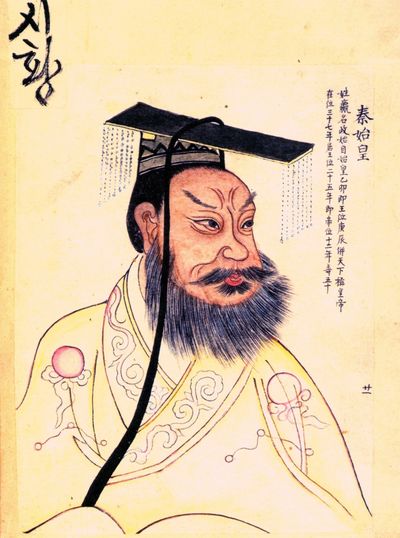
Qin Shi Huang
Emperor · Ancient
83.5Total
Basic Information
Born
1304
-259
Died
1369
-210
Era
Medieval
Ancient
Nationality
Morocco
China
Occupation
Explorer
Emperor
Civilization
Middle Eastern
Eastern
Score Comparison
Military (10%)
29.8
80.0
Political (20%)
43.0
88.0
Influence (20%)
70.6
82.0
Legacy (20%)
58.9
85.0
Leadership (15%)
30.8
88.0
Strategy (15%)
56.3
75.0
TOTAL
50.5
83.5
Rankings
🥇
Qin Shi HuangLeader
Mil: 80.0Pol: 88.0Inf: 82.0
83.5
🥈
Ibn Battuta
Mil: 29.8Pol: 43.0Inf: 70.6
50.5
+33.0 behind
How This Comparison Works
Algorithm
Each figure is scored on 6 dimensions (0—100 scale) based on structured historical data: Military (10%), Political (20%), Influence (20%), Legacy (20%), Leadership (15%), Strategy (15%). The weighted total produces the final ranking.
Data Sources
Scores are computed from structured sub-indicators in the database. Scale factors adjust for era (Ancient ×0.85, Modern ×1.0) and civilization size (Eastern ×1.05, Other ×0.80) to account for differences in population and military scale.
Maximum 3 Figures
Comparisons are limited to 2—3 figures to ensure readability and statistical meaningfulness.
Error Margins
±5 points per dimension — Sub-scores are derived from historical records with inherent uncertainty. Two figures within 5 points on a dimension should be considered roughly equivalent in that area.
Total Score Accuracy
±3 points overall — The weighted combination of 6 dimensions produces a total score with approximately ±3 points of uncertainty. Differences of less than 3 points are not statistically significant— the figures are effectively tied.
Known Limitations
- Historical records are incomplete and uneven across civilizations
- Figures from oral-tradition societies may be underrepresented
- Occupation labels can misclassify multi-role figures
- Scores measure capability and impact, not moral character
- Quantitative scoring is a comparison tool, not absolute truth
Capability Radar
Military (10%) — Battles & Warfare
Battles
23
85
Win Rate
22
90
Expansion
25
90
Political (20%) — Governance & Reform
Reform
0
95
Diplomacy
30
75
Economy
0
90
Influence (20%) — Cultural & Global Reach
Cultural
60
95
Global
55
85
Legacy (20%) — Historical Impact
Historical
55
95
Longevity
55
95
Leadership (15%) — Power & Stability
Tenure
10
70
Stability
0
65
Strategy (15%) — Tactics & Innovation
Strategy
30
85
Tactics
33
80
Reform
36
95
Analysis will be generated on first visit.
Scores and timeline are available below. The page will refresh automatically when ready.
Ibn Battuta — Complete Timeline
1325 AD
Departure from TangierOther
Ibn Battuta left his home in Tangier to perform the hajj to Mecca. This journey marked the beginning of 30 years of travel, covering over 75,000 miles across Africa, Asia, and Europe, far exceeding the travels of Marco Polo.
ExplorationHajjTravel
Impact: globalconstructive
1334 AD
Visit to the court of Muhammad bin TughluqPolitical Action◆ Major
Ibn Battuta arrived in Delhi and served as a qadi (judge) under Sultan Muhammad bin Tughluq for several years. He gained access to the sultan's court and traveled extensively in India, later being sent as an envoy to China.
DiplomacyIndiaService
Impact: regionalconstructive
1345 AD
Travels in Southeast Asia and ChinaOther◆ Major
Ibn Battuta traveled to the Maldives, Sri Lanka, and Sumatra before reaching China. He visited Quanzhou and Beijing, documenting the region's trade, customs, and the Yuan dynasty's administration, though some details are disputed.
ExplorationChinaSoutheast Asia
Impact: regionalconstructive
1354 AD
Return to Morocco and dictation of the RihlaCultural
Ibn Battuta returned to Morocco and, at the sultan's request, dictated his travel account to Ibn Juzayy. The resulting book, the Rihla, provided a detailed chronicle of the medieval Islamic world and beyond, becoming a key historical source.
LiteratureTravelogueHistorical Source
Impact: globalconstructive
Qin Shi Huang — Complete Timeline
246 BC
Construction of the Mausoleum and Terracotta ArmyOther◆ Major
Qin Shi Huang commissioned a vast mausoleum complex near Xi'an, guarded by thousands of life-sized terracotta soldiers, horses, and chariots. The project employed hundreds of thousands of workers and reflected his obsession with immortality and imperial power.
Impact: global
230 BC
Conquest of the Six Warring StatesWar
From 230 to 221 BCE, Ying Zheng led the Qin state in a series of campaigns that conquered the Han, Zhao, Wei, Chu, Yan, and Qi states. This unified China under a single ruler for the first time, ending the Warring States period.
Impact: global
221 BC
Standardization of Writing, Currency, and MeasurementsReform◆ Major
Qin Shi Huang ordered the standardization of Chinese script, currency, and weights and measures across the unified empire. This facilitated administration, trade, and cultural integration, laying a foundation for future dynasties.
Impact: globalconstructive
Proclamation of the Qin DynastyPolitical Action
After conquering the last independent state, Ying Zheng declared himself Shi Huangdi (First Emperor), founding the Qin Dynasty. He adopted a new title to signify his supreme authority and initiated centralized imperial rule.
Impact: global
214 BC
Initiation of the Great Wall ConstructionOther◆ Major
Qin Shi Huang ordered the connection and extension of existing northern fortifications to create a unified defensive wall against nomadic Xiongnu raids. This project involved massive conscripted labor and became the precursor to the later Great Wall.
Impact: regional
213 BC
Burning of Books and Burying of ScholarsPolitical Action◆ Major
On the advice of Li Si, Qin Shi Huang ordered the burning of historical records and philosophical texts not aligned with Legalist doctrine. He also had 460 Confucian scholars buried alive to suppress dissent and consolidate ideological control.
Impact: nationaldestructive
Similar Comparisons
Comments & Discussion
ExterminatusEmperor6/17/2026
Qin Shi Huang was history's ultimate control freak—burned books, buried scholars, rode around seeking immortality elixirs like a paranoid tyrant on steroids. Ibn Battuta at least had the decency to wander, learn, and write it all down. The Emperor tried to freeze history; the traveler lived it. Give me the restless Berber over the bronze-plated dictator any day.
焚书坑儒大将军6/17/2026
秦始皇就是个把世界当盆景修剪的暴君,烧掉百家争鸣,活埋反对声音,连自己功劳碑都要刻成标准字。伊本·白图泰至少知道世界不是棋盘,人不是棋子。一个用铁血画地为牢,一个用脚步证明天下可走。谁更像个文明人,这还要争?