Loading...
Analysis will be generated on first visit.
Scores and timeline are available below. The page will refresh automatically when ready.
Hernando de Soto vs Qin Shi Huang
Qin Shi Huang leads by 34.3 pts · 2 figures compared
…

Hernando de Soto
Explorer · Medieval
49.2Total
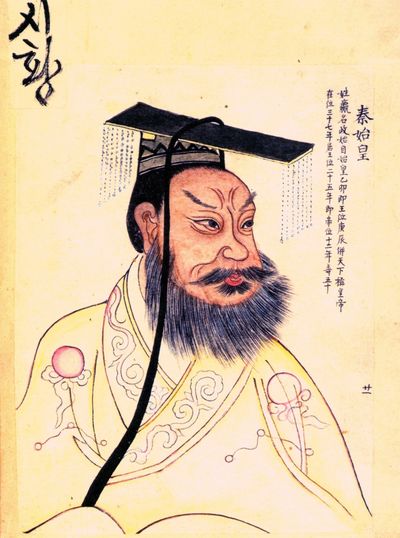
Qin Shi Huang
Emperor · Ancient
83.5Total
Basic Information
Born
1495
-259
Died
1542
-210
Era
Medieval
Ancient
Nationality
Spain
China
Occupation
Explorer
Emperor
Civilization
Western
Eastern
Score Comparison
Military (10%)
43.3
80.0
Political (20%)
29.4
88.0
Influence (20%)
72.0
82.0
Legacy (20%)
60.7
85.0
Leadership (15%)
27.6
88.0
Strategy (15%)
55.3
75.0
TOTAL
49.2
83.5
Rankings
🥇
Qin Shi HuangLeader
Mil: 80.0Pol: 88.0Inf: 82.0
83.5
🥈
Hernando de Soto
Mil: 43.3Pol: 29.4Inf: 72.0
49.2
+34.3 behind
How This Comparison Works
Algorithm
Each figure is scored on 6 dimensions (0—100 scale) based on structured historical data: Military (10%), Political (20%), Influence (20%), Legacy (20%), Leadership (15%), Strategy (15%). The weighted total produces the final ranking.
Data Sources
Scores are computed from structured sub-indicators in the database. Scale factors adjust for era (Ancient ×0.85, Modern ×1.0) and civilization size (Eastern ×1.05, Other ×0.80) to account for differences in population and military scale.
Maximum 3 Figures
Comparisons are limited to 2—3 figures to ensure readability and statistical meaningfulness.
Error Margins
±5 points per dimension — Sub-scores are derived from historical records with inherent uncertainty. Two figures within 5 points on a dimension should be considered roughly equivalent in that area.
Total Score Accuracy
±3 points overall — The weighted combination of 6 dimensions produces a total score with approximately ±3 points of uncertainty. Differences of less than 3 points are not statistically significant— the figures are effectively tied.
Known Limitations
- Historical records are incomplete and uneven across civilizations
- Figures from oral-tradition societies may be underrepresented
- Occupation labels can misclassify multi-role figures
- Scores measure capability and impact, not moral character
- Quantitative scoring is a comparison tool, not absolute truth
Capability Radar
Military (10%) — Battles & Warfare
Battles
35
85
Win Rate
30
90
Expansion
50
90
Political (20%) — Governance & Reform
Reform
5
95
Diplomacy
25
75
Economy
10
90
Influence (20%) — Cultural & Global Reach
Cultural
40
95
Global
45
85
Legacy (20%) — Historical Impact
Historical
55
95
Longevity
40
95
Leadership (15%) — Power & Stability
Tenure
20
70
Stability
15
65
Strategy (15%) — Tactics & Innovation
Strategy
45
85
Tactics
40
80
Reform
5
95
Analysis will be generated on first visit.
Scores and timeline are available below. The page will refresh automatically when ready.
Hernando de Soto — Complete Timeline
1532 AD
Participation in the conquest of PeruWar◆ Major
De Soto served as a captain under Francisco Pizarro during the conquest of the Inca Empire. He led the first Spanish contact with Inca Emperor Atahualpa at Cajamarca and was present at the Battle of Cajamarca where Atahualpa was captured.
ConquestInca EmpireSpanish Colonization
Impact: regionaldestructive
1538 AD
Governorship of CubaPolitical Action◆ Major
De Soto was appointed Governor of Cuba and Adelantado of Florida by King Charles I. He was granted the right to conquer and colonize the lands from Florida to the Rio de la Plata. He used his governorship to organize his expedition to North America.
GovernorshipColonizationFlorida
Impact: regional
1539 AD
Landing in FloridaOther◆ Major
De Soto landed near present-day Tampa Bay with 600 men, 200 horses, and a herd of pigs. He began a four-year expedition through the southeastern United States, encountering numerous Native American tribes including the Timucua, Cherokee, and Choctaw.
Age of DiscoveryExplorationFlorida
Impact: regional
1540 AD
Battle of MabilaWar◆ Major
De Soto's forces attacked the fortified town of Mabila (in present-day Alabama) after a dispute with Chief Tuskaloosa. The battle resulted in the deaths of 2,500-5,000 Native Americans and 20 Spaniards. De Soto lost most of his supplies and equipment in the ensuing fire.
BattleNative American ConflictSpanish Conquest
Impact: regionaldestructive
1541 AD
Discovery of the Mississippi RiverOther
De Soto's expedition became the first Europeans to sight the Mississippi River, near present-day Memphis, Tennessee. He crossed the river with his army of 400 men and 200 horses, searching for gold and a passage to the Pacific. The river was named Rio del Espiritu Santo.
Age of DiscoveryExplorationMississippi River
Impact: globalconstructive
1542 AD
Death on the Mississippi RiverOther◆ Major
De Soto died of a fever on May 21, 1542, on the banks of the Mississippi River. To prevent Native Americans from learning of his death, his men weighted his body with sand and sank it in the river. His expedition continued under Luis de Moscoso.
DeathMississippi RiverExploration
Impact: regionaltragic
Qin Shi Huang — Complete Timeline
246 BC
Construction of the Mausoleum and Terracotta ArmyOther◆ Major
Qin Shi Huang commissioned a vast mausoleum complex near Xi'an, guarded by thousands of life-sized terracotta soldiers, horses, and chariots. The project employed hundreds of thousands of workers and reflected his obsession with immortality and imperial power.
Impact: global
230 BC
Conquest of the Six Warring StatesWar
From 230 to 221 BCE, Ying Zheng led the Qin state in a series of campaigns that conquered the Han, Zhao, Wei, Chu, Yan, and Qi states. This unified China under a single ruler for the first time, ending the Warring States period.
Impact: global
221 BC
Standardization of Writing, Currency, and MeasurementsReform◆ Major
Qin Shi Huang ordered the standardization of Chinese script, currency, and weights and measures across the unified empire. This facilitated administration, trade, and cultural integration, laying a foundation for future dynasties.
Impact: globalconstructive
Proclamation of the Qin DynastyPolitical Action
After conquering the last independent state, Ying Zheng declared himself Shi Huangdi (First Emperor), founding the Qin Dynasty. He adopted a new title to signify his supreme authority and initiated centralized imperial rule.
Impact: global
214 BC
Initiation of the Great Wall ConstructionOther◆ Major
Qin Shi Huang ordered the connection and extension of existing northern fortifications to create a unified defensive wall against nomadic Xiongnu raids. This project involved massive conscripted labor and became the precursor to the later Great Wall.
Impact: regional
213 BC
Burning of Books and Burying of ScholarsPolitical Action◆ Major
On the advice of Li Si, Qin Shi Huang ordered the burning of historical records and philosophical texts not aligned with Legalist doctrine. He also had 460 Confucian scholars buried alive to suppress dissent and consolidate ideological control.
Impact: nationaldestructive
Similar Comparisons
Comments & Discussion
QIN_THE_MASTER6/17/2026
Let's be real—comparing de Soto to Qin is like comparing a firecracker to a hydrogen bomb. The First Emperor didn't just conquer; he standardized writing, currency, and axle widths across a territory that dwarfs anything de Soto ever saw. De Soto's "empire" was a bloody, feverish failure that left behind disease and death, while Qin laid the foundation for 2,000 years of Chinese civilization. The only thing de Soto "unified" was a few hundred corpses at the bottom of the Mississippi. Try harder,
汉家铁骑6/17/2026
德索托算哪门子征服者?他不过是带着几百个西班牙人到处抢劫,最后死在烂泥里。秦始皇统一六国,书同文车同轨,修建长城和驰道,奠定了华夏两千年的基业。西班牙人走到哪就祸害到哪,带去了天花和屠杀,最后连个像样的殖民地都建不起来。一个是千古一帝,一个是落魄土匪,没有可比性。
DATA_DOUBTER6/17/2026
Everyone's romanticizing the First Emperor, but let's look at the facts: Qin's "unification" was a brutal, one-time event that lasted barely 15 years after his death before his empire collapsed into chaos. Meanwhile, de Soto's expedition, for all its violence, provided Europe with the first detailed accounts of the American Southeast—real data that shaped colonization for centuries. Qin gave us the Terracotta Army and some burned books; de Soto gave us maps and ethnographies that historians stil
河畔独行者6/17/2026
说实话,这两个人都不值得崇拜。德索托是贪婪的殖民者,带着火枪和十字架屠杀原住民;秦始皇是暴君,焚书坑儒,把活人当砖头砌进长城。一个毁灭了密西西比河谷的文明,一个毁灭了百家争鸣的思想自由。要是让我选,我宁愿当个农民种地,也不愿活在他们的统治下。征服者都是屠夫,只不过屠刀大小不同罢了。
CLASSICS_SCHOLAR6/17/2026
What truly separates these men is their relationship with time. Qin saw himself as the eternal pivot of history—he standardized writing so that his word would last forever, built a tomb that still guards him after 2,000 years. De Soto, however, knew he was ephemeral; he died with his boots muddy, his only monument a river that keeps flowing over his bones. Qin sought to freeze time. De Soto was time’s victim. That’s the difference between an emperor who thought he was heaven’s son and an explore
西域观察家6/17/2026
从世界史角度看,这个对比很有意义。秦始皇建立的是内向型的帝国,依靠行政系统和法家思想把不同地区