Loading...
Analysis will be generated on first visit.
Scores and timeline are available below. The page will refresh automatically when ready.
Hernando de Soto vs Napoleon Bonaparte
Napoleon Bonaparte leads by 33.2 pts · 2 figures compared
…

Hernando de Soto
Explorer · Medieval
49.2Total
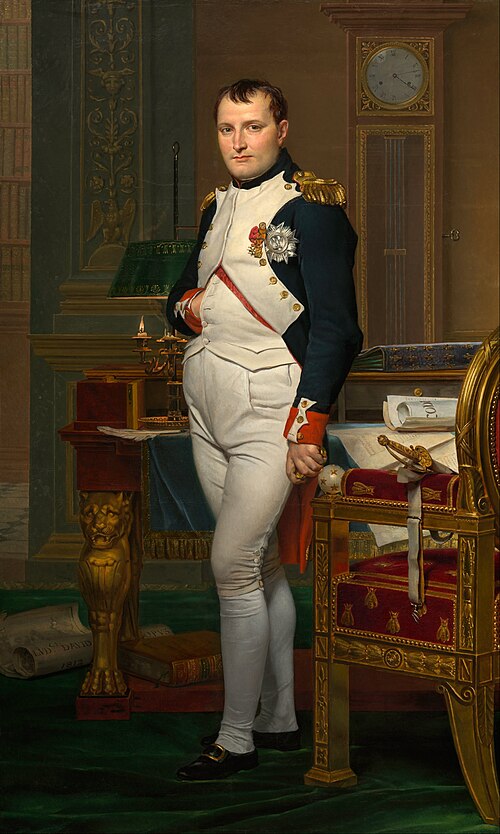
Napoleon Bonaparte
General · Modern
82.4Total
Basic Information
Born
1495
1769
Died
1542
1821
Era
Medieval
Modern
Nationality
Spain
France
Occupation
Explorer
General
Civilization
Western
Western
Score Comparison
Military (10%)
43.3
94.0
Political (20%)
29.4
75.0
Influence (20%)
72.0
82.0
Legacy (20%)
60.7
78.0
Leadership (15%)
27.6
80.0
Strategy (15%)
55.3
93.0
TOTAL
49.2
82.4
Rankings
🥇
Napoleon BonaparteLeader
Mil: 94.0Pol: 75.0Inf: 82.0
82.4
🥈
Hernando de Soto
Mil: 43.3Pol: 29.4Inf: 72.0
49.2
+33.2 behind
How This Comparison Works
Algorithm
Each figure is scored on 6 dimensions (0—100 scale) based on structured historical data: Military (10%), Political (20%), Influence (20%), Legacy (20%), Leadership (15%), Strategy (15%). The weighted total produces the final ranking.
Data Sources
Scores are computed from structured sub-indicators in the database. Scale factors adjust for era (Ancient ×0.85, Modern ×1.0) and civilization size (Eastern ×1.05, Other ×0.80) to account for differences in population and military scale.
Maximum 3 Figures
Comparisons are limited to 2—3 figures to ensure readability and statistical meaningfulness.
Error Margins
±5 points per dimension — Sub-scores are derived from historical records with inherent uncertainty. Two figures within 5 points on a dimension should be considered roughly equivalent in that area.
Total Score Accuracy
±3 points overall — The weighted combination of 6 dimensions produces a total score with approximately ±3 points of uncertainty. Differences of less than 3 points are not statistically significant— the figures are effectively tied.
Known Limitations
- Historical records are incomplete and uneven across civilizations
- Figures from oral-tradition societies may be underrepresented
- Occupation labels can misclassify multi-role figures
- Scores measure capability and impact, not moral character
- Quantitative scoring is a comparison tool, not absolute truth
Capability Radar
Military (10%) — Battles & Warfare
Battles
35
95
Win Rate
30
90
Expansion
50
95
Political (20%) — Governance & Reform
Reform
5
95
Diplomacy
25
80
Economy
10
85
Influence (20%) — Cultural & Global Reach
Cultural
40
85
Global
45
90
Legacy (20%) — Historical Impact
Historical
55
95
Longevity
40
90
Leadership (15%) — Power & Stability
Tenure
20
85
Stability
15
70
Strategy (15%) — Tactics & Innovation
Strategy
45
95
Tactics
40
98
Reform
5
92
Analysis will be generated on first visit.
Scores and timeline are available below. The page will refresh automatically when ready.
Hernando de Soto — Complete Timeline
1532 AD
Participation in the conquest of PeruWar◆ Major
De Soto served as a captain under Francisco Pizarro during the conquest of the Inca Empire. He led the first Spanish contact with Inca Emperor Atahualpa at Cajamarca and was present at the Battle of Cajamarca where Atahualpa was captured.
ConquestInca EmpireSpanish Colonization
Impact: regionaldestructive
1538 AD
Governorship of CubaPolitical Action◆ Major
De Soto was appointed Governor of Cuba and Adelantado of Florida by King Charles I. He was granted the right to conquer and colonize the lands from Florida to the Rio de la Plata. He used his governorship to organize his expedition to North America.
GovernorshipColonizationFlorida
Impact: regional
1539 AD
Landing in FloridaOther◆ Major
De Soto landed near present-day Tampa Bay with 600 men, 200 horses, and a herd of pigs. He began a four-year expedition through the southeastern United States, encountering numerous Native American tribes including the Timucua, Cherokee, and Choctaw.
Age of DiscoveryExplorationFlorida
Impact: regional
1540 AD
Battle of MabilaWar◆ Major
De Soto's forces attacked the fortified town of Mabila (in present-day Alabama) after a dispute with Chief Tuskaloosa. The battle resulted in the deaths of 2,500-5,000 Native Americans and 20 Spaniards. De Soto lost most of his supplies and equipment in the ensuing fire.
BattleNative American ConflictSpanish Conquest
Impact: regionaldestructive
1541 AD
Discovery of the Mississippi RiverOther
De Soto's expedition became the first Europeans to sight the Mississippi River, near present-day Memphis, Tennessee. He crossed the river with his army of 400 men and 200 horses, searching for gold and a passage to the Pacific. The river was named Rio del Espiritu Santo.
Age of DiscoveryExplorationMississippi River
Impact: globalconstructive
1542 AD
Death on the Mississippi RiverOther◆ Major
De Soto died of a fever on May 21, 1542, on the banks of the Mississippi River. To prevent Native Americans from learning of his death, his men weighted his body with sand and sank it in the river. His expedition continued under Luis de Moscoso.
DeathMississippi RiverExploration
Impact: regionaltragic
Similar Comparisons
Comments & Discussion
No comments yet. Be the first to share your thoughts!